
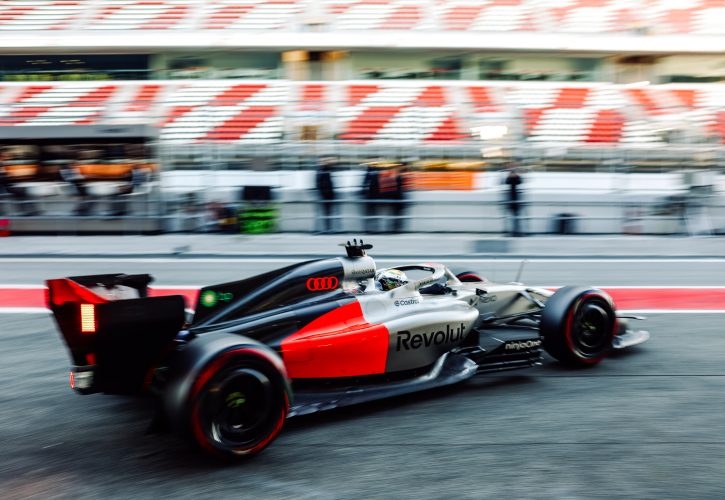
Audi's R26 debut hit by major reliability issues
Audi’s entry into F1 — completed with its takeover of the Sauber team and the launch of the R26 — began with a Barcelona shakedown followed by a three‑day closed test that produced 240 laps (about 1,117 km). The R26 retained substantial Sauber DNA but ran an Audi power unit. Both drivers, Nico Hülkenberg and Gabriel Bortoleto, suffered stoppages: Bortoleto halted after 27 laps with a suspected gearbox problem, and Hülkenberg stopped early because of a hydraulics fault. Audi completed 145 laps on the final day, but the 240‑lap total left the team eighth of ten by mileage — well behind the leaders and ahead only of outfits that managed as few as roughly 65 laps.
Project chief Mattia Binotto said the results produced a “very, very long list” of design and operational fixes — the largest he has seen in his career — and described the early reliability failures as expected teething problems for a new power‑unit program. The test exposed a stark mileage gap to established suppliers: Mercedes completed 1,132 laps, Ferrari 989 and Red Bull 622; Audi also ran 47 fewer laps than McLaren. Those shortfalls make improving reliability the immediate priority so Audi can increase lap count, gather technical data and unlock performance as a new engine manufacturer without customer teams.
Audi has set clear near‑term milestones, scheduling two Bahrain test blocks on Feb. 11–13 and Feb. 18–20 to validate fixes and iterate on the R26 ahead of the season opener. Binotto said the work is technically demanding but actionable: the team will focus on rapid learning and race‑by‑race improvements while pursuing a long‑term ambition to compete for world titles by 2030. Significant reliability and development challenges hampered the debut, but the defined testing roadmap is intended to resolve issues before the start of the championship.
New Player Signup Bonuses