




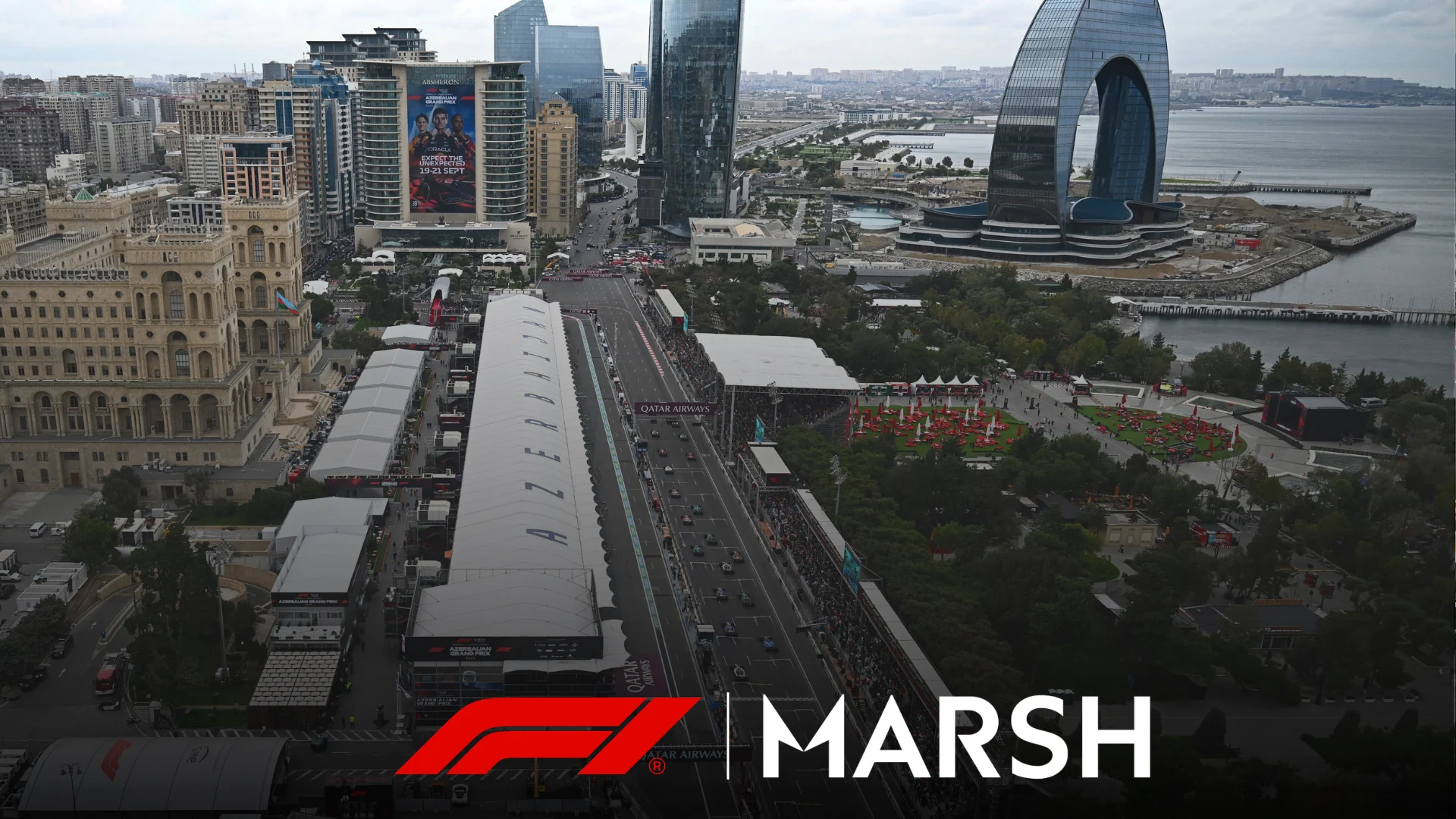
Baku Grand Prix tests energy use, tire strategy in Azerbaijan
NXTbets Pro | Published On: September 24, 2026
Baku circuit demands
Baku City Circuit asks teams to solve a sharp balance test. The 6.003-km street track rewards straight-line speed, but it also punishes any loss of grip through the corners and any mistake with brake cooling. Its 2.2-km main straight gives cars room to stretch out, then the short run to Turn 1, just 111 meters from the line, sends them straight into a heavy braking zone. That mix makes setup work tricky from the start. Teams need pace on the straight, stability in the slower sections and brakes that can handle repeated heavy stops. Wind and gusts add another layer. They can affect balance on the long straight, unsettle cars under braking and make the street circuit harder to read from one lap to the next. The surface is smooth and the tyre wear is low, which changes the race picture again. That shifts the focus toward getting the car in the right operating range at the right moment. The 2026 regulations could make the Turn 18-19 sequence even more important if drivers cannot take it flat-out, which raises the value of precision through the final part of the lap. In Baku, speed alone does not solve the problem. The cars need to stay efficient down the straight, disciplined under braking and strong enough in the corners to avoid bleeding time in the places where the circuit narrows the field.
Tyre strategy and qualifying
Tyre choice points toward a race built around timing and control. Pirelli is bringing the C3, C4 and C5 compounds to Baku, with C3 as Hard, C4 as Medium and C5 as Soft. That range gives teams options, but the circuit’s low wear profile points toward a likely one-stop race. The harder part comes before the flag drops. Tyre preparation is especially difficult in qualifying, and lock-ups into the heavy braking zones are expected to matter. Drivers need to bring the tyres up quickly, keep them in the right window and still avoid overcooking them on the first laps. That is a narrow target at a street circuit where a mistake can punish a whole run. Baku also creates unusual pressure on energy deployment. The long straight demands heavy battery use, while lower-power running elsewhere and the MGU-K delay can create timing issues. That means drivers must think about the lap as a sequence of energy management problems, not just a single push lap. McLaren racing director Randy Singh said Baku has historically been qualifying-heavy, and he pointed to stronger slipstreaming and more overtakes in the 2026 season as factors that could open more passing chances there. Singh also said early qualifying laps and race timing become especially important when red and yellow flags appear. That is the kind of circuit where a clean lap can shape the whole weekend, and a mistimed run can leave a driver chasing the race instead of controlling it.
Baku history and records
Baku’s past explains why the circuit still draws attention every season. The track debuted in 2016 and has been used every year except one, so teams know the layout even if the challenge keeps changing. Charles Leclerc holds the lap record there with a 1:43.009, a benchmark that reflects how quickly the right package can click on a street circuit that rewards commitment. The history also includes races that flipped from order to chaos in a hurry. Daniel Ricciardo won a chaotic Azerbaijan Grand Prix after multiple Safety Cars, collisions, penalties and restarts, a reminder that Baku can reward survival as much as raw pace. Lando Norris also showed how specific the strategy puzzle can become there, winning with a long run on hard tires before switching to fresher medium tires late in the race. That kind of approach fits the circuit’s low wear and the importance of choosing the right moment to attack. It also underlines why tire life and race control matter so much in Baku. The track can be fast, but it can also be unforgiving when traffic, interruptions or a bad call change the shape of the race. That mix makes Baku one of the clearest tests on the Formula 1 schedule. Teams need speed on the straight, patience in the strategy and clean execution when the pressure rises.