
Boost Button Replaces DRS, Makes Overtakes Energy-Driven
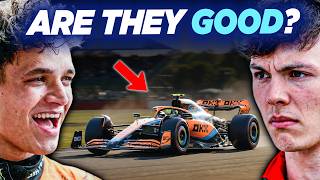
A closed five-day shakedown in Barcelona gave teams their first practical look at the 2026 regulation changes. Lando Norris drove McLaren’s MCL40, describing a slimmer, lighter chassis with active aerodynamics and an approximately 50/50 electric–biofuel power split. Peak electrical output was reported at about 350 kW, and Norris warned that full battery deployment could lift straight-line speeds to roughly 380 kph but would likely drain the pack by the end of a long straight.
On track, the cars produced stronger forward G‑forces and reduced cornering grip, which altered balance until drivers adjusted over a few laps. The new push-button Boost (Overtake) Mode replacing DRS makes overtaking dependent on finite battery reserves and recharge cycles rather than solely aerodynamic tow.
Those changes carry clear strategic and tactical implications. Battery deployment limits, kilowatt caps and defined timing windows will force split-second energy management that affects qualifying, overtaking and race strategy. Norris warned this could increase on-track “chaos,” producing momentum swings, defensive uses of Boost and what he called “yo‑yoing” overtakes followed by recovery laps. Mercedes sophomore Kimi Antonelli called it “chess at speed,” saying anticipating rivals and instant energy trade‑offs will become core racecraft; he added that juniors who have adapted quickly to the new cars may cope sooner, though established drivers will adapt as well. Teams therefore face a steeper operational burden as drivers must manage on‑car systems in real time as well as wheel‑to‑wheel skills.
Practically, teams will use pre‑season sessions to develop deployment and recharge strategies so performance during key qualifying laps and race maneuvers is not compromised. Bahrain testing and the season opener in Australia are the next critical checkpoints. Engineers and strategists will continue to refine timing windows, recharge profiles and active‑aero responses as track data accumulates. The combination of greater electrical power, active aerodynamics and system‑dependent overtaking means on‑car systems and strategy will play a larger role across the 2026 season, changing how races are planned and executed.
New Player Signup Bonuses