
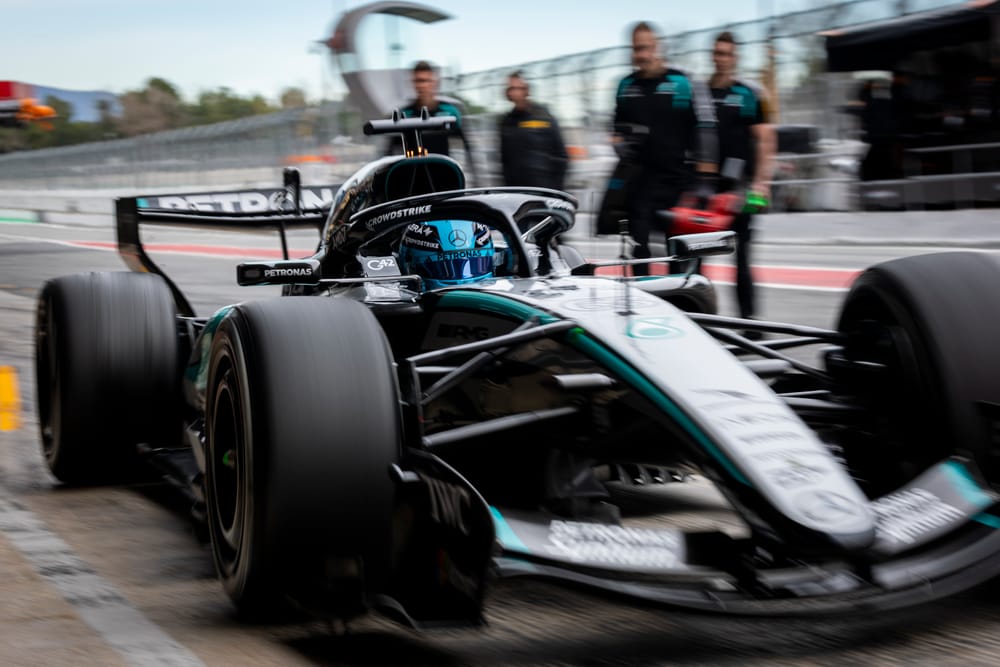
Compression Theory Sparks Paddock Strain Before Melbourne
A technical theory published earlier this month by Auto Motor und Sport (AMuS) generated a pre‑season controversy by suggesting Mercedes — and separately Red Bull Powertrains — may have found a way to meet the FIA’s new 16.0:1 geometric compression cap in the garage while producing higher effective compression on track. AMuS reported Mercedes used 3D‑printed pistons to raise static compression to about 17:1. It also described a tiny one‑cubic‑centimeter pocket linked to the combustion chamber near the pre‑chamber spark plug that would stop expanding at operating temperature and thereby increase running compression; AMuS said Red Bull Powertrains had identified the same underlying principle but had not found a reliable implementation. Reported estimates of the on‑track gain varied by outlet — AMuS suggested roughly 10–13 hp while other reports put the figure closer to 15–20 hp — equivalent to about 0.2–0.3 seconds per lap.
The allegation is an unconfirmed technical theory, but it focused attention on Article C5.4.3, which currently measures compression “at ambient temperature,” and prompted rival manufacturers led publicly by Ferrari, Audi and Honda to press the FIA and the Power Unit Advisory Committee (PUAC) to change measurement procedures so compliance would be checked with engines hot or via in‑use sensors. Teams discussed the issue at a late‑January technical experts meeting and then in subsequent PUAC sessions; formally changing the written procedure would require support from four of the five engine manufacturers plus the FIA and Formula One Management.
Red Bull’s position was viewed as pivotal to securing that supermajority, and sources indicated it may back closing the loophole to avoid leaving Mercedes with a pre‑season advantage. Mercedes team principal Toto Wolff publicly defended the work as legal and transparent, pointing to the team’s recent five‑day shakedown and apparent reliability as evidence of legitimacy.
The FIA initially measured engines cold and declared them compliant, but Autosprint recently reported the governing body plans to retest all V6 power units under hot, running conditions starting at the Australian Grand Prix to verify compliance in race‑like conditions. With the March 1 homologation deadline approaching, rapid regulatory change before Melbourne looks difficult, so any substantive rewrite is likelier to be deferred into 2027. The dispute centers on measurement methodology and enforcement rather than a new hardware ban, but it has raised political and sporting tensions in the paddock and risks overshadowing the start of the season.
New Player Signup Bonuses