
FIA narrows automatic penalties, widens steward discretion
The FIA published updated driving-standards and penalty guidelines ahead of the 2026 Formula 1 season, presenting the document as guidance to inform stewards rather than as formal changes to the sporting regulations. The revisions build on a 2025 review and follow a meeting with teams and drivers in Qatar, seeking to inject more flexibility and “common sense” into stewarding by narrowing automatic penalty‑point triggers to truly dangerous, reckless or apparently deliberate actions and by giving stewards broader discretion to judge incidents in context.
The guidance makes clear that minimal contact described as a touch or “kiss” may attract no penalty, while for especially severe or “very extreme” deliberate or reckless collisions stewards may now impose the harshest sanctions, including disqualification or a suspension from the next race. Existing tools such as the 10-second stop-and-go penalty and the four penalty-point threshold remain available, though no driver received that specific sanction during the 2025 season. The document also sets measurable overtaking and track-limit criteria: inside moves should have the overtaking car’s front axle at least alongside the other car’s mirror prior to and at the apex, outside moves should have the overtaker’s front axle ahead at the apex, and moves must be driven in a controlled way within track limits.
Chicanes and S‑bends are to be judged element-by-element, white lines count as track while curbs do not, and qualifying and Sprint laps that gain a benefit will be deleted with a “three strikes” approach applied in Sprint and Race sessions subject to stated exceptions. Rules on defending after leaving the track were tightened so that a car that cuts a chicane or leaves the track and then rejoins in the same position will generally be considered to have gained a lasting advantage and should concede the place, with final decisions remaining at stewards’ discretion. The guidance also clarifies investigatory standards—lock-ups will not automatically be treated as loss of control, temporary loss of control may stem from avoidance or physics, and apex lines can legitimately vary between drivers and attempts—while yellow-flag enforcement was given rough benchmarks (about 5% slower for single waved yellows and ~15% for double waved yellows). Stewards will factor tire condition, fuel load, energy deployment and track and environmental conditions when judging compliance.
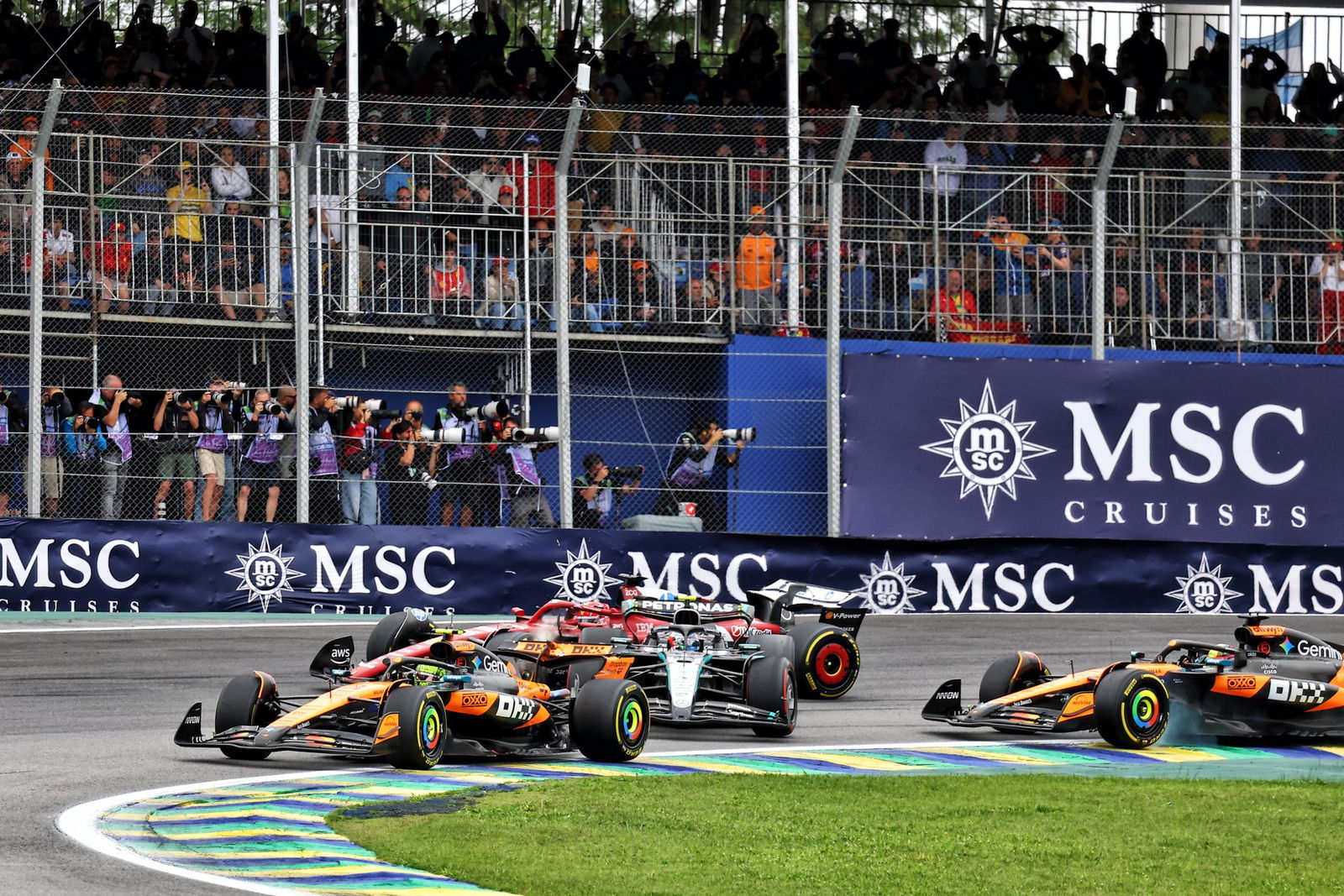
The changes were prompted in part by controversial 2025 stewarding decisions, notably the Brazilian Grand Prix where Oscar Piastri received a 10-second penalty and two penalty points for a Turn 1 collision that drew criticism from Carlos Sainz, and the package includes caveats and explicit overtaking criteria intended to reduce automatic penalties and make stewarding more consistent and context-sensitive going into 2026. Notable 2025 examples cited in the update include Max Verstappen, who was the only driver to receive as many as three penalty points for contact in 2025 and who served a 10-second penalty at the Spanish Grand Prix for colliding with George Russell without stewards deeming the collision deliberate or reckless.
New Player Signup Bonuses