




FIA weighs spray, standing water and visibility before wet race starts
NXTbets Pro | Published On: October 9, 2026
FIA wet-race checks
The FIA weighs standing water, spray and visibility before it sends Formula 1 cars into wet races, and Formula 1’s own assessment is blunt: true rain racing is fading because modern cars throw up so much spray that drivers can barely see. The issue has worsened as F1 cars have gained more downforce, which only adds to the cloud of spray hanging in the air. That leaves officials with a safety call built around what they can see and what the drivers can tell them. The FIA studies the amount of standing water, measures how much spray the cars are creating and watches visibility from the cockpit level. It also listens to drivers before it decides whether conditions are safe enough to race. Formula 1 has made clear that two obvious fixes do not solve the core problem. Reducing electrical power does not restore sight lines. Changing aerodynamics does not clear the spray. The result is a tighter and more cautious standard for wet-weather racing than the sport once used, one that puts visibility ahead of spectacle when the track turns into a moving wall of water.
Safety lessons
Formula 1’s approach to rain has been shaped by safety lessons that forced the sport to rethink where the limits sit. Jules Bianchi’s death in 2014 helped drive changes across the series, and the message from that period still hangs over every wet-race decision. Heavy standing water at Sepang gave another example of how quickly conditions can cross the line from difficult to unsafe. There, organizers held the grid before the race started because the track had too much water on it. That kind of delay shows how the FIA now treats wet races as a balancing act, not a simple green-light decision. Officials are not just looking for rainfall. They are looking for whether the track can carry cars, whether spray will blind the field and whether the drivers believe the conditions still allow them to race with any control. The rulebook is only part of the picture. The sport has learned that the visual problem can outlast the rain itself, and that standing water can make the start of a race more dangerous than the laps that follow. Sepang and Bianchi’s legacy both point to the same outcome, a tougher standard for letting the field run when the weather turns severe.
Driver views
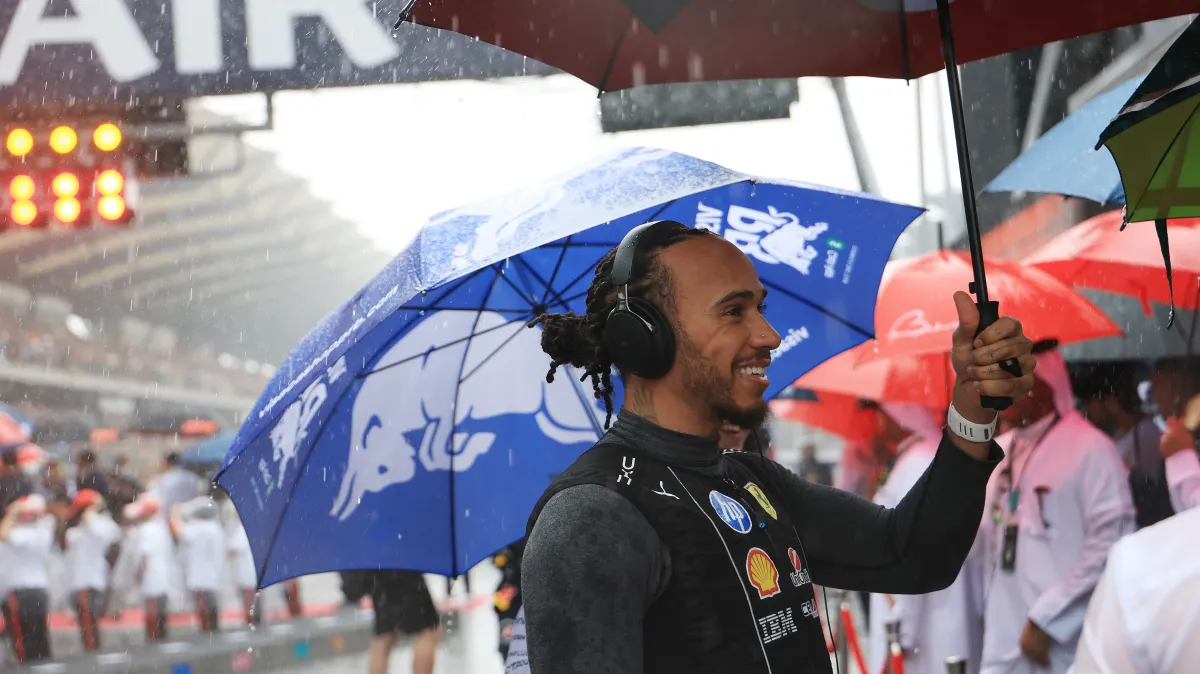
Lewis Hamilton said younger Formula 1 drivers are becoming “more and more cautious” about racing in wet conditions, while veteran drivers are more willing to go out in extreme rain. He acknowledged that the risk rises when the track is soaked and visibility drops, but he also said those are the moments when a driver can make the biggest difference by relying on instinct and feeling the car. Hamilton pointed to two of his best-known wet-weather wins, the 2007 Japanese Grand Prix and the 2008 British Grand Prix, as examples of how much can still be decided when conditions are at their worst. Carlos Sainz backed the FIA’s timing, saying the governing body got it right on when to go racing and that the rain gave him a better chance to do something. Isack Hadjar offered a different caution, saying the new power units and intermediate tires made wet driving more difficult and unpredictable. Together, those views reflect the modern wet-race dilemma. The cars are faster and more advanced, but the spray they create makes the race harder to see and harder to judge. The drivers know the margin is thin, and the FIA is left to decide when that margin disappears.