




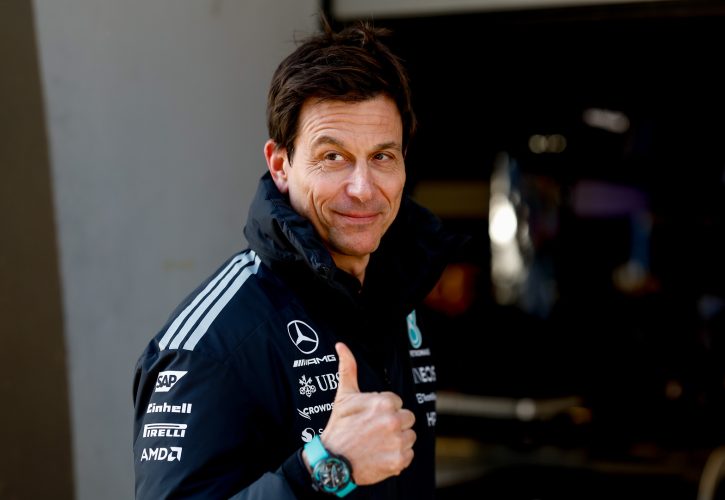
Mercedes brings few Miami upgrades, targets Canada
The championship resumed in Miami after an unexpected five-week break that followed the cancellation of the Bahrain and Saudi Arabian rounds. The FIA introduced targeted measures at Miami to help flat-out qualifying laps after the switch to a 50% electric hybrid formula, to reduce unwanted closing-speed differentials, to curb so-called “superclipping” and to improve wet- and start-safety. F1 CEO Stefano Domenicali said the changes were intended to encourage more overtakes. Mercedes team principal Toto Wolff called the adjustments an “evolution” and said officials were “acting with a scalpel.” Organizers and teams warned some technical effects, especially those linked to energy-harvesting deployment, may not become apparent until later rounds such as the Canadian Grand Prix (May 22-24).
Teams used the five-week development window to push rival upgrade programmes in different directions, making Miami a high-stakes technical crossroads. Mercedes, which had won the opening three races and the Shanghai Sprint, brought a deliberately limited package to Miami and prioritized a larger upgrade targeted for the Canadian Grand Prix. Mercedes staff said they had brought “barely” any upgrades and expected roughly a three-tenths buffer. Antonelli said that approach would give rivals clearer signs of how long Mercedes’ dominance might last. Commentator Jolyon Palmer warned Mercedes risked “standing still” in the development race.
Ferrari and McLaren moved aggressively. Ferrari introduced a substantial update in Miami and aimed to use the first additional development upgrade opportunity window to secure engine upgrade chances. McLaren split its upgrade programme and promised a “completely new car” for Miami. Ferrari driver Lewis Hamilton said he felt “fired up” for the restart but warned his team remained down on power compared with Mercedes and “probably the Ford” power unit, making the deficit hard to close without new engines. Commentators such as Martin Brundle predicted an “absolutely wild” three-way fight among Ferrari, McLaren and Mercedes.
The weekend also carried political and regulatory stakes. Officials said they would soon decide whether any of the five power-unit manufacturers would receive catch-up upgrades, a process that has sparked debate involving Wolff and Red Bull’s Laurent Mekies. Wolff and others suggested the rule and energy tweaks were likely to tighten the field and produce a “stronger spectacle,” while some teams and observers warned the fixes may not fully restore previous performance levels. Miami therefore represented an early test of whether aerodynamic updates, power-unit catch-up decisions and the FIA’s mid-season fine-tuning can meaningfully change the competitive balance and improve safety as the season moves toward Canada.