



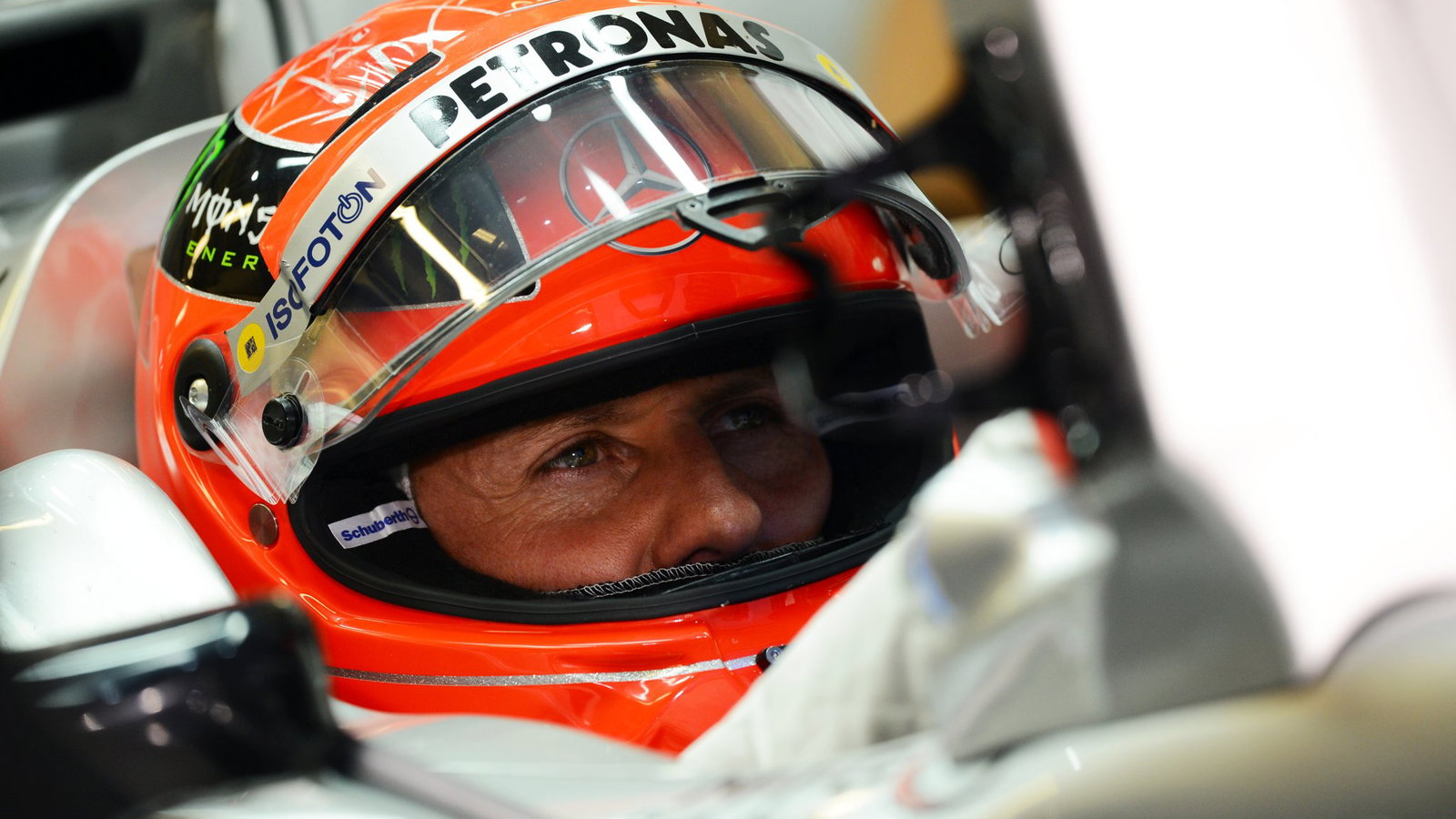
Schumacher misjudged braking in Spanish GP crash, Rosberg says
NXTbets Pro | Published On: November 16, 2026
Schumacher comeback assessment
Nico Rosberg said Michael Schumacher was not at his best during his Mercedes Formula 1 comeback because he could not adjust quickly enough to changing conditions and new situations. Rosberg framed that reduced adaptability as the main reason Schumacher fell short of the standard he had set at his peak. The comments put the spotlight on how Schumacher handled a later chapter of his career that demanded quick responses and constant recalibration.
Rosberg’s view was not a broad critique of Schumacher’s talent. He described Schumacher as a relentless mental competitor and a “mental warrior,” a driver who kept pressure on his teammate in ways that went beyond lap time. Rosberg said Schumacher remained formidable in the garage and in engineering meetings, where he used small tactics to try to unsettle him. He pointed to moments such as blocking his parking space, holding him up before qualifying and making him feel ignored in engineering meetings. Those details, Rosberg said, showed a competitor who stayed engaged in every part of the operation, even when his on-track form was not at its peak.
That mix of respect and critique runs through Rosberg’s view of Schumacher’s Mercedes years. Schumacher returned to Formula 1 in 2010 after retiring in 2006 and spent three seasons as Rosberg’s teammate. Rosberg said he was usually beating Schumacher on points and in the championship during that stretch, a sign that the rivalry tilted in his favor over time. Schumacher scored one podium during his Mercedes comeback and retired again in 2012. Rosberg’s assessment places that period in a clear frame, a veteran driver still dangerous in some areas, but no longer as complete as he had been before.
Spanish GP crash
Rosberg pointed to Schumacher’s collision with Bruno Senna at the Spanish Grand Prix in 2012 as the clearest example of the problem he saw. He said Schumacher misjudged his braking after using DRS in that incident and braked at the same point as usual, which led to a heavy crash with Senna. Rosberg used the incident to illustrate his belief that Schumacher struggled with the sort of split-second adaptation that separates a sharp race from a costly mistake. For Rosberg, the crash stood out because it fit the pattern he said he saw during Schumacher’s comeback, a driver still operating with instinct and habit but not always adjusting quickly enough when the track and race conditions changed.
The consequences were immediate. The crash earned Schumacher a five-place grid penalty for Monaco. He later qualified on pole for Monaco before the penalty was applied, leaving a sharp contrast between the speed he could still produce and the setback that followed the collision. The sequence captured the tension in Schumacher’s comeback, where flashes of his old pace coexisted with moments that invited scrutiny.
Rosberg’s comments cast the Spanish Grand Prix crash as an example of the adaptability limits he saw during Schumacher’s comeback. The incident illustrated his view that Schumacher did not always adjust quickly when conditions changed.
Mercedes rivalry tactics
Rosberg said the Mercedes rivalry extended beyond the track, with routine race-weekend interactions becoming part of the contest. His account presented pressure as something that could be applied quietly, through presence, timing and discomfort in the team environment.
Rosberg said those efforts reflected a competitor who stayed alert to every opportunity to gain an edge. That approach matched the broader picture he painted of Schumacher as a mental force, a driver who kept opponents thinking even when he was not matching them at the top of the standings.
Rosberg’s account also underlined how much of the Mercedes rivalry was built on more than speed. He was describing both the opponent he faced and the methods he believed Schumacher used to test him. The picture that emerges is of a driver who kept competing in the smallest details, even as his comeback moved into its final phase.