




Williams unveils lighter chassis for Baku Grand Prix
NXTbets Pro | Published On: September 23, 2026
Williams chassis gains
Williams arrives in Baku with a lighter, newly manufactured chassis that has taken the car to at or below the minimum weight, a move that gives the team more flexibility with ballast and a clearer read on where the performance gain might come from. The Azerbaijan Grand Prix is round 15 of the 2026 Formula 1 season, but the weekend will run on Saturday to avoid a clash with Azerbaijan’s Remembrance Day on Sunday, and practice and qualifying have been moved earlier in the week. That timing shift fits a circuit that puts a premium on efficiency more than on heavy upgrade packages. Baku’s long straights reward clean aero, while its energy-harvesting demands can make deployment tougher over a lap. Colder brakes and tires also can leave drivers more exposed to lock-ups at Turn 1. Williams team principal James Vowles said the new chassis could feed future learning, and that matters in a place where small losses show up quickly. The team is not chasing a flashy one-race fix. It is looking for a lighter, more usable baseline that can help unlock the car across a wider range of conditions.
McLaren upgrade push
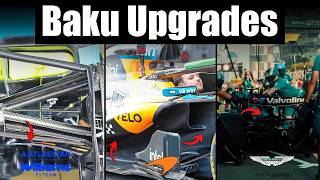
McLaren continues to push its update program in Baku, where it brought a heavily revised sidepod package for first practice and plans to bring back its low-drag H-wing for the Azerbaijan Grand Prix. The team will also test another update aimed at improving straight-line speed and low-speed performance, two areas that can define a weekend on a circuit with big braking zones and punishing acceleration out of the corners. That approach matches the demands of Baku, which asks for a car that slices through the air cleanly but still stays planted enough to work through the slower sections. The challenge is making those gains without giving back too much at the opposite end of the track. McLaren’s choice to keep layering in changes shows it is still searching for more speed rather than waiting for one large package to solve everything at once. Aston Martin is taking a different route with lighter components rather than a major update, another sign that teams see this race as one where efficiency and execution may matter more than sheer volume of new parts. In Baku, the margins are tight, and the teams that manage drag, balance and tire preparation best should have the clearest path forward.
Mercedes Ferrari Cadillac
Mercedes comes to Baku for its final race before a planned major update in Malaysia, and the team is still managing engine strategy around that future step. Mercedes and George Russell are waiting to take a final engine penalty until the planned upgrade later in the season, a sign that the team wants to line up its power-unit decisions with the next performance jump instead of spending them now. Lewis Hamilton said his Spanish Grand Prix retirement may have given him enough engine life to finish the year, which gives Ferrari one more piece of room in a long season where mileage matters as much as raw pace. Charles Leclerc is still deciding when to take a Ferrari engine penalty, and his latest Monza-spec engine is back in Ferrari’s pool. That gives the team options, but not an easy call, because the timing of any penalty can shape a weekend before the car even turns a wheel in anger. Cadillac, meanwhile, has introduced a major brake-cooling upgrade to address season-long brake issues. That makes Baku a useful test case, since the circuit’s demands on brake temperature and control can expose any weakness fast.