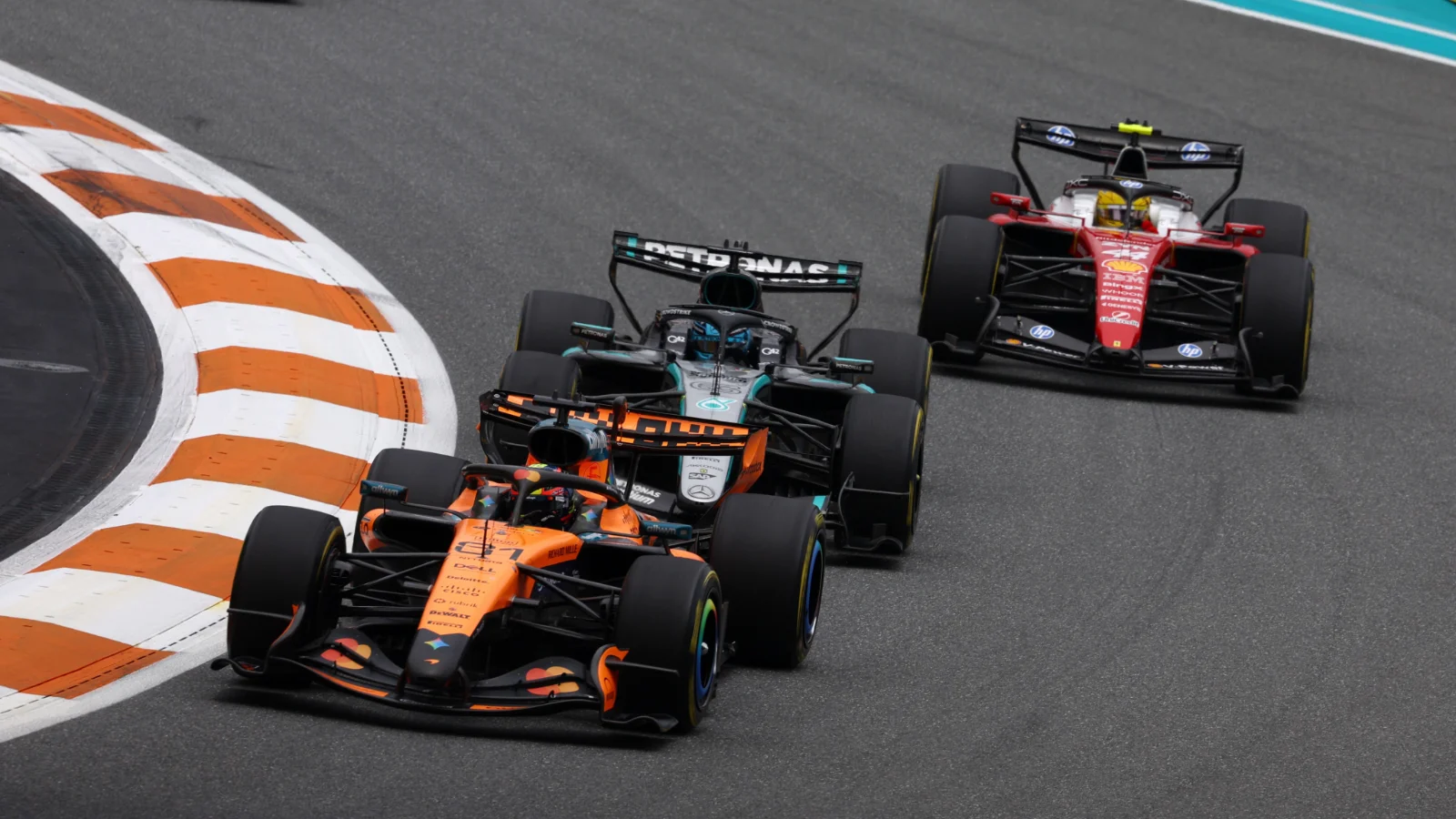
Andrea Stella urges F1 power-unit overhaul by 2028

McLaren's Andrea Stella urges F1 power-unit overhaul by 2028, pushes higher fuel flow and bigger batteries
| May 8, 2026
Power-unit overhaul push
Andrea Stella, McLaren’s sporting director, publicly pushes for a substantial overhaul of Formula 1 power units aimed at rebalancing the relative contribution of the internal combustion engine and hybrid systems. He calls explicitly for higher fuel flow to raise ICE power, far greater electrical energy harvesting — moving the harvesting figure from roughly 350 kW toward the 400–450 kW range — and larger batteries to allow teams to rebalance harvesting versus deployment. Stella frames this as a McLaren initiative to shift the performance mix ahead of the next rules cycle and asks that revised power-unit hardware and the associated regulatory package be finalized within two years, effectively by mid-2028. The appeal combines technical specificity with a clear timetable: it is not a general plea for “more power” but a set of concrete hardware and rules changes that McLaren wants considered and locked in ahead of the next generation of cars.
That request explicitly raises the power contribution of both the ICE and the hybrid components, rather than substituting one for the other. By seeking increased fuel flow, Stella aims to restore more of the raw thermal power the ICE can deliver, while the simultaneous call for much larger electrical harvesting and battery capacity intends to ensure hybrid systems remain vital and potentially more deployable during a lap. The two elements are linked: greater harvesting and storage capacity can change strategic choices around when teams deploy hybrid power, and higher ICE output alters baseline lap times and engine mapping approaches. McLaren’s public position therefore reads as an attempt to reset the engineering trade-offs that have shaped recent power-unit development, and to do so on a schedule that would meaningfully influence the next rules cycle rather than a distant, open-ended future debate.
Implementation and constraints
Multiple sources and technical analysts push back on how quickly or easily those hardware changes can be delivered, and their objections center on lead times and the integrated nature of chassis and power-unit design. Increasing fuel flow is not an isolated change: it tends to necessitate larger fuel tanks to provide equivalent race distance, and larger tanks commonly require chassis redesigns and packaging revisions. Manufacturers and teams have largely planned to retain their 2027 chassis, a commercial and development decision that reduces the available runway for rolling major architectural changes into cars built for the next cycle. Given that reality, analysts warn that substantive hardware changes with the kind of knock-on effects Stella describes are unlikely to be meaningfully implemented before 2028.
Those practical constraints underscore the difference between regulatory desire and engineering feasibility. The timeline Stella requests — finalizing revised power-unit hardware and rules within roughly two years — compresses design, homologation and integration tasks that normally span multiple seasons. The interdependence of fuel system size, tank placement, battery capacity and cooling architecture means teams cannot treat any single modification as plug-and-play. If manufacturers and teams proceed with a fixed chassis concept for 2027, they constrain options for larger tanks and reworked packaging that would accompany raised fuel flow. The result is a political and technical negotiation: governing bodies and engine manufacturers must weigh whether to pursue the kind of hardware reset Stella advocates and, if they do, how to manage the lead time so teams can adapt without compromising planned chassis programs.
The wider conversation around power-unit direction also includes broader tonal signals from the sport’s leadership and drivers. FIA president Mohammed Ben Sulayem signals interest in exploring a return to V8 engines in the next rules cycle, a comment that aligns with the general theme of reassessing ICE prominence. Meanwhile, McLaren driver Lando Norris offers a lighter note in public discussion, joking that teams should consider “getting rid of the battery.” Those statements do not alter the core technical hurdle: moving fuel flow and harvesting targets requires coordinated rule changes and hardware development that touch multiple suppliers and the aerodynamic and structural design of the cars. Stella’s proposal therefore functions as both a technical brief and a strategic push — it sets out specific targets and a deadline while forcing a realistic accounting of whether the sport’s current development timelines, commercial planning and technical constraints can accommodate the scale of change McLaren requests.
Read The Betting Guide: SMX Betting Guide
New Player Signup Bonuses