


Antonelli got presidential welcome after Formula 1 title
NXTbets Pro | Published On: November 14, 2026
Mattarella welcome
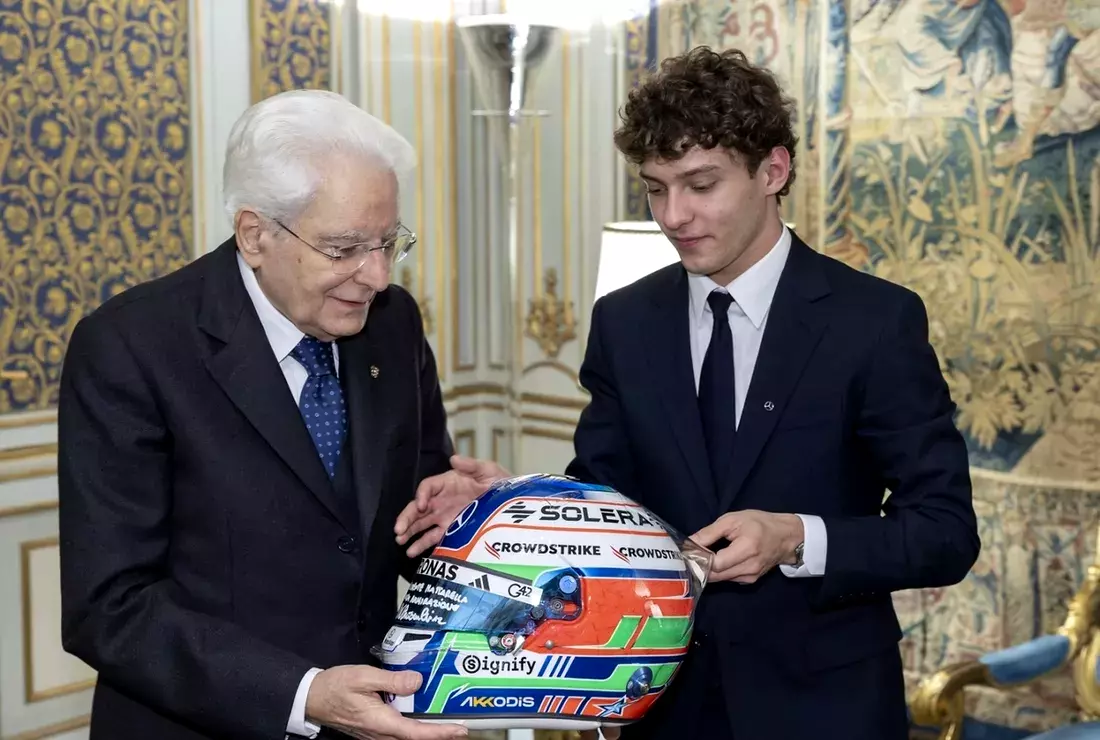
Italian President Sergio Mattarella received Kimi Antonelli and his family at the Quirinale Palace in Rome, and the visit put the champion in front of the country’s top office soon after his Formula 1 breakthrough. Antonelli arrived with one of his racing helmets, signed on the visor, and the gesture gave the meeting a personal touch that matched the scale of the achievement. The title made him the first Italian driver to win Formula 1 since Alberto Ascari, a marker that carries real weight in a country with a long memory for motorsport success. Mattarella said Antonelli’s run had renewed his interest in Formula 1, a sign that the championship had already reached beyond the paddock and into the national conversation. The president also responded positively when Antonelli invited him to attend a race, with Monza among the possibilities, and the exchange suggested the title had opened doors well beyond a trophy presentation. The visit came after Antonelli clinched the championship at the Mexico Grand Prix with four races to spare, a finish that left little doubt about the strength of his season. It also framed him not only as a race winner, but as a figure who had already become part of Italy’s sporting identity. The scene in Rome carried the tone of an official salute, but it also looked like the kind of reception that follows a breakthrough moment. Antonelli did more than win a title. He gave Italy a new reference point in a sport where the country had waited a long time for its next champion.
San Siro tribute
Antonelli received another strong homecoming at San Siro, where the crowd greeted him with loud chants during Italy’s 3-1 Nations League win over France in Milan. About 70,000 people filled the stadium, and the response turned a match night into a public celebration of his title. It was Antonelli’s first home reception since he sealed the championship in Mexico, and the timing made the ovation feel even more pointed. Before kickoff, he received a custom Italy shirt with his No. 12 and the initials AKA, a simple tribute that tied him to both the national team and his own identity. The moment grew louder when he appeared on the big screen and reacted with a brief, astonished, “Wow!” The crowd kept chanting his name, and Antonelli said later he was moved to tears by the reception. That reaction said as much about the setting as the applause itself. San Siro is built for collective noise, and on this night it gave Antonelli the kind of welcome reserved for a figure who had broken through in a big way. The stadium tribute also broadened his title celebration beyond racing. His championship had already drawn attention in the motor racing world. At San Siro, it crossed into the wider sporting culture of Italy, where the cheers came from football fans who understood the value of a homegrown champion. The scene gave Antonelli a second victory lap, this time in front of a crowd that had come for soccer but stayed for a salute.
Formula 1 demands
Antonelli also used the spotlight to describe what Formula 1 asks of a driver physically, and his comments showed why a title run in the sport takes more than speed and talent. He said the racing is physically demanding and that he loses about a couple of kilograms during a Grand Prix. That detail captured the strain of the job in plain terms. Drivers spend long stretches under heat and pressure, and the physical cost shows up even after the race ends. Antonelli said he cools down in a tub of cold water after races, a routine that points to the recovery work that follows every Grand Prix weekend. The championship had brought him praise and recognition, but his own description of the sport kept the focus on the day-to-day grind behind the results. That matters because his title did not arrive through a single flash of speed. He built it over a season, and he did it through the day-to-day demands of Formula 1. The scale of that accomplishment makes the physical side of the sport easier to understand. Every race asks for concentration, strength and recovery, and Antonelli’s comments put those demands in the open. His championship had already given Italy a new star, and his words about the physical toll of Formula 1 explained how that star was made. The helmet at the palace, the chants at San Siro and the cold-water recovery after races all pointed to the same thing. Antonelli had become a champion in a sport that demanded total commitment, and he had done it with the country watching closely.