



Mexico City Grand Prix faces high-altitude test at Autodromo Hermanos Rodriguez
NXTbets Pro | Published On: October 29, 2026
Altitude challenge
The Mexico City Grand Prix asks Formula 1 teams to solve a rare problem before they can even focus on pace, because the Autodromo Hermanos Rodriguez sits more than 2,200 meters above sea level. That makes Mexico City Formula 1’s highest circuit, and the thin air changes the racing equation. Air density drops about 20%, along with downforce and cooling. Brakes, engines and tires all feel the strain. The lack of cooling adds to the challenge, while reduced drag is part of the trade-off. Williams trackside engineer Paul Williams said the event will bring unusual technical and strategic challenges, with high altitude reducing downforce and drag while complicating cooling, turbo boost and energy deployment. He said teams will likely need maximum-downforce setups, and that is only the beginning of the trade-off.
Circuit layout
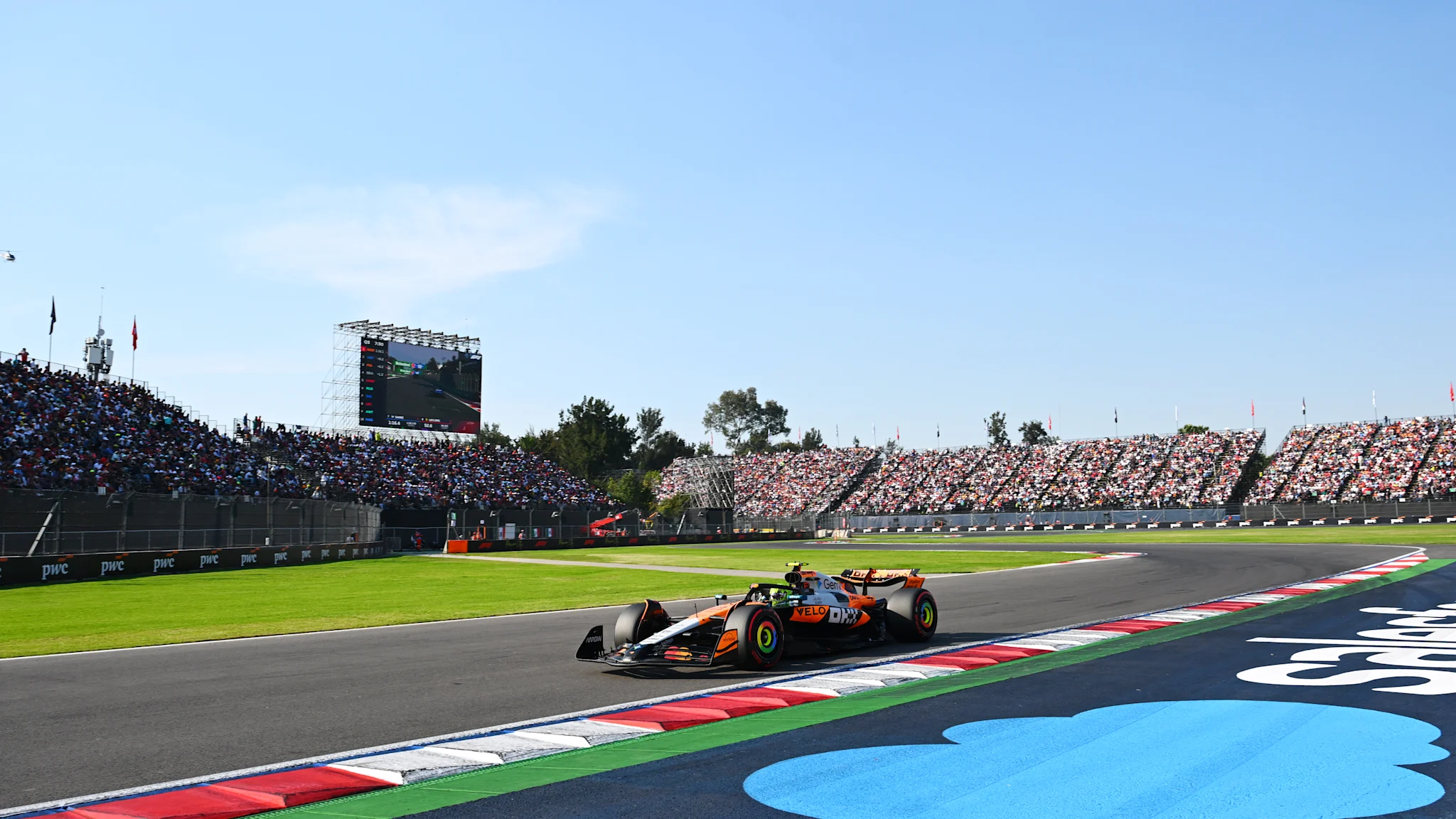
The lap itself adds another layer of difficulty. The circuit is 4.304 kilometers long, has 17 turns and is run over 71 laps for a total race distance of 305.354 kilometers. It also includes three Straight Mode zones, which gives engineers more to think about when they decide how much drag to give up for cooling and top speed. The overtaking detection point is at Turn 14 and the activation line is at Turn 17, and overtaking is difficult at this circuit. The Foro Sol stadium section remains one of the lap’s most important and difficult sequences because it demands low-speed grip and careful tire management. The circuit was built in 1959 and returned to the Formula 1 calendar in 2015 after safety-related changes. Valtteri Bottas holds the lap record, a 1:17.774 set in 2021.
Strategy and tires
Paul Williams said the race should force teams to weigh cooling against drag, predict traffic and think through one-stop options, with a two-stop race likely. He also said resurfacing between Turns 16 and 1 and from Turns 7 to 16 could change grip and tire behavior. Teams expect to be cautious with Friday data because the circuit rubbers in heavily. That uncertainty matters even more with the 2026 tire set, C3-C4-C5, because the allocation is expected to bring medium-to-hard tires back into play while soft tires remain raceable. Williams said qualifying warm-up will be especially important on all three compounds, and he warned that degradation and graining could change the race picture fast. Safety car interruptions could also alter strategy and outcomes, which adds another layer of unpredictability to a race shaped by altitude. Sergio Perez is set to make his 300th Grand Prix start at his home race.