




Analysts: Mercedes W17 exploited loophole to boost power
Analysts concluded Mercedes' W17 had exploited a loophole in the technical rules to produce a superior power unit and hybrid this season, yielding a straight-line and energy advantage over Ferrari that was clearly evident in Montreal qualifying and the Sprint. The advantage has translated into a sustained on-track performance lead since the opening round in Australia, and because customer teams like McLaren also run Mercedes power units, the benefit has spread across the field — after the first set of upgrades in Miami, McLaren moved clearly ahead of Ferrari in outright performance, aided by Mercedes PU-related work.
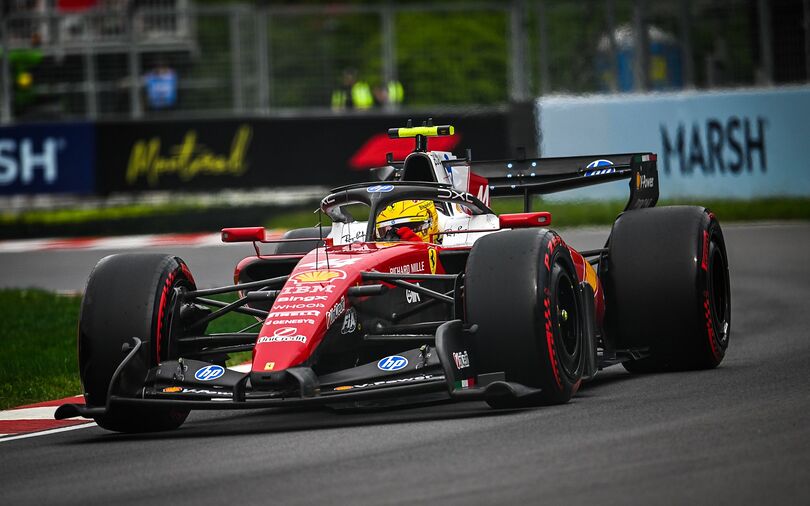
The Montreal data laid the gap bare. F1Technical overlay and speed-trace comparisons showed George Russell consistently producing stronger exits and higher top speeds than Lewis Hamilton, with Russell setting sprint pole at 1:12.965 to Hamilton's 1:13.326 — a 0.361-second margin. Russell topped out at 333 km/h on the flying lap to Hamilton's 330 km/h and reached 300 km/h 11 meters earlier than his teammate. Mercedes' hybrid delivery gave Russell a 2–3 km/h advantage from Turns 5–7 and a cumulative 0.19-second lead by the Turn 8 braking point, with his superior exit traction contributing another 0.12-second acceleration advantage. By the end of the lap, Hamilton's battery was depleted: his speed was 11 km/h lower than at lap start while Russell finished 1 km/h faster, stretching the margin to its final 0.361 seconds. F1Technical concluded Hamilton had suffered electrical deployment fade and run out of usable energy on the short run to the finish, costing him over a tenth versus Russell. Compounding the loss, Hamilton effectively had only one competitive late Q3 run while Russell completed two, and similar battery-depletion patterns were visible in the earlier Sprint shootout.
Analyses also highlighted Ferrari's broader power-unit and battery-efficiency deficit, with the cars arriving at the final corner carrying significantly less usable energy than McLaren and Mercedes — a gap estimated to contribute around 0.3 seconds of race pace to Mercedes. Telemetry and sector analysis showed Hamilton and the Ferraris were stronger through slow and medium-speed corners and carried higher apex speed through the first two chicanes and out of Turn 7, with Ferrari retaining an edge in medium-speed corners and rotation. Commentators framed the revelations as a story about deployment and straight-line power rather than driver error, with the Sprint reinforcing Ferrari's weaker race pace relative to McLaren and Mercedes. A wet-race forecast, observers noted, could reshuffle the order on race day and potentially narrow the gaps the data had exposed.