




FIA blames governance limits for delayed 2026 F1 engine changes
NXTbets Pro | Published On: August 3, 2026
Governance limits at FIA
The FIA says its hands were tied on Formula 1’s 2026 engine rules because the governance structure around power-unit changes required wider approval. FIA single-seater director Nikolas Tombazis said it was a shame the governing body could not move earlier on the regulations, but he made clear that the FIA could not act alone. Formula One Management and at least four of the five manufacturers had to sign off on changes, and Tombazis said those votes never came. He pointed to a system that left the FIA able to identify problems, but unable to fix them without support from the sport’s other power brokers.
That limitation became more of an issue once the FIA saw trouble in simulator data in 2022. Tombazis said the governing body had been trying for the previous two years to make adjustments, but those efforts had “failed with the governance that was in place.” The result was a delay that left the FIA reacting to known concerns instead of shaping the package sooner. Tombazis said the changes ideally should have been made years earlier. His comments framed the 2026 rules as a case where the sport understood the likely pain points well before launch, yet the decision-making structure slowed the response.
2026 rules drive complaints
Tombazis also said the FIA expected criticism around several parts of the 2026 formula. He cited the 50-50 power split, energy management, super clipping, battery management and software-driven elements as areas that would draw complaints. That prediction fit with the first half of the season’s reaction. Drivers such as Max Verstappen and Oscar Piastri voiced concerns, but Tombazis said the criticism did not stop the racing from being “pretty exciting.” He said the level of complaint was “realistically only to be expected,” which reflects a familiar tension in Formula 1. New engine rules have to satisfy manufacturers, engineers, teams and drivers at the same time, and the priorities rarely line up cleanly.
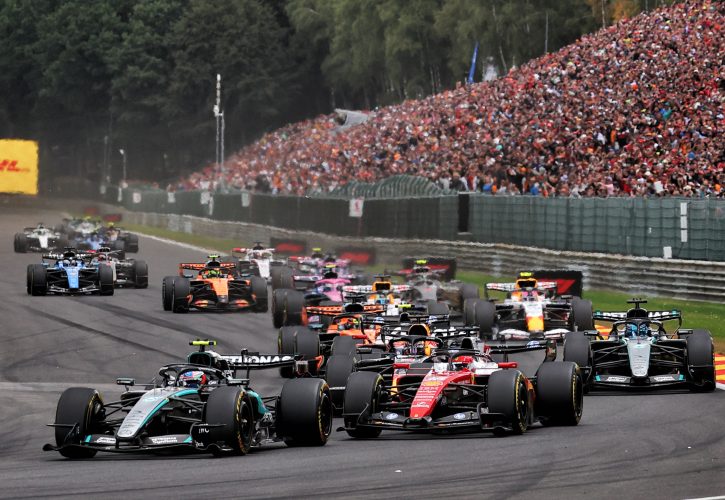
The season’s competitive shape backed up that view. Mercedes took most of the wins in the first half of the campaign, yet the races did not settle into a long string of processional runs. That matters because the debate around the 2026 rules has often centered on whether the cars will race well enough once the new power-unit format arrives. Tombazis did not present the complaints as a sign the concept had failed. He presented them as a predictable reaction to a major technical reset, one the FIA knew would trigger debate once the details went public and teams started measuring the effect in real conditions.
Miami changes and 2028 path
The FIA and Formula 1 have already moved to blunt some of the sharpest edges in the package. Emergency energy-management changes came in from the Miami Grand Prix, and further tweaks at Miami were made to reduce extreme super clipping. Those steps showed the sport was willing to intervene when the behavior of the system became too severe. Tombazis’s comments suggest the FIA viewed those fixes as necessary damage control rather than a full solution. The goal was to make the new formula more usable without rewriting the entire project. Formula 1 has also agreed to a gradual move toward a 60-40 power split by 2028, which points to a longer-term correction path built into the regulations. Tombazis said those changes ideally would have arrived earlier, but the governance framework delayed the process and limited what the FIA could do on its own.
That backdrop leaves the 2026 rules in a more complicated place. The FIA sees a set of concerns that it identified early. It also sees a sport that still wants to preserve the balance of power among manufacturers, FOM and the governing body. Tombazis’s comments make that clear. The FIA can flag issues, push for revisions and warn about what simulator data shows. It cannot force the sport through the kind of change it wants without the votes to match. For now, Formula 1 is moving ahead with a package that has already been adjusted at the edges and that will continue to evolve toward a different power split by 2028. The core message from Tombazis is blunt. The problems were seen in advance, the fixes were discussed, and the structure of the sport stopped the FIA from acting sooner.