Author Archives: PressBox

  • Kevin Thomas Jr. sweeps USAC sprint features in Arizona

    Fox No. 53 to contest 30 USAC Sprint races with Leary

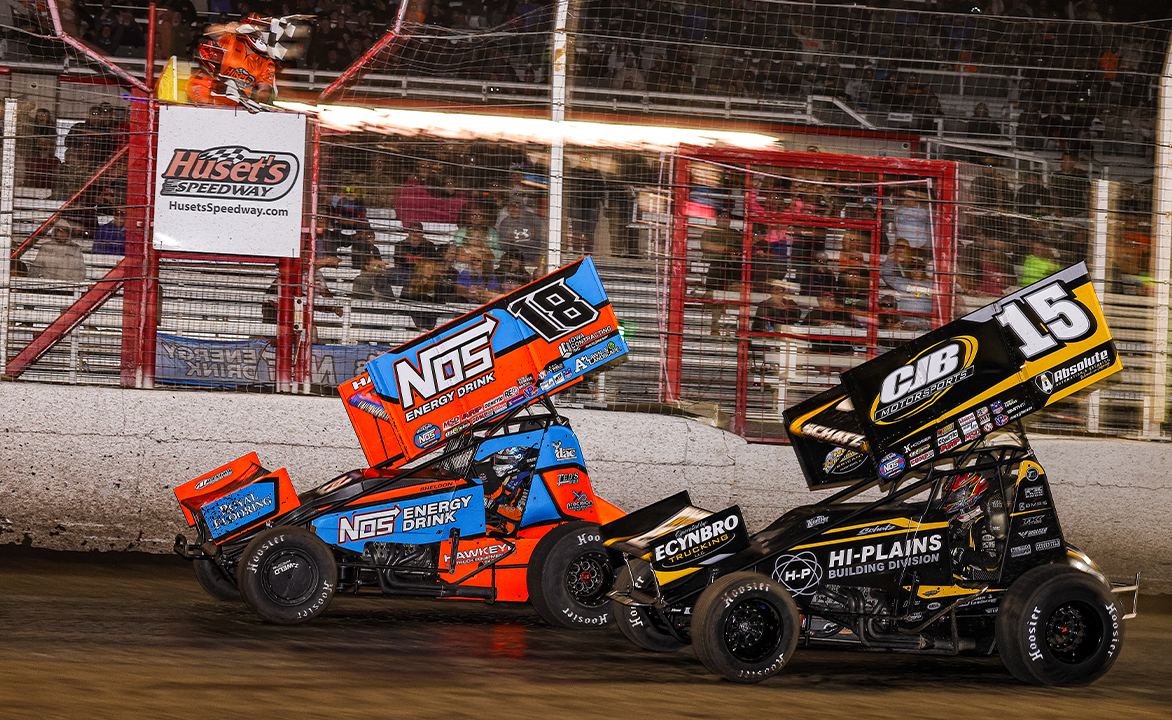
    The Fox No. 53 will contest a concentrated 30-race USAC AMSOIL National Sprint Car slate in 2026 with C.J. Leary sharing the seat for events focused in Indiana, Ohio and Illinois. Leary’s Sprint Car debut in the No. 53 is scheduled for April 3 at Red Hill Raceway in Sumner, Illinois and April 4 at Paragon Speedway in Indiana for the Chuck Amati Classic; when he is not in the No. 53 he plans to run other USAC events in a different ride.

    Leary will split his 2026 USAC program with a full-time Silver Crown ride for Team AZ-Petty-Rossi/Curb-Agajanian, piloting the No. 21 DRC/Stanton-powered car in an 11-race dirt-and-pavement Silver Crown schedule that opens May 8-9 at the Kansas State Fairgrounds in Hutchinson. Teammate Mario Clouser will drive the No. 20 DRC/Stanton-powered entry; Clouser, from Auburn, Illinois, drove for three teams in 2025, led 42 of 100 laps at the Kansas State Fairgrounds, earned his first IRP pole and compiled podiums en route to a career-best fifth in the 2025 Silver Crown standings. Team AZ confirmed primary technical support from DRC/Stanton and commercial backing from Avanti Windows & Doors, Curb Records, Pella and AMSOIL for the 2026 Silver Crown campaign.

    Leary brings strong USAC credentials to both programs: he is the 2019 USAC National Sprint Car champion, has 24 career USAC series wins and entered the announcement with a streak of 321 consecutive USAC feature starts dating to 2017, six starts short of Justin Grant’s benchmark of 327. His Silver Crown résumé includes a runner-up finish in the 2025 championship with two late-season wins at Lucas Oil Indianapolis Raceway Park (pavement) and Du Quoin State Fairgrounds (dirt).

    The Fox No. 53 program is tied to the Fox family and the Gohr Racing legacy, with longtime mechanic Galen Fox involved. The car carries 19 career USAC National Sprint Car feature wins—two by Brad Fox and 17 by Jon Stanbrough—which the No. 53 team will look to add to during the concentrated 2026 slate.

    More
  • Dirty air, aero gaps hamper Márquez as Aprilia posts 1-2

    Dirty air, aero gaps hamper Márquez as Aprilia posts 1-2

    Marc Márquez’s weekend at the United States Grand Prix at COTA was defined more by penalties, aero and injury issues than by his finishing position. A Sprint crash with Fabio Di Giannantonio earned him a mandatory long‑lap penalty — a sanction Márquez said resulted from a risky pass attempt — that cost him exactly 2.505 seconds when taken on lap 4 and dropped him to 11th early in the race. He recovered to fifth after an extended scrap with Enea Bastianini, finishing just 0.143 seconds clear of the Italian. Márquez said rivals “increase the intensity” when they race him and that Sprint mistakes and first‑lap penalties carry over to the main race.

    Aerodynamics and “dirty air” compounded Márquez’s problems at COTA. He told reporters being stuck in dirty air made it “practically impossible” to ride competitively and estimated the effect at roughly a second per lap. The race also underlined wider technical gaps: Aprilia completed a one-two with Marco Bezzecchi (who won, Aprilia’s third straight factory win) and Jorge Martin, while Ducati staff acknowledged tire-wear problems at COTA and introduced short-term Aprilia-style rear aero and leg wings.

    Ducati technical staff and analysts warned the team is playing catch-up after Aprilia’s winter step. Team principal Davide Tardozzi said further engineering updates are expected by Jerez as Ducati tries to close the gap. Tardozzi added Márquez was “not in good shape” following shoulder injuries sustained in Indonesia and will use the break before Jerez to work on his shoulder. Márquez said, “It’s me who’s missing, not the bike,” complained he lacked feel in the opening laps, that fresh tires made the Desmosedici feel “aggressive,” and that he needed six to ten laps to ride competitively. Despite showing strong mid-race pace — Tardozzi highlighted he could gain roughly eight tenths over 5–6 laps — Márquez sat fifth in the championship, 36 points adrift of the leader, and warned a turnaround was not guaranteed as he prepares to focus on starts and arm recovery before Jerez.

    More
  • Bezzecchi wins COTA GP; Razgatlioglu best Yamaha, 25s back

    Bezzecchi wins COTA GP; Razgatlioglu best Yamaha, 25s back

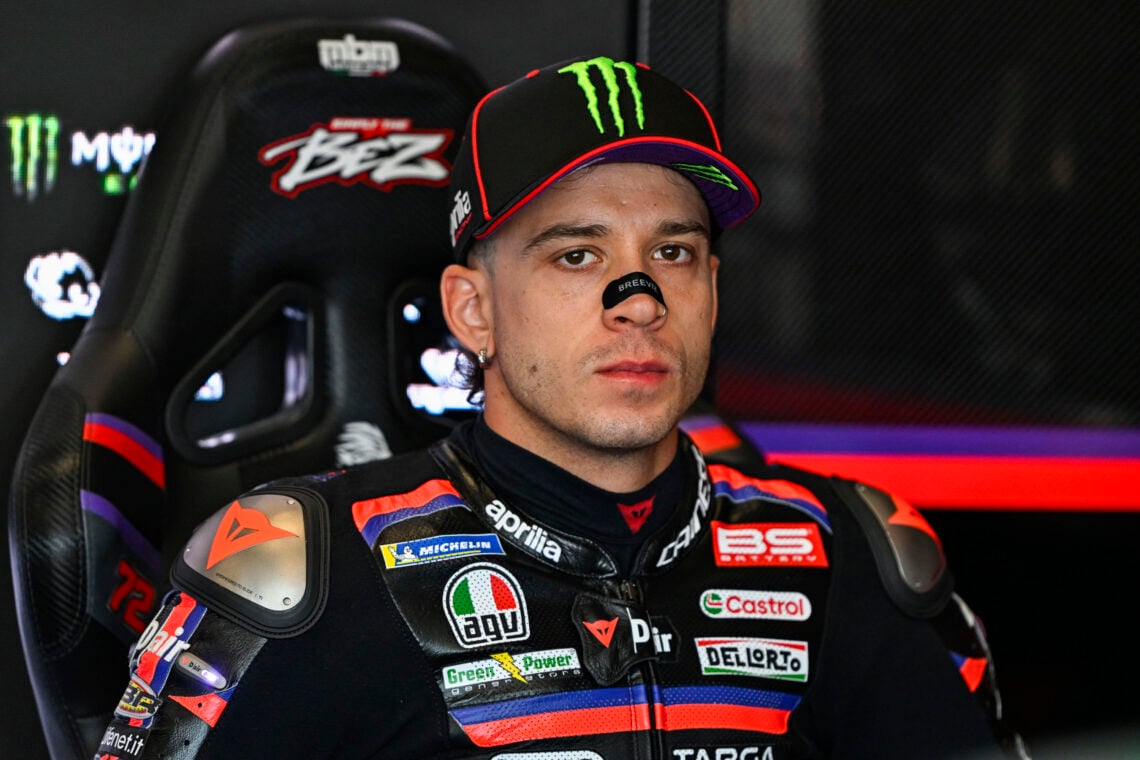
    Marco Bezzecchi won the United States Grand Prix at Circuit of the Americas on an Aprilia, while Toprak Razgatlioglu scored his first MotoGP premier-class point by finishing 15th after overtaking a fading Fabio Quartararo late in the race. “I’m happy with the point, but we were 25 seconds behind the leader,” Razgatlioglu said, underlining the roughly 25-second gap to the frontrunners and the limits of the Yamaha package.

    Razgatlioglu credited Pramac teammate Jack Miller and lessons learned on and off track for helping him finish and collect a point, saying he had adopted a calmer, smoother “Superbike” riding style that helped manage troublesome Michelin tires. He also said he learned from following Quartararo during the event and from testing with Miller, but admitted weaknesses remained, notably in early braking zones, and he matched and then surpassed his 2025 crash tally in recent rounds.

    Pramac director Gino Borsoi called the result “a morale boost,” and the team noted it was the first MotoGP championship point for the updated Yamaha M1 V4 package while stressing their ambitions remained higher and hoping it would be the first of many. Yamahas nonetheless filled the final four finishing positions at Austin, underscoring the gap to the Aprilia-led frontrunners, and Razgatlioglu praised the Circuit of the Americas and vowed to push for better results as the championship moved toward the European rounds.

    More
  • Suzuka exposes Ferrari's power-unit deficit, Vasseur says

    Suzuka exposes Ferrari’s power-unit deficit, Vasseur says

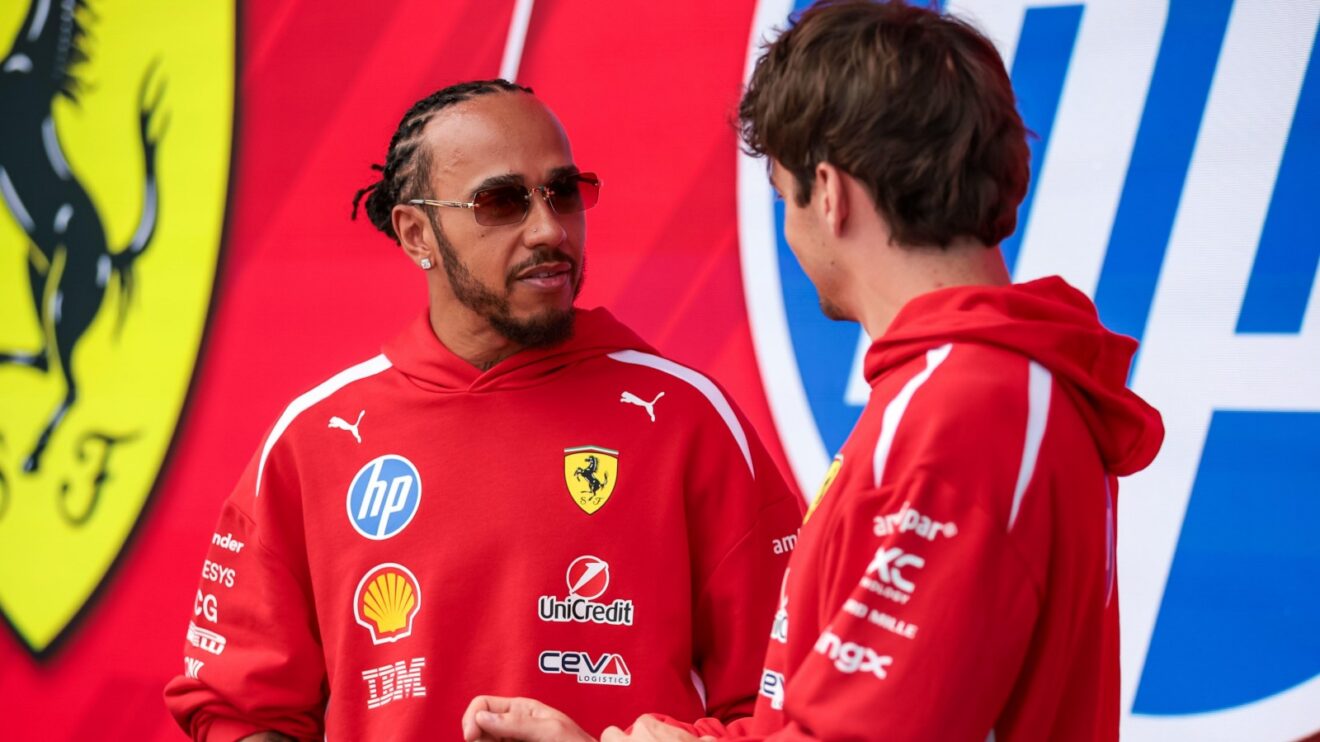
    At the Japanese Grand Prix in Suzuka, Ferrari’s straight-line speed and power-unit weakness — particularly the SF‑26’s lack of pace down the straights — were laid bare, drivers and team figures said. Charles Leclerc called the power unit “maybe our main weakness at the moment,” and Lewis Hamilton described a “really confusing” loss of power that left him struggling to defend and ultimately finish sixth. Team principal Fred Vasseur acknowledged a clear straight-line deficit and said the team must investigate whether it stems from engine power, timing/strategy or overtake-mode deployment; he and others pointed to Suzuka’s long straights as having exposed the problem.

    The on-track consequences were immediate. Leclerc recovered from early Safety Car misfortune and an early pit stop that left him in traffic to fight back past teammates and rivals and secure third, but said he had to manage his tires carefully and that the Safety Car had hurt the team’s strategy. Hamilton briefly gained places by pitting under the Safety Car but slipped from a podium position as he struggled to extract performance from the SF‑26 and lost places to rivals; he suspected his engine was down because others had more straight-line speed despite running the same car. Vasseur noted Hamilton had dropped out of “overtake mode,” which removed an overtake boost and contributed to the drop-off.

    Ferrari plans to use the upcoming month-long break to analyze the car and seek performance improvements before Miami, focusing on the power unit and straight-line performance while also advancing tires, aero and chassis work. Leclerc warned upgrades might not arrive in time for Miami, and reports from Suzuka prompted a renewed push to close the gap — the team opened the season clearly second behind Mercedes and appeared to lose ground to McLaren — even as Leclerc’s podiums provided a morale boost and Vasseur praised the driver’s racecraft in what he called one of the season’s most entertaining races.

    More
  • Third slow getaway leaves Mercedes exposed in Suzuka

    Third slow getaway leaves Mercedes exposed in Suzuka

    Mercedes’ vulnerability — recurring poor race starts compounded by an inability to cope with traffic and dirty air — was laid bare at the Japanese Grand Prix in Suzuka. Team principal Toto Wolff conceded that ‘poor starts have been a recurring issue’, calling the team’s launches ‘mediocre’ and saying a bad getaway nearly cost them in Japan; he also admitted this was the third time this season Mercedes had to recover from a slow launch.

    Former drivers Damon Hill and Jacques Villeneuve warned the team should be concerned, with Villeneuve adding that Mercedes’ package is “vulnerable in dirty air” and needs to be in “fresh air” to be competitive, because traffic and turbulent airflow limit recovery opportunities.

    The race itself illustrated the problem. Kimi Antonelli, who started on pole and later won at Suzuka to become the youngest leader of the 2026 standings, botched his own launch and dropped to sixth before a late safety car — triggered by Ollie Bearman’s crash — and a timely pit stop reshaped the running and allowed him to retake the lead. Mercedes’ recovery efforts were visible but imperfect: George Russell fought back to fourth after a setup change left his W17 uncooperative and both Mercedes drivers were hampered by traffic. Wolff both praised Antonelli’s racecraft and quipped about modern drivers learning in “automatic driving schools” while again pointing to the team’s recurring poor getaways.

    The combined pattern of slow starts and an aerodynamic/flow weakness when following other cars has prompted external concern and demonstrated that other teams and drivers can threaten Mercedes on race day. Unless the team addresses clutch/launch procedure and its loss of performance in dirty air, those vulnerabilities look set to undermine Mercedes’ results going forward.

    More
  • Aston Martin falters at Suzuka amid Honda PU, aero woes

    Aston Martin falters at Suzuka amid Honda PU, aero woes

    Aston Martin’s weekend at the Japanese Grand Prix in Suzuka underlined that the team’s problems run well beyond simple reliability fixes. The team recorded its first race finish of the season, but both cars qualified on the back row. Fernando Alonso finished as a backmarker—widely reported as 18th, with one source listing him 19th—and Lance Stroll retired after roughly 30 laps with a suspected water-pressure issue.

    Persistent Honda power-unit output and reliability problems, combined with chassis and aerodynamic weaknesses and excess weight, mean the AMR26 needs major upgrades to be competitive.

    Team officials framed the result as incremental rather than celebratory; team principal Mike Krack called the outcome ‘not a cause for celebration,’ described it as ‘one small step,’ and warned there is a ‘mountain to climb.’

    More
  • Kevin Thomas Jr. sweeps USAC sprint features in Arizona

    USAC Silver Crown Headlines Rich Vogler Classic July 19

    USAC announced the Silver Crown National Championship will headline the Rich Vogler Classic at Winchester Speedway in Winchester, Ind., on Sunday, July 19. The 100-lap feature will run on the track’s 1/2-mile paved oval.

    Starting positions will be set straight up by two-lap qualifying; the fastest lap counts. Series Director Kody Swanson and official USAC rules will govern the event, and competitors must use USAC-specified Silver Crown tire allocations and a mandatory driver radio tuned to 464.5500 MHz.

    USAC’s published points and purse structure awards 70 points and $8,000 to the winner, 67 points and $4,000 to second place, and non-transfer finishers will receive $200. Tickets will be sold at the gate with tiered General Admission and Reserved seating, weekend camping is available for $30, and fans can watch the live stream on FloRacing, listen to race audio via the USAC app, or follow live updates on USAC social channels.

    More
  • Officials React at Detroit Supercross Conference

    Officials React at Detroit Supercross Conference

    VurbMoto’s reporting focused on official reactions and event-level takeaways rather than a detailed results ledger. The article “Post-Race Press Conference From Detroit Supercross” covered a post-race media session that included riders, team representatives and race officials. Reporters pressed participants about how track conditions and on-track incidents shaped performances and whether any incidents might draw penalties, while team spokespeople provided strategy context and race organizers described operational and safety responses. The conference also addressed health and safety concerns and considered implications for the championship standings and upcoming rounds.

    The Detroit round of the 2026 Supercross season was also reviewed with an evaluative recap of event highlights, competitive outcomes, venue atmosphere, event organization and on-track action. That review placed Detroit SX within the broader season and assessed implications for riders and teams without including detailed transcripts, heat-by-heat results or individual race scores. Together, the press-conference coverage and evaluative review emphasized event-level takeaways and official reactions for readers seeking a concise recap and implications rather than a blow-by-blow race report.

    More
  • Red flag at Turn 11 sets stage for Agius' late pass to win

    Red flag at Turn 11 sets stage for Agius’ late pass to win

    Senna Agius, 20, won the Moto2 United States Grand Prix at the Circuit of the Americas after the race was red-flagged and shortened following a multi-rider crash. The restarted race ran for 10 laps; Agius, who had qualified fifth, worked his way forward and made a decisive pass with two laps remaining to hold off Celestino Vietti and record his third Moto2 victory. Reports listed his winning margin at about 0.5 seconds (timed at 0.497 seconds in one account). Agius dedicated the result to his Intact GP mechanic Roberto Lunadei, who was killed in a road accident two weeks earlier, describing it on Instagram as “More than a win,” and he received public congratulations from Mark Webber. Because he is 20, Agius was unable to celebrate with a traditional shoey in the United States, where the legal drinking age is 21.

    The race was halted after a large pile-up at the Turn 11 hairpin that was variously described as involving seven riders and specifically named Sergio Garcia, David Alonso, Daniel Munoz, Colin Veijer, Filip Salac, Alberto Ferrandez and Angel Piqueras. Reports said Alberto Ferrandez failed to slow and struck Filip Salac, and that Ferrandez and Piqueras were taken to the on-site medical center. Officials red-flagged the event and shortened the distance to 10 laps for the restart; pole-sitter Barry Baltus received a long-lap penalty for riding the wrong way under the red flag and was passed by Agius on lap three of the restart. Deniz Oncu crashed on the sighting lap before the restart, and Dani Holgado collided with Joe Roberts on the opening lap before serving a long-lap penalty that dropped him down the order. Several accounts noted that the crash, the shortened distance and ensuing penalties were decisive in shaping the final finishing order.

    Agius rode for Liqui Moly Dynavolt Intact GP on a Kalex with Pirelli control tires, Vietti finished second on an HDR SpeedRS Boscoscuro machine and Izan Guevara was third on Boscoscuro equipment for Blu Cru Pramac Yamaha. David Alonso was recorded as finishing fourth and Manuel Gonzalez fifth, with Joe Roberts ninth for the OnlyFans American Racing Team. Sources differ on some details: while one report listed David Alonso among the riders involved in the Turn 11 incident, others record him recovering from 17th on the grid to fourth; and summaries vary on the championship lead after COTA — one set of standings put Manuel Gonzalez on top with 39.5 points (3.5 clear of Guevara) and Daniel Holgado third on 33, while another account described Holgado as the championship leader. Moto2’s next race is scheduled at Jerez on April 24-26.

    More