




Mercedes drops Antonelli penalty challenge after British GP
NXTbets Pro | Published On: July 6, 2026
Mercedes penalty decision
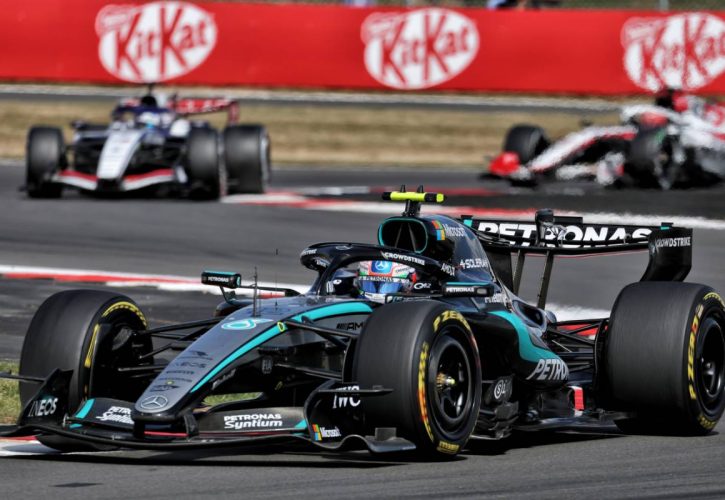
Mercedes dropped any immediate challenge to Kimi Antonelli’s five-second penalty from the British Grand Prix, ending the chance of a quick reversal after Silverstone. The team had initially reviewed whether the sanction could be overturned because of the car damage Antonelli suffered, but it settled internally on the view that the penalty stood. Mercedes concluded that the punishment was justified because Antonelli left the track multiple times, including a fourth infringement that triggered the stewards’ response. The FIA also ruled that the mechanical problem did not excuse the track-limits violations. That leaves Mercedes without a live appeal against the decision and closes the door on a formal fight over the final ruling. Antonelli finished ninth on the road before the penalty was applied, then dropped to 16th in the final classification once the five-second addition was made. The result turned a points-adjacent drive into a much tougher final order and put the focus on how much the damage influenced the lap-time loss, and how much of the penalty came from repeated mistakes on track. Mercedes’ call removes any immediate challenge to the stewards and confirms that the team accepted the ruling rather than pushing the case further.
Antonelli damage
Antonelli’s race changed after a front-left wheel shield or brake duct failure, which Mercedes described as damage caused by a foreign object lodged in that area. The failure hurt the car badly. Mercedes said it severely reduced handling and turning ability, and the team had to send Antonelli back to the pits twice late in the race for repairs. Before the damage, Antonelli was closing on Charles Leclerc on fresher tires, and Mercedes believed the run had real promise. Toto Wolff said the team’s simulations suggested Antonelli could have caught Leclerc with six laps left if the damage had not struck. That is the clearest sign of how much pace disappeared once the car started to misbehave. Mercedes sent the damaged car back to the factory to find the exact cause of the failure, a step that points to how closely the team wants to understand the issue before the next rounds. The sequence of events also explains why the penalty became such a flashpoint. Antonelli’s track-limits violations happened in a race where the car itself was no longer behaving normally, and the late repairs added more loss on top of the mechanical problem. The car’s speed and balance were gone at the moment the driver needed them most.
Track-limits rules
Antonelli said the outcome was unfair, and the debate around his penalty has already spilled beyond Mercedes. Juan Pablo Montoya called for Formula 1 to change its track-limits penalty rules after the Silverstone case, arguing that drivers should only be punished for leaving the track when they gain an advantage. He also said mechanical failures should not count toward track-limits penalties when the car error forces the driver wide or changes the line. That view goes to the center of the argument around Antonelli’s race. The stewards judged the repeated departures from the track as violations, and the FIA backed that view by saying the mechanical issue was not a valid excuse. Mercedes reached the same conclusion after its own review, even if the team first looked at the damage as a possible basis for an appeal. The broader issue is simple. A driver can lose control of a race because of a broken part, but the rules still punish the repeated track-limits breaches. That tension now sits at the heart of the discussion. Mercedes’ decision means there is no immediate challenge to the ruling, and the case ends with the penalty in place, the damage under review, and the rulebook still unchanged.