




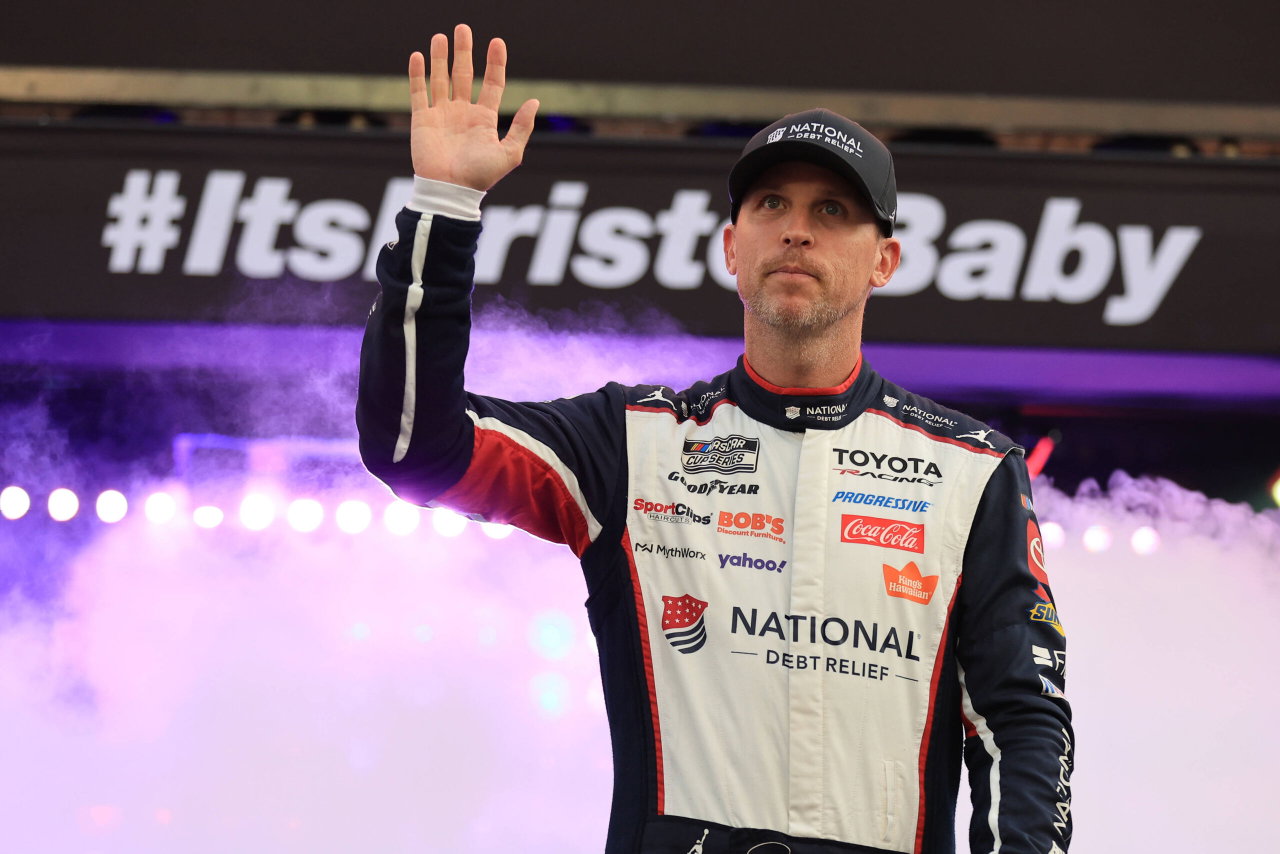
Denny Hamlin says O’Reilly Series economics can block Cup Series path
NXTbets Pro | Published On: October 18, 2026
O’Reilly Series economics
Denny Hamlin said about 80% of drivers in NASCAR’s O’Reilly Auto Parts Series pay some amount of money to race, and he said the division’s biggest problem is economics, not talent. Speaking on his “Actions Detrimental” podcast, Hamlin called it NASCAR’s most financially fragile division and laid out a cost structure that can keep drivers from moving up the ladder. He said some rides cost between $40,000 and $45,000 per race. He said top seats at teams such as Joe Gibbs Racing or JR Motorsports can cost between $100,000 and $150,000. He also said a full season in a weaker car can run from $1.3 million to $1.4 million. Hamlin’s argument put the focus on what it takes to get into the best equipment. A driver can have speed and still face a steep financial climb before that speed turns into a real path toward the Cup Series. In Hamlin’s view, the barrier is money first and talent second.
Series financing response
Parker Kligerman said Hamlin was “maybe 50% correct,” and he said seat funding in the series often comes from a mix of family money, manufacturer support and sponsorship rather than a simple pay-to-drive setup. He also said NASCAR has always depended on complex financing. Tommy Joe Martins, co-owner of Alpha Prime Racing, said small O’Reilly Auto Parts Series teams may work with budgets of $2.5 million to $3 million, and he said sponsorship alone often covers only part of a small team’s costs. That leaves teams and drivers pulling from several different places to make a season work. Kligerman’s point was that the money trail is rarely simple. Martins’ budget estimate showed how much a small team has to cover even before it can think about the next step up the ladder. The series, in that view, is built on a patchwork of support that can keep teams running but also keeps the financial pressure high. That pressure affects who gets the seat, who stays in it and who gets a chance to move toward the next level.
Driver results matter
Recent results give that financial debate some context. Brent Crews had a 12.4 average finish. Parker Retzlaff recorded 12 top-10 finishes in the No. 99 car and added four top-five finishes. Taylor Gray won at Kansas, posted 14 top-10 finishes and led 191 laps through Charlotte. Patrick Staropoli had no top-10 finishes through the Charlotte race in his campaign. Those numbers show how wide the range of results can be inside the series, from drivers who put together consistent runs to others still looking for a breakthrough. Hamlin’s point centered on the gap between what a driver can do on track and what it costs to keep that driver in the right equipment. The results from Crews, Retzlaff, Gray and Staropoli show that performance can vary sharply even before the financial side of the equation enters the picture.