




Red Bull upgrades leave pace unclear after Friday practice at the Austrian Grand Prix
NXTbets Pro | Published On: June 29, 2026
Red Bull upgrades
Red Bull’s first major test of its Austrian Grand Prix upgrade package left the team with more questions than answers after Friday practice at the Red Bull Ring. The car ran with new floor and rear-suspension changes, but the balance never settled in a clean way and both drivers came away saying the same thing. The pace was there in flashes. The overall picture was mixed. Kimi Antonelli set the pace in both sessions, while Max Verstappen finished fourth each time and ended the day more than half a second back. That gap left Red Bull with work to do before qualifying, and the team headed into the night needing a better setup to make the package fit the circuit.
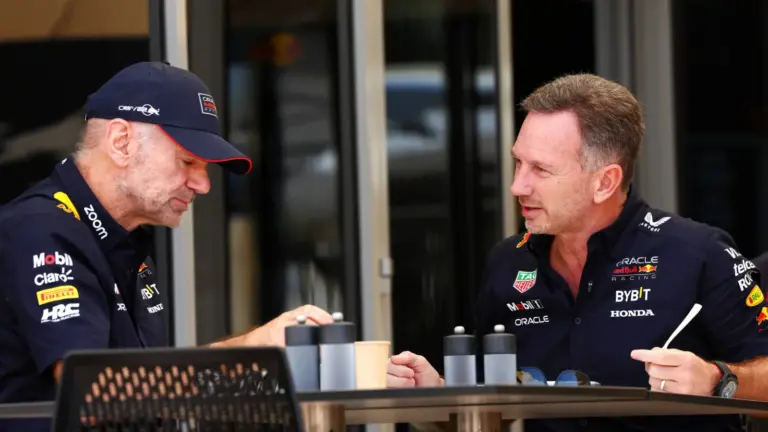
The upgrade package drew its first real readout in conditions that exposed both upside and weak spots. Red Bull wanted to see how the revised floor and suspension worked over a full day of running, and the answer was incomplete because the team could not put together a smooth sequence of laps. Both drivers said the car lacked the right balance, with the problems showing most clearly under braking and in traction-sensitive areas such as Turn 3. That mattered at a track where confidence through the corner sequence can shape the rest of the lap. Pierre Waché said the team had trouble finding the right balance with the package, that running was limited and that the new parts still need more evaluation despite promising long-run pace. The message from the garage was clear. Red Bull has potential in the upgrade, but it has not yet turned that potential into a stable short-run package for qualifying.
Verstappen problems
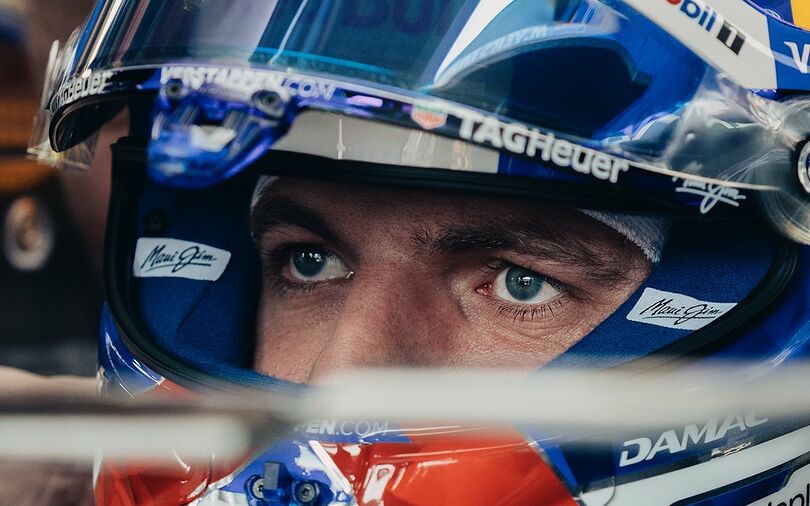
Verstappen’s day started with a setback and never fully smoothed out. His car went into anti-stall twice in FP1 and he was stranded in the pit lane before he could get back to the garage. The problems were tied to driveability issues at Turn 3, the same corner that unsettled the rest of the team’s running. Even after the opening-session disruption, Verstappen kept working through the programme and trimmed his time from 1:08.077 in FP1 to 1:07.564 in FP2. That improvement still only put him fourth in both sessions, and the final readout showed how much ground Red Bull had to make up on Antonelli. The team did not get a clean benchmark because the car never gave Verstappen the kind of balance he wanted on entry or on exit, and the braking phase remained a concern through the afternoon.
Laurent Mekies said the team was struggling with the car’s behavior both entering and exiting Turn 3, which matched Verstappen’s own feedback from the cockpit. The issue went beyond one isolated moment. It affected the way the car rotated, put power down and settled through the corner sequence. That kind of limitation matters most when a team is chasing certainty in qualifying trim, because any hesitation through the braking zone or any loss of traction on exit costs time in a hurry. Red Bull also had to deal with the fact that the car’s rhythm never really came together over a full lap, even when Verstappen’s times improved in FP2. The upgrade package did not fail on outright speed alone. It failed to give the driver the confidence he needed to attack the lap the way Red Bull wants before Saturday. For a team that expected this test to sharpen its performance, Friday instead showed how much setup work remains.
Hadjar feedback
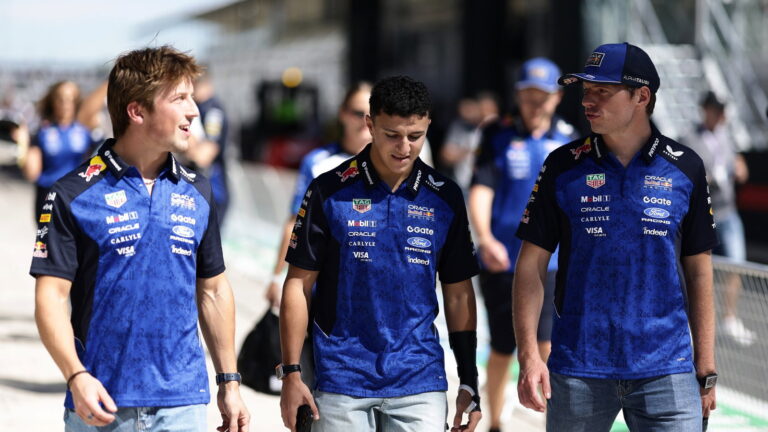
Hadjar’s Friday was disrupted from the start by a late engine change and car issues in FP1, and the loss of running showed in his first-session result. He completed only 11 laps and finished 12th, a modest baseline in a day already shaped by Red Bull’s search for balance. His second session brought a better number, with a move up to seventh and a 1:07.758 lap in FP2. That jump gave Red Bull at least one cleaner data point from the junior driver’s side of the garage, but it did not hide the bigger theme. Hadjar also ran into engine-related driveability problems at Turn 3, the same corner that troubled Verstappen, and he said the upgraded Red Bull still “feels like the usual” after the changes. His assessment lined up with the team’s broader view. The package has altered the car, but it has not yet changed the feel enough for the drivers to trust it fully.
Hadjar said Red Bull still has work to do to catch up, and he pushed the same point from a different angle. The team needs the car to perform consistently across all sessions instead of leaning too heavily on qualifying pace. That is the clearest thread running through Friday. Red Bull saw enough in the long run to keep the upgrade package in play, but the short run remains unsettled and the balance issues have shown up in the places that matter most. Hadjar’s improvement from one session to the next gave the team a better platform than his FP1 disruption, yet the car still asked the same questions under braking and through traction zones. Red Bull’s next task is simple to state and hard to execute. It has to turn an upgrade that looks promising in pieces into a car that behaves the same way from one run to the next.