




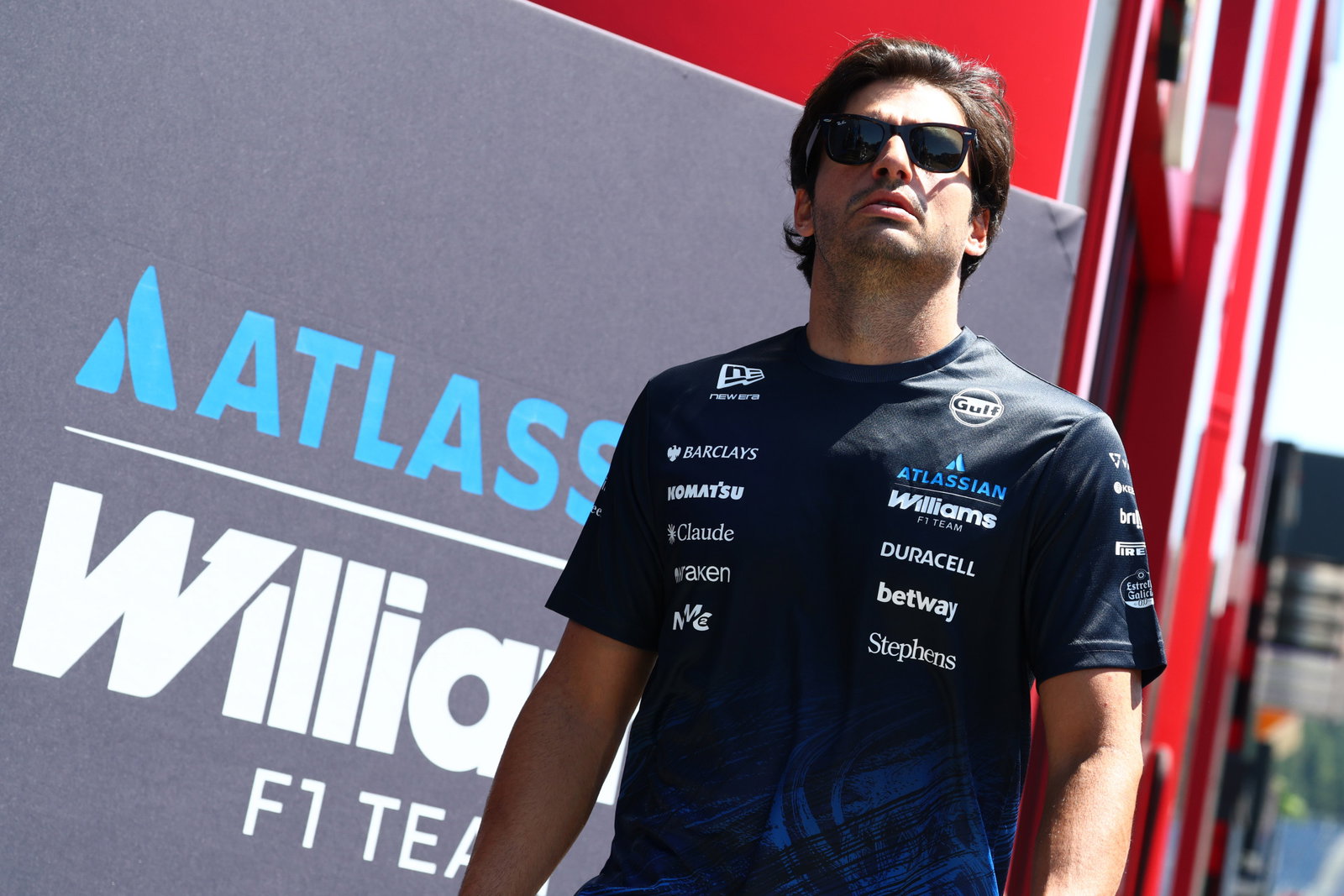
Sainz proposes three-place grid penalty for drivers who trigger qualifying flags
NXTbets Pro | Published On: July 3, 2026
Sainz proposes penalty
Carlos Sainz wants Formula 1 to punish any driver who causes a yellow or red flag in qualifying with a three-place grid penalty. He plans to take the idea to both the Grand Prix Drivers’ Association and the FIA. The goal is straightforward. Sainz wants to stop drivers from gaining an edge by interrupting other runners’ laps and then benefiting from the stoppage themselves.
He said the current setup can reward the driver who triggers the incident. Under the present rules, that driver can still complete a lap if he slows enough to satisfy the FIA. Sainz said that creates the wrong incentive. He framed the proposal as a safety measure and a way to cut down on gamesmanship. He also said the rule should bite when a driver causes the kind of interruption that changes the shape of qualifying for everyone else.
Sainz tied the push to the wider debate over how qualifying incidents get judged. He wants a clearer penalty that applies when a driver creates a yellow or red flag, instead of leaving room for tactical interpretation. In his view, the issue is simple. If a driver brings out the flag and affects the session, that driver should lose ground on the grid.
Austrian Grand Prix
The debate sharpened after a controversial qualifying session at the Austrian Grand Prix. Max Verstappen’s crash or gravel excursion brought out yellow flags late in Q3 and set up the latest argument over how Formula 1 handles dangerous moments in qualifying. Sainz said the situation should have triggered a double yellow or a red flag. He described the scene as unsafe and said the session should not have kept going in that form.
George Russell emerged from that session with pole position intact after officials ruled that he had slowed enough under yellow flags. Sainz said that result followed the current rulebook, and he credited Russell with understanding it perfectly. Even so, he made clear that he disliked the outcome. He said Russell had “played the rules to perfection.” He also said the lap should not have been allowed to finish when the track was in a potentially dangerous state.
Kimi Antonelli also featured in the episode. He aborted his lap because he believed the incident was under double-yellow conditions. That reaction underlined the uncertainty around the moment and the split-second judgment drivers had to make. For Sainz, that is part of the problem. He believes the rules leave too much room for advantage when the session is disrupted and the field is trying to judge risk at speed.
Leclerc and the wider debate
Charles Leclerc also came away affected by the incident, since it helped decide who got pole. He said the idea of a harsher penalty could make sense at some circuits. He did not back a blanket rule that would apply the same way at every track. That view points to a broader issue around consistency. Qualifying incidents can look different depending on the circuit layout, the kind of runoff available and how quickly danger spreads through the session.
Sainz wants the discussion to move from a single qualifying controversy to a larger rule change. He believes the sport needs a cleaner deterrent so drivers do not profit from causing stoppages. He also wants officials to avoid leaving the judgment to a narrow reading of whether a driver slowed enough. His proposal goes after the incentive itself. If causing a yellow or red flag brings an automatic grid penalty, the driver who creates the interruption would pay a clear price.
That is the heart of the case he plans to present to the FIA and the GPDA. Sainz is pushing for a rule that puts safety first and removes the temptation to exploit a disrupted lap. The Austrian Grand Prix gave him the example he needed. It also gave the paddock another reminder that qualifying margins can turn on one moment, one flag and one decision from the stewards.