NXTbets Inc

  • Pérez says Cadillac restored his confidence

    Pérez says Cadillac restored his confidence

    Sergio Pérez says he feels “much more appreciated” at Cadillac and that his car-development feedback is “much more appreciated” than it was at Red Bull, a shift he credits with restoring his enjoyment and confidence as he returns to Formula 1 for the 2026 season. The 36‑year‑old—described in sources as a multiple Grand Prix winner (reports variously list five wins between 2021–2024 and one source calls him a six‑time winner)—joined Cadillac alongside Valtteri Bottas for the American team’s debut campaign, and he said his year away gave him perspective. Pérez added he intends to treat his 15th season “as if it was karting,” and has emphasized enjoyment as a route to better performance.

    Pérez has pointed to a more collaborative environment at Cadillac, saying he can already see the car being developed in the same unified direction he has requested and that his feedback is better received than during his difficult final year at Red Bull. He was released by Red Bull at the end of 2024 after a dip in form and an inability to match teammate Max Verstappen; Pérez said the weight of expectations and reminders of failure at Red Bull had drained his enjoyment. Broadly, commentators noted he looked refreshed and confident during pre‑season testing in Bahrain, and former driver Anthony Davidson said Pérez appears “happier at Cadillac than at any point during his time at Red Bull.”

    Caveats remain: Cadillac is widely expected to start 2026 with one of the slower cars on the grid and observers after testing judged the new project may struggle toward the back, with some reports saying Pérez appeared more visibly worried than Bottas about the team’s prospects. Cadillac has signaled a short‑term priority of steady progress—beginning with the Australian Grand Prix in Melbourne—focused on assembling departments and out‑developing established teams rather than chasing immediate results, and the drivers’ experience is expected to be relied upon to help the debut season. These impressions are drawn from post‑testing reports rather than definitive performance data, and fans will be watching whether Pérez’s apparent uplift in confidence and his greater collaborative role at Cadillac translate into on‑track results.

    More
  • FP2 sets baseline at Australian GP, reveals race pace

    FP2 sets baseline at Australian GP, reveals race pace

    Friday practice at the Australian Grand Prix was treated as a crucial data-gathering day. FP1 ran 12:30–13:30 AEDT and FP2 16:00–17:00 AEDT; teams prioritized long-run work over headline lap times, and FP2 was expected to give the clearest read on race pace because crews ran heavier fuel loads and extended stints on medium and hard tires.

    Teams focused on a handful of technical indicators during Friday running: long-run consistency, rear stability when drivers used aggressive curbs, lap-time drop-off across 8–12 lap stints, and component behavior such as brake temperatures, cooling performance and gearbox response. How teams used the soft tire was also revealing: avoiding long soft-tire runs could point to durability concerns, while aggressive soft-tire testing would suggest confidence in a two-stop strategy.

    The weekend schedule runs March 5–7: FP3 and qualifying are set for Saturday, with the race on Sunday at 15:00 AEST. Broadcasters: Apple TV is the exclusive U.S. rights holder and is offering a seven-day free trial; Sky Sports (via Sky Go/NOW) holds exclusive U.K. rights; F1 TV remains available worldwide, including Canada and Mexico. Friday’s importance was amplified by major regulation changes and limited on-track data — teams completed nine days of pre-season running but arrived with only a baseline for the 2026-spec cars and overhauled chassis and power units. Early indicators named McLaren, Mercedes, Red Bull and Ferrari among potential frontrunners, while new manufacturer entries Audi and Cadillac made their race-weekend debuts. Motorsport.com will provide live text commentary of the weekend. Support-series context: the F2 season also opened at Albert Park this weekend (Free Practice on Friday, Qualifying and the Sprint on Saturday, Feature on Sunday); organizers expect pit strategy, the circuit’s low-grip surface, multiple DRS zones and high tire wear to be decisive across the weekend.

    More
  • Mekies warns Red Bull faces 'painful' PU development

    Mekies warns Red Bull faces ‘painful’ PU development

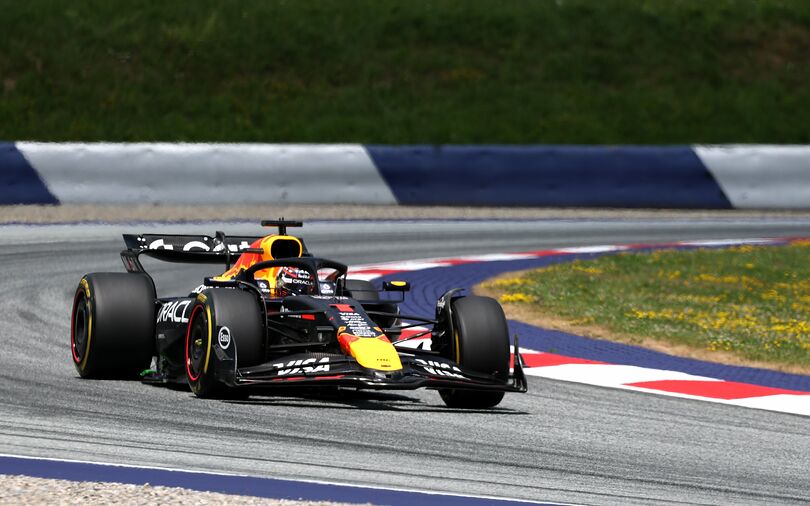
    Team principal Laurent Mekies warned that Red Bull faces a potentially “painful” process to develop its new power unit under Formula 1’s 2026 regulations ahead of the Australian Grand Prix. While the Ford-backed unit made an impressive showing in Bahrain testing and Red Bull Powertrains completed a high volume of laps, Mekies framed the immediate challenge as technical development — particularly durability and reliability — rather than outright race performance. New signing Isack Hadjar experienced reliability problems in Bahrain, and Mekies said there was a long way to go before the team could be considered favorites, although he remained cautiously optimistic about the start of the campaign.

    Max Verstappen described the new regulations as “pretty complicated” and “anti-racing,” likening the cars to “Formula E on steroids,” while also praising the initial performance of Red Bull’s debut power unit and the team’s assembly work. He and Mekies highlighted battery-charging techniques showcased in testing as important for the year ahead. Preseason running exposed questions around energy recovery and other performance and reliability matters; Verstappen cautioned that late rule changes would be impractical given the money already spent and warned that reducing deployable electrical power would generally slow lap times. He said PU-chassis integration felt good but that Red Bull still wanted additional performance, and he acknowledged he did not yet know where the team would sit in the competitive pecking order despite expecting to be among the top four alongside Mercedes, Ferrari and McLaren.

    Those technical uncertainties carry tactical consequences. Reports from testing — and the new regulations’ greater emphasis on engine and tire management — underpinned Verstappen’s warning not to overinterpret strong preseason form, and he admitted Red Bull had “quite a bit of work” to catch Mercedes and Ferrari. The team plans to be “super aggressive” at the start of the season, a strategy its drivers and engineers accept is intentional but risky given the increased vulnerability to engine and tire issues. With the Australian Grand Prix expected to be a tough and potentially chaotic early test of the 2026 packages, Mekies signaled that resolving durability and development problems in the weeks before Melbourne will be critical to the team’s prospects.

    More
  • Ferrari's Hamilton vows to stay in F1 until Africa hosts GP

    Ferrari’s Hamilton vows to stay in F1 until Africa hosts GP

    Lewis Hamilton has vowed to stay in Formula 1 until a Grand Prix is held in Africa, saying he has spent six to seven years “fighting in the background” to make it happen and that he does not want to retire without having raced on the continent. Speaking ahead of the season opener in Melbourne, the seven-time world champion and Ferrari driver said he aims to race in Africa at least once before he retires and named South Africa, Kenya and Rwanda as strong candidate hosts.

    Hamilton framed his campaign in personal and political terms, describing himself as “half-African”, citing roots in Togo and Benin and noting planned visits in 2025 to Benin, Senegal and Nigeria. He accused former colonial powers of ongoing exploitation, urged African unity and said it was time to “take Africa back”, while continuing behind-the-scenes lobbying with stakeholders to restore an F1 race to the continent.

    Practical obstacles remain substantial. F1’s last African race was at Kyalami in 1993 and the circuit will need upgrades to regain FIA Grade 1 status; the FIA approved plans and gave the venue three years to complete the works, and Hamilton has pushed for an accelerated timeline. Rival bids have gone quiet, a Rwandan proposal is unlikely to be ready before 2029 amid regional security concerns, and Hamilton himself acknowledged there is no imminent prospect — he said the chances of a race before the end of the decade are low. There are currently no confirmed race dates or official agreements to bring F1 back to Africa.

    More
  • Piastri resets after 2025 collapse, embraces 2026 rules

    Piastri resets after 2025 collapse, embraces 2026 rules

    Oscar Piastri says he is focused on moving past the “painful” collapse that cost him the 2025 title and is approaching his fourth F1 season determined to learn the lessons rather than chase guarantees. He described the 2026 regulation reset and the new, more electrified power units as a constructive distraction that give “plenty still to learn,” and warned that early pace in Melbourne will not necessarily indicate who will win the championship.

    Piastri said he is “approaching the limit of how much more performance he can extract,” that he will concentrate on races that showed “what I can do,” and that he used the off-season to reset mentally and to get to grips with the sweeping changes to chassis and power-unit rules. On McLaren’s competitiveness he was candid that the team is “in the mix” but not where it was a year ago and that he “has no idea” exactly where McLaren will be under the new regulations. Team leaders Andrea Stella and Zak Brown suggested Mercedes and Ferrari looked a step ahead in pre-season testing, with Red Bull and McLaren close behind; McLaren does not expect the all-new MCL40 to be the early leader at Albert Park.

    The 2026 power units feature a near 50/50 split of internal combustion and electrical power and a three-fold increase in electrical energy, creating new harvesting and deployment challenges that make Melbourne an especially instructive weekend. Piastri said the changes set up a season-long development battle where updates will determine competitiveness. Outside voices underline the mixed outlook: Sky Sports commentator David Croft called Piastri “a world champion in the making,” bookmakers have installed Mercedes as favorites, and McLaren enters the year as defending two-time constructors’ champions after a 2025 campaign in which Piastri won seven races, led the standings for 189 days but lost momentum in a late six-race stretch and finished third. Piastri said he will build on the season’s proud moments and on McLaren’s engineering strength as the team pursues a longer-term development plan rather than prioritizing early results.

    More
  • Bottas to take five-place grid penalty at Cadillac debut

    Bottas to take five-place grid penalty at Cadillac debut

    Stewards imposed a five-place grid drop on Valtteri Bottas on 8 December 2024 for incidents at the 2024 Abu Dhabi Grand Prix after he rotated into and made contact with Sergio Pérez on lap one and was later involved in a separate incident with Kevin Magnussen. Bottas retired from the race and could not serve the in-race sanction, so the stewards left the five-place grid penalty to be applied at a future round — now set to be enforced at his Cadillac debut in Melbourne.

    Changes to the FIA sporting regulations have complicated how that outstanding sanction is described in reporting. One account says the rules were amended to limit applying grid drops to offences within 12 months and that the change was not applied retroactively; another describes a later tweak tied to a 12-month wipe of unserved penalties. Regardless of the differing descriptions, stewards and the updated regulations are cited as the mechanism that will see the outstanding penalty applied at the upcoming Australian Grand Prix at Albert Park.

    When Cadillac makes its Albert Park debut, Bottas will be moved back five places from wherever he qualifies. Outlets assess the competitive impact differently: one report noted Cadillac is not expected to advance out of Q1, making the drop unlikely to materially affect Bottas’s result, while other reporting framed the enforced grid drop as a direct competitive blow to Cadillac Racing’s launch. Bottas joins Cadillac as teammate to Sergio Pérez, and the new MAC-26 showed both pace and reliability issues in pre-season testing; Bottas has said success will be measured by making the car faster and more reliable and improving the team’s collective operation.

    More
  • Mercedes upgrade could boost Norris and Piastri

    Mercedes upgrade could boost Norris and Piastri

    Oscar Piastri warned that the pecking order revealed at the season-opening Australian Grand Prix will not determine who succeeds under the new rules. He said McLaren are “in the mix” but not in the same position they occupied 12 months ago and expressed confidence in the team’s engineers to close early gaps. McLaren enter the year as defending two-time constructors’ champions and Lando Norris is the reigning drivers’ champion. Former driver-turned-pundit Anthony Davidson suggested the new cars could suit Piastri, a view reinforced by Norris, who said the new car felt “similar to driving a Formula 2 car.” Those comments underline how the regulation changes have altered which driving styles are favored.

    This season’s regulation overhaul has materially changed handling and power-unit characteristics: teams are targeting roughly a 50/50 electrical/combustion power split, electrical energy has increased by about three times, the MGU-H has been removed, and the cars are around 200 mm shorter and 100 mm narrower. Those changes affect harvesting, deployment and overall car balance, and will reshape which teams and drivers benefit as development progresses. McLaren’s technical staff stressed that adapting to the rules will be decisive; chief designer Rob Marshall said the MCL40 is highly complex and places a heavy workload on drivers, that pre-season testing focused on understanding the car’s behavior and on exploiting hybrid energy recovery and deployment, and he judged the car’s foundation reasonably strong but warned the team must quickly dial in optimum settings and sustain an aggressive development programme. Team principal Andrea Stella acknowledged Mercedes and Ferrari looked “a step ahead” after Bahrain testing but cautioned that early pace may not hold as development converges, and the Albert Park weekend and the harvesting/deployment challenges teams experienced there were particularly instructive.

    Power-unit access is an immediate factor in McLaren’s prospects: Bahrain data indicated McLaren ran an older-spec Mercedes power unit and switching to Mercedes’ updated specification, possibly ahead of FP1 at Albert Park, could unlock untapped performance and potentially put Norris and Piastri back into race-winning contention. In testing McLaren appeared third or fourth fastest while Charles Leclerc topped the final day. Accusations emerged that Mercedes ran closer to an 18:1 effective compression ratio in race conditions versus the 16:1 regulatory limit, and the FIA has proposed additional power-unit testing at ambient temperature and at 130°C from August. Toto Wolff called the issue a “storm in a teacup,” while Ferrari’s Fred Vasseur warned against expecting a quick fix. If FIA tests find a breach and Mercedes subsequently fails checks, teams using Mercedes power — including McLaren — could face mid-season power losses. For McLaren and Piastri, the campaign will therefore hinge on rapid on-track development, reliable access to any upgraded Mercedes specification, and how quickly the team adapts to the new technical landscape.

    More
  • FIA confirms 80 km/h pit limit at Albert Park

    FIA confirms 80 km/h pit limit at Albert Park

    Organizers and some reports said Albert Park’s pit‑lane speed limit for the 2026 Australian Grand Prix would be reduced from the usual 80 km/h to 60 km/h to cope with an expanded 22‑car grid after Cadillac joined as F1’s 11th team, but the FIA issued an explicit correction denying the cut and confirming the limit remains 80 km/h. The FIA’s announcement, which included detailed confirmation of Melbourne’s first use of the new 2026 “straight mode” zones, therefore dispelled the 60 km/h reports.

    Australian Grand Prix chief events officer Tom Mottram was among those who described a lower limit as a necessary, one‑year “stop‑gap” to ease tighter working conditions in one of the smallest pit complexes on the calendar, and organizers said the measure would have required temporary hospitality, freight storage and pitwall adjustments. Organizers framed the proposed 60 km/h limit as a short‑term safety and operational response because Albert Park’s garages cannot be altered in time for the event, noting the 60 km/h limit last applied before pit‑lane modifications ahead of the 2022 season.

    Plans for longer‑term relief include a $350 million paddock building due to begin construction after this weekend’s race, new garages and a temporary Paddock Club expected for the 2027 event, and a precinct redevelopment targeted for completion in 2028, while Melbourne’s contract to host the Grand Prix runs through 2037. Sources therefore conflict on whether a one‑off reduction was imposed or merely proposed, leaving teams to plan under the FIA’s stated 80 km/h limit for the race weekend.

    More
  • Liam Lawson: Improve qualifying or lose Racing Bulls seat

    Liam Lawson: Improve qualifying or lose Racing Bulls seat

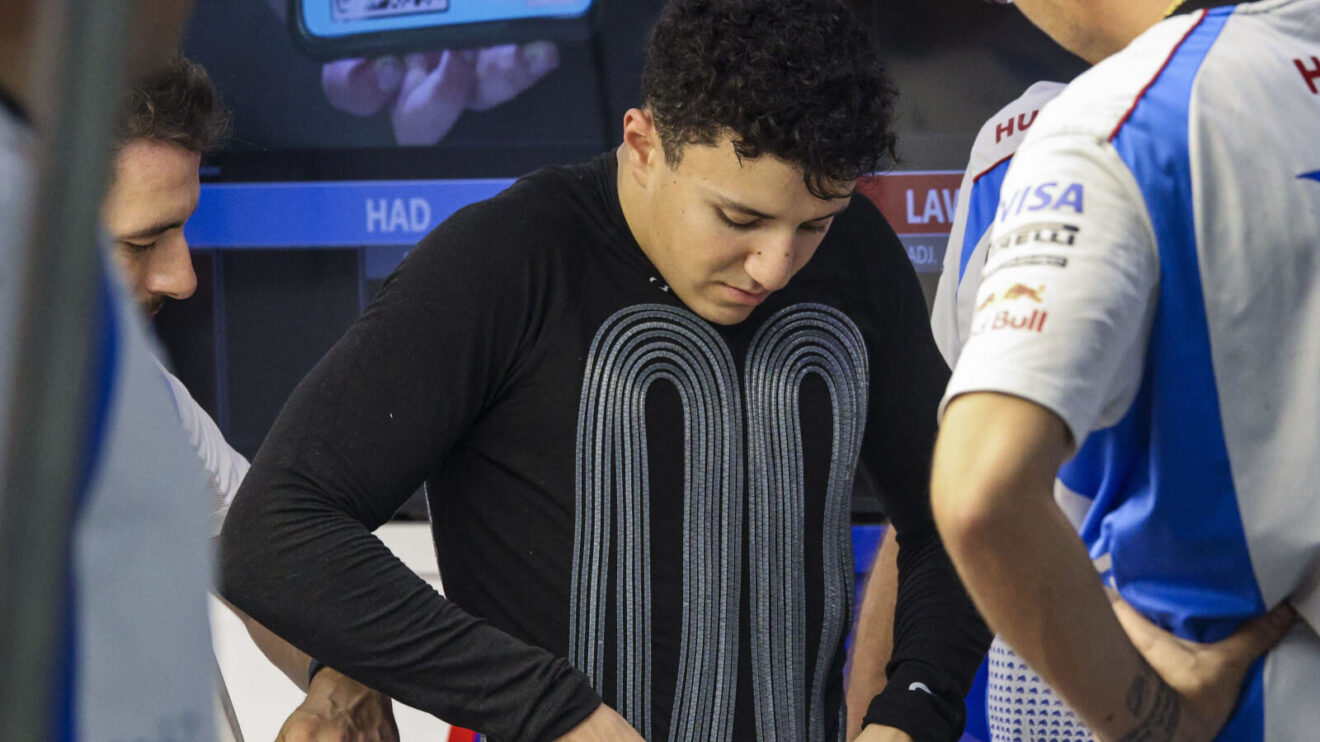
    Liam Lawson admitted he did not feel fully ready for the 2026 Formula 1 season and said he faces mounting pressure to improve his qualifying form or risk a career “dead end.” Reports variously listed him as 23 and 24, and former driver Jolyon Palmer has publicly questioned his ability to lead Racing Bulls. Unnamed team observers warned Lawson that single-lap pace in qualifying must improve to avoid losing his Racing Bulls seat after 2026, and he will line up alongside 18-year-old rookie Arvid Lindblad, who is reportedly impressing behind the scenes.

    Speaking on New Zealand radio and the Mike Hosking Breakfast show ahead of the Australian season opener, Lawson offered cautious but measured praise for the new cars and powertrains. He described the 2026 cars as smaller, “a little bit more playful,” and suffering from reduced downforce that “prevents drivers from attacking corners as before,” attributing the changes to revised technical regulations including the introduction of hybrid power units and significant aerodynamic reductions and saying there were many unknowns under the new rules.

    Lawson said he was “surprised” by the new Red Bull–Ford power unit he tested, calling it “really good” and noting “pleasing reliability” after nearly 500 laps in the VCARB03 during pre-season testing, but he cautioned new powertrains often suffer teething issues and predicted many teams would struggle early in 2026. Those mixed signals—promising pre-season pace alongside warnings about reliability and his own self-doubt—underline the stakes for his second full year in F1. His abrupt demotion from Red Bull in 2025 forced a fight to retain a seat and, he said, shaped his development; he learned from on-track battles such as holding off Yuki Tsunoda. Lawson framed his comments as part of an attempt to rebound, saying he felt better and was excited about 2026, but converting race chances into consistent single-lap qualifying results remains the immediate career imperative.

    More