NXTbets Inc

  • Newey-Led Aston Martin Reveals Honda-Powered AMR26

    Newey-Led Aston Martin Reveals Honda-Powered AMR26

    Aston Martin staged a public launch in Dhahran, Saudi Arabia, to reveal the AMR26 and its new satin green livery. However, a livestream of the event suffered technical glitches. The car is the first Aston Martin design under Adrian Newey and the team’s first works partnership with Honda. The AMR26 ran in an all-black/exposed-carbon test guise during a Barcelona shakedown two weeks earlier, appearing late on Day 4 and logging 65 laps.

    Newey now serves as team principal while remaining managing technical partner. The AMR26 shows notable design changes, including revised suspension concepts and tight engine-bay packaging to accommodate Honda’s RA626H power unit. It also highlights a move away from some Mercedes customer components toward an in-house gearbox and rear-suspension solution. Honda praised the electric side of the RA626H while expressing less satisfaction with its combustion element. Reports around the return of works engines referenced regulatory disputes, such as an interpretation over compression ratios involving Mercedes.

    Organisational shifts accompany the technical overhaul. Andy Cowell has moved to Chief Strategy Officer to coordinate the Honda integration, and Aston Martin has completed factory upgrades and a new wind tunnel. Fernando Alonso and Lance Stroll were retained for a fourth successive season, with Alonso framing 2026 as a critical campaign, and owner Lawrence Stroll publicly defending the investment in the team.

    With limited early mileage from Barcelona, Aston Martin will run two Bahrain pre-season test windows, February 11–13 and February 18–20, to validate the car’s concepts and assess reliability before the championship begins. The AMR26, its Honda power unit, and the reworked organisation were presented as the centerpiece of a technical, livery, and competitive reset ahead of the 2026 season.

    More
  • Hadjar Steps into Red Bull Amid 2026 Technical Reset

    Hadjar Steps into Red Bull Amid 2026 Technical Reset

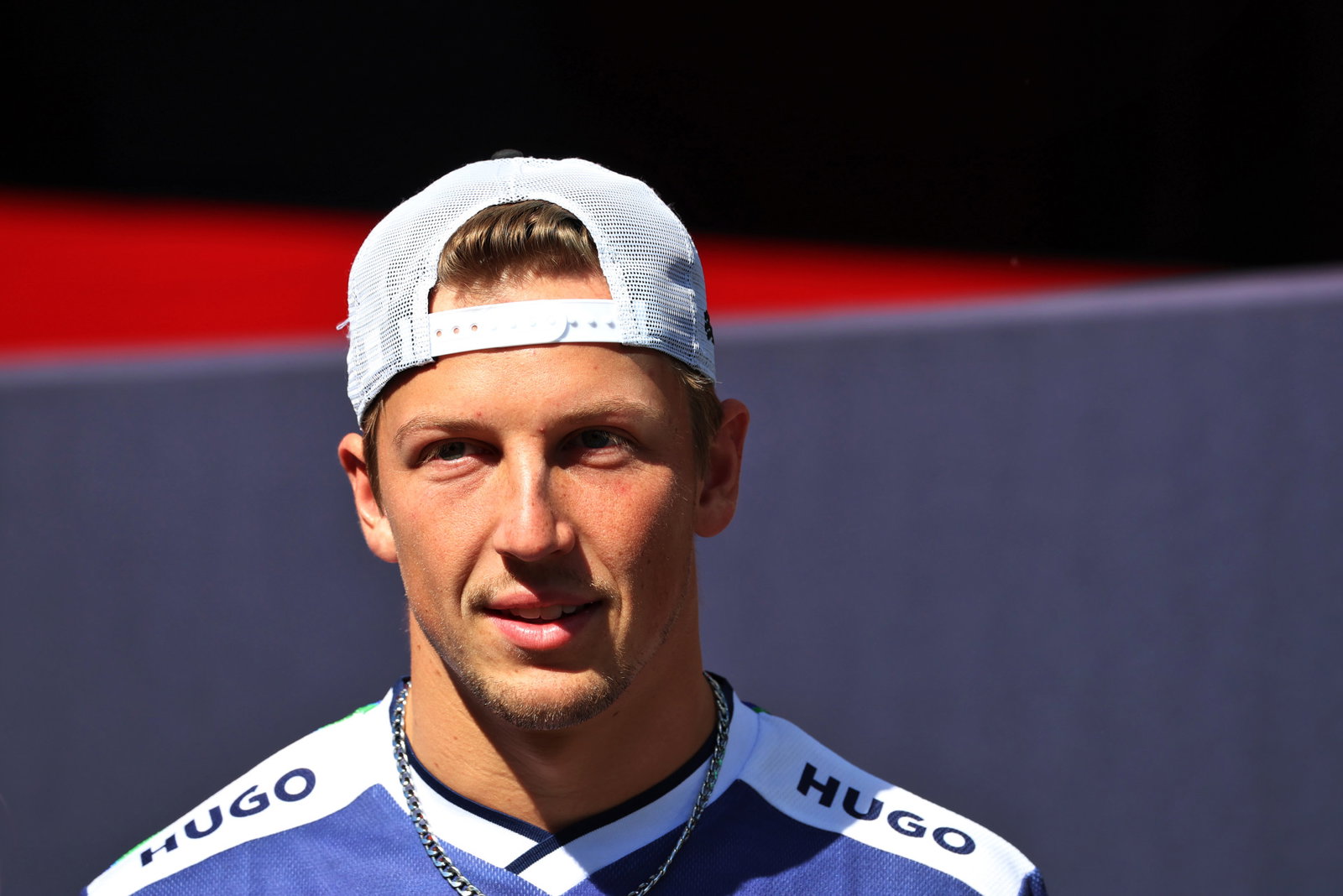
    Isack Hadjar has been confirmed as a Red Bull Racing driver for the 2026 Formula 1 season and will partner four-time world champion Max Verstappen. His arrival coincides with a major technical reset that will bring shorter, lighter cars, overbody aerodynamics, movable wings, and new power units with a 50/50 electrical-combustion split. Red Bull’s 2026 package is centered on the RB22 and the team’s first in-house powertrain developed in partnership with Ford, making the engineering transition as important as the driver change.

    Hadjar earned promotion after a strong 2025 debut with satellite team Racing Bulls, scoring 51 points, taking a podium at the Dutch Grand Prix, and posting the best qualifying record of any driver outside the sport’s top four teams. His results led to him displacing Yuki Tsunoda. Commentators have highlighted his rapid progression. Alex Brundle called him the central rookie to watch in the uncertain new era and said the regulation reset gives Hadjar a favorable chance to establish himself if he adapts quickly. Felipe Massa endorsed the move as “an amazing opportunity,” adding that Hadjar should have an easier time adapting at Red Bull than Liam Lawson did. Hadjar himself reportedly expected the seat and has stated his aim to be a world champion who must beat everyone, including Verstappen.

    Both Brundle and the reporting emphasize that Hadjar’s prospects will depend as much on Red Bull’s new package as on his own adaptability. Brundle suggested that if the RB22 proves less competitive than hoped, Red Bull might have additional reasons to lean on Hadjar during the transition. He also cautioned that early indicators, such as reports of a strong Mercedes power unit and Lewis Hamilton posting the fastest shakedown time in a Ferrari, remain provisional until the new cars run in a race environment. The signing, therefore, represents not only a major personnel change but also a strategic test of driver hierarchy and development under fundamentally altered technical rules. Hadjar’s early career is set to be shaped by how quickly he and the team navigate 2026’s reset.

    More
  • McLaren Starts 2026 as Favorite, Faces Technical Reset

    McLaren Starts 2026 as Favorite, Faces Technical Reset

    On paper, McLaren starts 2026 as the team to beat. The squad enters the season as back-to-back constructors’ champions (2024, 2025) and with Lando Norris crowned 2025 drivers’ champion after a final-round showdown in Abu Dhabi. However, sweeping 2026 rule changes amount to a fundamental reset of chassis, aerodynamics, and power-unit fundamentals, so last season’s advantages may not carry over.

    McLaren’s dominant mid-2024 MCL38 and its follow-up MCL39, which relied on very low ride heights and a particular floor concept, are likely to have limited read-across to the new regulations. Chief designer Rob Marshall has said key performance edges are “effectively gone.” Aerodynamics technical director Peter Prodromou led a major redesign McLaren described as largely new: slightly narrower and producing less downforce, and built to suit higher-rake setups and altered floor and wing rules.

    Compounding the aerodynamic reset, McLaren remains a Mercedes customer under a supply partnership that runs through 2030. That customer status can create structural disadvantages versus manufacturer teams that design chassis and power unit together from the start of a regulations cycle. Mercedes impressed with reliability at the Barcelona shakedown, which reduces engine-side risk for McLaren, and reports suggest Mercedes will lead power-unit development in 2026 and benefit from aggregated data across its customer teams, a potential development-gap risk for McLaren.

    Off track, McLaren has retained its championship-winning driver pairing of Lando Norris and Oscar Piastri (third in Drivers’ Standings in 2025). Team principal Andrea Stella has signaled continuity of driver equality and said the team will “streamline” rules of engagement after Piastri’s remark that current practices “probably caused some headaches.” McLaren also hired Will Courtenay from Red Bull as sporting director. Those operational tweaks, combined with the new aerodynamic package and continued Mercedes supply, form the core of McLaren’s defense plan.

    More
  • McLaren Unveils MCL40; Norris to Carry No.1 in Title Defense

    McLaren Unveils MCL40; Norris to Carry No.1 in Title Defense

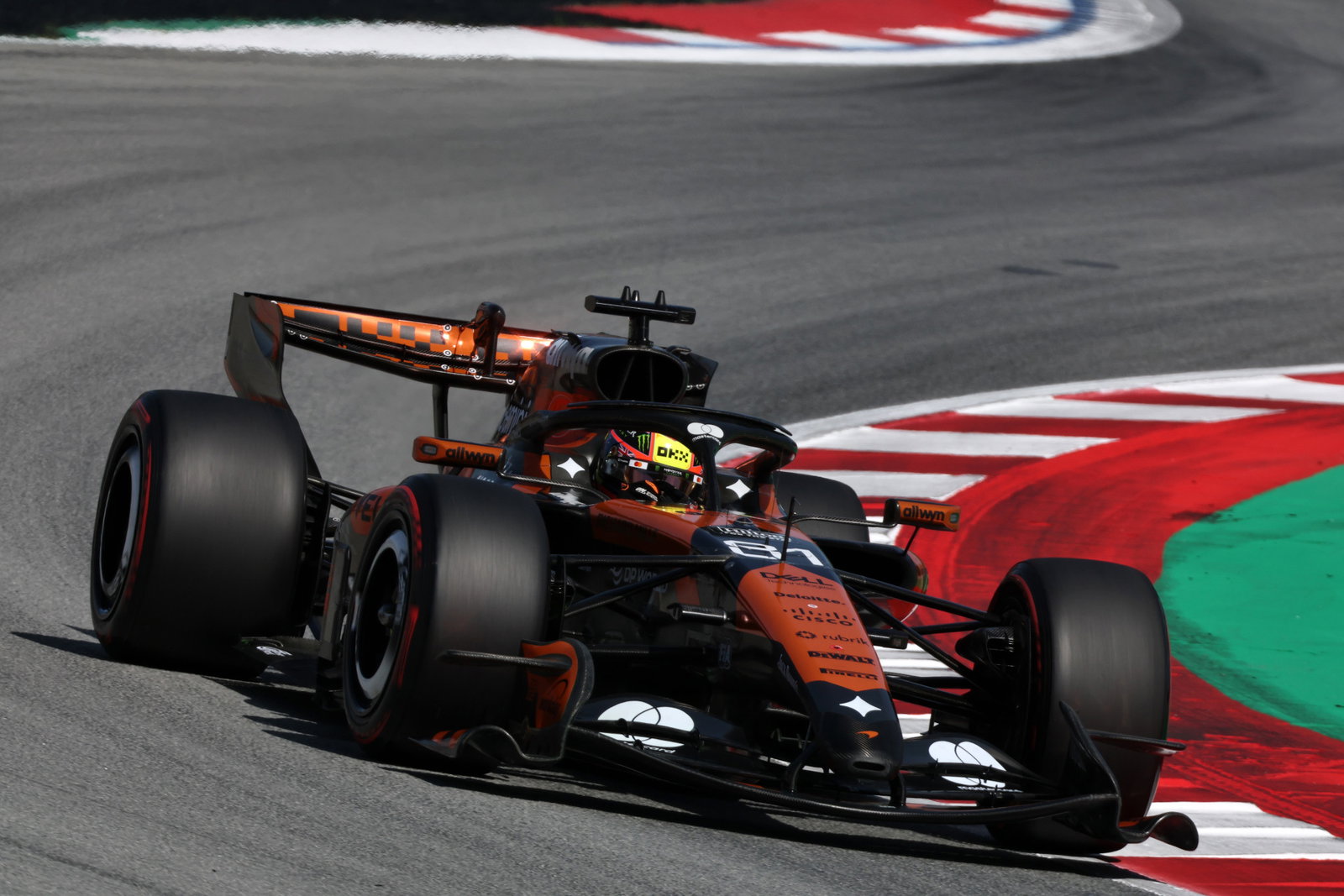
    McLaren revealed the MCL40 and its 2026 papaya-and-black livery at the Bahrain International Circuit, becoming the penultimate team to show its new look ahead of pre‑season testing. The garage-presented design stays broadly in line with recent years but leans more heavily on papaya with a revised black pattern on the engine cover; McLaren described it as its final papaya-and-black scheme. McLaren also promoted Mastercard to title sponsor, increasing its branding on the car, the team’s first title sponsor since Vodafone more than a decade ago.

    McLaren ran an unofficial shakedown in Barcelona in late January in a black camouflage wrap, completing 287 laps, fewer than Mercedes’ 500, with only Audi, Cadillac, and Aston Martin recording fewer among the 10 teams present. The MCL40’s fastest time in Barcelona sat within 0.25 seconds of Lewis Hamilton’s benchmark lap, which team principal Andrea Stella said underlines that Mercedes “has raised the bar.” The car will remain in Bahrain for the two scheduled test blocks on February 11–13 and February 18–20 as McLaren continues on‑track preparations ahead of the season opener in Melbourne on March 8.

    The launch framed McLaren’s bid to defend both the drivers’ and constructors’ titles after securing a record‑equalling constructors’ crown and Lando Norris’ maiden drivers’ title in Abu Dhabi in 2025. Norris will carry the No. 1 on the MCL40, with Oscar Piastri alongside him. Racing CEO Zak Brown said early indicators point to competitiveness while urging caution about firm conclusions this early. Some bookmakers have already flagged Mercedes and George Russell as early favorites. With F1’s 2026 regulation reset expected to reshape the grid, the MCL40 launch served as both a visual reveal and a technical preview of how McLaren intends to defend its double titles. As of the Bahrain event, Aston Martin remained the only team yet to show its 2026 livery, with the Adrian Newey–designed AMR26 scheduled for an unveiling Monday evening.

    More
  • Mercedes Unveils W17 as Full Reinvention for 2026

    Mercedes Unveils W17 as Full Reinvention for 2026

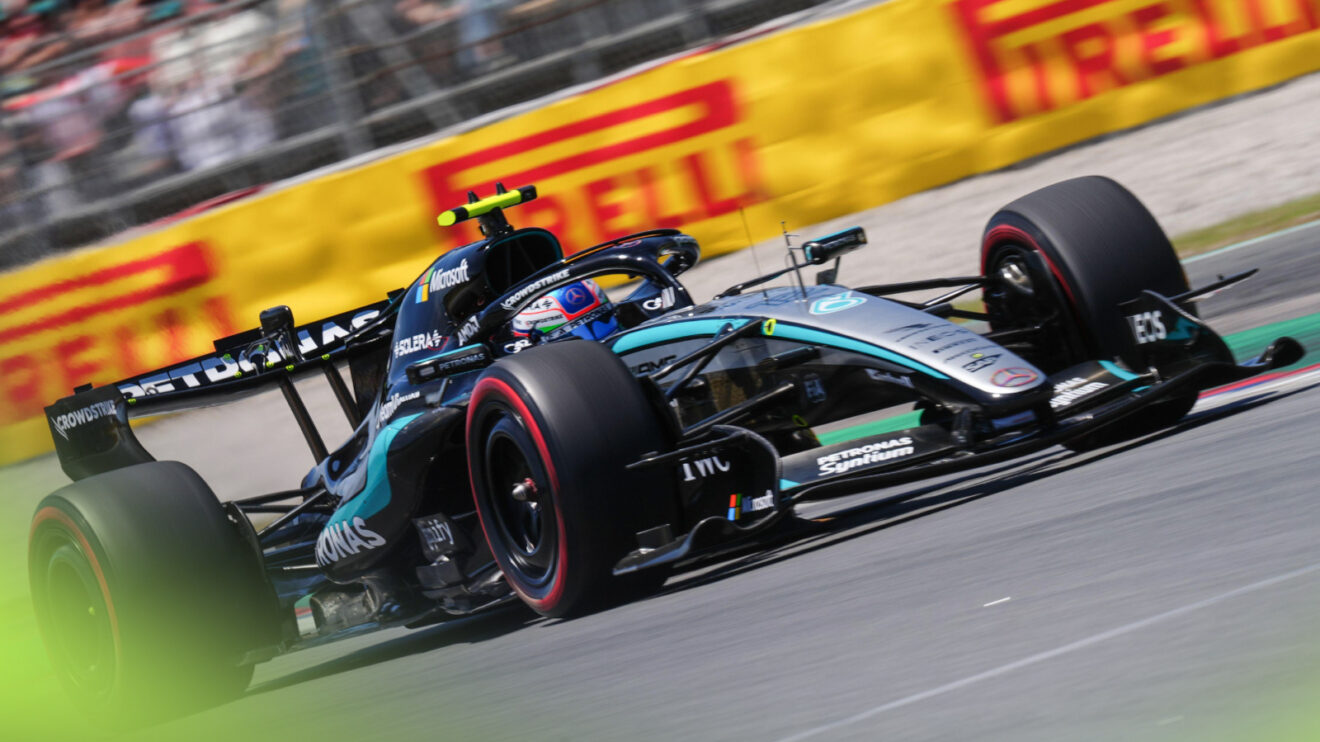
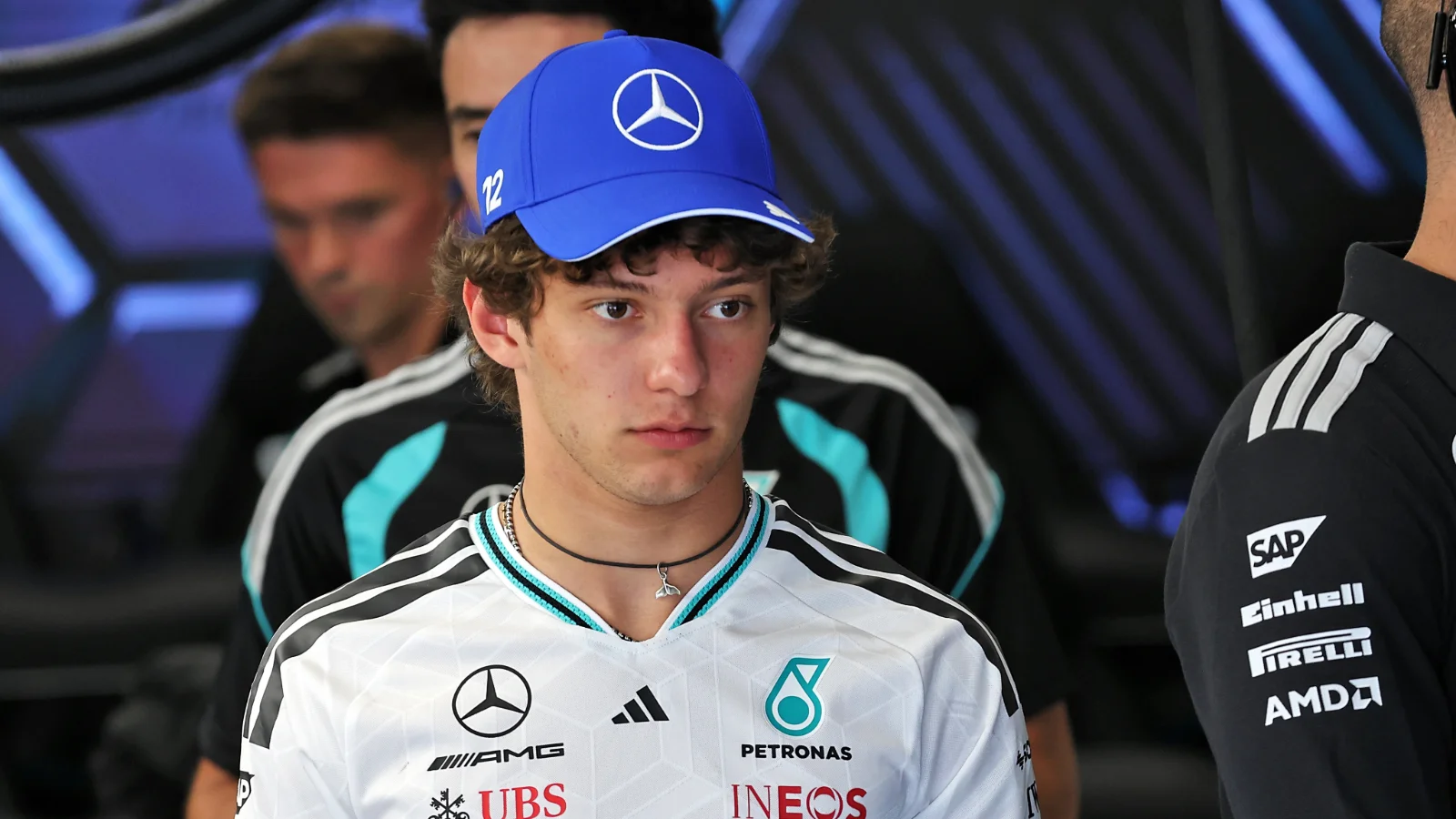
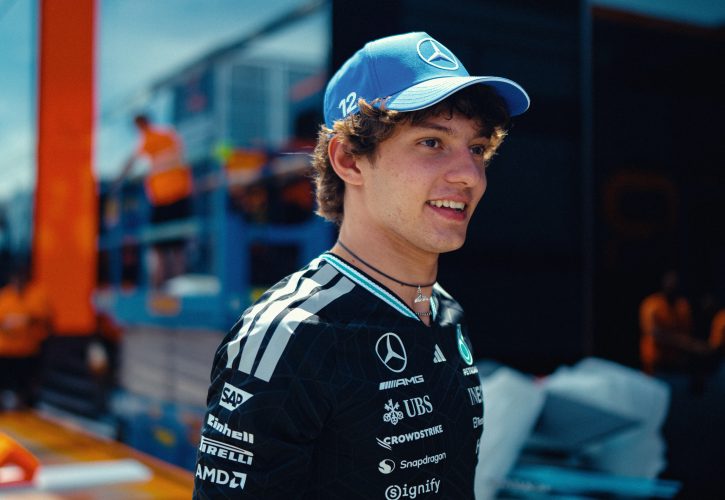
    At the team’s digital season launch, Toto Wolff described 2026 as “a line in the sand” and presented the W17 as a deliberate reinvention rather than an incremental update. He outlined sweeping changes to power units, aerodynamics, chassis dimensions, and energy deployment, including a near 50:50 combustion-electric split and the removal of the MGU-H. The team boss further stressed closer integration between Brackley and Brixworth, naming George Russell and rookie Kimi Antonelli as his race drivers, and confirming Fred Vesti as the reserve driver.

    Mercedes reinforced that intent with a heavy Barcelona shakedown, reporting roughly 500 closed laps and more mileage at the Circuit de Catalunya than any rival. Russell and Antonelli said they were satisfied with the W17’s progress. Rival teams have publicly and privately questioned a reported compression-ratio loophole in the 2026 engine rules and suggested it may have given Mercedes an early advantage. However, Wolff has pushed back publicly and expressed private frustration. Reporting stresses that the debate centers on scrutiny of the regulations rather than any formal ruling by the sport’s authorities.

    Wolff said he does not want “world dominance,” preferring close championship battles, and pointed to the new chassis and engine rules, the cost cap, and largely equal equipment as checks on wide performance swings. The immediate test of whether Mercedes’ early running translates into a sustained advantage will come at pre-season testing in Bahrain, with two test windows on Feb 11–13 and Feb 18–20, followed by the season-opening race in March. Those sessions will provide the first competitive measure of how the W17 performs under the new regulations and whether Mercedes’ reinvention yields a durable edge or simply early promise.

    More
  • Boost Button Replaces DRS, Makes Overtakes Energy-Driven

    Boost Button Replaces DRS, Makes Overtakes Energy-Driven

    A closed five-day shakedown in Barcelona gave teams their first practical look at the 2026 regulation changes. Lando Norris drove McLaren’s MCL40, describing a slimmer, lighter chassis with active aerodynamics and an approximately 50/50 electric–biofuel power split. Peak electrical output was reported at about 350 kW, and Norris warned that full battery deployment could lift straight-line speeds to roughly 380 kph but would likely drain the pack by the end of a long straight.

    On track, the cars produced stronger forward G‑forces and reduced cornering grip, which altered balance until drivers adjusted over a few laps. The new push-button Boost (Overtake) Mode replacing DRS makes overtaking dependent on finite battery reserves and recharge cycles rather than solely aerodynamic tow.

    Those changes carry clear strategic and tactical implications. Battery deployment limits, kilowatt caps, and defined timing windows will force split-second energy management that affects qualifying, overtaking, and race strategy. Norris warned this could increase on-track “chaos,” producing momentum swings, defensive uses of Boost, and what he called “yo‑yoing” overtakes followed by recovery laps. Mercedes sophomore Kimi Antonelli called it “chess at speed,” saying anticipating rivals and instant energy trade‑offs will become core racecraft. The Italian added that juniors who have adapted quickly to the new cars may cope sooner, though established drivers will adapt as well. Teams therefore face a steeper operational burden as drivers must manage on‑car systems in real time as well as wheel‑to‑wheel skills.

    Practically, teams will use pre‑season sessions to develop deployment and recharge strategies so performance during key qualifying laps and race maneuvers is not compromised. Bahrain testing and the season opener in Australia are the next critical checkpoints. Engineers and strategists will continue to refine timing windows, recharge profiles, and active‑aero responses as track data accumulates. The combination of greater electrical power, active aerodynamics, and system‑dependent overtaking means on‑car systems and strategy will play a larger role across the 2026 season, changing how races are planned and executed.

    More
  • Haas' Komatsu: Ocon and Team share Blame for 2025

    Haas’ Komatsu: Ocon and Team share Blame for 2025

    Haas team principal Ayao Komatsu said the team “expected more” from Esteban Ocon after a difficult 2025 season, adding that “nobody’s satisfied” with the sporting result and describing responsibility as roughly “50/50” between driver and team. Ocon joined Haas for 2025 after Nico Hülkenberg moved to Sauber. Despite a previous Grand Prix win and additional podiums, he was narrowly outscored 38–41 and outqualified 11–17 (excluding technical issues) by rookie teammate Oliver Bearman. Komatsu highlighted issues Ocon raised, notably braking instability and inconsistent car behaviour that Bearman did not appear to suffer, and pointed to weekends such as Baku, where Ocon was “miles off” in qualifying, versus Abu Dhabi, where a poor Friday was followed by recovery to Q3 and a seventh-place finish, as evidence of inconsistency alongside underlying ability. He urged the team to speed up its engineering and set‑up processes so small faults do not compound across a race weekend, saying those technical and operational fixes are essential for Haas to unlock both drivers’ performances as it plans for 2026.

    Komatsu also acknowledged ongoing contract uncertainty and confirmed Ocon had been mentioned among names at risk heading into the 2026 silly season. He described “very good ongoing talks” over the winter that have improved Ocon’s understanding of how driver and team should work together and helped align expectations for a critical year in the driver’s F1 career. Haas says the situation is being actively managed and expects clearer on‑track performance and cohesion in 2026. Both performance and contract outcomes will likely determine Ocon’s immediate future and whether roster changes are required.

    More
  • Stroll Backs In-House AMR26 with Honda Power Swap

    Stroll Backs In-House AMR26 with Honda Power Swap

    Adrian Newey’s first Aston Martin design, the AMR26, completed a delayed on-track shakedown in Barcelona and immediately marked a clear technical departure for the team. Sky Sports F1 analyst Bernie Collins called the program a “mammoth undertaking,” noting Aston Martin’s move to an in-house gearbox and hydraulics and the switch to a Honda power unit. These steps were driven by significant investment from Lawrence Stroll that separates the car from the Mercedes-based drivetrains used previously. The late rollout limited track time, with only Fernando Alonso managing a full day of testing, leaving many performance questions unanswered ahead of the season opener.

    Technically, the AMR26 emphasizes undersurface-focused aerodynamics and unusually tight packaging. Observers pointed to a chamfered nose, a tapered front wing, aggressive rake, and a floor designed to generate the majority of downforce, plus numerous airflow vanes and a markedly larger airbox. PlanetF1’s Matt Somerfield highlighted the sidepod treatment and a cavernous gap beneath them that recalled past double-floor concepts. Newey described the car as a holistic package requiring close collaboration between aerodynamic and mechanical designers and said it contains “quite a few features that haven’t necessarily been done before.” He also warned that the AMR26 will be “very different” at the start of the season. Rival reaction combined curiosity and caution. Williams principal James Vowles labeled Newey’s suspension choices “very extreme,” joking that wishbones were placed “in places that I don’t think they should be,” while Mercedes driver George Russell called it the most standout design on the grid but stressed that striking looks must translate into lap-time performance. With unconventional rear-suspension packaging that appears to favor aerodynamic downforce or lower drag over traditional mechanical cornering, the car’s true competitiveness will be judged in Melbourne when full weekend running provides a clearer measurement under race conditions.

    More
  • Compression Theory Sparks Paddock Strain Before Melbourne

    Compression Theory Sparks Paddock Strain Before Melbourne

    A technical theory published earlier this month by Auto Motor und Sport (AMuS) generated a pre‑season controversy. It suggests that Mercedes, and separately Red Bull Powertrains, may have found a way to meet the FIA’s new 16.0:1 geometric compression cap in the garage while producing higher effective compression on track. AMuS reported Mercedes used 3D‑printed pistons to raise static compression to about 17:1. It also described a tiny one‑cubic‑centimeter pocket linked to the combustion chamber near the pre‑chamber spark plug that would stop expanding at operating temperature and thereby increase running compression; AMuS said Red Bull Powertrains had identified the same underlying principle but had not found a reliable implementation. Reported estimates of the on‑track gain varied by outlet, ranging from 10–13 hp up to 15–20 hp, depending on the publication. Translating these gains into time leads to a 0.2 – 0.3 second per lap advantage.

    The allegation is an unconfirmed technical theory, but it focused attention on Article C5.4.3, which currently measures compression “at ambient temperature.” It prompted rival manufacturers, led publicly by Ferrari, Audi, and Honda, to press the FIA and the Power Unit Advisory Committee (PUAC) to change measurement procedures so compliance would be checked with engines hot or via in‑use sensors. Teams discussed the issue at a late‑January technical experts meeting and then in subsequent PUAC sessions. Formally changing the written procedure would require support from four of the five engine manufacturers plus the FIA and Formula One Management.

    Red Bull’s position was viewed as pivotal to securing that supermajority, and sources indicated it may back closing the loophole to avoid leaving Mercedes with a pre‑season advantage. Mercedes team principal Toto Wolff publicly defended the work as legal and transparent, pointing to the team’s recent five‑day shakedown and apparent reliability as evidence of legitimacy.

    The FIA initially measured engines cold and declared them compliant, but Autosprint recently reported the governing body plans to retest all V6 power units under hot, running conditions starting at the Australian Grand Prix to verify compliance in race‑like conditions. With the March 1 homologation deadline approaching, rapid regulatory change before Melbourne looks difficult, so any substantive rewrite is likely to be deferred into 2027. The dispute centers on measurement methodology and enforcement rather than a new hardware ban, but it has raised political and sporting tensions in the paddock and risks overshadowing the start of the season.

    More