NXTbets Inc

  • Williams Focuses on Simulator Prep as FW48 Eyes Bahrain Vindication

    Williams Focuses on Simulator Prep as FW48 Eyes Bahrain Vindication

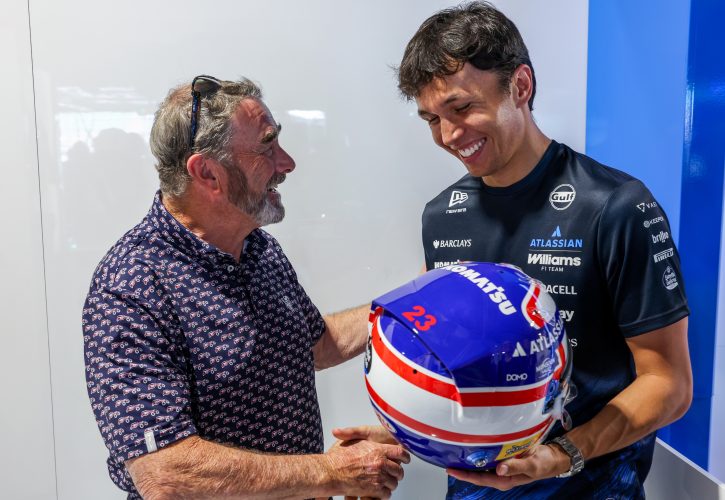
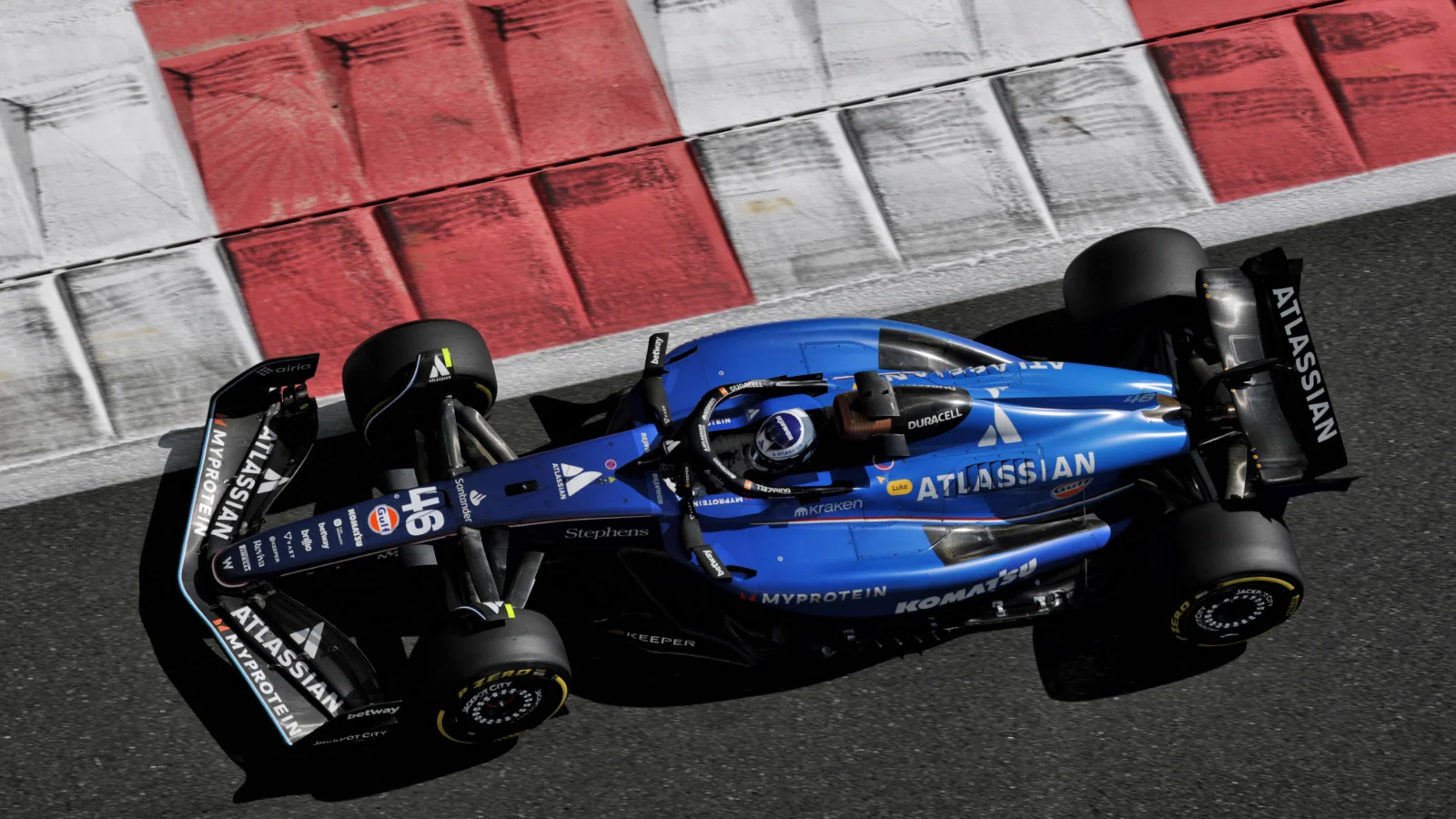
    Williams unveiled the visual identity for its FW48 while keeping the chassis covered after missing the Barcelona pre-season running. The livery retains the team’s dark-blue base with lighter-blue sidepods and adds prominent white panels on the sidepods and on the front and rear wings for Komatsu branding. Barclays logos in cyan-blue appear following a new banking partnership, and the announcement confirmed additional commercial partners, including Anthropic and Wilkinson Sword.

    The team reconfirmed Alex Albon and Carlos Sainz as its drivers for the upcoming campaign. Sainz scored two podiums in 2025, and the pair will look to build on Williams’ fifth-place finish in the 2025 constructors’ standings. Team principal James Vowles called the livery the most complex and best the team has produced and said Williams missed Barcelona because of production delays tied to an ambitious design and manufacturing programme, not failed FIA crash tests.

    Williams described the FW48 as representing a technical shift, and placing greater emphasis on overbody airflow and the introduction of active aero via movable front and rear wing elements. The British establishment confirmed that the car runs a Mercedes power unit and gearbox, and says it relied heavily on intensive virtual-track testing and simulator work at its Grove base to develop accurate car-and-power-unit models before on-track running. Rivals have warned that this season’s higher electrical power and tighter energy-management demands make actual track mileage particularly valuable.

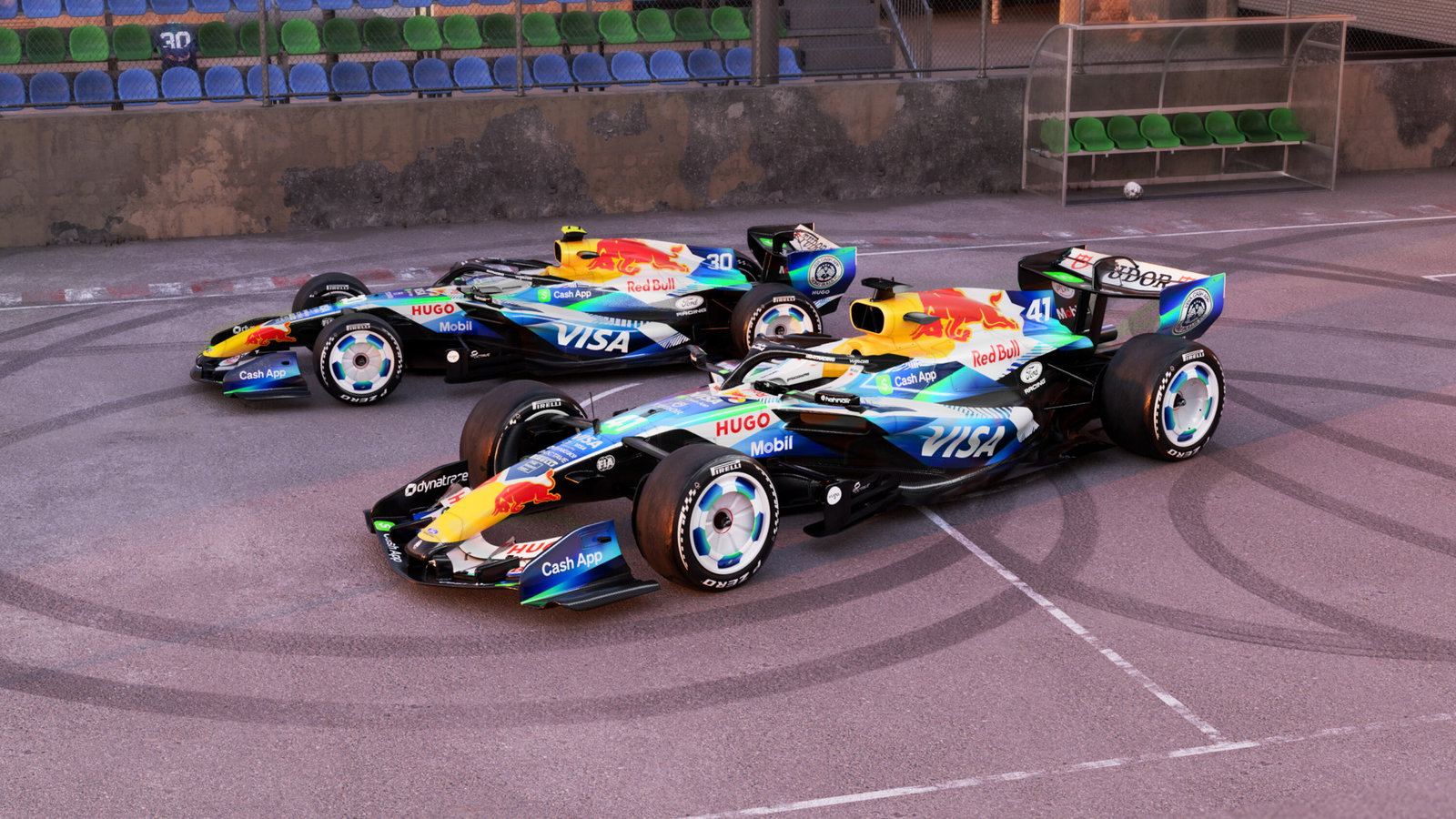
    Williams plans a shakedown of the FW48 ahead of the Bahrain tests (Feb 11–13 and Feb 18–20), where it will run a fan-selected “flow state” livery across the two sessions and aim to recover lost on-track time. Vowles and the engineering group expressed cautious optimism, based on internal metrics, that the FW48 could be the team’s strongest package, but they acknowledged the car’s true competitiveness will only be revealed once it completes running in Bahrain and translates simulation gains into lap time under race conditions.

    More
  • Bahrain Test to Determine if W17 is a Title Contender

    Bahrain Test to Determine if W17 is a Title Contender

    Mercedes emerged as the standout in Barcelona’s pre-season shakedown under the new regulations. Mercedes said its works team completed 501 laps, and that Mercedes-linked power units logged more than 1,000 combined laps, including customer teams. The W17 frequently appeared near the top of timing sheets, and trackside engineering director Andrew Shovlin said the all-new systems “worked brilliantly.” The team credited work at its Brixworth and Brackley facilities and momentum from an earlier Silverstone outing, while stressing that strong reliability is encouraging but not a definitive indicator of ultimate pace.

    Mercedes called George Russell’s outing a “positive surprise.” He posted the second-fastest lap, within less than a tenth of Lewis Hamilton’s 1:16.348 marker, and reported the W17 “feels nice to drive” with no porpoising. Andrea Kimi Antonelli also showed encouraging pace at times. Both drivers covered heavy mileage to build a large data set, which Mercedes says will inform ongoing development.

    Pressure persists off-track. Mercedes has not won the constructors’ title since 2021, or a drivers’ crown since 2020, but Toto Wolff remains in charge even as the technical group shifts. James Allison and Simone Resta remain involved, John Owen resigned, and engineering director Giacomo Tortora has assumed a larger role. Team commentary has tied driver futures and leadership scrutiny to on-track results. Russell’s seat and Antonelli’s progression were described as contingent, and Wolff has publicly signalled openness to pursuing other top drivers such as Max Verstappen should Mercedes prove dominant.

    The team will next focus on setup exploration and race/qualifying preparation at the official Bahrain test on February 11–13, with further running planned for February 18–20. Those sessions will be key to determining whether the W17’s encouraging start converts into genuine championship contention and whether pressure on drivers and leadership intensifies.

    More
  • Piastri Plots 2026 Comeback After Losing Title to Norris

    Piastri Plots 2026 Comeback After Losing Title to Norris

    Oscar Piastri’s collapse at the end of the 2025 season is well documented. He held a 34-point lead after the Dutch Grand Prix (round 15) but failed to win any of the final eight races, enduring a six-race podiumless streak. The Australian’s results paved the way for his teammate Lando Norris to seize the championship by 13 points. Piastri ultimately finished third in the drivers’ standings behind Norris (the 2025 champion) and Max Verstappen, while McLaren secured the Constructors’ title for a second consecutive year.

    This week, former Red Bull team principal Christian Horner publicly backed Piastri, saying the young Australian will get “better and better” and noting he had earlier described him as an “odds-on favorite” during last year’s summer run. Horner will begin a speaking tour in Melbourne on Feb 24. Broadcaster Martin Brundle predicted that Piastri will “come back with a vengeance,” praising his rapid learning curve and the portions of 2025 when he dominated races, while also pointing to clear areas for improvement, such as low-grip performance and tire management. Brundle added that the rule reset and upcoming preseason activity in February, including closed shakedowns and Bahrain tests, could reshuffle the competitive order before the Australian Grand Prix in March.

    Technical critics and coaches have been more prescriptive. Driving coach Martin Villari, on The Red Flags Podcast with Tom Clarkson, labeled limited simulator use and a late-braking approach as the “obvious” problems that cost Piastri time in sequences such as turns 1–3 in Mexico City and at circuits in Brazil. Villari urged increased, focused simulator work and a reframe of corner approach and braking technique. Pundits have suggested Piastri should also heed advice from established rivals like Max Verstappen and combine that technical work with the resilience Horner and Brundle expect.

    The consensus is clear. Piastri remains a major contender based on talent and past form. But a concrete program of technical refinement and thorough preparation during the rule reset and preseason will be essential if he is to engineer a title run in 2026.

    More
  • Power Unit Advisory Committee to Probe On-Track Ratios

    Power Unit Advisory Committee to Probe On-Track Ratios

    A technical dispute over the 2026 Formula 1 power-unit regulations erupted as reports said Mercedes and Red Bull Powertrains had found ways to run higher effective compression ratios on track while remaining compliant with static tests. The 2026 V6 hybrid rules specify a 16:1 compression ratio at ambient temperature, yet both manufacturers were reported to have configured units that registered about 18:1 in above-ambient conditions — a setup analysts estimated could be worth roughly 0.3 seconds per lap at Albert Park. Teams and technical bodies held an initial meeting and the Power Unit Advisory Committee was scheduled to meet on Thursday to discuss possible next steps, but talks so far produced few concrete outcomes.

    Christian Horner, who founded Red Bull Powertrains and helped develop the 2026 units, publicly rejected characterizations of the situation as outright cheating, telling Australia’s Today show that engineers naturally push the boundaries and that the dispute was about interpreting rules rather than deliberate rule-breaking. Horner dismissed claims that teams were “cheating like wildcats” and defended both Red Bull and Mercedes; he also described Toto Wolff’s blunt remark to unhappy OEMs — “get your s*** together” — as “a big statement.” Media reports noted suggestions that Red Bull might already be using, or could adopt, similar configurations; Red Bull denied such claims.

    The regulatory debate prompted teams at a pre-Barcelona shakedown meeting to consider adding real-time fuel-compression measurement to prevent on-track circumvention, though that change was viewed as unlikely to be implemented during the 2026 season. With power-unit mappings still being finalized ahead of the opening rounds, the matter remained an ongoing technical and regulatory dispute between manufacturers, teams and the sport’s technical bodies as the season approached.

    More
  • Cadillac F1 completes Barcelona shakedown, logs 164 laps

    Cadillac F1 completes Barcelona shakedown, logs 164 laps

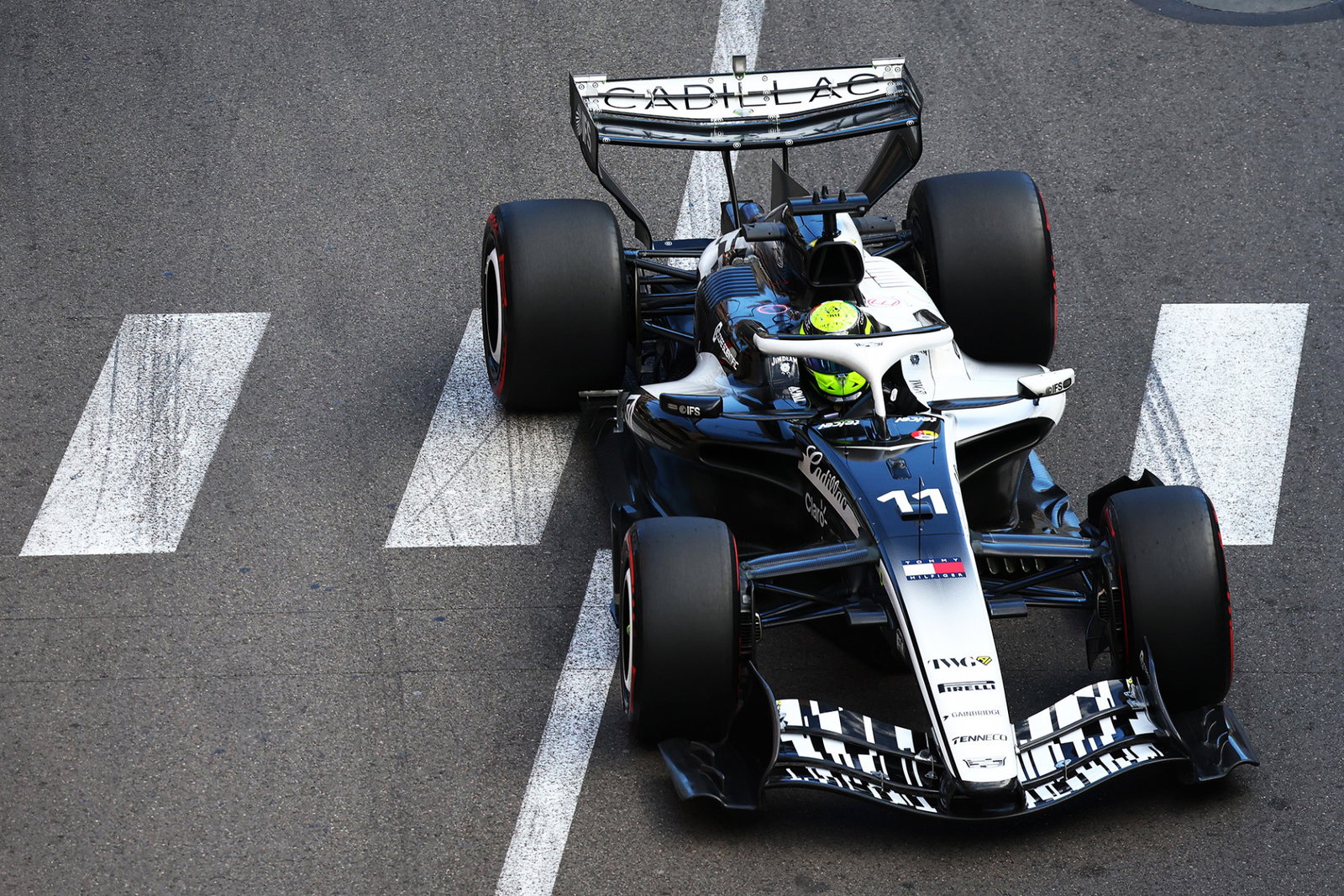
    Cadillac F1 completed a private three-day shakedown at Barcelona-Catalunya, running 164 laps. The program prioritized systems checks and reliability rather than outright pace, with engineers treating the outing as a debugging and durability exercise.

    Valtteri Bottas, who returned after sitting out 2025, drove during the program and said the team had made rapid progress but still faced a “mountain to climb” to reach the competitiveness and reliability needed for its debut. His quickest Barcelona time was 4.572 seconds — roughly 6% off the test leader but within the 107% qualifying cutoff — suggesting the car could plausibly make the grid even if substantial development remains.

    Cadillac has cleared several early technical milestones: a full-car dyno run in December, a Silverstone filming day in January, and the Barcelona shakedown. Those steps helped temper concerns even though the team recorded the slowest combined running across the five-day test programme and the second-lowest lap total among teams present.

    Team principal Graeme Lowdon and senior staff note that, despite broad individual F1 experience, the group has only about 11 months of working-together time and some key facilities remain unfinished, leaving operational and development gaps to close.

    Engineers collected data for simulator correlation work in the United States ahead of two three-day pre-season tests in Bahrain in February. The team may produce new parts before those Bahrain sessions and will use on-track running there to prove improved reliability and extract further performance. Success in Bahrain — and subsequent iteration before the season opener in Melbourne in March, where Bottas will race alongside Sergio Perez — will determine whether the early milestones translate into consistent, race-ready form.

    Until then, the Barcelona outing stands as an important historical step that demonstrated tangible progress while also highlighting the substantial technical and operational work still to be completed.

    More
  • Antonelli targets 2026 title after strong W17 shakedown

    Antonelli targets 2026 title after strong W17 shakedown

    Mercedes promoted Andrea Kimi Antonelli to a full-time race seat for 2025 as the team’s first-ever rookie signing, elevating him at 18 after scouting him in karting in 2017. Gwen Lagrue, Mercedes’ head of driver development, said the team learned from George Russell’s three-year spell at Williams — which required “half a season to get him up to speed” after joining Mercedes in 2022 — and decided to accelerate Antonelli’s path so he would be ready when the team expected to be more competitive in 2026. Lagrue praised Antonelli’s maturity and leadership, likened her early impression to seeing Max Verstappen at a young age, and told Toto Wolff to secure him for the Mercedes program, framing the promotion as a strategic development gamble because Mercedes did not expect to fight for the title in 2025. The club judged the risk worthwhile to shorten his learning curve and build long-term upside.

    Antonelli, who made his Formula 1 debut in 2025 at 19 after replacing Lewis Hamilton following Hamilton’s move to Ferrari, had a rookie season marked by both promise and painful setbacks. Toto Wolff called the appointment a “big ask,” and Antonelli’s year included several high-profile errors — most notably taking Max Verstappen out at the opening lap of the Austrian Grand Prix — and a midseason loss of confidence after a rear-suspension update. He endured a long points drought, scoring only once between rounds seven and 13 with his maiden podium (P3) at the 2025 Canadian Grand Prix, but finished the year with three Grand Prix podiums: P2 in São Paulo and P3 in Canada and Las Vegas, plus a P2 in the São Paulo Sprint after chasing Lando Norris. Those results underlined flashes of pace and resilience amid the typical rookie learning curve.

    Looking ahead to 2026, Antonelli has set an ambitious target of winning the World Championship as he prepares for his second F1 season, buoyed by a strong three-day Barcelona pre-season shakedown where Mercedes logged 1,134 laps and suggested the W17 has competitive pace. Mercedes warned that continued speed at the upcoming Bahrain pre-season test would position them as the team to beat when the season opens in Australia. At the W17 launch Antonelli said his goal is to win and to eventually fight for the championship, and he expressed eagerness to compete alongside teammate George Russell. Toto Wolff has counseled caution — recalling Antonelli’s midseason slump in 2025 and warning that Russell-level consistency should not be expected immediately — while nonetheless expressing confidence that the young driver can deliver a strong year.

    More
  • Newey: Aston Martin only began wind‑tunnel work mid‑April

    Newey: Aston Martin only began wind‑tunnel work mid‑April

    Adrian Newey revealed that Aston Martin did not put its 2026 car into a wind tunnel until mid‑April 2025, roughly four months after the aero testing ban lifted on January 1, 2025, and after he joined the team on March 1, 2025. The CoreWeave wind tunnel only reached full operation in April, which Newey said created a “very, very compressed research and design cycle” and meant the AMR26 “only came together at the last minute.” That timing left Aston Martin at a material deficit compared with rivals that began wind‑tunnel and CFD work immediately after the ban ended. Newey described the AMR26 as a much more tightly packaged and ambitious design that required close coordination between aerodynamic and mechanical teams.

    The compressed schedule forced a last‑minute push to get the car to a five‑day Barcelona shakedown, flown from the factory via Birmingham and Girona. The AMR26 made a very late appearance in the penultimate hour of the opening test, completing 65 laps across that final hour and the subsequent Friday running, and managed only one full day of running after a few laps the evening before. That limited on‑track mileage left Aston Martin with a steep development curve and less aero validation than rivals ahead of the season. Newey said mechanical designers “really embraced” the tight packaging despite added complexity, but acknowledged the timing and operational constraints constrained early validation.

    He framed the slow early mileage as a technical and logistical setback rather than a permanent deficit and signaled an active in‑season upgrade program. Newey warned the car would continue to evolve through the season, with upgrades planned so the Aston Martin that appears at the Australian Grand Prix will be substantially different from the one that finishes in Abu Dhabi. The team has clear targets to improve drivability and race pace for drivers Lance Stroll and Fernando Alonso as it works to close the gap opened by the delayed and compressed development. Overall, the AMR26 represents an ambitious step for Aston Martin that combined aggressive packaging with an accelerated rollout and an ongoing upgrade pathway driven by catch‑up development.

    More
  • Audi's R26 debut hit by major reliability issues

    Audi’s R26 debut hit by major reliability issues

    Audi’s entry into F1 — completed with its takeover of the Sauber team and the launch of the R26 — began with a Barcelona shakedown followed by a three‑day closed test that produced 240 laps (about 1,117 km). The R26 retained substantial Sauber DNA but ran an Audi power unit. Both drivers, Nico Hülkenberg and Gabriel Bortoleto, suffered stoppages: Bortoleto halted after 27 laps with a suspected gearbox problem, and Hülkenberg stopped early because of a hydraulics fault. Audi completed 145 laps on the final day, but the 240‑lap total left the team eighth of ten by mileage — well behind the leaders and ahead only of outfits that managed as few as roughly 65 laps.

    Project chief Mattia Binotto said the results produced a “very, very long list” of design and operational fixes — the largest he has seen in his career — and described the early reliability failures as expected teething problems for a new power‑unit program. The test exposed a stark mileage gap to established suppliers: Mercedes completed 1,132 laps, Ferrari 989 and Red Bull 622; Audi also ran 47 fewer laps than McLaren. Those shortfalls make improving reliability the immediate priority so Audi can increase lap count, gather technical data and unlock performance as a new engine manufacturer without customer teams.

    Audi has set clear near‑term milestones, scheduling two Bahrain test blocks on Feb. 11–13 and Feb. 18–20 to validate fixes and iterate on the R26 ahead of the season opener. Binotto said the work is technically demanding but actionable: the team will focus on rapid learning and race‑by‑race improvements while pursuing a long‑term ambition to compete for world titles by 2030. Significant reliability and development challenges hampered the debut, but the defined testing roadmap is intended to resolve issues before the start of the championship.

    More
  • FIA Seeks Black-and-White Hot-Engine Test for Ratio Rule

    FIA Seeks Black-and-White Hot-Engine Test for Ratio Rule

    Engine manufacturers and the FIA scheduled two meetings for next week. A Monday technical workshop followed by Thursday’s Power Unit Advisory Committee (PUAC) to try to resolve a dispute over an alleged compression-ratio loophole in the 2026 Technical Regulations. The issue centers on Article C.5.4.3, which caps geometric compression ratio at 16.0 and requires measurement at ambient temperature. Checks to date have been performed under ambient conditions, while the FIA is exploring methods to measure compression ratios with engines hot, after an earlier expert gathering produced only partial agreement and requested additional test data. Ferrari power unit technical director Enrico Gualtieri described talks as positive but said more work and data were needed. In addition, FIA single-seater technical director Nikolas Tombazis said officials wanted the matter “put to bed in a totally absolute black and white way” before the Australian Grand Prix at Albert Park.

    Reports have identified Mercedes as the team most likely to have exploited the regulatory ambiguity, with Red Bull implicated to a lesser extent. The interpretation is said to allow higher on-track compression and a potential performance gain of up to about 15 bhp, roughly 0.4 seconds per lap. Several manufacturers, including Ferrari, Honda, and Audi, sent a joint letter to the FIA before Christmas raising concerns, and Red Bull’s similar interpretation helped align other firms politically in calls for guarantees about engine legality. Former driver Ralf Schumacher publicly urged Ferrari to “keep their mouths shut,” invoking the team’s 2019 fuel-flow controversy and a subsequent confidential agreement with the FIA, while also praising the engineers who flagged the loophole.

    The FIA has outlined three possible remedies to address the situation, including permitting additional spending to redesign engines (considered unlikely). Secondly, the imposition of limits on the performance extractable from Mercedes’ Petronas fuel, or requiring a legal declaration from Mercedes affirming compliance. Motorsport Italia noted that a false declaration could carry severe consequences, including potential disqualification. No immediate rule change or sanction has been announced. However, officials emphasize that next week’s meetings are intended to build consensus on a technical testing method, and any formal testing procedure or rule amendment would be handled at the PUAC level. It remains unclear whether teams unhappy with the pace or outcome of the process will lodge formal protests at the start of the 2026 season if a clear resolution is not reached in time.

    More