NXTbets Inc

  • Antonelli targets 2026 title after strong W17 shakedown

    Antonelli targets 2026 title after strong W17 shakedown

    Mercedes promoted Andrea Kimi Antonelli to a full-time race seat for 2025 as the team’s first-ever rookie signing, elevating him at 18 after scouting him in karting in 2017. Gwen Lagrue, Mercedes’ head of driver development, said the team learned from George Russell’s three-year spell at Williams — which required “half a season to get him up to speed” after joining Mercedes in 2022 — and decided to accelerate Antonelli’s path so he would be ready when the team expected to be more competitive in 2026. Lagrue praised Antonelli’s maturity and leadership, likened her early impression to seeing Max Verstappen at a young age, and told Toto Wolff to secure him for the Mercedes program, framing the promotion as a strategic development gamble because Mercedes did not expect to fight for the title in 2025. The club judged the risk worthwhile to shorten his learning curve and build long-term upside.

    Antonelli, who made his Formula 1 debut in 2025 at 19 after replacing Lewis Hamilton following Hamilton’s move to Ferrari, had a rookie season marked by both promise and painful setbacks. Toto Wolff called the appointment a “big ask,” and Antonelli’s year included several high-profile errors — most notably taking Max Verstappen out at the opening lap of the Austrian Grand Prix — and a midseason loss of confidence after a rear-suspension update. He endured a long points drought, scoring only once between rounds seven and 13 with his maiden podium (P3) at the 2025 Canadian Grand Prix, but finished the year with three Grand Prix podiums: P2 in São Paulo and P3 in Canada and Las Vegas, plus a P2 in the São Paulo Sprint after chasing Lando Norris. Those results underlined flashes of pace and resilience amid the typical rookie learning curve.

    Looking ahead to 2026, Antonelli has set an ambitious target of winning the World Championship as he prepares for his second F1 season, buoyed by a strong three-day Barcelona pre-season shakedown where Mercedes logged 1,134 laps and suggested the W17 has competitive pace. Mercedes warned that continued speed at the upcoming Bahrain pre-season test would position them as the team to beat when the season opens in Australia. At the W17 launch Antonelli said his goal is to win and to eventually fight for the championship, and he expressed eagerness to compete alongside teammate George Russell. Toto Wolff has counseled caution — recalling Antonelli’s midseason slump in 2025 and warning that Russell-level consistency should not be expected immediately — while nonetheless expressing confidence that the young driver can deliver a strong year.

    More
  • Newey: Aston Martin only began wind‑tunnel work mid‑April

    Newey: Aston Martin only began wind‑tunnel work mid‑April

    Adrian Newey revealed that Aston Martin did not put its 2026 car into a wind tunnel until mid‑April 2025, roughly four months after the aero testing ban lifted on January 1, 2025, and after he joined the team on March 1, 2025. The CoreWeave wind tunnel only reached full operation in April, which Newey said created a “very, very compressed research and design cycle” and meant the AMR26 “only came together at the last minute.” That timing left Aston Martin at a material deficit compared with rivals that began wind‑tunnel and CFD work immediately after the ban ended. Newey described the AMR26 as a much more tightly packaged and ambitious design that required close coordination between aerodynamic and mechanical teams.

    The compressed schedule forced a last‑minute push to get the car to a five‑day Barcelona shakedown, flown from the factory via Birmingham and Girona. The AMR26 made a very late appearance in the penultimate hour of the opening test, completing 65 laps across that final hour and the subsequent Friday running, and managed only one full day of running after a few laps the evening before. That limited on‑track mileage left Aston Martin with a steep development curve and less aero validation than rivals ahead of the season. Newey said mechanical designers “really embraced” the tight packaging despite added complexity, but acknowledged the timing and operational constraints constrained early validation.

    He framed the slow early mileage as a technical and logistical setback rather than a permanent deficit and signaled an active in‑season upgrade program. Newey warned the car would continue to evolve through the season, with upgrades planned so the Aston Martin that appears at the Australian Grand Prix will be substantially different from the one that finishes in Abu Dhabi. The team has clear targets to improve drivability and race pace for drivers Lance Stroll and Fernando Alonso as it works to close the gap opened by the delayed and compressed development. Overall, the AMR26 represents an ambitious step for Aston Martin that combined aggressive packaging with an accelerated rollout and an ongoing upgrade pathway driven by catch‑up development.

    More
  • Audi's R26 debut hit by major reliability issues

    Audi’s R26 debut hit by major reliability issues

    Audi’s entry into F1 — completed with its takeover of the Sauber team and the launch of the R26 — began with a Barcelona shakedown followed by a three‑day closed test that produced 240 laps (about 1,117 km). The R26 retained substantial Sauber DNA but ran an Audi power unit. Both drivers, Nico Hülkenberg and Gabriel Bortoleto, suffered stoppages: Bortoleto halted after 27 laps with a suspected gearbox problem, and Hülkenberg stopped early because of a hydraulics fault. Audi completed 145 laps on the final day, but the 240‑lap total left the team eighth of ten by mileage — well behind the leaders and ahead only of outfits that managed as few as roughly 65 laps.

    Project chief Mattia Binotto said the results produced a “very, very long list” of design and operational fixes — the largest he has seen in his career — and described the early reliability failures as expected teething problems for a new power‑unit program. The test exposed a stark mileage gap to established suppliers: Mercedes completed 1,132 laps, Ferrari 989 and Red Bull 622; Audi also ran 47 fewer laps than McLaren. Those shortfalls make improving reliability the immediate priority so Audi can increase lap count, gather technical data and unlock performance as a new engine manufacturer without customer teams.

    Audi has set clear near‑term milestones, scheduling two Bahrain test blocks on Feb. 11–13 and Feb. 18–20 to validate fixes and iterate on the R26 ahead of the season opener. Binotto said the work is technically demanding but actionable: the team will focus on rapid learning and race‑by‑race improvements while pursuing a long‑term ambition to compete for world titles by 2030. Significant reliability and development challenges hampered the debut, but the defined testing roadmap is intended to resolve issues before the start of the championship.

    More
  • FIA Seeks Black-and-White Hot-Engine Test for Ratio Rule

    FIA Seeks Black-and-White Hot-Engine Test for Ratio Rule

    Engine manufacturers and the FIA scheduled two meetings for next week. A Monday technical workshop followed by Thursday’s Power Unit Advisory Committee (PUAC) to try to resolve a dispute over an alleged compression-ratio loophole in the 2026 Technical Regulations. The issue centers on Article C.5.4.3, which caps geometric compression ratio at 16.0 and requires measurement at ambient temperature. Checks to date have been performed under ambient conditions, while the FIA is exploring methods to measure compression ratios with engines hot, after an earlier expert gathering produced only partial agreement and requested additional test data. Ferrari power unit technical director Enrico Gualtieri described talks as positive but said more work and data were needed. In addition, FIA single-seater technical director Nikolas Tombazis said officials wanted the matter “put to bed in a totally absolute black and white way” before the Australian Grand Prix at Albert Park.

    Reports have identified Mercedes as the team most likely to have exploited the regulatory ambiguity, with Red Bull implicated to a lesser extent. The interpretation is said to allow higher on-track compression and a potential performance gain of up to about 15 bhp, roughly 0.4 seconds per lap. Several manufacturers, including Ferrari, Honda, and Audi, sent a joint letter to the FIA before Christmas raising concerns, and Red Bull’s similar interpretation helped align other firms politically in calls for guarantees about engine legality. Former driver Ralf Schumacher publicly urged Ferrari to “keep their mouths shut,” invoking the team’s 2019 fuel-flow controversy and a subsequent confidential agreement with the FIA, while also praising the engineers who flagged the loophole.

    The FIA has outlined three possible remedies to address the situation, including permitting additional spending to redesign engines (considered unlikely). Secondly, the imposition of limits on the performance extractable from Mercedes’ Petronas fuel, or requiring a legal declaration from Mercedes affirming compliance. Motorsport Italia noted that a false declaration could carry severe consequences, including potential disqualification. No immediate rule change or sanction has been announced. However, officials emphasize that next week’s meetings are intended to build consensus on a technical testing method, and any formal testing procedure or rule amendment would be handled at the PUAC level. It remains unclear whether teams unhappy with the pace or outcome of the process will lodge formal protests at the start of the 2026 season if a clear resolution is not reached in time.

    More
  • Horner Eyes Selective F1 Return as Partner-Owner

    Horner Eyes Selective F1 Return as Partner-Owner

    Christian Horner broke his public silence at the European Motor Show in Dublin, saying he has ‘unfinished business’ in Formula 1 (F1) after his dismissal in July 2025. He reflected on 21 years leading Red Bull and the team’s record under his stewardship, which included 124 Grand Prix wins and a combined 14 world titles (eight drivers’ championships and six constructors’ crowns). Horner said he misses the sport and defended the often-stormy but respectful rivalry with Mercedes chief Toto Wolff. He confirmed he had met FIA president Mohammed Ben Sulayem and that these were his first public remarks since leaving Red Bull when Laurent Mekies was named Red Bull’s successor shortly after his departure.

    Horner made clear any return would be selective and strategic. He said he is eligible to return to the paddock from this spring and would only consider roles that offer real influence and a realistic chance to win, preferring a partner or ownership role rather than being a ‘hired hand’. He stressed he is not in a rush to re-enter the paddock and would only come back with a clear purpose and pathway to success.

    Media reports link Horner to several potential avenues back into the sport. The most prominent is a reported consortium eyeing Otro Capital’s 24% stake in Alpine, a move Flavio Briatore has confirmed he was involved in. Alpine has said the sale cannot proceed before September without Renault Group approval, a timing constraint that affects this investment route. Other reports have connected Horner with possible roles or ties to Ferrari, Aston Martin, Cadillac and Haas.

    Taken together, his statements and the ongoing talks signal a measured, ownership-centred approach to any return to F1.

    More
  • Red Bull's DM-01 Delivers Reliable Baseline Despite Hadjar Crash

    Red Bull’s DM-01 Delivers Reliable Baseline Despite Hadjar Crash

    Red Bull’s 2026 car showed encouraging pace during the Barcelona shakedown, but the test week was disrupted when Isack Hadjar, who topped day one, crashed at the end of day two. The incident forced the team to fly spare parts in from Milton Keynes, sidelining their schedule for Wednesday and Thursday. Max Verstappen was kept off the track until Friday, but Red Bull still completed 185 laps across the opening two days, while sister team Racing Bulls logged 319.

    The primary objective of the preliminary test, which verified the reliability of Red Bull’s first-ever power unit, the DM-01, was achieved, with the engine running reliably in both Red Bull’s and customer Racing Bulls vehicles. Team principal Laurent Mekies said the power unit had “surpassed expectations” and provided a usable baseline, while Sky Sports commentator Karun Chandhok noted that chassis and power unit appeared well-matched during initial running. The DM-01, developed in collaboration with Ford and named in honor of late co-founder Dietrich Mateschitz, delivered the mileage rivals found impressive and underpinned the optimistic technical readout from Milton Keynes.

    Aerodynamically the new car drew praise despite being the first Red Bull design created without Adrian Newey’s direct input after his spring 2024 move to Aston Martin. Technical director Pierre Wache’s group retained Newey-like principles, notably keeping the front wheels as far from the sidepods as possible to reduce tyre wake and adopting push-rod suspension at both ends. That combination of conservative suspension choices and carried-over aerodynamic thinking suggests Red Bull favored a more traditional interpretation of the 2026 regulations. Drivers and commentators described the RB22 as more predictable, with Hadjar saying the 2026 cars “don’t feel too different.” At the same time, former driver Juan Pablo Montoya cautioned that the main risk might lie in electronics and system integration, and drivability and smooth power delivery could reveal “glitches” as engineers optimize the package. Taken together, the shakedown left Red Bull technically strong on the power-unit front and aero development, while flagging integration and drivability work as the next priorities. The crash-related parts logistics were the only notable brake on early progress.

    More
  • Mercedes Mileage Sets Pace; AMR26 Debut Draws Scrutiny

    Mercedes Mileage Sets Pace; AMR26 Debut Draws Scrutiny

    On the penultimate day of the Barcelona pre-season test, Mercedes established a clear benchmark, as George Russell posted the fastest unofficial lap of 1:16.641, and the Silver Arrows completed 168 laps to wrap up their allocated three days of running. Kimi Antonelli also featured near the top in the morning running, and Mercedes’ mileage advantage contrasted with other teams still sorting out reliability work. Ferrari ran both Lewis Hamilton and Charles Leclerc across the sessions, combining for about 170 laps, despite Hamilton recovering from a minor spin. Leclerc posted a 1:19.128 on Day 4 before closing to within 0.2 seconds of Russell’s benchmark on the final shakedown day. Those times framed the early performance picture heading into the next test and the season opener in Bahrain.

    Aston Martin’s Adrian Newey–designed AMR26 finally arrived in Barcelona and made a headline-grabbing debut. Lance Stroll completed a single timed lap of 1:46.404 on Day 4 before the car stopped on track and triggered a red flag. The all‑black AMR26 was powered by a Honda unit, and the team followed up on Friday with Fernando Alonso at the wheel for a more measured run. Reports indicated that Aston Martin ran Alonso with a restricted speed range of roughly 230–275 km/h while checking systems and the new power unit. The late introduction, brief stoppage, and the high-profile driving rotation put the revised Aston Martin–Honda pairing at the center of attention throughout the shakedown.

    The rest of the test was marked by a mix of reliability and logistical setbacks. McLaren curtailed running for Oscar Piastri after a fuel‑system issue. Red Bull stayed away while awaiting spare parts following Isack Hadjar’s heavy crash earlier in the week, Haas missed a day with mechanical problems, Alpine and Audi postponed their programs to Friday, and Williams was absent for the entire shakedown because of FW48 build delays. Taken together, the Barcelona sessions left Mercedes with the clearest pace and mileage advantage, as several teams continue to address technical and logistical concerns before further pre-season running.

    More
  • James Key: Audi Validates R26 Systems in Barcelona

    James Key: Audi Validates R26 Systems in Barcelona

    Audi centered its Barcelona shakedown around reliability as it brought the new R26 and its first in‑house power unit to the track, with technical director James Key saying the team would be “pretty pleased” to leave if a solid final day followed a disrupted opening. The week began with Gabriel Bortoleto stopping on Day 1 after a technical fault that triggered one of three red flags and limited Audi to roughly 27 laps. A later morning hold‑up, reportedly involving Nico Hülkenberg, was traced to a hydraulic leak that was fixed, allowing Hülkenberg to return in the afternoon and complete 68 laps. Key stressed that the priority was collecting fundamental track data so engineers in Neuburg could begin mapping the power unit and gearbox and tune energy‑recovery strategies. Audi deliberately ran fewer laps than some rivals. They used three of the five available Barcelona running days and reserved the final permitted day on Friday as its third run to complete the program. The team characterized the faults as expected prove‑out issues for a brand‑new chassis and a first F1 power unit rather than reasons for alarm.

    Overall, Key judged the Barcelona program “on target,” provided the last day went well, framing the sessions as a critical opportunity to validate systems and gather baseline data for early 2026 development. Engineers addressed the early setbacks and achieved substantive afternoon running, which the team described as productive for identifying and fixing initial issues with the power unit. Having taken over the Sauber entry and built its first F1 powertrains, Audi plans to focus resources on the official pre‑season tests in Bahrain next month. The squad emphasized methodical troubleshooting and data collection over maximizing lap count at this stage of integration. Key summed up the approach with a measured tone. “This is why we test,” highlighting that the priority remained technical validation and gathering the on‑track information required to progress development.

    More
  • Piastri Stopped by Fuel-System Fault in Barcelona Test

    Piastri Stopped by Fuel-System Fault in Barcelona Test

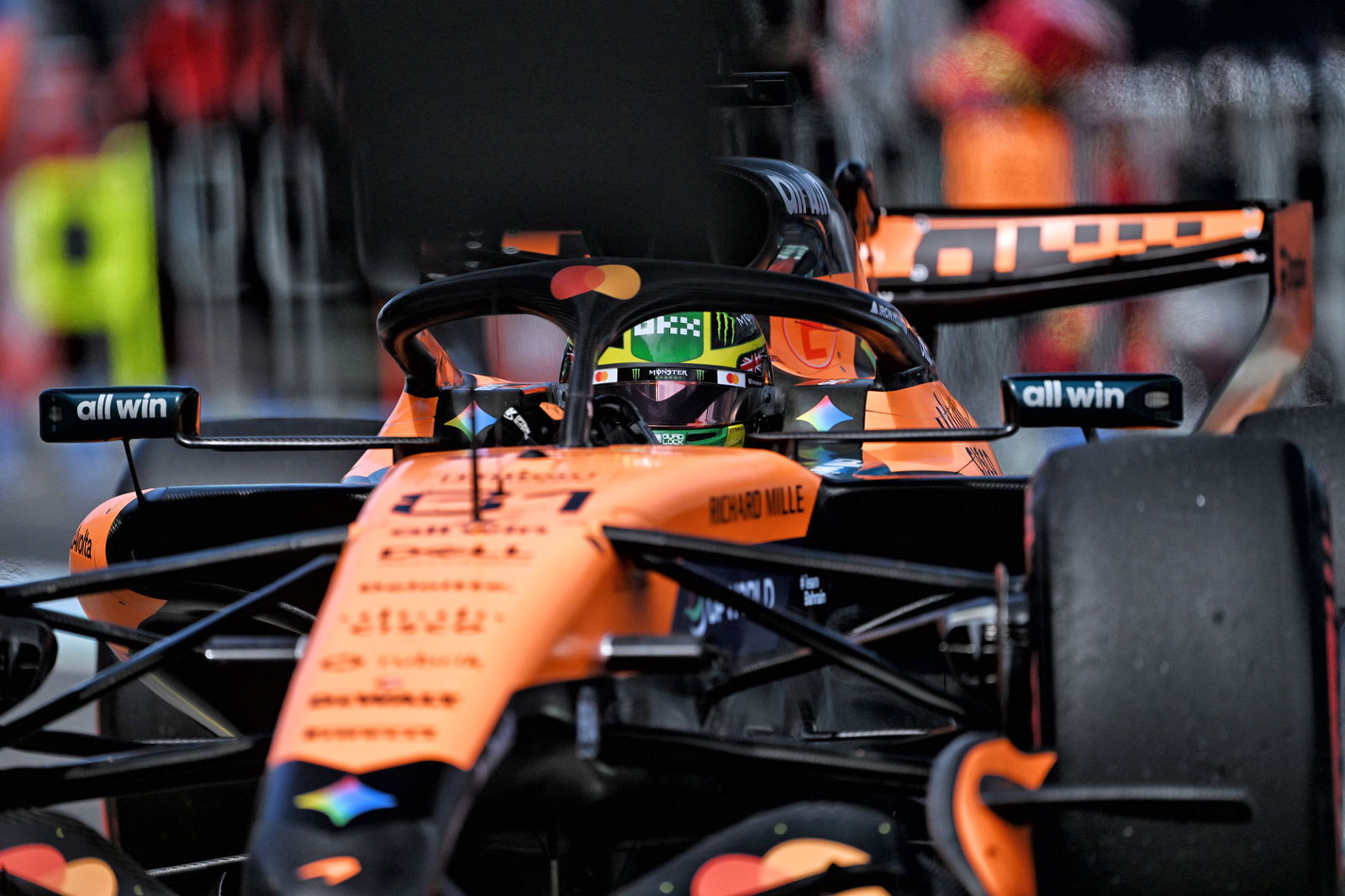
    McLaren’s MCL40 debut in Barcelona was disrupted when Oscar Piastri encountered a fuel‑system fault that stopped him after 48 laps on the penultimate day of the shakedown. The team had only taken to the track on Wednesday, with Lando Norris completing 76 laps, and used the limited sessions to start adapting to the radically revised chassis and power unit for 2026. Piastri finished fourth on the unofficial timesheets, 1.974 seconds off the fastest lap set by Mercedes’ George Russell, but the afternoon was lost when engineers stripped the car down to locate and repair the fuel-system issue.

    McLaren described the outing as a shakedown focused on exposing bugs, gathering data, and practicing energy management rather than chasing representative race pace. Technical staff, led by Performance Technical Director Mark Temple, confirmed the fault prevented further running ahead of the final Barcelona day and that engineers were working to fix the problem. Piastri said he expected to return on Friday, with only one Barcelona day remaining before two further tests in Bahrain. The team planned to split running between Piastri and Norris to recover mileage and continue setup work.

    The interruption left McLaren short of valuable laps compared to rivals. Mercedes and Ferrari logged significantly heavier mileage across the test, increasing pressure to find setup direction and improve the car’s feel and pace. Team statements emphasized that every minute of track time was precious, and the setback may force McLaren to prioritize reliability fixes alongside performance evaluation as they prepare for the Bahrain tests and the season opener. Despite the disruption, the Woking-based outfit framed the session as useful for troubleshooting early teething issues on the MCL40.

    More