NXTbets Inc

  • Bearman and Ocon clash over alleged lap blocking in Monaco practice

    Bearman and Ocon clash over alleged lap blocking in Monaco practice

    Haas teammates Oliver Bearman and Esteban Ocon clashed over alleged lap blocking during Monaco practice, producing a series of heated team‑radio exchanges that were broadcast and captured on onboard footage. The initial confrontation unfolded in FP1, when Bearman repeatedly backed out of flying laps and led Ocon out of the pits while Ocon followed closely, prompting Ocon to complain that Bearman had ruined his hot laps twice. The row escalated on team radio, with Bearman heard calling Ocon an “idiot” on air and Ocon using stronger language about having his laps impeded. Haas race engineer Laura Muller instructed Ocon to back off, but Ocon at one point overtook Bearman into the Anthony Noghes corner.

    The dispute continued to be referenced around FP2, where Bearman put in the stronger showing on track. In FP1 Bearman posted a 1:16.292 to sit 16th and Ocon a 1:16.333 to be 17th, Bearman 0.041 seconds quicker. Bearman improved in FP2 to 1:14.456 and 10th, while Ocon remained 17th in both sessions. Bearman, 19, called FP2 “a step forward” and said the team still had work to do overnight to optimise the car. Ocon, 29, downplayed the row after FP2, saying he had also been held up several times, that the team had swapped positions and resolved the issue, and that practice was about finding the car’s limits ahead of pushing harder the following day. He also commented that the new‑generation cars at Monaco felt “a bit more old school” with less energy‑management demand.

    Haas sporting boss Ayao Komatsu held a debrief after the FP1 incident, signalling the team was actively managing driver interactions and extracting lessons from the practice sessions. The tensions come with wider context: Bearman outscored Ocon last season and led him by 17 points in the 2026 standings entering Monaco, having three points finishes so far this year, while Ocon had scored one point in the opening five races. Media reports noted neither driver’s future at Haas is guaranteed beyond 2026, a point Ocon called “complete nonsense,” saying he had a good relationship with Komatsu and remained focused on his job.

    More
  • Ferrari: Vasseur under medical observation, return timetable unclear

    Ferrari: Vasseur under medical observation, return timetable unclear

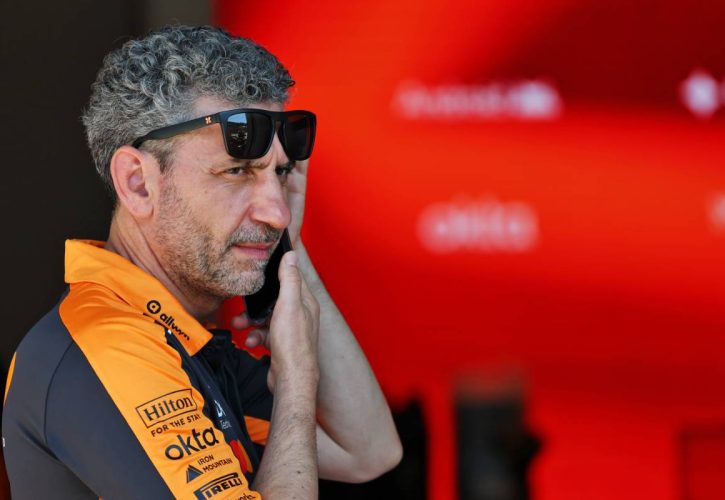
    Ferrari announced that team principal Fred Vasseur, 58, would miss Saturday’s Monaco Grand Prix qualifying after undergoing medical checks and being kept under observation at a local medical facility. The team said it would not provide further medical details and wished Vasseur a speedy recovery. Ferrari framed the matter as an internal medical issue and gave no timetable for his return.

    The statement, released as qualifying was imminent, said Vasseur would not be present at the circuit on Saturday but did not identify who might assume his trackside responsibilities for qualifying. Vasseur has led Ferrari’s Formula 1 team since 2023 and received a multi-year contract extension last year. The announcement removed a key figure from a crucial part of the race weekend and left Ferrari managing both sporting priorities and an unexpected leadership absence.

    On Friday Charles Leclerc topped first practice and Lewis Hamilton set the fastest time in the second session, underscoring the competitive picture for the weekend. Vasseur had earlier warned teams that Friday times were not definitive and urged crews to anticipate track and grip evolution, saying teams should be “one session ahead” of qualifying and the race. Ferrari and other outlets extended well wishes for Vasseur’s recovery.

    More
  • Antonelli’s Monaco pole exposes Russell’s 0.4s pace gap

    Antonelli’s Monaco pole exposes Russell’s 0.4s pace gap

    George Russell arrived at the Monaco Grand Prix exposed by a clear pace deficit to Mercedes team-mate Kimi Antonelli, who took pole with a 1:12.051 lap. Antonelli’s time was 0.043 seconds quicker than Max Verstappen and capped a run of four straight wins that has left Russell 43 points adrift in the standings. Russell qualified sixth, about 0.39-0.4 seconds off the pole pace, and said he was “a bit bamboozled” and “bewildered,” adding that “nothing’s clicking.” He blamed a mismatch between his driving style and the W17, said he lacks confidence in the car, and acknowledged he must either change his approach or push for development to close the gap. Sky pundit Anthony Davidson said onboard footage confirmed a visible lack of confidence from Russell compared with Antonelli, noting a rear loss at Turn 1 and tentative work through the key Monaco corners.

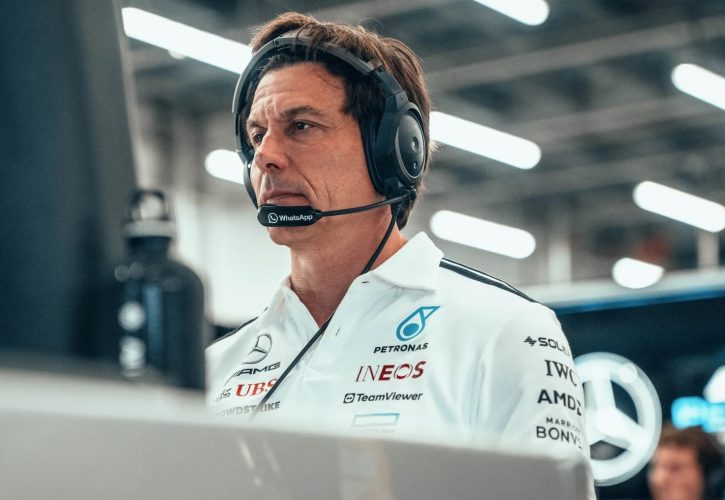
    The weekend exposed inconsistent form across practice sessions. Russell set the fourth-fastest time in FP2, roughly 0.4 seconds behind Lewis Hamilton and about 0.1 seconds quicker than Antonelli, but he was more than seven-tenths of a second slower than Antonelli in FP3. Team principal Toto Wolff said Russell did not feel fully comfortable in the car but warned he should not be written off. Russell described Ferrari as “the team to beat” after practice and pointed to the SF-26’s mechanical characteristics being well suited to street circuits like Monaco. He also acknowledged Red Bull as a surprise performer and said Mercedes had ideas to improve the W17 overnight but had not yet “nailed it.”

    Russell’s struggles were compounded by earlier season setbacks, including an engine failure in Canada that contributed to his points deficit. He said he has “nothing to lose” and will try to enjoy every race, arguing the championship remains mathematically reachable if he can keep taking poles and convert them into wins. The Monaco result underlined Antonelli’s momentum and left Mercedes facing both setup and development questions if Russell is to stem the widening performance gap.

    More
  • Provisional pole gone: Leclerc breaks suspension after Tabac impact

    Provisional pole gone: Leclerc breaks suspension after Tabac impact

    Charles Leclerc’s persistent brake and car‑consistency problems cost him a shot at pole and culminated in a Q3 crash that compromised his Monaco qualifying. Leclerc slid into the Tabac wall during his final Q3 push, breaking the rear suspension and ending an attempt that had briefly put him on provisional pole. He blamed ongoing braking problems and an inconsistent car, saying, “I don’t really know where to brake,” and describing the last two weekends as “incredibly tough.” Reports varied on the immediate cause of the ruined lap, with some accounts citing a puncture after contact with the wall, and others linking the incident directly to the brake and balance issues that have dogged him since Canada. The crash left Leclerc fourth on the grid, his worst Monaco qualifying since 2023, with Ferrari noting the car’s unpredictable behaviour made it hard to judge limits.

    Leclerc had shown strong pace through Friday practice, topping FP1 and finishing second in FP2, but he and the team flagged recurring brake problems and setup inconsistency throughout the weekend. He reported a “horrendous” feeling under braking in FP3, and earlier sessions included a lock‑up at Mirabeau and a brush with the barriers at the Swimming Pool that produced debris and a brief Virtual Safety Car. Ferrari said it believes it has a potential fix and plans to test it in Barcelona, and the team will monitor data and any repair‑related penalties before confirming Leclerc’s final starting status. In qualifying Andrea Kimi Antonelli took pole ahead of Max Verstappen and Lewis Hamilton, leaving Leclerc to regroup from a damaged car and lost confidence for Sunday’s race.

    More
  • Norris's MCL40 stalls at Monaco; McLaren probes electrical fault

    Norris’s MCL40 stalls at Monaco; McLaren probes electrical fault

    McLaren’s Monaco practice was dominated by reliability and setup headaches after Lando Norris suffered an electrical shutdown that left his MCL40 stranded at the Nouvelle Chicane, costing him roughly 45 minutes of running and a 19th-place classification. McLaren confirmed the stoppage was caused by an electrical fault that engineers had not yet isolated, and Norris watched the remainder of FP2 from the pit wall, saying, “The car simply turned off.” The stoppage forced Oscar Piastri to be McLaren’s sole runner for much of the session and prompted a brief Virtual Safety Car period.

    The running exposed a roughly one-second pace deficit to the frontrunners. Oscar Piastri finished seventh in FP2, about 1.0 to 1.062 seconds behind the session benchmark of 1:13.026 set by Lewis Hamilton, after the team said it had trimmed an earlier gap of around 1.5 seconds. McLaren reported the MCL40 looked more competitive through sectors two and three but struggled in the first sector, a shortfall the team linked to tyre warm-up and temperature. Chief technical officer Rob Marshall and Piastri said they were optimistic about finding overnight improvements, but Piastri also said the squad had “no great ideas” for an immediate fix. McLaren listed diagnosing the electrical fault and fine-tuning temperature and balance as immediate priorities, and the team brought a six-piece upgrade package to Monaco, including a radical rear winglet.

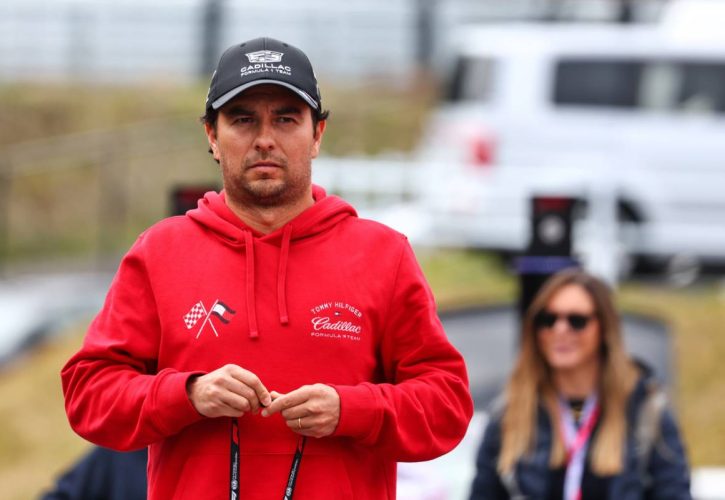
    The session underlined how much work McLaren faces before qualifying, as Ferrari set the pace on Friday with Hamilton’s 1:13.026 and Charles Leclerc 0.111 seconds adrift, and running was repeatedly interrupted by incidents including Sergio Perez’s front-right brake fire and crashes that sent other cars to the garage. The team also carried recent reliability concerns into Monaco after Andrea Stella said separate overheating and gearbox failures had forced Norris out in Montreal, and McLaren said it would focus on repairing the electrical issue and extracting performance from the upgrade package ahead of the decisive sessions.

    More
  • Leclerc leads Ferrari 1-2 in crash-hit Monaco FP1

    Leclerc leads Ferrari 1-2 in crash-hit Monaco FP1

    Charles Leclerc set the pace in first practice for the Monaco Grand Prix, posting a 1:13.978 to give Ferrari a 1-2 in a crash-hit FP1. Leclerc’s time was 0.226 seconds quicker than teammate Lewis Hamilton, with Max Verstappen a further 0.513 seconds back in third. Championship leader Kimi Antonelli ran fourth and George Russell was fifth, with Lando Norris and Nico Hülkenberg also inside the top seven, providing an early read on the pecking order around the tight Monte Carlo street circuit.

    The session was interrupted twice by heavy incidents that curtailed running. Red Bull rookie Isack Hadjar lost control exiting the Swimming Pool chicane and struck the barriers nose-first, ripping off bodywork and prompting a red flag; Hadjar radioed that the car was “undrivable.” Fernando Alonso later clipped the wall at the Nouvelle/harbor chicane and shed part of his front wing, triggering another stoppage and a brief virtual safety car for debris. Leclerc himself locked up at Mirabeau and brushed the barriers, and several drivers ran into run-off areas as teams struggled with tyre degradation and the new-generation cars on Monaco’s slow-speed sections.

    Teams said they would analyse the curtailed running and use Free Practice 2 to refine setups and assess race-day potential, after many drivers switched to medium tyres in the closing stages. Stewards opened probes into multiple incidents, including an alleged impeding between Leclerc and Liam Lawson, a separate impeding allegation against Arvid Lindblad for blocking Oscar Piastri, and an inquiry into Lawson leaving the pit exit on a red light. Observers noted that Ferrari’s SF-26 and team setups appeared well suited to Monaco’s low-speed corners, but commentators stressed that track evolution and tyre choices could still change the competitive balance across the weekend.

    More
  • F1 locks in Las Vegas night race through 2037 amid sellouts

    F1 locks in Las Vegas night race through 2037 amid sellouts

    Formula 1 confirmed a new 10-year extension that will keep the Las Vegas Grand Prix on the calendar through 2037. The agreement was reached with local partners including Las Vegas Grand Prix, Inc., Clark County and the Las Vegas Convention and Visitors Authority, replacing a previous deal due to expire in 2027. The extension locks in a November race weekend, with practice on Nov. 19, FP3 and qualifying on Nov. 20, and the race on Nov. 21, and gives promoters, teams and local stakeholders long-term scheduling certainty. Formula 1 has also made major infrastructure investments in central Las Vegas, including roughly $500 million to buy land and to build a new pit building and paddock.

    Since the event returned in 2023 the Las Vegas Grand Prix has become one of Formula 1’s most high-profile U.S. fixtures and generated an estimated $3.2 billion in cumulative economic impact for Southern Nevada through 2025. All three editions from 2023–2025 sold out. The 2025 race produced $43 million in state and local tax revenue, with $15 million earmarked for K‑12 education. The Las Vegas Grand Prix Foundation has contributed more than $2 million to local nonprofits and education programs. Grand Prix Plaza, a 39-acre multi-use fan complex, was recognized at the 2026 Green Sports Alliance Summit for environmental innovation.

    The Grand Prix is run on the 3.8-mile (6.2 km) Las Vegas Strip Circuit and features a night-time layout with a roughly 2 km straight down the Strip, long straights and heavy braking zones. Drivers regularly exceed 200 mph and have been recorded above 322 kph as they pass landmarks such as the Bellagio and Caesars Palace. The event has delivered memorable on-track moments and multiple victories, with Max Verstappen winning in 2023 and 2025 and George Russell winning in 2024, a year that produced 113 overtakes and saw Verstappen secure his fourth consecutive World Drivers’ Championship. Formula 1 chief Stefano Domenicali said the sport was “thrilled” to continue racing in Las Vegas and framed the extension as evidence of the sport’s long-term commitment to the U.S. market, a point echoed by local officials who described the race as a signature global event for the city.

    More
  • FIA probes Norris and Leclerc for late Monaco press conference

    FIA probes Norris and Leclerc for late Monaco press conference

    The FIA opened probes after reigning world champion Lando Norris and home driver Charles Leclerc arrived late to Thursday’s official drivers’ press conference at the Monaco Grand Prix, causing the session to start a short time late. The pair had been scheduled to appear alongside Gabriel Bortoleto and were named, together with McLaren and Ferrari representatives, in a referral to the stewards under Article B10.1.1.a of the F1 regulations.

    A hearing is scheduled for Friday, with one report giving the time as 10:10 local. The stewards listed for the case are Derek Warwick, Garry Connelly, Tanja Geilhausen and Jean‑Francois Calmes. The referral concerns compliance with mandatory media obligations rather than any on‑track incident.

    The FIA described the inquiry as procedural and no findings or penalties have been announced. FIA officials and the stewards indicated they were unlikely to impose a sporting punishment. The summons was unusual because it came before either driver had taken to the track.

    Reports noted past precedents, including Lewis Hamilton’s late arrival at the 2023 British Grand Prix press conference, which drew no penalty, and earlier FIA interventions over media conduct in 2024. Coverage emphasized the FIA’s enforcement of media rules, including the requirement that drivers not selected for the main session take part in a separate session that does not clash with FIA activities.

    More
  • Teams exploit FIA actuator-loophole after active-aero ban at Monaco

    Teams exploit FIA actuator-loophole after active-aero ban at Monaco

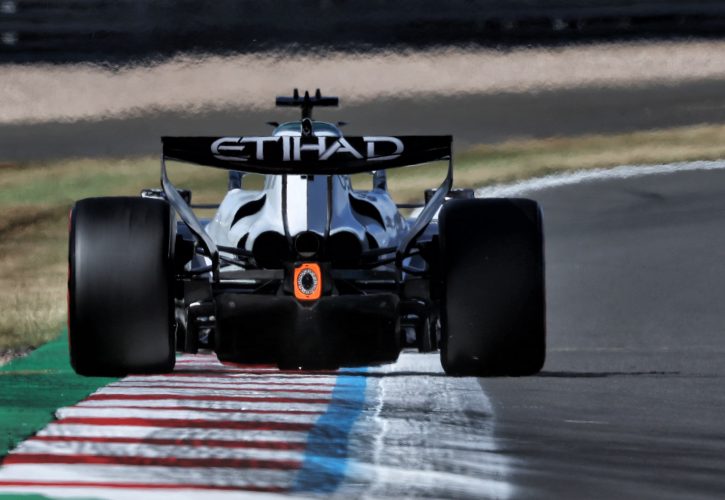
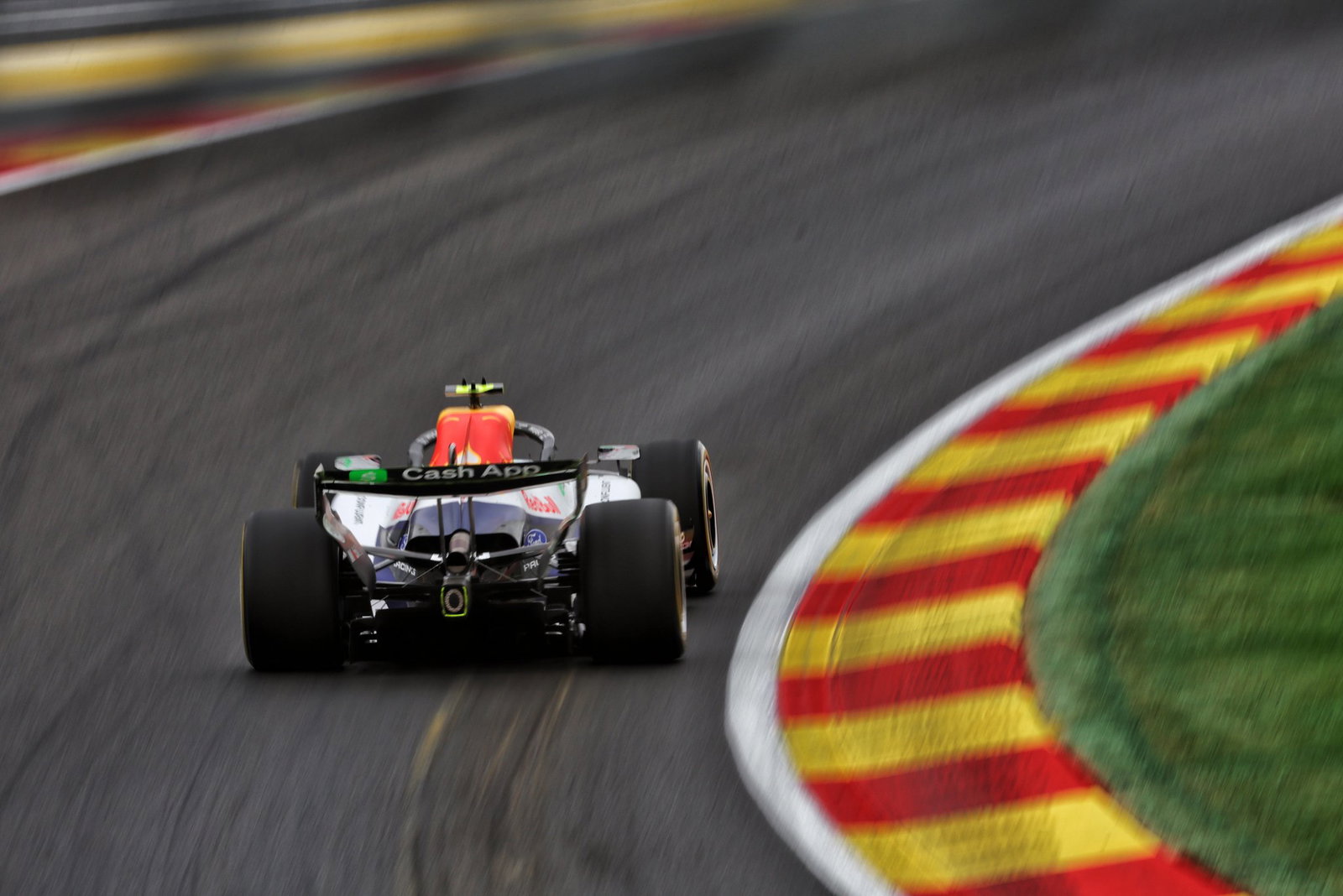
    F1 teams exploited the rear-wing actuator housing loophole at the Monaco Grand Prix to add fixed winglets after the FIA banned active aero and straight mode for the weekend. With movable aero unavailable for an entire race weekend for the first time since DRS was introduced in 2011, teams turned the small rectangular actuator housings into packaging zones for fixed aerodynamic elements aimed at recovering downforce on the tight, high-downforce Monte Carlo layout.

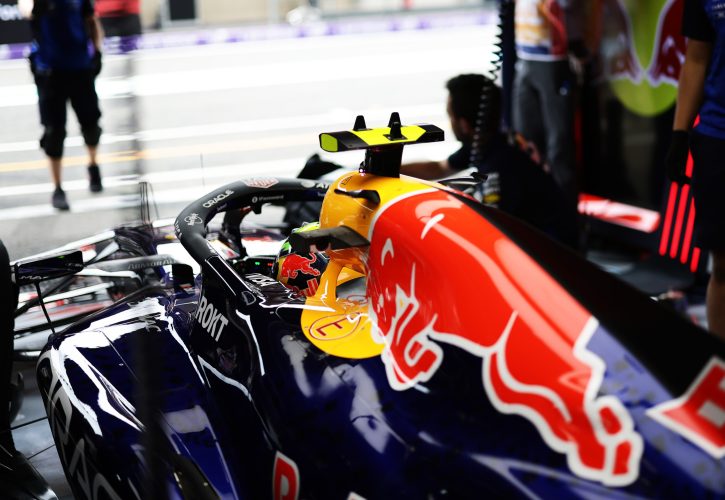
    Teams replaced or reworked conventional rear-wing actuators with clusters of small winglets and cascading elements that fit inside FIA-defined legality boxes, effectively reusing the actuator housing to regain some aerodynamic control while remaining lawful. Mercedes and Red Bull led visible examples: Mercedes removed its actuator and fitted a radical arrangement that included a mainplane-mounted pylon with a trio of cascading winglets, additional banks of winglets and Gurney flaps, while Red Bull retained its actuator pod and modified it to carry two winglets enclosed by endplates. Cadillac removed the actuator entirely, Racing Bulls converted the housing into a single tab with an added Gurney flap, and McLaren deployed a comparable approach. Reports vary on Ferrari’s role, with some accounts saying it had not yet taken advantage of the actuator-housing area and others listing Ferrari among teams with cascading elements.

    The added winglets were intended to produce cleaner incoming airflow and increased upwash, enlarging the low-pressure field and, when linked to the diffuser, increasing suction and underfloor airflow to boost downforce. Because Monaco’s low cornering speeds reduce the drag penalty, teams chased so-called “dirty downforce” to improve traction and acceleration. Technical commentators framed the work as classic marginal-gain engineering: a tactical, rapid response to a one-off rule change that exploited permitted packaging zones and actuation points rather than a wholesale rewrite of aerodynamic rules. PlanetF1 described the installations as aerodynamic workarounds prompted by the temporary ban, and teams across the grid adapted quickly to optimize lap time for Monaco’s low-speed, tight-circuit environment.

    More