NXTbets Inc

  • Honda, Aston Martin scramble to fix Sakura V6 vibrations

    Honda, Aston Martin scramble to fix Sakura V6 vibrations

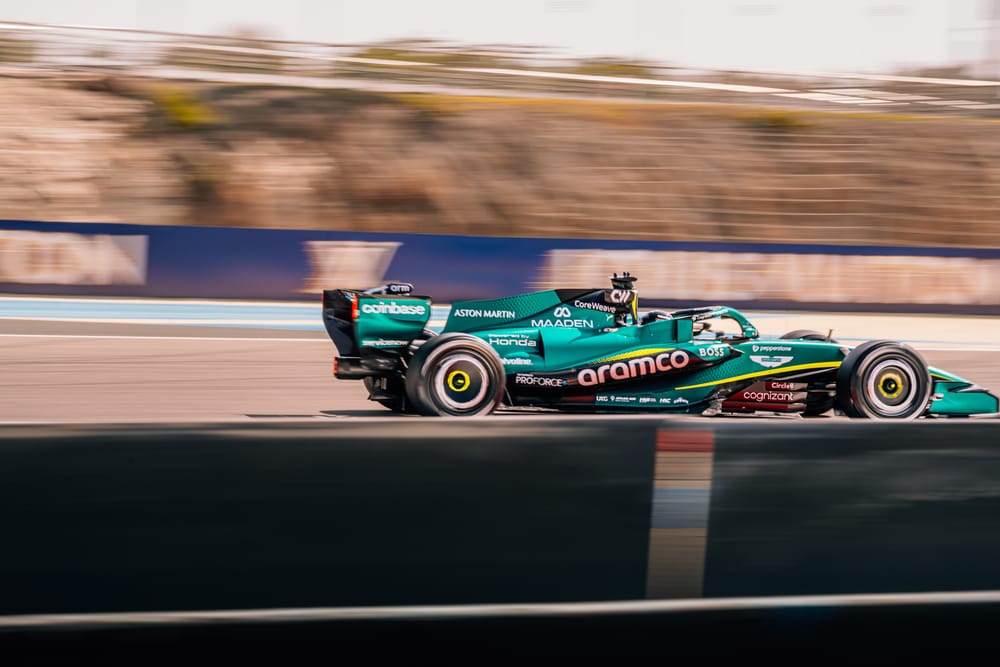
    Excessive vibrations from Honda’s new Sakura V6 repeatedly damaged Aston Martin’s battery system during pre‑season running, forcing Honda to stop on‑track work and severely curtailing the team’s testing program. HRC head Ikuo Takeishi said the battery looked as if it had been ‘shaken’ inside the monocoque, and Honda described the vibrations as ‘dangerous’ and ‘extremely challenging.’ Repeated battery‑system failures prompted Honda to halt running, and a shortage of spare parts meant Aston Martin completed just six install laps on the final day of Bahrain testing.

    Honda has identified excessive combustion‑engine vibrations from the Sakura V6 as the source of the damage but has not found a single root cause, saying the problem appears multifactorial. Engineers at HRC are running bench tests and using simulations at the Sakura facility and a virtual test rig to reproduce the issue, while developing both chassis and power‑unit countermeasures to reduce vibration. Honda and Aston Martin are assessing fixes under a tight timeline ahead of the season opener in Australia and the engine homologation deadline on March 1; HRC says it is collaborating with Aston Martin owner Lawrence Stroll and technical director Adrian Newey, and Honda aims to have the package competitive by the Japanese GP at Suzuka.

    The disruption left Aston Martin with sharply limited preseason mileage: across three pre‑season tests the AMR26 completed about 400 laps in total, including 128 laps over three days in Bahrain and 2,115 km of running overall — roughly a third of the distance some rivals logged, while many teams recorded more than 300 laps and several exceeded 400. The shortfall was compounded by the AMR26’s late delivery, a shortage of spare parts and a complex integration program that included a new in‑house gearbox, new electronics and suspension. Tetsushi Tsunoda, head of power‑unit development at HRC, described the situation as a ‘double handicap,’ citing late supplier signings and prior regulatory limits on early investment; Honda drew a parallel with past vibration and correlation troubles in 2017 and said it will focus on combustion and other development work to close the performance and reliability gap as the season progresses.

    More
  • Formula One revenue jumps 14% to $3.87B; profits rise

    Formula One revenue jumps 14% to $3.87B; profits rise

    Formula One closed 2025 with annual revenue up 14% to $3.87 billion, operating income rising 28% to $632 million and adjusted OIBDA increasing 20% to $946 million. Reports varied slightly on headline figures — one summary rounded F1 revenue to $3.9 billion — but the company also posted a record fourth-quarter revenue of $1.38 billion, a 22% jump from Q4 2024.

    The gains were broad-based: primary F1 revenue totaled $3.09 billion, with the revenue mix split among race promotion (26.7%), media rights (31.3%) and sponsorship (21.7%) — sponsorship exceeded 20% of primary revenue for the first time since Liberty Media’s acquisition. Ancillary streams supported growth as well, with hospitality and licensing up 20% to $787 million. Fan engagement rose, with attendance of 6.75 million (up 4%) and live TV viewership reported broadly as up about 21% year‑over‑year (one source cited a 24% increase). Liberty attributed media‑rights growth to F1 TV subscriptions and one‑time movie revenue.

    Parent Liberty Media also reported improved results and strategic moves tied to the strong performance: consolidated revenue was $4.48 billion for fiscal 2025 and overall operating income rose to $577 million from $287 million a year earlier. In July, Liberty completed an acquisition of an 84% stake in MotoGP for $3.1 billion and disclosed pro-forma 2025 MotoGP revenue of $573 million (up 14%), pro-forma operating income of $54 million (up 86%) and adjusted OIBDA of $201 million. Liberty highlighted longer-term commercial stability — including a Concorde Agreement through 2030, new sponsorship deals such as Standard Chartered and media-rights extensions — alongside venue and rights arrangements that support F1’s revenue outlook.

    More
  • Hamilton pushes to revive Ferrari career as Leclerc looms

    Hamilton pushes to revive Ferrari career as Leclerc looms

    Lewis Hamilton has entered this season at Ferrari determined to revive his form after a disappointing 2025. That year he finished sixth in the drivers’ standings, did not record a single grand prix podium and was frequently eliminated in Q1. His intra-team duel with Charles Leclerc remains the clearest measure of recovery: Leclerc outqualified Hamilton 23 times to seven, took seven podiums and finished 86 points ahead in 2025. Some critics have been blunt — Roberto Boccafogli called Hamilton ‘clearly outclassed’ — and Ralf Schumacher warned Hamilton could ‘pull the plug’ on his F1 career if he cannot match Leclerc in the opening three or four races. Hamilton has publicly ruled out retirement and his Ferrari contract runs until the end of 2027; figures such as Bernie Ecclestone have reportedly urged him privately to retire.

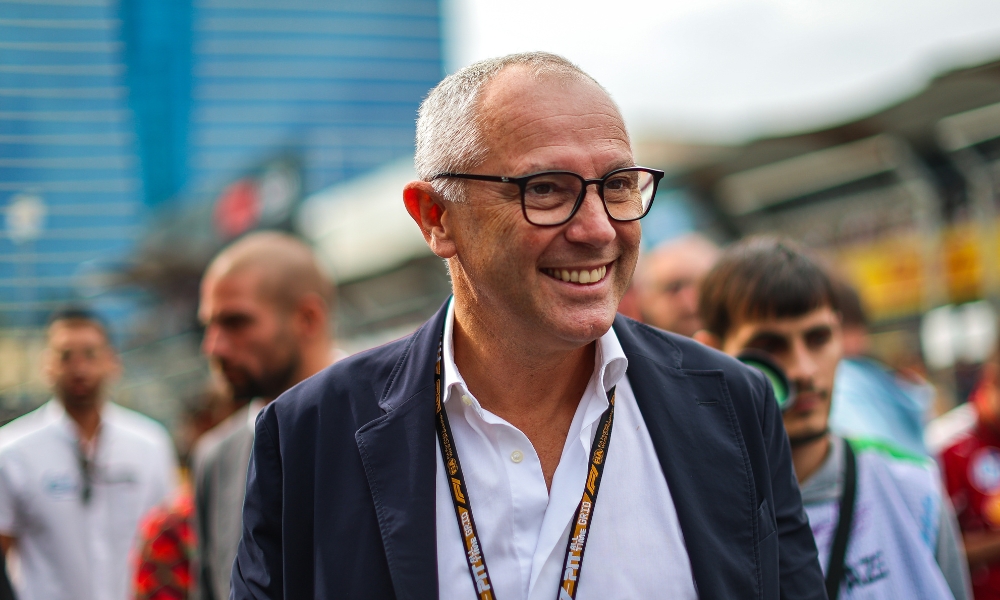
    Ferrari and Hamilton are relying on this season’s regulation overhaul and encouraging pre-season testing to deliver improvement. Ferrari topped running in Barcelona and Bahrain, with Leclerc posting the fastest test time and the SF-26’s revised rear-wing package praised for its straight-line speed. F1 presenter Will Buxton highlighted Hamilton’s strong showings in testing and predicted he can return to winning ways. Ferrari CEO Stefano Domenicali said Hamilton felt confident ahead of the rule changes.

    Behind the scenes, Ferrari has reshuffled engineering support — Riccardo Adami moved into a different role and Hamilton has a new race engineer — as the team seeks clearer communication and technical gains. Observers warn that if meaningful improvement does not arrive with the new regulations, Ferrari’s high-profile signing could be seen as a gamble that backfired, adding pressure on team principal Fred Vasseur and potentially jeopardizing Leclerc’s long-term commitment.

    More
  • Isack Hadjar promoted to Red Bull seat with Verstappen

    Isack Hadjar promoted to Red Bull seat with Verstappen

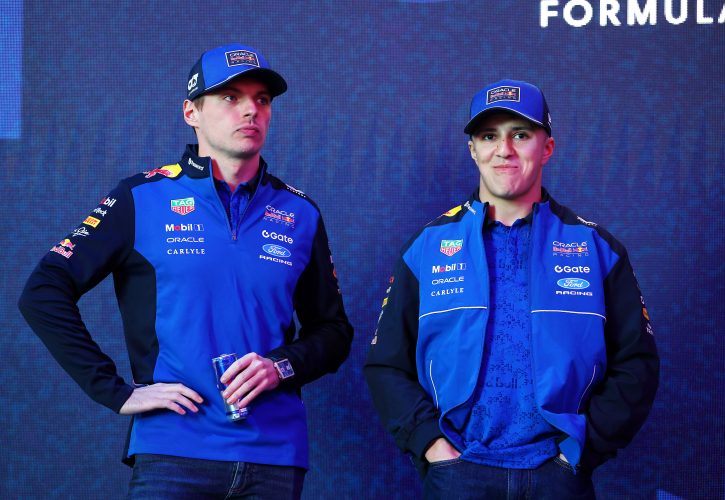
    Isack Hadjar, 21, has been promoted into a full-time race seat at Red Bull Racing and will partner four-time world champion Max Verstappen for the 2026 F1 season. The move was announced ahead of the Abu Dhabi finale and was reported again as the paddock headed to the Australian Grand Prix in Melbourne. The appointment makes Verstappen’s fourth different teammate in 16 months.

    Hadjar earned the promotion after a strong rookie campaign that included a podium at the 2025 Dutch Grand Prix and an impressive qualifying and race record; he outscored Liam Lawson and Yuki Tsunoda across 2025. His first season also featured notable errors — a formation-lap crash in Australia, a collision with Kimi Antonelli in Britain and costly mistakes in Baku. Hadjar joined Red Bull’s junior programme in 2021, carried out FP1 outings in 2023 and 2024 and provided simulator support; Red Bull credited Lawson as a “senior figure” who helped mentor Hadjar, and team boss Laurent Mekies and prior FP1 sessions were said to have smoothed his transition into the senior Milton Keynes operation.

    Team and paddock voices framed the timing as opportune. Sergio Perez called the promotion a “massive opportunity,” while Alex Albon and others suggested the 2026 regulation changes will act as a reset likely to suit a young driver stepping into Red Bull’s high-performance environment. Verstappen described their early working relationship after Bahrain testing as “very open,” said Hadjar should enter 2026 with confidence, and — speaking of his own mindset — added, “I can beat anyone.” Hadjar did suffer a wet-weather crash during a closed-door Red Bull test in January 2026. The move comes as Red Bull prepares to start 2026 with a new Red Bull–Ford engine, a technical change that has prompted questions about the team’s title prospects and underscored the significance of integrating a young teammate.

    More
  • Cadillac to run Ferrari power units, develop GM engine 2029

    Cadillac to run Ferrari power units, develop GM engine 2029

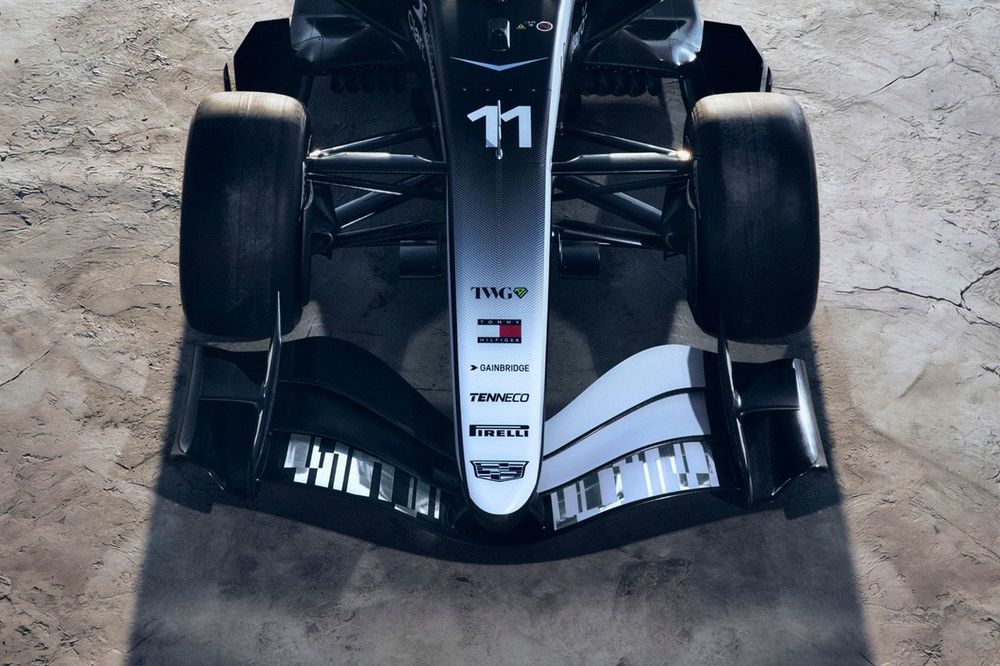
    Cadillac is framing its Formula 1 entry with a high-profile marketing push alongside a multi-year technical program. The brand will unveil its debut livery in a 30-second commercial during the Super Bowl (scheduled to air around 3:00 a.m. GMT in the U.K. and Europe) and teased the reveal in Times Square with a frosted-glass car replica that gradually “thaws.” The campaign pairs the Super Bowl ad buy with a Times Square activation and online distribution; Cadillac will post the ad to its social channels after the broadcast.

    CEO Dan Towriss described the dual launches as an invitation for fans to join the team’s journey. In the U.K., Channel 5 will show the Super Bowl free-to-air and Sky Sports will provide full coverage, giving Cadillac broad exposure as it moves into the season.

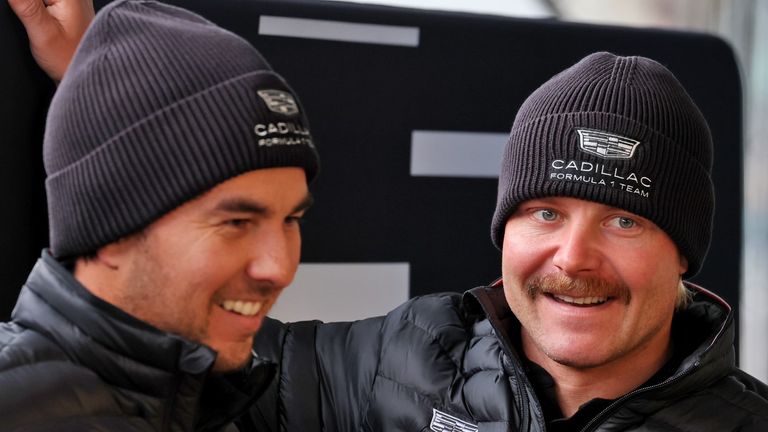
    On the sporting and technical side, Cadillac will join F1 as the sport’s 11th team and its first expansion entry since Haas a decade ago, operating as a works operation under new technical regulations intended to tighten competition. The team will be based in both Indianapolis and Silverstone, will initially run Ferrari power units, and will simultaneously develop a General Motors engine targeted for 2029 — a multi-year plan meant to balance visibility this season with future powertrain development. Team principal Graeme Lowdon tempered expectations, stressing execution and earning respect while acknowledging logistical and technical hurdles ahead of the season-opener in Melbourne in March. Drivers Valtteri Bottas and Sergio Pérez, who together have 16 grand prix wins, said the objective is steady progress and to “try not to finish last,” underscoring Cadillac’s cautious approach as it shifts from a high-visibility launch to the practical challenges of competing in F1.

    More
  • Cadillac F1 Debugs Car in Barcelona After Limited Running

    Cadillac F1 Debugs Car in Barcelona After Limited Running

    Cadillac’s newly formed Formula 1 team moved from planning into on-track reality with shakedowns that began at Silverstone and continued at the Circuit de Catalunya in Barcelona, where the American entry completed its first meaningful running against rival squads. The rookie outfit, and the 11th team on the grid in 2026, has signed Valtteri Bottas and Sergio Pérez, two mid-thirties veterans who bring a combined 16 grand prix wins and wide experience. Team principal Graeme Lowdon said recruiting experienced drivers would help unify the engineering group and garage, and Bottas summed the short-term aim as “try not to be last.”

    The Barcelona shakedown was framed as a debugging and data-gathering exercise. Bottas handled the morning running, completing 33 laps, and Pérez completed 11 in the afternoon, 44 laps in total. Many of them had installation and systems-check laps. Running was curtailed at times by minor technical issues, and the team again struggled to accumulate mileage.

    Drivers and engineers described a learning curve under the major 2026 regulation changes. Bottas said the car felt different, with less aerodynamic load in high-speed corners, more torque on corner exit, and increased battery-management demands. Pérez called the new engine “massively different” and said, “It’s always challenging when there is a massive rule change.” Lowdon and the drivers emphasized that the priority was to debug systems, build mileage, and establish team procedures, with plans to use further permitted test days and upcoming sessions in Bahrain to work through gremlins rather than chase immediate lap-time performance.

    More
  • Melbourne's Layout May Expose 2026 F1 Energy Limits

    Melbourne’s Layout May Expose 2026 F1 Energy Limits

    The 2026 F1 power‑unit rules, which mandate roughly a 50/50 split between internal combustion and electrical power, are already reshaping driving styles, strategy, and race dynamics ahead of the Australian Grand Prix in Melbourne. Teams say the new units have nearly tripled electrical output, making battery harvesting and deployment central to performance. That shift has prompted warnings that traditional flat‑out laps could become a “thing of the past” at Melbourne, a circuit identified as relatively harvest‑poor (about 7 MJ per lap versus roughly 8.5 MJ in Bahrain), and therefore more likely to expose energy‑management limits than tracks with more braking and slow corners.

    Pre-season testing in Bahrain and Barcelona exposed how those constraints will change on-track behavior. Drivers were audibly lifting and coasting on straights in qualifying simulations, downshifting aggressively into corners to conserve energy, and even backing off before lap ends to preserve deployable charge. Several drivers described the new cars as unfamiliar, with Haas’ Ollie Bearman calling them “a bit strange” and saying some turns felt power‑limited rather than like true corners. Other drivers voiced stronger reactions. Max Verstappen labeled the rules “Formula E on steroids,” prompting a rebuke from Formula One Management. George Russell said he had enjoyed the Bahrain and Barcelona tests but cautioned Melbourne “might be a different story,” and Fernando Alonso and Lando Norris similarly noted the cars feel different to drive.

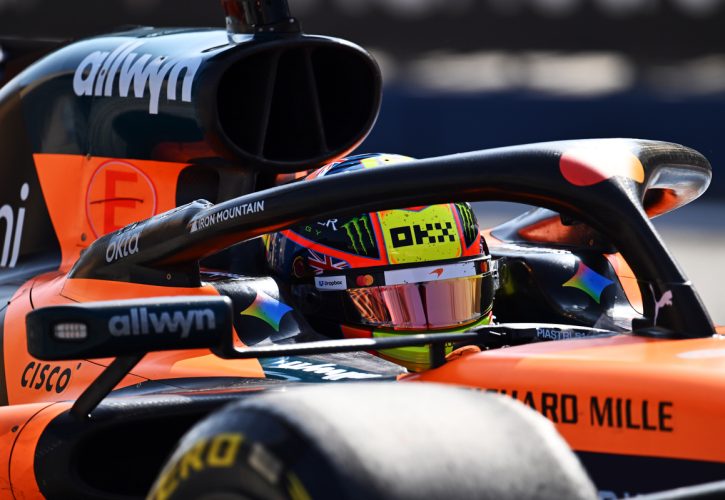
    Team principals and engineers say the effects will reach into racecraft and strategy. McLaren’s Andrea Stella and driver Oscar Piastri framed battery harvesting as a tactical weapon and potential weakness across the 24-race calendar. He warned that pre-programmed energy strategies will be harder to adjust on the fly and that circuits such as Melbourne and Jeddah could be “harvest-limited.” Teams expect qualifying runs, race stints, car setups, and overtaking patterns to change as crews prioritize when and how to use stored energy rather than chasing outright top speed. FIA technical director Tombazis said the FIA would evaluate opening-race data before proposing changes to harvesting or deployment parameters. With Melbourne viewed as an early, practical stress test, teams will be watching reliability, race-window strategies, and the on-track spectacle closely as the season opens.

    More
  • Newey Steers Aston Martin AMR26 Recovery

    Newey Steers Aston Martin AMR26 Recovery

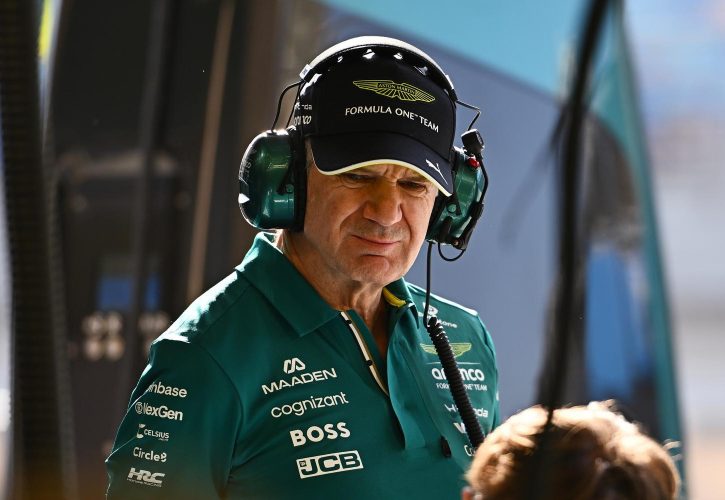
    Adrian Newey was credited with jump-starting Aston Martin’s recovery after a difficult recent preseason. He was appointed team principal in March while retaining his managing technical partner role, and owner Lawrence Stroll also named him to head the team’s operations. Newey designed the AMR26, the squad’s first Newey-designed car. Several figures in the paddock, including former driver Pedro de la Rosa, called his intervention “critical” and praised his clear technical direction. de la Rosa said the group was “not worried” and asked that judgment be reserved until the end of the season.

    The problems Newey inherited were severe and multifaceted. According to sources at the F1 Commission, he told rivals Honda’s new power unit was failing to harvest hybrid energy at the regulatory lower limit of 250 kW and could not reach the 350 kW threshold. The shortfall reduced straight-line power and prevented engineers from gathering accurate aerodynamic data. Bahrain testing exposed reliability and supply issues, as the team completed the fewest laps, and Honda reportedly had only one functional battery by the final day. In addition, an energy recovery system fault curtailed Fernando Alonso’s running, and spare-part shortages limited Lance Stroll to a six-lap cameo. The team also suffered integration problems. Its first in-house gearbox was “miscommunicating” with the engine and producing erratic behavior, prompting some paddock observers to warn Aston Martin risked being the slowest team, and might miss the 107% qualifying threshold, and could even be unable to start the season opener in Australia.

    Aston Martin has leaned on new infrastructure and intensive data collection while seeking technical fixes. The AMR26 was built in the team’s new wind tunnel, and the simulator came online at the start of 2025. During curtailed running in Bahrain, the squad focused on logging as much data as possible to diagnose the issues. Team figures urged caution in judgment but said resolving Honda’s hybrid energy recovery shortfall and the gearbox–engine integration will be decisive if Newey’s technical leadership, the new facilities, and the Honda partnership are to close the performance gap.

    More
  • Yuki Tsunoda Escapes as Red Bull RB7 Erupts in San Francisco

    Yuki Tsunoda Escapes as Red Bull RB7 Erupts in San Francisco

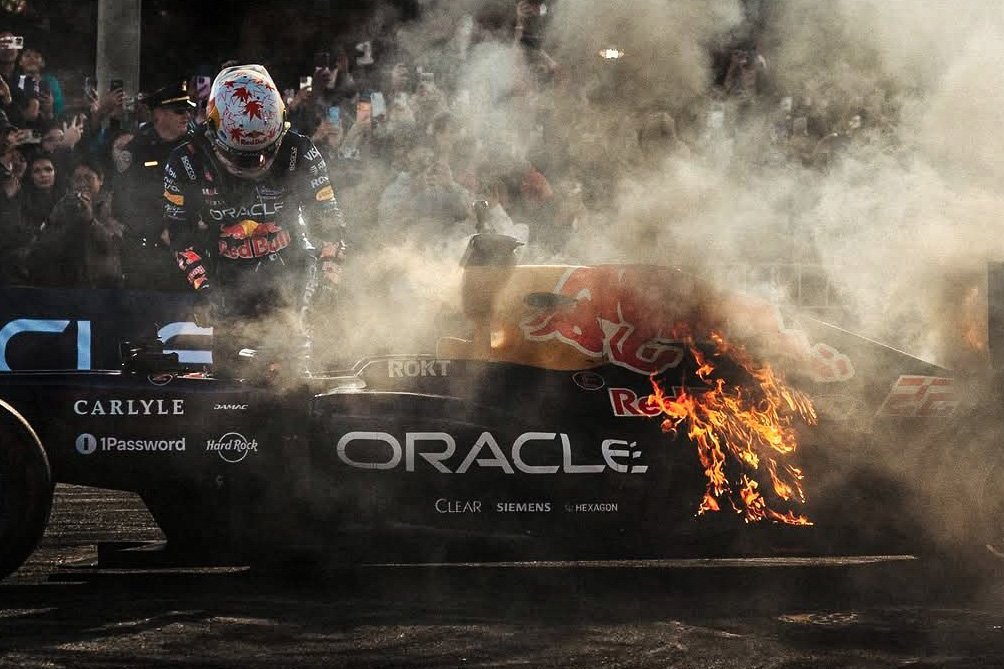
    Yuki Tsunoda escaped unharmed after a historic Red Bull RB7 caught fire during a show run on San Francisco’s waterfront. Tsunoda made his first public appearance since losing his race seat late in 2025 and assuming the role of Red Bull’s test and reserve driver (2026). He was driving the 2011 title‑winning RB7 in a Red Bull-Ford show run when, after a series of donuts, smoke and then flames erupted from the car’s rear. Fan footage showed spectators shouting for him to get out as he calmly unbuckled, stood up, and climbed from the cockpit while response vehicles arrived. Reports and eyewitness videos indicated he was uninjured, and no other injuries were reported.

    Organizers halted the event early and retired the RB7 from the demonstration, leaving smoke and smoldering wreckage on the waterfront. The RB7 is closely associated with Sebastian Vettel’s 2011 championship, and the fire drew extra attention because it occurred during a public show rather than in competition.

    Coverage combined fan video and eyewitness reaction with technical commentary. Observers also noted Red Bull’s new in-house power unit, developed with Ford, had been praised for reliability in preseason testing, but no technical cause for the RB7 fire has been provided. There is also no confirmation that the modern power unit was involved. The incident prompted questions among observers about potential logistical and reputational fallout for Tsunoda and Red Bull. Isack Hadjar replaced Tsunoda on Red Bull’s 2026 race roster after the Japanese driver scored 33 points and finished 17th in 2025.

    More