NXTbets Inc

  • Goiânia paddock tunnel submerged; Turn 1 waterlogged

    Goiânia paddock tunnel submerged; Turn 1 waterlogged

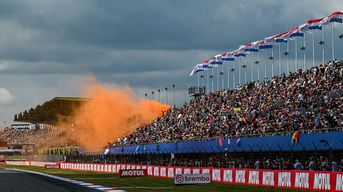
    Heavy rain and flash flooding at the refurbished Autódromo Ayrton Senna in Goiânia threatened final preparations for the MotoGP Brazil Grand Prix, the first Brazilian round in 37 years. A storm that began Monday afternoon returned with force on Tuesday; by 5 p.m. local time the paddock access tunnel was submerged under more than 25 cm of water. Multiple sections of the circuit were waterlogged, including about 12 metres of asphalt in Turn 1, the final corner and the end of the main straight.

    Local authorities issued emergency alerts and civil defense warnings as organizers, track teams and the Climate Crisis Office launched recovery operations. Crews used tanker trucks and manual clearing to drain standing water and remove mud, working through Wednesday after initial efforts the previous day. Organizers said they would repeat removal operations because further rain was forecast, noting the situation was time‑sensitive with roughly 48 hours until Moto3 FP1 at 9 a.m. local time on Friday.

    By mid‑morning officials reported temperatures around 30°C and said the asphalt was practically dry in places, but they cautioned that an adverse forecast could still compromise the weekend and that drainage and safety conditions must be assessed before any schedule changes. Event organizers stressed they were not discussing cancellation and pledged to do everything possible to stage the Grand Prix, but acknowledged that localized flooding, damage to access routes and the ongoing forecast left the weekend’s staging uncertain.

    The incident underlined the tight turnaround and high stakes involved in returning MotoGP to Brazil after more than three decades, as teams and organizers worked against time to restore the circuit ahead of round two of the season.

    More

  • Marc Márquez Weighs Retirement Amid Injuries, Ducati Talks

    Marc Márquez Weighs Retirement Amid Injuries, Ducati Talks

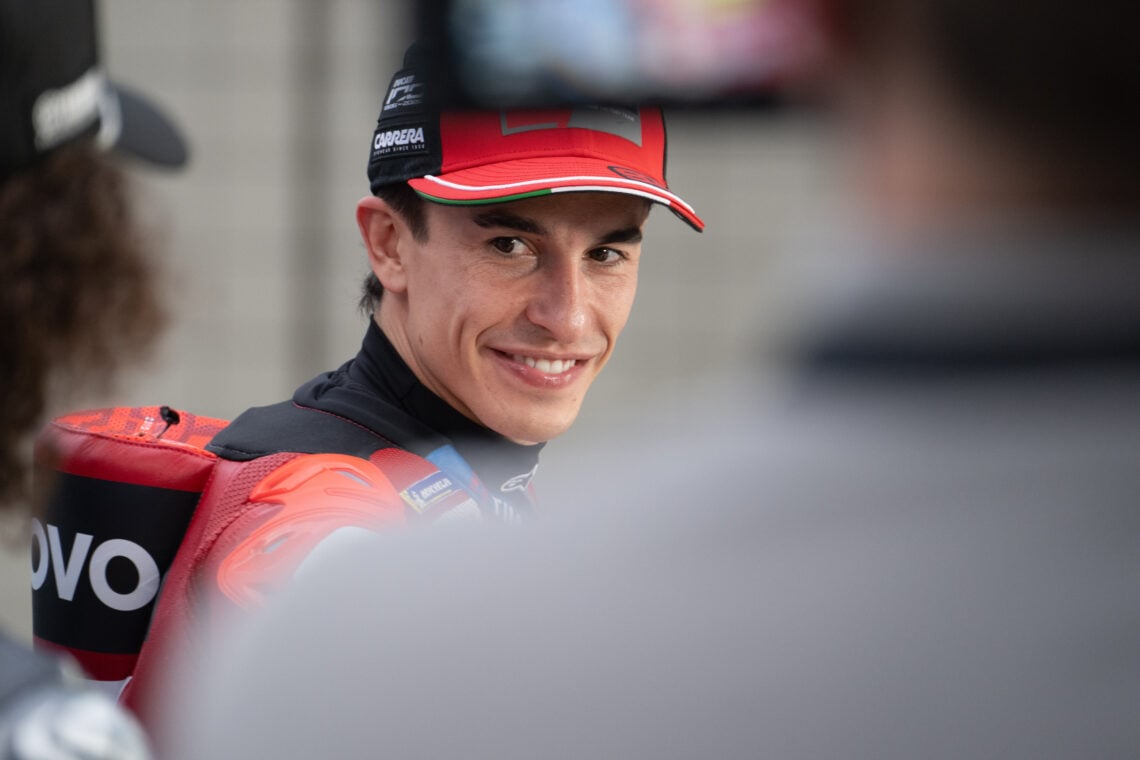
    Marc Márquez’s future in MotoGP is uncertain as he balances recovery from repeated, serious injuries with ongoing contract negotiations. He has said, “I know I’ll be ending my sporting career on two wheels,” described himself as being in his “final dance,” and acknowledged he is “limited more by my body than by my mind.” He also says renewal talks with Ducati “are going well,” but there is no concrete news; reports say his current deal is expiring, he has requested a one-plus-one contract rather than a long-term deal, and he plans to wait until he is fully recovered before deciding.

    Márquez’s caution is rooted in a difficult medical history. He underwent four major operations over two years after a 2020 right humerus fracture. In 2025 he suffered a season-ending shoulder problem — including a coracoid fracture, ligament damage and a broken collarbone — after being taken out at Mandalika by Marco Bezzecchi; that incident required surgery in October. He returned to a MotoGP machine at the Sepang test in February and made his racing comeback at the Thailand Grand Prix, where he finished second in the sprint before a tire failure ended a Grand Prix podium bid. He continues extra training and physiotherapy.

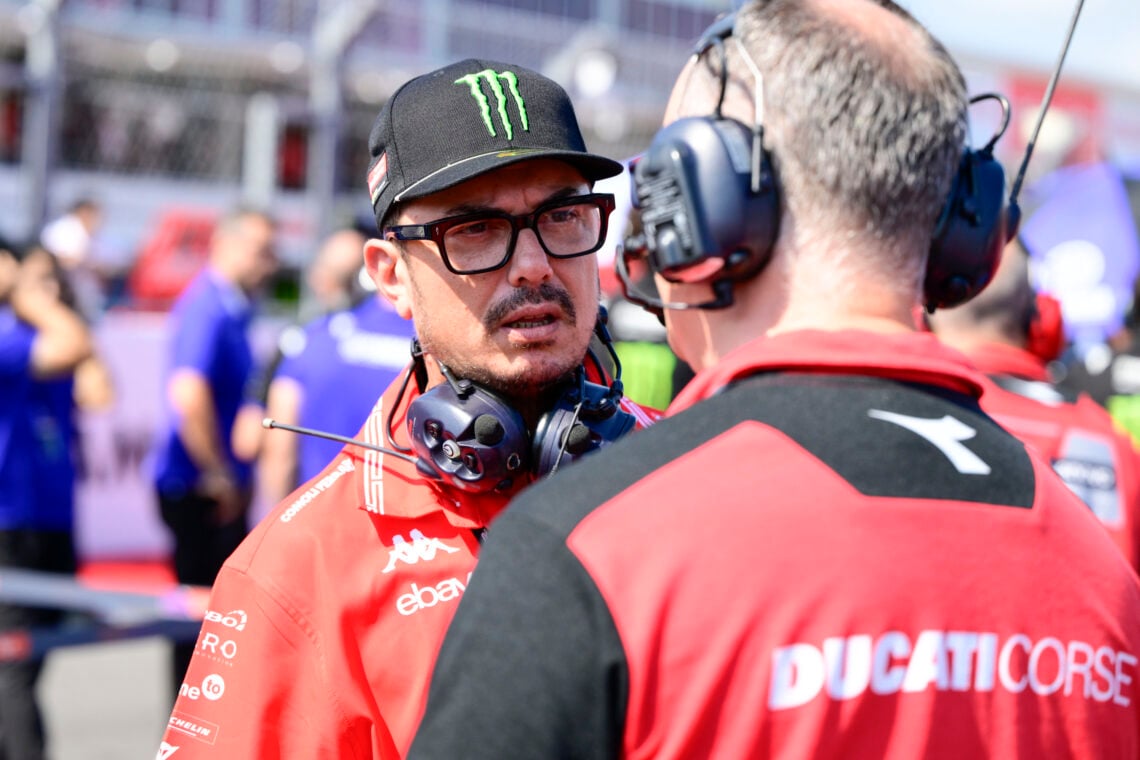
    Outside observers differ on how long Márquez will continue. Former rider Alex Barros suggested Márquez could consider retirement even if he defends the 2026 title, citing lingering shoulder issues and the potential arrival of Pedro Acosta at Ducati in 2027, while framing that view as speculation. Promoter and pundit Carlo Pernat said he saw “fear” in Márquez’s eyes after recent injuries but predicted he would race “another year or two,” noting the rider remains fast enough to beat most rivals while warning that rising talents such as Acosta could reshape the rivalry ahead. Despite the setbacks, Márquez remains competitive for Ducati, having secured his seventh MotoGP title in 2025 and becoming the oldest rider to claim the championship.

    More
  • Acosta Leads as MotoGP Returns to Goiania Grand Prix

    Acosta Leads as MotoGP Returns to Goiania Grand Prix

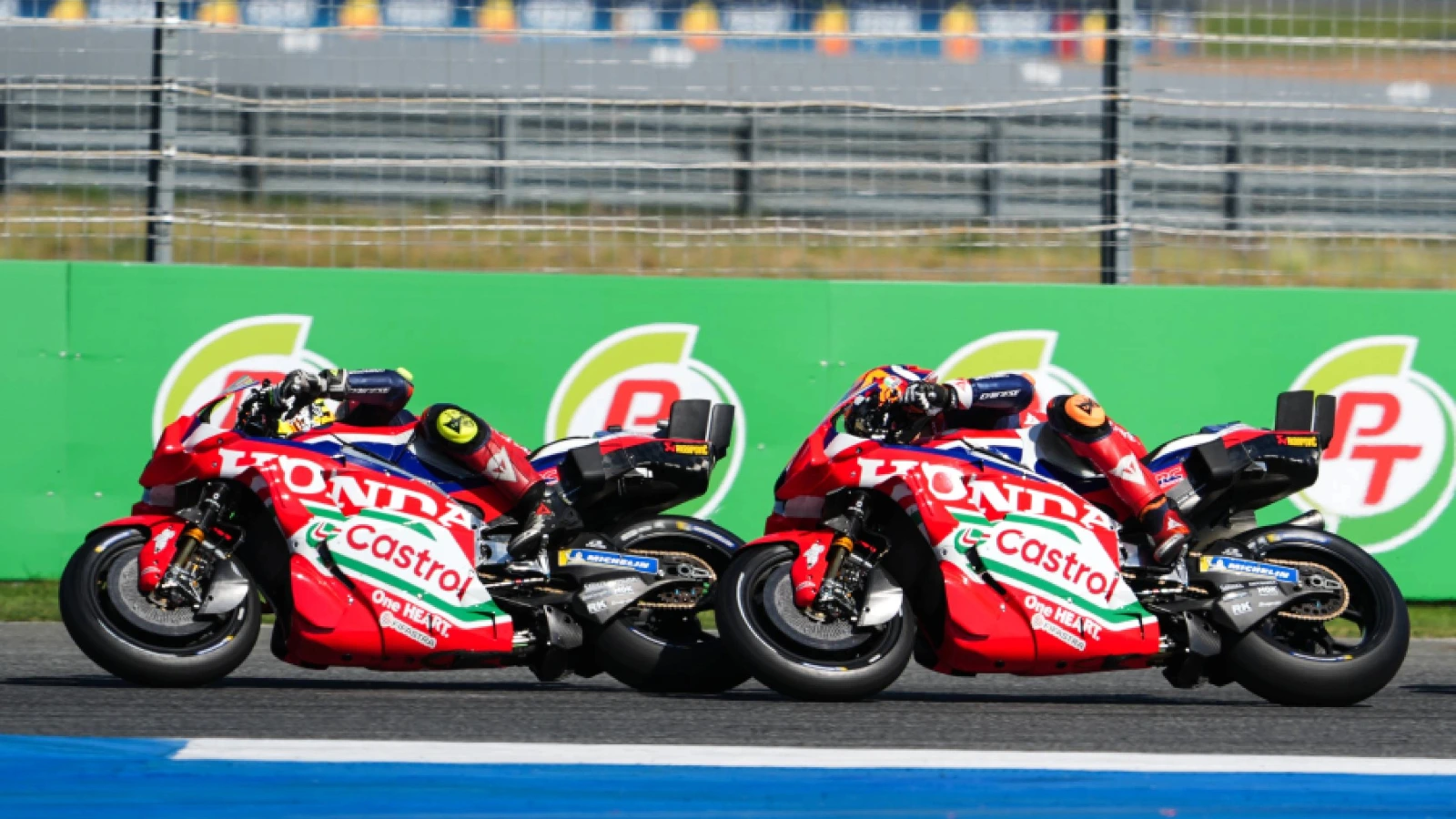
    MotoGP returns to Brazil at the Autódromo Internacional de Goiânia on March 20–22, with World Championship leader Pedro Acosta (Red Bull KTM) and local rookie Diogo Moreira under the spotlight. The 22-rider field includes Moreira, who scored points on his MotoGP debut in Thailand and arrives for LCR-Honda.

    Acosta heads to Goiânia as championship leader for the first time after a controversial Tissot Sprint win and a Sunday podium in Thailand. The Goiânia layout is new to every rider: 3.835 km with 12 turns, a straight of more than one kilometer and the championship’s second-shortest circuit after the Sachsenring.

    Dorna, the government of Goiás and Brasil Motorsport have signed an agreement to keep the championship at Goiânia through 2030 and oversaw upgrades to the pits, track surface, control tower, medical center, spectator areas, run-off zones and selective track widening. The venue last hosted world championship races in 1989, having staged Grands Prix from 1987–1989.

    Teams say they will need to adapt quickly to the unfamiliar circuit and conditions after the Buriram opener reshuffled the pecking order. Aprilia arrived strongly with Luca Bezzecchi taking pole, setting a lap record and winning on Sunday, and Bezzecchi, Raul Fernández, Jorge Martín and Ai Ogura occupy second through fifth in the standings. Marc Márquez (Ducati Lenovo) suffered a rear-tire puncture in Buriram and sits 23 points behind Acosta; Ducati more broadly had a mixed start, with Fabio Di Giannantonio leading Ducati’s classification. With momentum carrying over from Thailand, the Brazilian round could be a chaotic follow-up to Buriram and an early test of teams’ adaptability across the grid.

    More
  • MotoGP reschedules Qatar to Nov 8; Portimão, Valencia moved

    MotoGP reschedules Qatar to Nov 8; Portimão, Valencia moved

    MotoGP, in coordination with the FIM (Federation Internationale de Motocyclisme), the promoter and Qatari authorities, has postponed the Qatar Grand Prix from its original April slot and rescheduled the Lusail round for Nov 8. MotoGP CEO Carmelo Ezpeleta said the move was made with “great care,” with rider and public safety and wellbeing the priority. The Qatar Motor & Motorcycle Federation (QMMF) and Lusail International Circuit backed staging the race during the Nov 6–8 weekend, FIM president Jorge Viegas voiced support, and ticket holders will be able to transfer or roll over their tickets to the new date.

    The rescheduling followed a recent escalation of regional hostilities, including reported Iranian drone strikes on Hamad International Airport and other buildings in Doha, which prompted several weeks of contingency planning and a review of the April dates. Organizers explored alternatives, including moving the race to early December or relocating the round, but concluded a December slot was impractical because F1 is scheduled to race at Lusail on Nov 27–29 and the tight turnaround, plus significant curb and gravel-trap work needed for F1, would not allow adequate time for circuit modifications.

    As part of the late-season reshuffle, the Portuguese Grand Prix in Portimão was moved to Nov 22 and the season finale in Valencia to Nov 29; MotoGP said all other 2026 rounds remain unchanged. MotoGP and partners said the calendar adjustments aim to preserve the integrity and quality of the championship while responding to regional security concerns.

    More
  • Márquez predicts 850cc bikes could match 2027 lap times

    Márquez predicts 850cc bikes could match 2027 lap times

    MotoGP’s 2027 regulatory overhaul, centered on a shift from 1000cc to 850cc machines, is being presented as a safety-driven reset that could nonetheless preserve or even improve lap times while reshaping competitiveness across the grid. Organizers and riders have said the aim is to curb extreme top-speed runs, which had approached roughly 360 km/h, to ease pressure on limited run-off areas.

    Reigning champion Marc Márquez welcomed the displacement cut and predicted the smaller, lighter, less powerful bikes “could be similar, or even faster” on lap time, saying improved corner efficiency and greater maneuverability should offset slower straight-line speed. He described 2027 as a “season of continuous evolution” and warned adaptation would be uneven, noting “no one can guarantee they will have the best bike or adapt fastest.”

    The 2027 package pairs engine downsizing with broad technical and commercial measures: tighter aerodynamic limits and bans on ride-height and other aero/ride aids (including the holeshot device), a ban or heavy restriction on prototype aero devices, and a mandated switch from Michelin to Pirelli as sole tyre supplier. Manufacturers have begun development and limited running: Honda released footage of its 850cc prototype after Takaaki Nakagami ran it at Sepang and called the bike “super light” and said he was “a bit surprised,” KTM and Yamaha have shown or run machines privately, and Ducati and Aprilia are targeting spring debuts. Teams say the rule change will alter the balance between electronics, mechanical aids and rider input and could reward manufacturers that invest heavily and start testing early; Honda technical director Romano Albesiano said the company believes it could hold an advantage thanks to development resources, pointed to mid-season Brno and Spielberg tests as opportunities to build strong setups, and warned the new bikes will “definitely pitch more” and be more challenging to ride. Taken together, the technical, safety and tyre measures are being framed as a strategic reset that ends the 1000cc era after 2026 and creates a competitive window in which setup work, early testing and rider adaptation are likely to determine who benefits most from the new 850cc regulations.

    More
  • VR46 nears multi-year Ducati supply deal

    VR46 nears multi-year Ducati supply deal

    VR46 was close to re-signing with Ducati for the 2027 season despite exploratory interest from Aprilia. At a recent presentation in Rome, team principal Alessio “Uccio” Salucci said, “I never considered leaving Ducati,” and described talks with Aprilia as cordial. Aprilia’s outreach over the winter was led by CEO Massimo Rivola; Salucci told Motorsport.com he spoke with Rivola “two or three times.” Valentino Rossi also signaled confidence in continuing with Ducati as VR46 begins work toward a 2027 bike.

    The team said it was on the verge of finalizing a multi‑year supply deal taking effect in 2027, with one report saying a three‑year 2027–2029 contract was expected to be finalized soon. Salucci described the paperwork as “very close” with only a few “small details” remaining, but warned a public announcement could be delayed while Ducati, Aprilia, Yamaha, KTM and teams negotiate a new manufacturers’/constructors’ agreement and broader commercial terms with MotoGP. Observers said the timing and final form of any 2027 supply arrangement remained contingent on those wider manufacturer–MotoGP talks and planned technical changes for 2027, including the move to the 850cc/Pirelli era.

    Background context stressed VR46’s long association with Ducati. The team entered the premier class with Luca Marini, though sources differ on whether that step came in 2021 or 2022, and it replaced Pramac as Ducati’s main satellite team in 2025. Sources also differ on when formal factory support began (reports cite 2024 or 2025), but it is reported that Fabio Di Giannantonio has received the latest Ducati machinery and been run on factory‑spec equipment, while Franco Morbidelli has used a year‑old machine within the VR46 operation. VR46 has recorded race wins on the Desmosedici (most recently Marco Bezzecchi in 2023). Di Giannantonio and Morbidelli are out of contract at the end of this season, and the team reportedly pursued Pedro Acosta before he joined the official Ducati Lenovo squad.

    More
  • Liberty Media drops Phillip Island for Adelaide circuit

    Liberty Media drops Phillip Island for Adelaide circuit

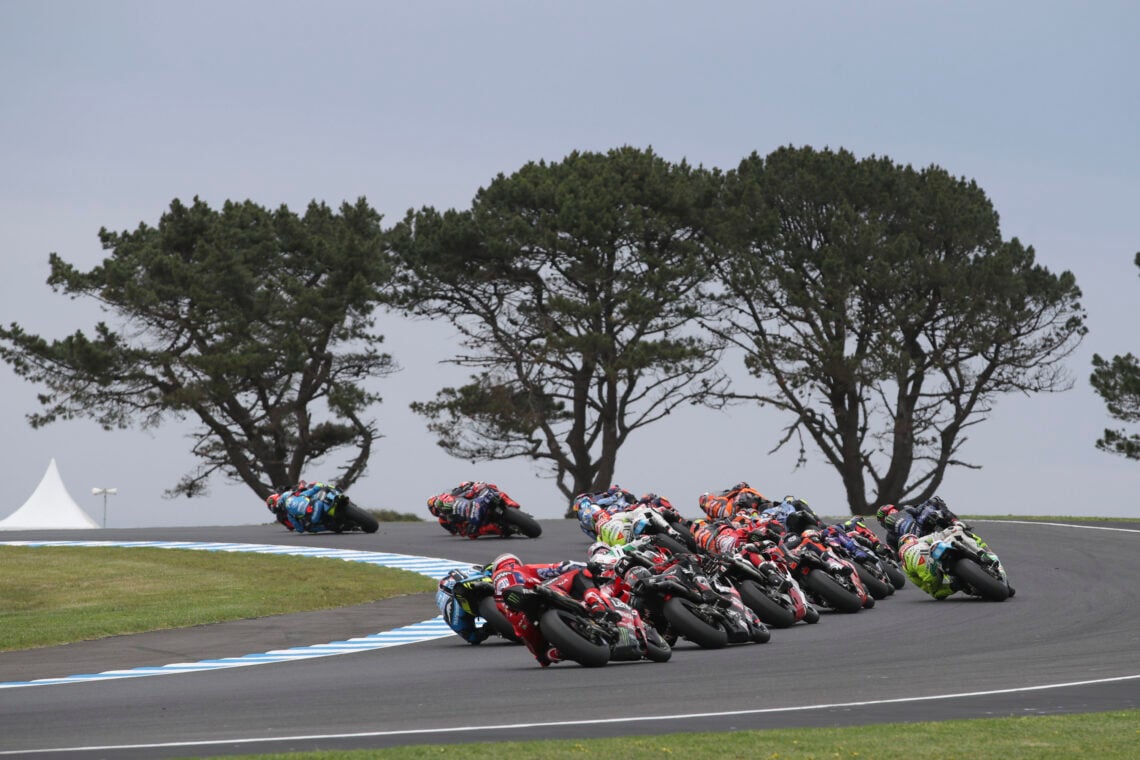
    MotoGP officials confirmed a major calendar overhaul as Liberty Media, MotoGP’s new owners, will replace Phillip Island with a planned Adelaide circuit as part of a push for more city-center events. Liberty announced Phillip Island will no longer host the Australian Grand Prix, though reports differ on the timing — the announcement cites a change “from 2027,” while some reports say Phillip Island was removed from the 2026 calendar. Some outlets suggested Adelaide could take the season-finale slot while Valencia moves into the middle of the season.

    The move provoked widespread criticism from riders, commentators and fans; commentator Keith Huewen called the loss “tragic.” Organizers acknowledged the decision has created uncertainty for local communities and supporters.

    Dorna CEO Carmelo Ezpeleta defended the overhaul on safety grounds, saying “safety comes first,” and citing an increased number of accidents at Phillip Island and persistent wind and rain concerns. He said safety — not location alone — will determine which venues remain on the calendar, warning that Madrid’s IFEMA layout lacked required safety conditions and that Suzuka, while “a beautiful circuit,” could not remain under current safety standards. Organizers and circuit designer Jarno Zaffelli described the planned Adelaide layout as urban but not a true street circuit: Ezpeleta called it a “safe, non-street race,” and Zaffelli said it would not be a “true street circuit.” Liberty Media has signaled further calendar changes as it modernizes and globalizes MotoGP’s schedule, identifying at least one other unnamed circuit for removal; the dispute frames a broader clash between a push for more city-center events (and some street-style proposals) and defenders of traditional high-speed venues, with venue design and safety at the center of the debate.

    More
  • TT Assen named Best Grand Prix of 2025 after 200,000+ crowd

    TT Assen named Best Grand Prix of 2025 after 200,000+ crowd

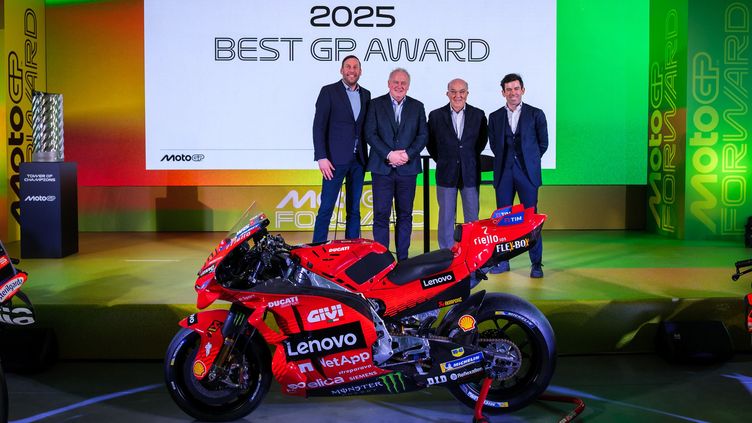
    TT Assen was voted the Best Grand Prix of 2025 after capping its centenary celebrations with a record weekend at the Motul Grand Prix of the Netherlands, drawing more than 200,000 spectators. Teams and paddock stakeholders chose the honor, recognizing Assen for its on- and off-track entertainment and strong fan engagement; Motul was the event’s title sponsor. A specially commissioned trophy will be formally presented to the Dutch GP team at TT Assen on June 28, shortly before the MotoGP race lights out.

    Organizers and MotoGP leadership credited deliberate improvements across operations and fan activities for the win. Arjan Bos, chairman of the TT Circuit Assen board and Dutch GP director, said the award reflected targeted work to improve the experience for competitors and spectators, while MotoGP chief executive Carmelo Ezpeleta praised Assen’s mix of modern facilities, deep history and its ability to grow crowds and fan activities. MotoGP noted the circuit’s focus on teams and riders, enhanced fan experience and added weekend entertainment; Motul and the broader paddock featured centrally in the event’s presentation and the judging process.

    The result underlines Assen’s long-standing place in motorcycle racing. Known as “The Cathedral of Speed,” Assen first hosted the world championship in 1949 and has the most MotoGP appearances since the series began, with two-wheeled racing at the venue dating back to the mid-1920s. Reports say the June 2025 meeting drew approximately 200,000 spectators for the weekend, with a reported Sunday crowd of 109,499, and that Marc Márquez — the eventual 2025 champion — completed a double victory at Assen. The Best Grand Prix award follows previous winners such as the Solidarity Grand Prix of Barcelona in 2024 and Qatar in 2023.

    More
  • Rim failure likely cost Márquez podium, harms Ducati bid

    Rim failure likely cost Márquez podium, harms Ducati bid

    Ducati’s hopes at the Thai MotoGP in Buriram were derailed by mechanical problems and an unexpectedly poor team showing that left the factory without a podium. The result ended a long run of Ducati podiums — reported as an 88-race streak that began in 2021 — though sources differ on the precise race it began (reports cite the 2021 British GP and Aragon 2021). Aprilia dominated the opener, turning what had been a pre-race expectation of Ducati strength into a difficult weekend for the Italian marque.

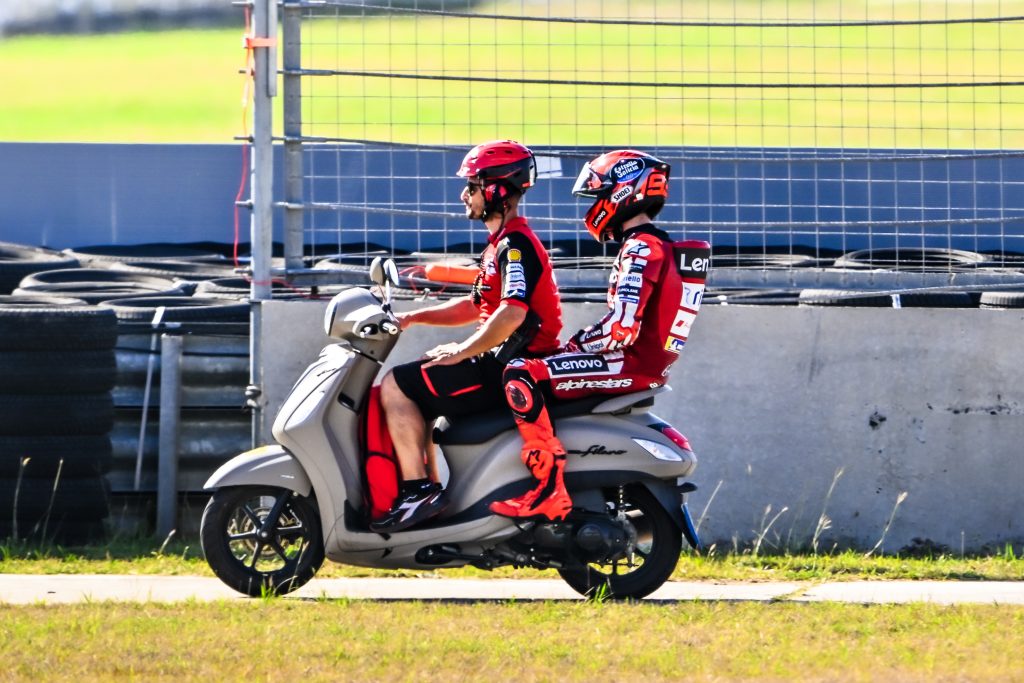
    The most dramatic failure came when Marc Márquez, who had begun the race on the front row and was contesting a podium, ran over the Turn 4 curb on lap 21 and suffered a deformed rear rim that caused an immediate loss of tire pressure and forced his retirement with six laps remaining. Ducati team boss Davide Tardozzi said “the rim exploded,” and technical lead Piero Taramasso said rim damage had been visible all weekend amid extreme heat and an aggressive curb design. Márquez called the failure “very strange” and “unlucky,” said he did not believe Michelin or the track surface were to blame, and insisted there was “no panic” at Ducati. Tardozzi added the failure likely cost Márquez at least a third-place finish and warned it complicates his championship bid.

    Other Ducati riders also suffered setbacks. Fabio di Giannantonio, the top Ducati finisher, recovered to sixth after a mysterious technical fault on lap six that he said produced overheating, reduced his pace and forced him to back off; he ruled out a direct tire failure but declined to specify the issue and said he believed he could have challenged for a podium. Franco Morbidelli finished eighth and Francesco Bagnaia ninth after a weekend of struggles; Alex Márquez and Marc Márquez both retired, Michele Pirro finished last as a replacement rider, and team members were left searching for explanations as engineers tried to understand why the bikes felt different from testing. With Ducati stunned and Aprilia celebrating a dominant day, team figures urged calm while investigations into the wheel and bike issues continued.

    More