NXTbets Inc

  • Mercedes upgrade could boost Norris and Piastri

    Mercedes upgrade could boost Norris and Piastri

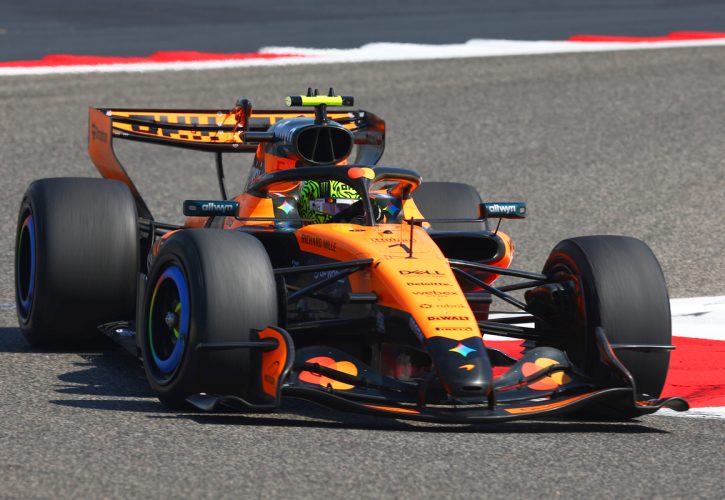
    Oscar Piastri warned that the pecking order revealed at the season-opening Australian Grand Prix will not determine who succeeds under the new rules. He said McLaren are “in the mix” but not in the same position they occupied 12 months ago and expressed confidence in the team’s engineers to close early gaps. McLaren enter the year as defending two-time constructors’ champions and Lando Norris is the reigning drivers’ champion. Former driver-turned-pundit Anthony Davidson suggested the new cars could suit Piastri, a view reinforced by Norris, who said the new car felt “similar to driving a Formula 2 car.” Those comments underline how the regulation changes have altered which driving styles are favored.

    This season’s regulation overhaul has materially changed handling and power-unit characteristics: teams are targeting roughly a 50/50 electrical/combustion power split, electrical energy has increased by about three times, the MGU-H has been removed, and the cars are around 200 mm shorter and 100 mm narrower. Those changes affect harvesting, deployment and overall car balance, and will reshape which teams and drivers benefit as development progresses. McLaren’s technical staff stressed that adapting to the rules will be decisive; chief designer Rob Marshall said the MCL40 is highly complex and places a heavy workload on drivers, that pre-season testing focused on understanding the car’s behavior and on exploiting hybrid energy recovery and deployment, and he judged the car’s foundation reasonably strong but warned the team must quickly dial in optimum settings and sustain an aggressive development programme. Team principal Andrea Stella acknowledged Mercedes and Ferrari looked “a step ahead” after Bahrain testing but cautioned that early pace may not hold as development converges, and the Albert Park weekend and the harvesting/deployment challenges teams experienced there were particularly instructive.

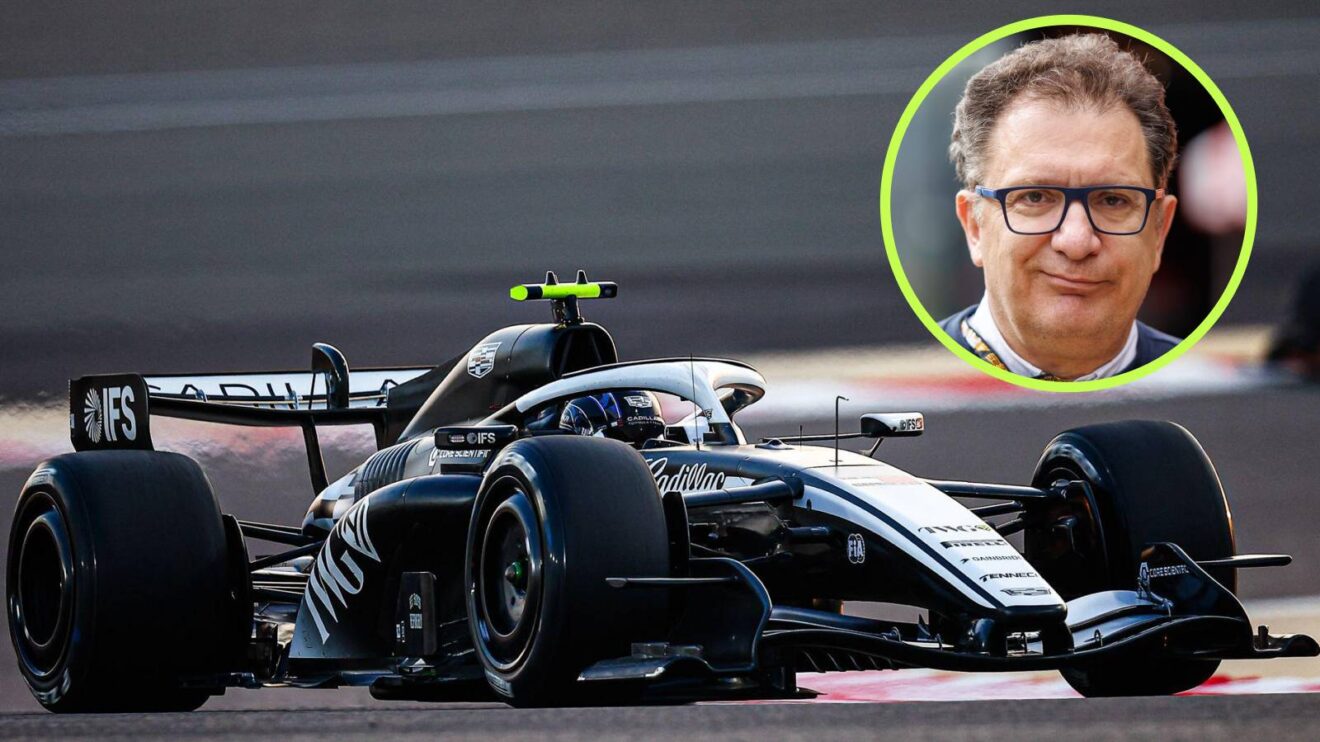
    Power-unit access is an immediate factor in McLaren’s prospects: Bahrain data indicated McLaren ran an older-spec Mercedes power unit and switching to Mercedes’ updated specification, possibly ahead of FP1 at Albert Park, could unlock untapped performance and potentially put Norris and Piastri back into race-winning contention. In testing McLaren appeared third or fourth fastest while Charles Leclerc topped the final day. Accusations emerged that Mercedes ran closer to an 18:1 effective compression ratio in race conditions versus the 16:1 regulatory limit, and the FIA has proposed additional power-unit testing at ambient temperature and at 130°C from August. Toto Wolff called the issue a “storm in a teacup,” while Ferrari’s Fred Vasseur warned against expecting a quick fix. If FIA tests find a breach and Mercedes subsequently fails checks, teams using Mercedes power — including McLaren — could face mid-season power losses. For McLaren and Piastri, the campaign will therefore hinge on rapid on-track development, reliable access to any upgraded Mercedes specification, and how quickly the team adapts to the new technical landscape.

    More
  • FIA confirms 80 km/h pit limit at Albert Park

    FIA confirms 80 km/h pit limit at Albert Park

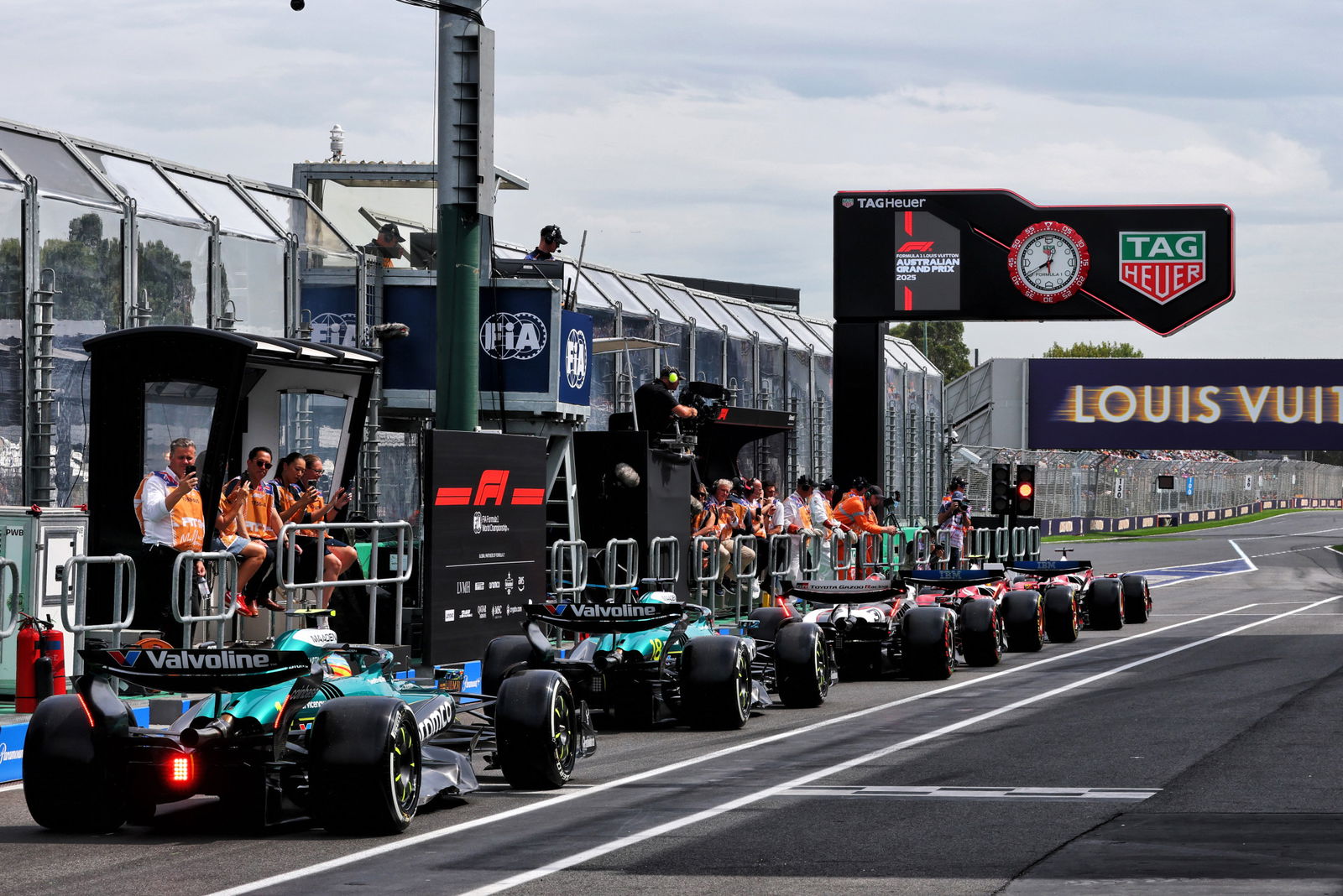
    Organizers and some reports said Albert Park’s pit‑lane speed limit for the 2026 Australian Grand Prix would be reduced from the usual 80 km/h to 60 km/h to cope with an expanded 22‑car grid after Cadillac joined as F1’s 11th team, but the FIA issued an explicit correction denying the cut and confirming the limit remains 80 km/h. The FIA’s announcement, which included detailed confirmation of Melbourne’s first use of the new 2026 “straight mode” zones, therefore dispelled the 60 km/h reports.

    Australian Grand Prix chief events officer Tom Mottram was among those who described a lower limit as a necessary, one‑year “stop‑gap” to ease tighter working conditions in one of the smallest pit complexes on the calendar, and organizers said the measure would have required temporary hospitality, freight storage and pitwall adjustments. Organizers framed the proposed 60 km/h limit as a short‑term safety and operational response because Albert Park’s garages cannot be altered in time for the event, noting the 60 km/h limit last applied before pit‑lane modifications ahead of the 2022 season.

    Plans for longer‑term relief include a $350 million paddock building due to begin construction after this weekend’s race, new garages and a temporary Paddock Club expected for the 2027 event, and a precinct redevelopment targeted for completion in 2028, while Melbourne’s contract to host the Grand Prix runs through 2037. Sources therefore conflict on whether a one‑off reduction was imposed or merely proposed, leaving teams to plan under the FIA’s stated 80 km/h limit for the race weekend.

    More
  • Liam Lawson: Improve qualifying or lose Racing Bulls seat

    Liam Lawson: Improve qualifying or lose Racing Bulls seat

    Liam Lawson admitted he did not feel fully ready for the 2026 Formula 1 season and said he faces mounting pressure to improve his qualifying form or risk a career “dead end.” Reports variously listed him as 23 and 24, and former driver Jolyon Palmer has publicly questioned his ability to lead Racing Bulls. Unnamed team observers warned Lawson that single-lap pace in qualifying must improve to avoid losing his Racing Bulls seat after 2026, and he will line up alongside 18-year-old rookie Arvid Lindblad, who is reportedly impressing behind the scenes.

    Speaking on New Zealand radio and the Mike Hosking Breakfast show ahead of the Australian season opener, Lawson offered cautious but measured praise for the new cars and powertrains. He described the 2026 cars as smaller, “a little bit more playful,” and suffering from reduced downforce that “prevents drivers from attacking corners as before,” attributing the changes to revised technical regulations including the introduction of hybrid power units and significant aerodynamic reductions and saying there were many unknowns under the new rules.

    Lawson said he was “surprised” by the new Red Bull–Ford power unit he tested, calling it “really good” and noting “pleasing reliability” after nearly 500 laps in the VCARB03 during pre-season testing, but he cautioned new powertrains often suffer teething issues and predicted many teams would struggle early in 2026. Those mixed signals—promising pre-season pace alongside warnings about reliability and his own self-doubt—underline the stakes for his second full year in F1. His abrupt demotion from Red Bull in 2025 forced a fight to retain a seat and, he said, shaped his development; he learned from on-track battles such as holding off Yuki Tsunoda. Lawson framed his comments as part of an attempt to rebound, saying he felt better and was excited about 2026, but converting race chances into consistent single-lap qualifying results remains the immediate career imperative.

    More
  • WSL removes Pipeline from Challenger Series after CT shifts

    WSL removes Pipeline from Challenger Series after CT shifts

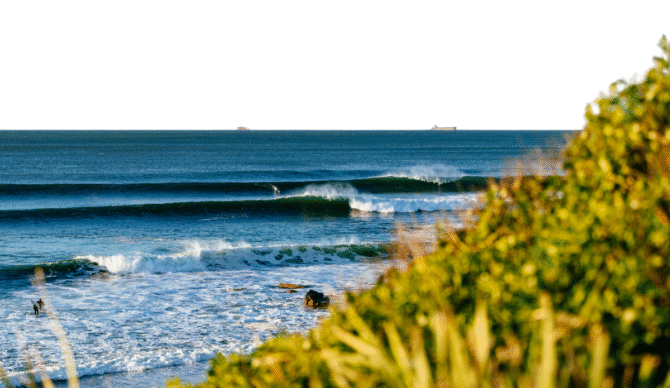
    The World Surf League announced adjustments to its 2026–27 schedules, condensing the Challenger Series to five stops and establishing a four-stop Longboard Tour that will run from July through March. The WSL said the Longboard Tour will use a cumulative-points model to decide the 2026 world title, while the Challenger Series returns to a smaller itinerary modeled on past Championship Tour qualifier series.

    The Challenger Series will feature five familiar stops but excludes Hawaii — including this year’s Lexus Pipe Challenger — after the WSL cited limited Pipe and Hawaii permits. WSL said those permitting constraints followed the Championship Tour’s decision to move its season start from Pipeline to Bells, which reduced available windows at Pipeline. Senior Tour Manager Travis Logie highlighted the depth of emerging talent on both the men’s and women’s sides and noted additional qualification pathways via QS 6,000 International events.

    The Longboard Tour’s four stops are the Huntington Beach Longboard Classic (July 25–29), the Bioglan Bells Beach Longboard Classic (Nov 25–29), the La Union Longboard Classic in the Philippines (Jan 20–24) — which replaces the previously scheduled Surf Abu Dhabi stop — and the Surf City El Salvador Longboard Championships in El Sunzal (Mar 13–21). The first three events will each field 24 surfers and award 10,000 points to each winner; the season-concluding El Salvador event will feature the top 12 men and top 12 women and award 15,000 points to winners. WSL Longboard Tour Director Will Hayden‑Smith said returning to a cumulative-points model while concentrating points at a smaller final-field championship is intended to reward season-long consistency and create a high-stakes finale.

    More
  • AMKUS to equip High Limit Racing with rescue gear

    AMKUS to equip High Limit Racing with rescue gear

    AMKUS Rescue Systems announced a partnership with Interstate Batteries High Limit Racing to outfit the team’s safety crews with high-performance rescue and extrication equipment to improve on-track safety and operational readiness at sprint car events nationwide. Speed Sport/HLR reported the collaboration in a piece titled “High Limit Partners With AMKUS Rescue Systems.”

    AMKUS President Emilie Maheu said the partnership reflects a shared commitment to protecting lives in high-risk environments and described High Limit Racing as representing the future of sprint car racing. AMKUS Sales Manager Kodi Smith said he identified and developed the collaboration through his connections in the racing community, and Interstate Batteries High Limit Racing CEO Brad Sweet said the availability of AMKUS emergency-response tools will raise safety standards for drivers, venues and the series as the team expands its sprint car footprint.

    Under the agreement, AMKUS will supply emergency-response and rescue equipment to High Limit Racing’s safety crews. AMKUS — which has more than 40 years of experience designing extrication tools — manufactures battery-powered and hydraulic rescue equipment in the United States from its base in Valparaiso, Indiana. High Limit Racing, founded by Kyle Larson and Brad Sweet, aims to grow the sprint car ecosystem nationwide, and both organizations presented the equipment partnership as a safety-first step to support that expansion.

    More
  • Yamaha link and Pramac deal set Toprak's 2027 path

    Yamaha link and Pramac deal set Toprak’s 2027 path

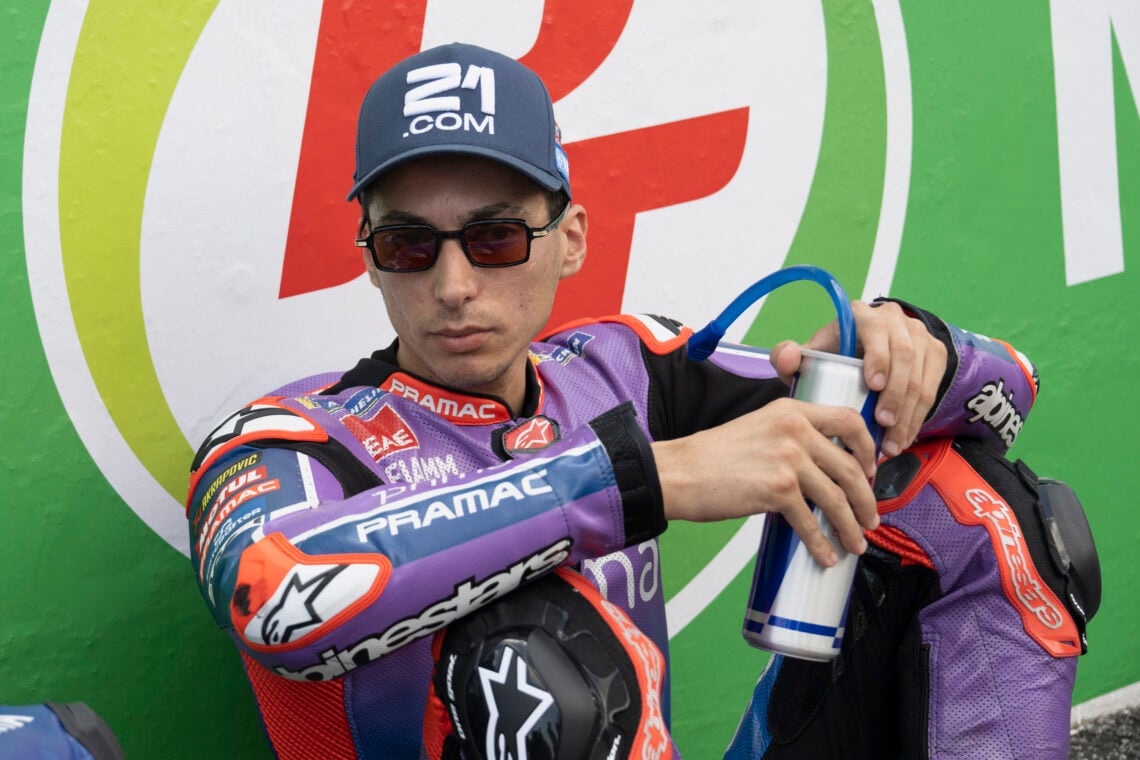
    Toprak Razgatlıoğlu, 29, is on a multi‑year transition from World Superbike to MotoGP, with his 2026–27 future shaped by overlapping agreements. He left WSBK after winning a third title and signed a two‑year MotoGP deal linked to Yamaha that begins in 2026, while remaining contracted to Pramac through the end of 2027. Sources say the presence of both a Yamaha‑linked factory arrangement and an existing Pramac seat creates the central overlap about where he will race in 2027.

    The 2026 season is being presented as a transition year on and off track. Razgatlıoğlu made his MotoGP debut for Pramac at the Thailand Grand Prix, finishing 17th — third of four Yamahas and ahead only of teammate Jack Miller — in a weekend that featured strong Sprint pace but a last‑corner crash. Paddock observers said the Yamaha V4 package looked uncompetitive in that outing.

    His manager, Kenan Sofuoğlu, told reporters there “could be interest” from factory Yamaha but he was “99% sure” Razgatlıoğlu would remain with Pramac in 2027; Pramac’s resistance to Honda’s attempt to sign him for 2026 has reinforced that position. Honda rider Luca Marini suggested Razgatlıoğlu may need until the 2027 season to be truly competitive and pointed to planned 2027 rule changes — 850cc engines, tighter aerodynamic limits and a ban on ride‑height devices — as factors that could affect adaptation. Those 2027 expectations are already affecting the rider market: Yamaha plans a largely new lineup for 2027 and has reportedly identified 2024 champion Jorge Martin as its preferred signing on a two‑year deal while it seeks his teammate. Reports say Yamaha views Razgatlıoğlu and Alex Rins as “far behind” in the race for a factory seat, even as Sofuoğlu and Yamaha describe an ongoing project aimed at improving the bike’s competitiveness for next year. With only one race contested so far this season, Razgatlıoğlu’s on‑track development and the team decisions that will shape his 2027 programme remain a developing story.

    More
  • Kevin Thomas Jr. sweeps USAC sprint features in Arizona

    Kevin Thomas Jr. sweeps USAC sprint features in Arizona

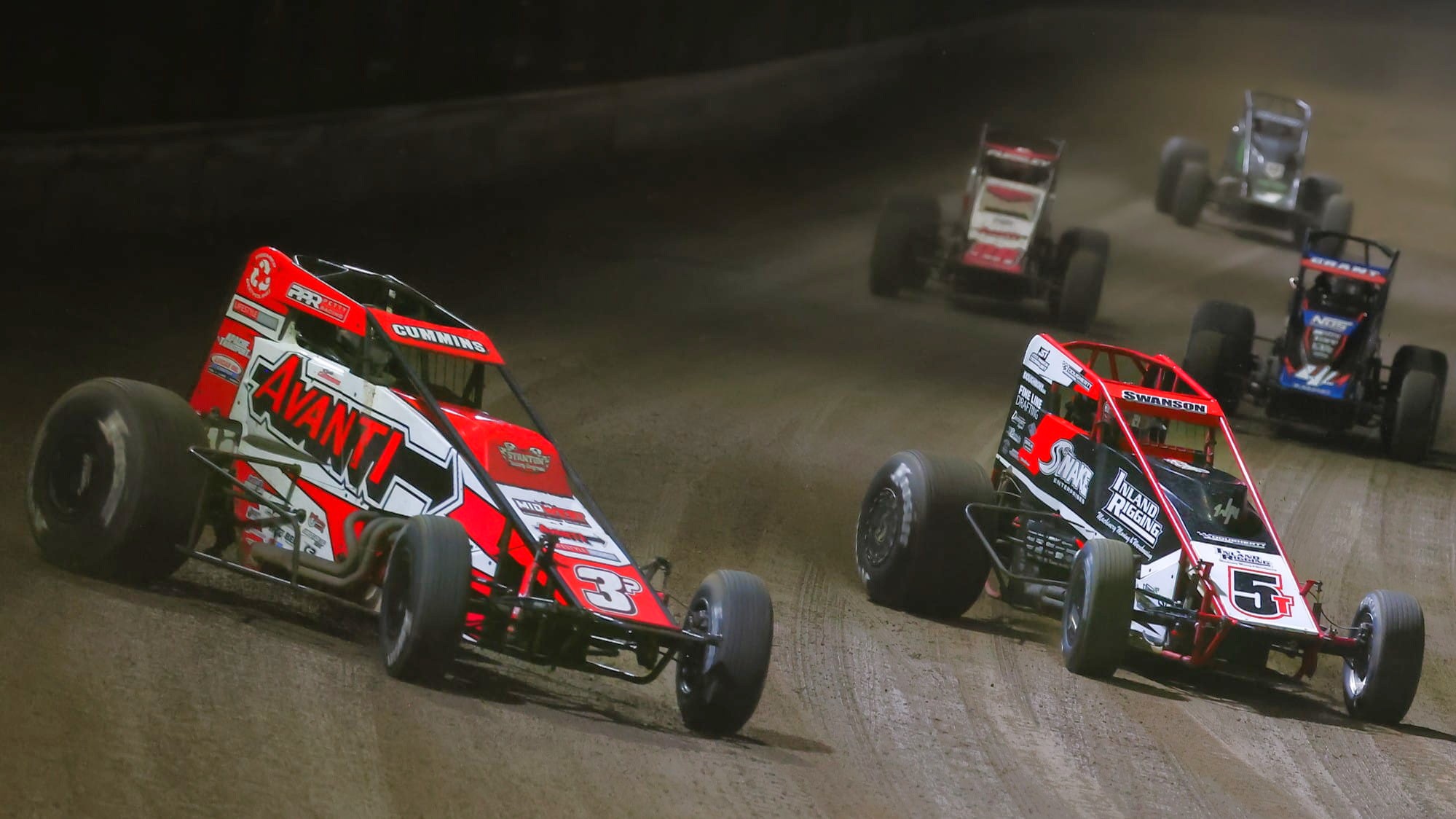
    Kevin Thomas Jr. completed a two-race sweep of USAC Avanti Windows & Doors sprint car features in Arizona, winning at Mohave Valley Raceway and then at Central Arizona Raceway during the Sonoran Clash. The Cullman, Alabama driver started fifth in both features and swept the weekend for Bonneau Motorsports’ No. 78 in Mohave and for the USAC Avanti Windows & Doors Southwest Sprint Car field in Casa Grande.

    At Mohave Valley Raceway Thomas—running a 360-cubic-inch engine against a field of 410-cubic-inch engines—started fifth, passed Eddie Tafoya Jr. on lap nine and, after multiple lead changes in the final three laps, retook the lead with the white flag and held it to the checkered. The victory was his ninth career USAC CRA feature win and moved him to 15th on the USAC CRA series all-time wins list; he earned $3,000 plus an additional $720 for the Rolls Scaffold 360 Challenge. Ricky Lewis charged from 10th to finish second and collected the Steve Lafond Photos Hard Charger award, Eddie Tafoya Jr. was third, Austin Williams fourth and Charles Davis Jr. fifth; R.J. Johnson posted fast time at 13.897 seconds and finished sixth. Heat winners included Braden Chiaramonte, A.J. Bender and Eddie Tafoya, and Chiaramonte flipped in his heat.

    The win at Central Arizona Raceway completed the sweep. Connor Lundy briefly took the lead during an opening-lap scramble, but Thomas moved into the lead by lap two and paced the field for 24 of the 25 laps to secure the feature victory. Steve Sussex finished second, R.J. Johnson third, Bruce St. James fourth and Charles Davis Jr. fifth. Both events were staged under the USAC banner with Avanti Windows & Doors as a presenting sponsor.

    More
  • Anthony Macri wins Volusia Jamboree; 2 points behind Gravel

    Anthony Macri wins Volusia Jamboree; 2 points behind Gravel

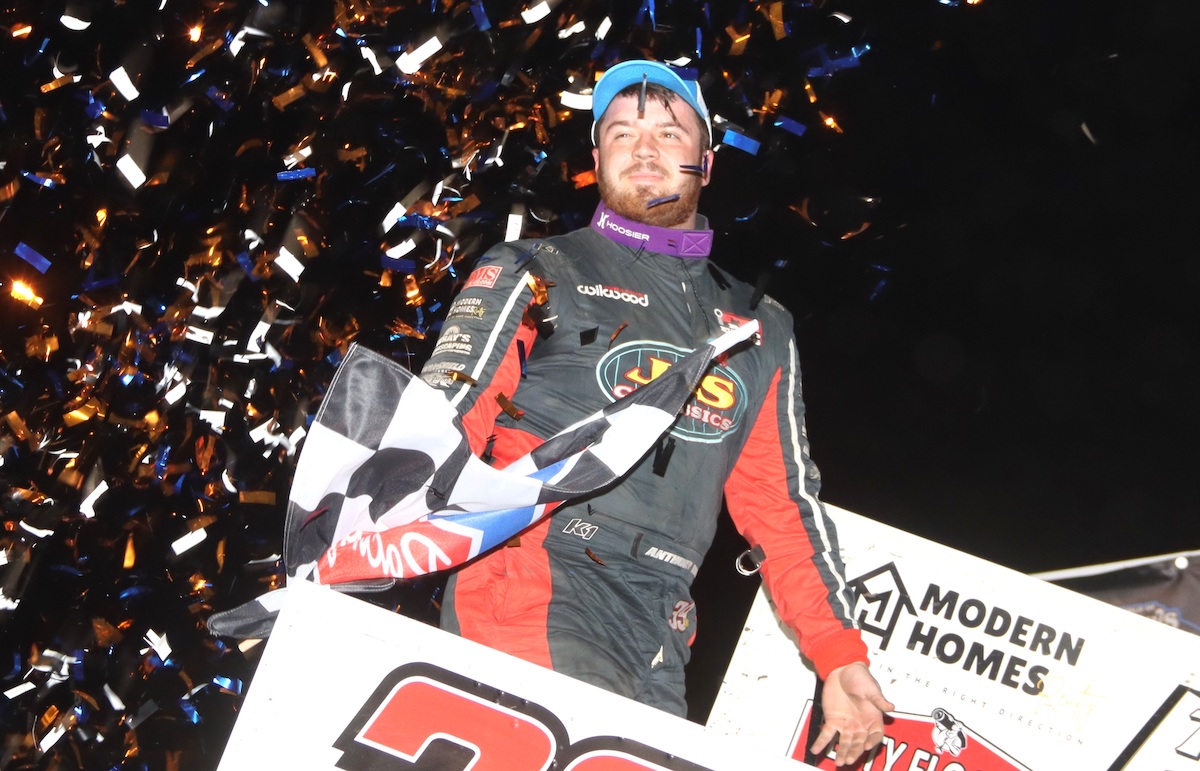
    Anthony Macri’s victory in the Bike Week Jamboree at Volusia Speedway Park underscored an early-season surge: he became the first driver with two World of Outlaws wins in 2026 and, after five races, sits two points shy of points leader David Gravel.

    Macri took the lead on Lap 14 and held off a late charge from 19-year-old Ashton Torgerson to claim the win; Torgerson finished second, marking one of Shark Racing’s three top-five results in five starts. David Gravel finished third, recording his fourth consecutive podium, while Carson Macedo and Daryn Pittman finished fourth and fifth, respectively.

    Macri, who races for Dillsburg, Pennsylvania-based Macri Motorsports, came to Volusia off a strong Federated Auto Parts DIRTcar Nationals showing — the team collected third- and fourth-place finishes and earned a $20,000 victory in the DIRTcar Nationals finale to capture the Big Gator. The Volusia triumph also made Macri the 13th driver to score multiple victories at the track; he credited his crew and a pacing strategy devised with Joe Mooney, saying the team “gave me a badass car” and that they worked to let others “wear their equipment” before making a decisive move.

    More
  • 2026 F1 overhaul forces teams to rethink race strategy

    2026 F1 overhaul forces teams to rethink race strategy

    The 2026 Formula 1 season begins under a wide technical and regulatory overhaul that will change race strategy and overtaking. New elements — roughly 50/50 hybrid power units, active front and rear wings, revised chassis dimensions, lighter minimum weights, and smaller Pirelli tyres — will force teams and drivers to relearn setup, driving techniques and energy management.

    Several distinct technical shifts define the package. Cars are shorter, narrower and lighter with a return to a more raked aerodynamic platform; active aero, including moving rear wings, now reduces drag on straights and can be adjusted in different conditions. DRS has been removed and replaced by an electrical “overtake mode” (also called boost mode or straight‑mode drag reduction), which provides temporary additional power under predefined rules.

    Power units are integrated engine-and-battery systems designed to run on fully sustainable fuels, and regulations expand energy-recovery and deployment options. Early testing has highlighted new engineering demands — changes such as revised compression ratios and altered energy-harvesting architectures have been discussed in the paddock — and teams face heavier energy-management workloads in race simulations.

    Early running in Bahrain produced high-profile experiments during testing, notably Ferrari’s rotating “upside-down” rear wing, and paddock discussion flagged a contested Mercedes power‑unit issue rather than an established fact. Broadcasters and pundits warned the opening rounds could be unpredictable; Sky Sports commentator Martin Brundle said “all bets are off,” predicting continual flip-flopping as upgrades arrive. Pre-season form is a useful but imperfect guide: Lando Norris enters the season as reigning champion, with McLaren hoping to remain competitive, while Mercedes, Ferrari and Red Bull appear to be credible threats. Eleven teams completed varying amounts of pre-season running, and the opener in Melbourne (March 6–8) — the first round of a 24-race calendar — will be a crucial test of how teams translate winter development into race pace, energy strategy and overtaking. Analysts say the season narrative will be driven less by a settled pecking order and more by how quickly teams master the new hybrid architecture, active aero and overtaking systems as upgrades and circuit characteristics reshuffle the championship picture.

    More