NXTbets Inc

  • Russell on Sprint pole as Antonelli probe threatens Mercedes

    Russell on Sprint pole as Antonelli probe threatens Mercedes

    FIA stewards opened post-session investigations into alleged impeding by Mercedes rookie Kimi Antonelli and Alpine’s Pierre Gasly during Sprint qualifying at the Chinese Grand Prix, actions that could carry three-place grid drops and threaten to undo Mercedes’ provisional front-row lockout. The summonses mean the Sprint starting order set in qualifying is provisional and could be reshuffled before Saturday’s Sprint race, with the stewards’ decision likely to have direct consequences for the top five.

    Officials were told Antonelli appeared to impede Lando Norris late in SQ2, with Norris saying on the radio he “was going to push that lap” after backing out when Antonelli was reportedly slow on the inside into Turn 1, while Max Verstappen accused Gasly of impeding him after Turn 14 and forcing him wide on his final push. Both drivers were called before the stewards; the FIA said it would probe the drivers’ actions themselves rather than simply the resulting track positions. Despite the alleged incidents, Norris and Verstappen both progressed to SQ3.

    Provisional results see George Russell on Sprint pole after a 1:31.520 lap with teammate Antonelli second, giving Mercedes a provisional 1-2. If Antonelli is penalized three places he would drop down the order — one widely reported scenario would see him fall to fifth, promote Norris onto the front row and bump Verstappen up from P8 — producing a significant reshuffle of the Sprint grid. The session also underlined wider issues in the field: Sergio Pérez missed the session with a fuel-system problem and Red Bull reported drivability and balance troubles, Verstappen calling the RB22 “horrendous,” leaving the stewards’ forthcoming ruling as the key determinant of the final Sprint grid.

    More
  • Mercedes set FP1 benchmark in Shanghai, over 0.5s clear

    Mercedes set FP1 benchmark in Shanghai, over 0.5s clear

    Mercedes stamped its authority on the solitary practice hour at the Chinese Grand Prix in Shanghai. George Russell set the outright pace in FP1 with a 1:32.741, and teammate Kimi Antonelli was 0.120s adrift to complete a Mercedes 1-2. The one-hour session — the only practice before sprint qualifying under Shanghai’s compact schedule — left Mercedes more than half a second clear of the nearest challengers on the timing screen.

    McLaren and Ferrari were the closest rivals in the limited running: Lando Norris and Oscar Piastri posted the best non-Mercedes times, around 0.56s and 0.73s back respectively, while Charles Leclerc also featured among the early challengers. Teams used the hour for short-run tire work and setup experiments — notably Ferrari introduced a new ‘macarena’ rear wing, which could reduce Mercedes’ straight-line advantage if it proves effective.

    Lewis Hamilton briefly ran the ‘macarena’ wing and soft tires during the session but remained well off Russell’s medium-tire benchmark. The session also produced several incidents and reliability concerns teams must address: Hamilton and Norris made contact during an overtaking attempt, with Hamilton spinning and heavily flat-spotting his tires; Franco Colapinto and Oliver Bearman also spun; Arvid Lindblad stopped with smoke; and Carlos Sainz missed much of the hour with a data issue.

    Red Bull appeared off the pace in FP1, with Max Verstappen and Isack Hadjar running outside the top spots, reinforcing the picture of a weekend in which Mercedes remained the team to beat and others must use sparse track time to try to close the gap.

    More
  • Mercedes' W17 straight-mode puts Ferrari on back foot

    Mercedes’ W17 straight-mode puts Ferrari on back foot

    Mercedes held a clear performance advantage over Ferrari going into the Chinese Grand Prix, driven largely by active-aero/straight-mode and differences in energy and engine deployment. Lewis Hamilton and Charles Leclerc both said Mercedes showed a distinct edge after the Australian Grand Prix, with Hamilton putting the qualifying gap at about eight tenths and the race-trim deficit at four to five tenths; in another report he described Ferrari as roughly half a second per lap slower in race trim.

    Observers attributed much of Mercedes’ edge to the W17’s straight-mode performance and how that system lets Mercedes deploy energy more effectively on flying laps, making their cars harder to clip on the straights. Formula 1 confirmed straight mode will be enabled at several sector pairs in Shanghai, and Hamilton urged Ferrari to work out how Mercedes achieved the “huge step.” George Russell’s dominant weekend in Melbourne — converting pole into victory after a near-0.8s pole advantage over non-Mercedes cars — underlined the gap.

    More
  • Márquez predicts 850cc bikes could match 2027 lap times

    Márquez predicts 850cc bikes could match 2027 lap times

    MotoGP’s 2027 regulatory overhaul, centered on a shift from 1000cc to 850cc machines, is being presented as a safety-driven reset that could nonetheless preserve or even improve lap times while reshaping competitiveness across the grid. Organizers and riders have said the aim is to curb extreme top-speed runs, which had approached roughly 360 km/h, to ease pressure on limited run-off areas.

    Reigning champion Marc Márquez welcomed the displacement cut and predicted the smaller, lighter, less powerful bikes “could be similar, or even faster” on lap time, saying improved corner efficiency and greater maneuverability should offset slower straight-line speed. He described 2027 as a “season of continuous evolution” and warned adaptation would be uneven, noting “no one can guarantee they will have the best bike or adapt fastest.”

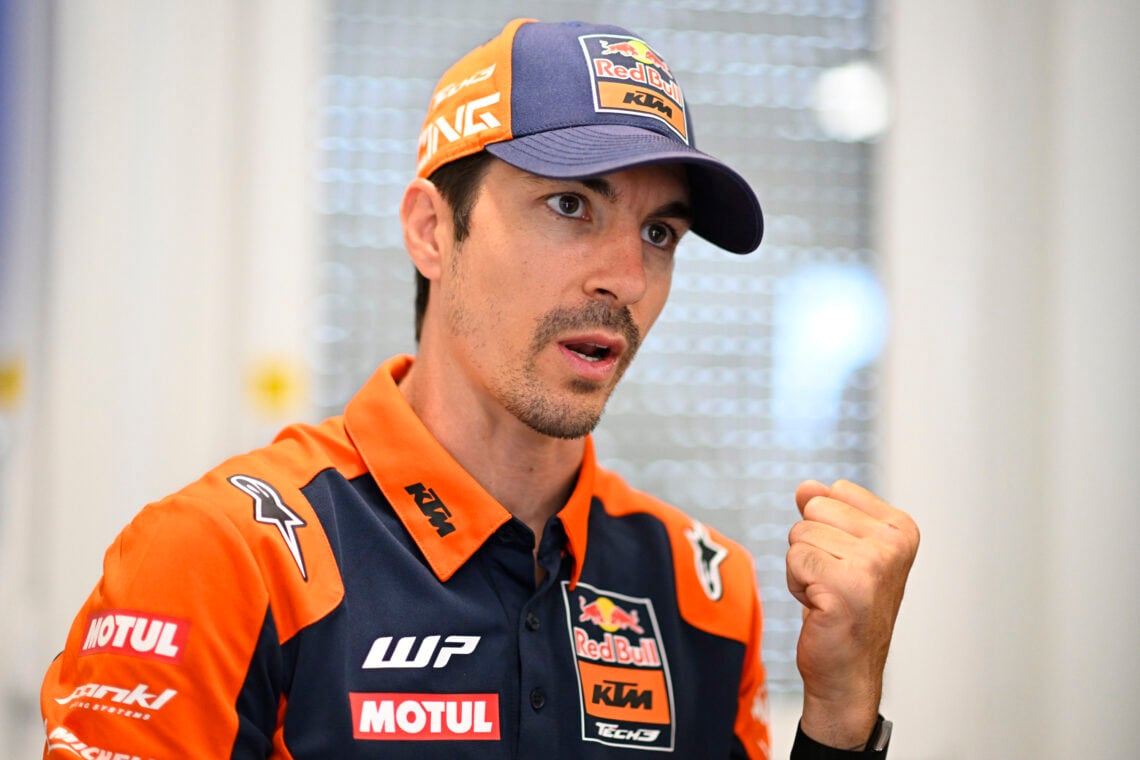
    The 2027 package pairs engine downsizing with broad technical and commercial measures: tighter aerodynamic limits and bans on ride-height and other aero/ride aids (including the holeshot device), a ban or heavy restriction on prototype aero devices, and a mandated switch from Michelin to Pirelli as sole tyre supplier. Manufacturers have begun development and limited running: Honda released footage of its 850cc prototype after Takaaki Nakagami ran it at Sepang and called the bike “super light” and said he was “a bit surprised,” KTM and Yamaha have shown or run machines privately, and Ducati and Aprilia are targeting spring debuts. Teams say the rule change will alter the balance between electronics, mechanical aids and rider input and could reward manufacturers that invest heavily and start testing early; Honda technical director Romano Albesiano said the company believes it could hold an advantage thanks to development resources, pointed to mid-season Brno and Spielberg tests as opportunities to build strong setups, and warned the new bikes will “definitely pitch more” and be more challenging to ride. Taken together, the technical, safety and tyre measures are being framed as a strategic reset that ends the 1000cc era after 2026 and creates a competitive window in which setup work, early testing and rider adaptation are likely to determine who benefits most from the new 850cc regulations.

    More
  • Russell accuses Ferrari of blocking FIA start fix

    Russell accuses Ferrari of blocking FIA start fix

    George Russell publicly accused Ferrari of blocking the FIA from changing Formula 1’s start procedure ahead of the Chinese Grand Prix, calling the team ‘selfish’ and ‘a bit silly.’

    He tied the dispute to start problems at the season-opening Australian Grand Prix in Melbourne, saying low battery levels on the formation lap—caused by the harvest-limit rule—had disadvantaged cars that qualified in the front half. Russell said the FIA wanted to remove the harvest limit to prevent repeats but could not implement the change because it required a super-majority of teams and Ferrari opposed it.

    He noted that some Ferrari drivers had managed strong starts under the current procedure, and Lewis Hamilton described the revised start procedure as ‘exciting’ and expected it to improve as the sport transitions to the broader 2026 power-unit and chassis changes.

    More
  • Ferrari fits SF-26 with 180-degree flip wing in Shanghai

    Ferrari fits SF-26 with 180-degree flip wing in Shanghai

    Ferrari will debut a radical rear wing—nicknamed the Macarena (also called the flip-flop wing)—on the SF‑26 at the Chinese Grand Prix in Shanghai as part of an early-season technical development arms race. Team principal Fred Vasseur says the upgrade is part of an aggressive development program, and the team plans an evolved rear-wing specification by the Canadian Grand Prix in May; reports indicated three different specifications of the Macarena were sent to Shanghai for the sprint weekend.

    Video from pre-season testing in Bahrain showed the wing’s top element rotating a full 180 degrees, effectively turning the flap upside down to reduce drag. Ferrari first ran the device on the penultimate day of testing with limited mileage and chose not to use it at the season-opening Australian Grand Prix. In Shanghai the wing was positioned to operate along the circuit’s 1.1 km straight.

    Rivals and Ferrari personnel framed the rollout as part of a rapid development battle. Lewis Hamilton said Ferrari ran the device “a full day or so” in Bahrain, praised Ferrari’s engineers for accelerating upgrades, and said he was keen to see its impact in China while warning the title fight will be decided by an ongoing “development war.” Hamilton also noted qualifying gaps of roughly eight tenths and race deficits of four to five tenths to Mercedes after Ferrari finished third and fourth in Melbourne following a pit-stop strategy blunder that likely cost a probable win. Others, including Lando Norris, have highlighted Ferrari’s strong cornering pace, and Ferrari has introduced other upgrades this season—including a smaller turbo intended to help race starts—as teams escalate technical development early in the season.

    More
  • VR46 nears multi-year Ducati supply deal

    VR46 nears multi-year Ducati supply deal

    VR46 was close to re-signing with Ducati for the 2027 season despite exploratory interest from Aprilia. At a recent presentation in Rome, team principal Alessio “Uccio” Salucci said, “I never considered leaving Ducati,” and described talks with Aprilia as cordial. Aprilia’s outreach over the winter was led by CEO Massimo Rivola; Salucci told Motorsport.com he spoke with Rivola “two or three times.” Valentino Rossi also signaled confidence in continuing with Ducati as VR46 begins work toward a 2027 bike.

    The team said it was on the verge of finalizing a multi‑year supply deal taking effect in 2027, with one report saying a three‑year 2027–2029 contract was expected to be finalized soon. Salucci described the paperwork as “very close” with only a few “small details” remaining, but warned a public announcement could be delayed while Ducati, Aprilia, Yamaha, KTM and teams negotiate a new manufacturers’/constructors’ agreement and broader commercial terms with MotoGP. Observers said the timing and final form of any 2027 supply arrangement remained contingent on those wider manufacturer–MotoGP talks and planned technical changes for 2027, including the move to the 850cc/Pirelli era.

    Background context stressed VR46’s long association with Ducati. The team entered the premier class with Luca Marini, though sources differ on whether that step came in 2021 or 2022, and it replaced Pramac as Ducati’s main satellite team in 2025. Sources also differ on when formal factory support began (reports cite 2024 or 2025), but it is reported that Fabio Di Giannantonio has received the latest Ducati machinery and been run on factory‑spec equipment, while Franco Morbidelli has used a year‑old machine within the VR46 operation. VR46 has recorded race wins on the Desmosedici (most recently Marco Bezzecchi in 2023). Di Giannantonio and Morbidelli are out of contract at the end of this season, and the team reportedly pursued Pedro Acosta before he joined the official Ducati Lenovo squad.

    More
  • McLaren admits 'nowhere near' leaders, must fix aero, tires

    McLaren admits ‘nowhere near’ leaders, must fix aero, tires

    McLaren conceded after the Australian Grand Prix that the team is “nowhere near” the front. Lando Norris said there was “zero chance at the minute” of matching the top teams, estimating McLaren were roughly 0.5-0.6 seconds per lap off the pace. He singled out Ferrari as having “the best car” with “unbelievable” cornering, pointed to Red Bull’s pace when Max Verstappen nearly caught him, and warned the team faces a long, tough season unless it closes the gap quickly.

    Team data and commentary pointed to a complex package shortfall rather than a single cause. McLaren team principal Andrea Stella said the team was “a little puzzled,” noting losses both on the straights and through certain corners and describing a performance gap of roughly 0.5-1.0 seconds that mirrored the near one-second qualifying deficit to George Russell. GPS analysis and team data highlighted straight-line time loss despite McLaren and Mercedes using the same power unit, and Stella added that limited information from Mercedes about their new engine hampered McLaren’s understanding.

    Severe front-tire graining after only a few laps compounded the problem, masking some pace and forcing two-stop strategies that left McLaren more than 50 seconds adrift of the winner. Most sources put Norris about 51-52 seconds behind Russell, though one report cited a 35.5-second gap. Outside analysts flagged the need for aero and package upgrades — Sky Sports’ Martin Brundle said McLaren “need an aero upgrade” — and Stella warned corrective upgrades will take a few races to arrive. The result was George Russell’s victory and a Mercedes 1-2 in Melbourne; Oscar Piastri, who had topped FP2 and shown early weekend pace, was unable to start after a reconnaissance-lap crash, leaving McLaren with only Norris to assess the deficit.

    More
  • Gravel, Macedo Tied; Title Fight Moves to Kennedale

    Gravel, Macedo Tied; Title Fight Moves to Kennedale

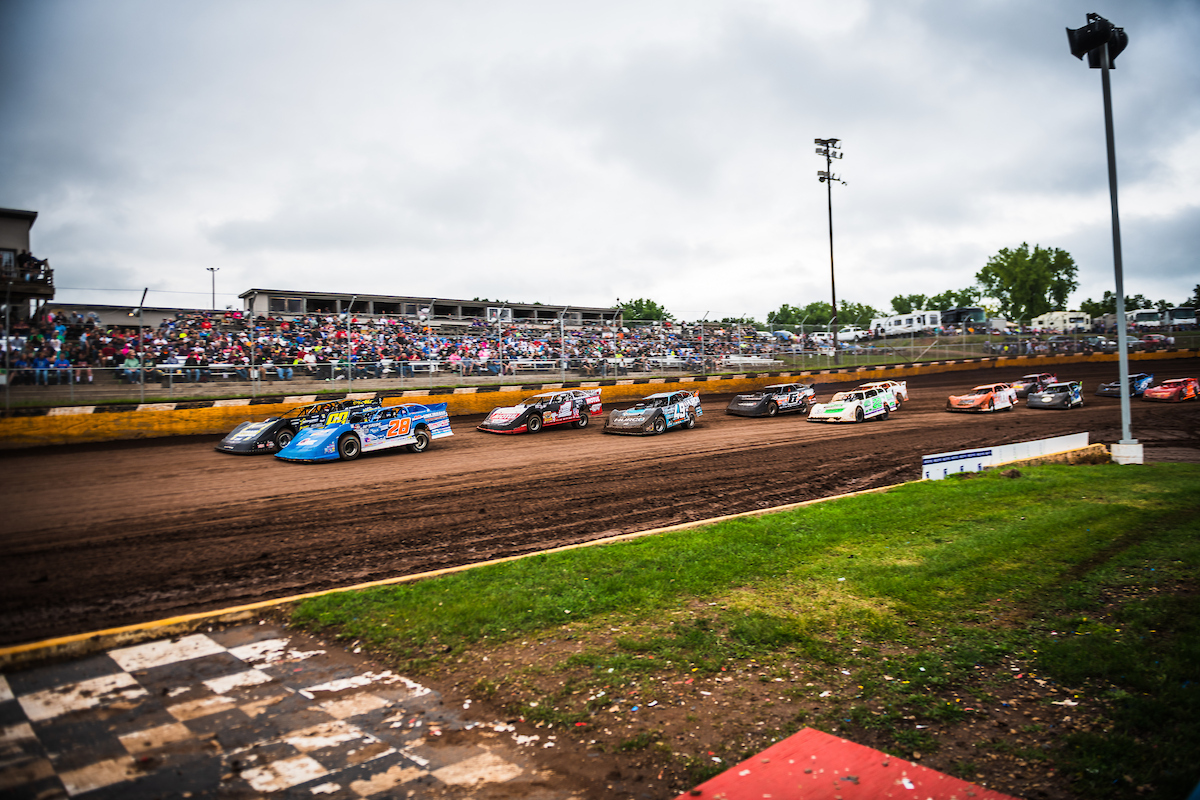
    The World of Outlaws NOS Energy Drink Sprint Car Series returns to Kennedale Speedway Park for the Cowtown Classic on Friday–Saturday, March 13–14. The two-day stop occupies the spring slot at the track southeast of Fort Worth for a third consecutive year and is part of the series’ schedule. The series, officially sponsored by NOS Energy Drink and often billed as ‘The Greatest Show on Dirt,’ will stage sprint-car competition at Kennedale. As background, the World of Outlaws first raced in Texas on March 18, 1978, at Mesquite’s Devil’s Bowl Speedway.

    The early championship is tightly contested: after six races David Gravel and Carson Macedo are tied atop the standings. Gravel has recorded four podiums this season and finished 11th at Talladega, while Macedo opened the year with five straight top-five finishes and holds a 3.67 average finish.

    New driver–team pairings have already produced winners this season, including Spencer Bayston, Sheldon Haudenschild (KCP Racing) and Donny Schatz (CJB Motorsports). Past Kennedale winners since the series debuted there in 2024 include Carson Macedo, Giovanni Scelzi and Buddy Kofoid. Fischer Motorsports’ Garet Williamson is a dark-horse to watch after posting four top-10s in six races and a season-best fifth at Talladega, and local Texas drivers Sam Hafertepe Jr., Marcus Thomas and John Carney II also figure to try to exploit home-track advantage.

    Preview coverage frames the Kennedale weekend as an event-level highlight for the series and a potential momentum swing in the early title fight.

    More