NXTbets Inc

  • Horner Eyes Selective F1 Return as Partner-Owner

    Horner Eyes Selective F1 Return as Partner-Owner

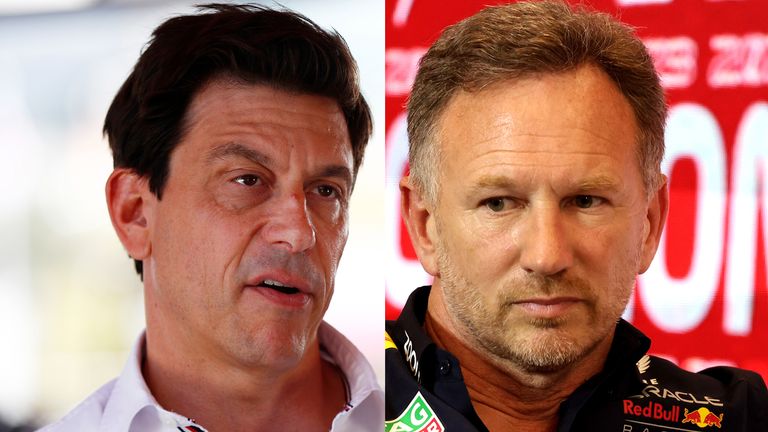
    Christian Horner broke his public silence at the European Motor Show in Dublin, saying he has ‘unfinished business’ in Formula 1 (F1) after his dismissal in July 2025. He reflected on 21 years leading Red Bull and the team’s record under his stewardship, which included 124 Grand Prix wins and a combined 14 world titles (eight drivers’ championships and six constructors’ crowns). Horner said he misses the sport and defended the often-stormy but respectful rivalry with Mercedes chief Toto Wolff. He confirmed he had met FIA president Mohammed Ben Sulayem and that these were his first public remarks since leaving Red Bull when Laurent Mekies was named Red Bull’s successor shortly after his departure.

    Horner made clear any return would be selective and strategic. He said he is eligible to return to the paddock from this spring and would only consider roles that offer real influence and a realistic chance to win, preferring a partner or ownership role rather than being a ‘hired hand’. He stressed he is not in a rush to re-enter the paddock and would only come back with a clear purpose and pathway to success.

    Media reports link Horner to several potential avenues back into the sport. The most prominent is a reported consortium eyeing Otro Capital’s 24% stake in Alpine, a move Flavio Briatore has confirmed he was involved in. Alpine has said the sale cannot proceed before September without Renault Group approval, a timing constraint that affects this investment route. Other reports have connected Horner with possible roles or ties to Ferrari, Aston Martin, Cadillac and Haas.

    Taken together, his statements and the ongoing talks signal a measured, ownership-centred approach to any return to F1.

    More
  • Houston Triple Crown at NRG Forces Two-Bike Strategy

    Houston Triple Crown at NRG Forces Two-Bike Strategy

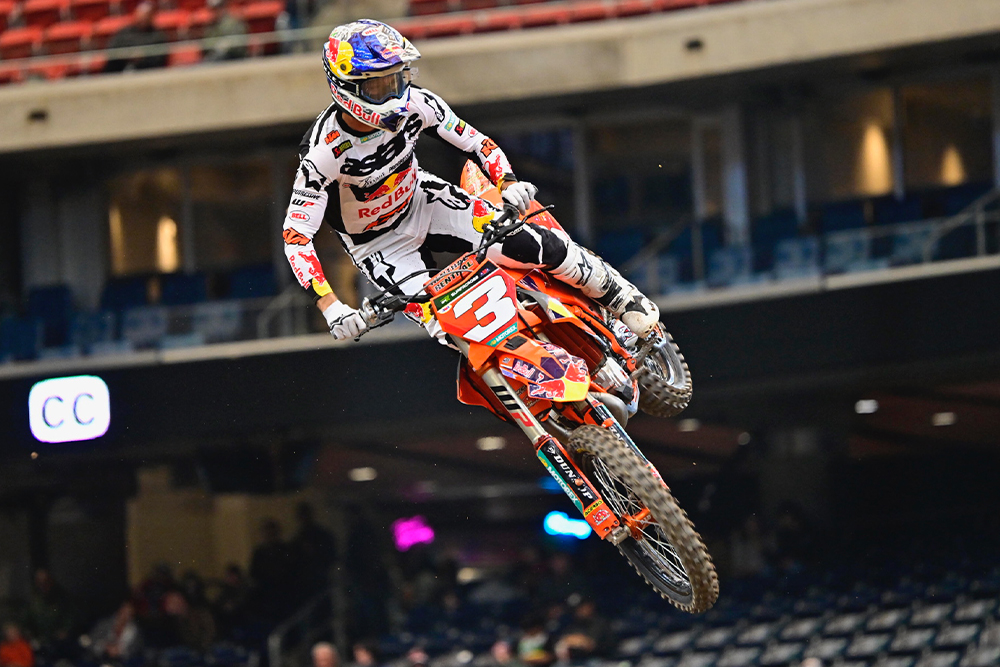
    Round four at NRG Stadium in Houston was the season’s first Triple Crown stop and the series’ first race outside California this season. The event applied the Triple Crown format with no heats, afternoon qualifying and three mains per class, and teams could bring two bikes through tech so riders could switch machines between mains. That two-bike, Triple Crown setup rewarded consistency and forced new setup and risk-management choices.

    In qualifying, Eli Tomac topped the 450SX timing charts with a 46.684, nearly half a second quicker than Chase Sexton (47.097); Hunter Lawrence was third at 47.176, underlining Tomac’s early-season form. Haiden Deegan led 250SX qualifying with a 47.554, followed by Levi Kitchen (47.745) and Ryder DiFrancesco (47.790), reinforcing Deegan’s command of the 250SX West standings.

    The weekend also produced significant roster news. Honda HRC rider Chance Hymas suffered a shoulder injury in the first turn at Anaheim 2 and was ruled out for the remainder of the Supercross season. Other storylines carried into Houston, include Cooper Webb’s early struggles and his round three crash left him adrift in the standings. In other news, Jason Anderson showed encouraging speed, Hunter Lawrence continued seeking his first 450SX win, and riders such as Jorge Prado and Ryder DiFrancesco were penciled as Triple Crown podium contenders. The SMX Next class returned after the red-flag crash at Anaheim 2 involving Ryder Malinoski and Max Shane, adding another subplot to the weekend’s racing and recovery narratives.

    More
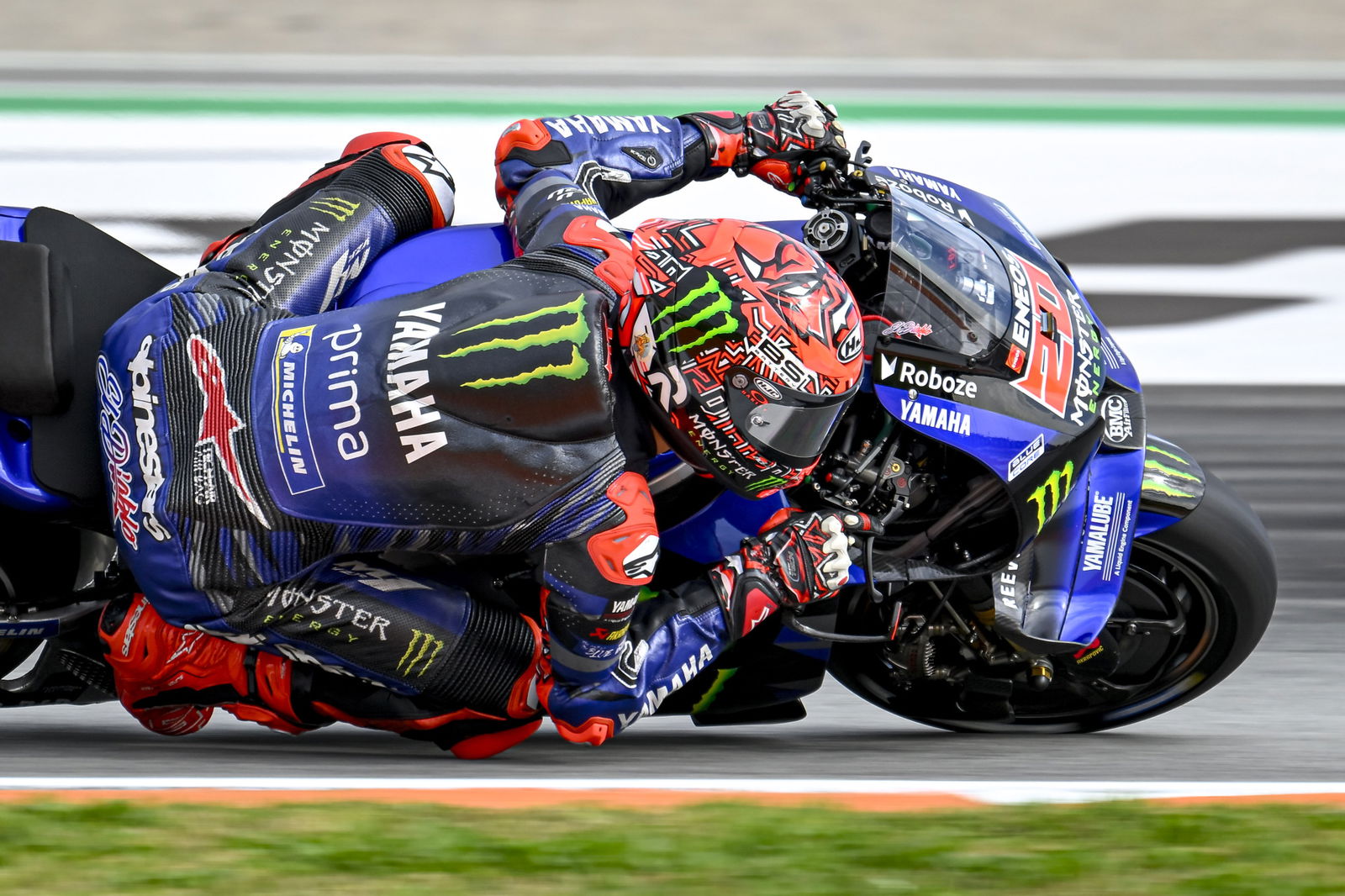
  • Manager Denies Quartararo-Honda Deal, Talks Ongoing

    Manager Denies Quartararo-Honda Deal, Talks Ongoing

    Late January reporting prompted a late-season MotoGP rider reshuffle narrative after Motorsport.com reported that Fabio Quartararo had agreed a two-year move from Yamaha to Honda tied to upcoming 2027 regulations. His manager, Thomas Maubant, denied any signed agreement and said only discussions, including with Honda, were ongoing. Some outlets framed the item as confirmed, while others described it as speculative or media-amplified and timed alongside the opening tests.

    Those reports sparked speculation about domino effects across factory seats. Media suggested a Quartararo-to-Honda switch could imperil Honda riders Joan Mir and Luca Marini, both contracted through 2026, for next season’s line-up and could free a Yamaha seat that some outlets linked to Jorge Martín, who has sought to leave Aprilia.

    Separate reports from Diario AS and other outlets associate Pedro Acosta with Ducati alongside Marc Márquez, with Márquez reported to be close to a two-year extension. Coverage noted that such moves could threaten Francesco Bagnaia’s factory position and potentially open a path for Maverick Viñales into Acosta’s current KTM seat. These reports were presented as unconfirmed in many accounts.

    The transfer talk ran alongside on-track developments at the Sepang shakedown, where Aleix Espargaró topped the times, underscoring that manufacturers continued work on machinery even as market stories circulated. Joan Mir, reflecting on Honda’s 2025 progress under technical director Romano Albesiano, said Honda now understands what it needs and hopes to be “fighting for something” in 2026. Mir and Marini have not yet signed for the planned switch to 850cc machinery.

    Overall, coverage this week centered on unconfirmed transfer reports and potential domino effects across factory seats as teams positioned themselves ahead of 2027 regulations. However, several elements remain provisional and disputed by managers or treated as speculative by some outlets.

    More
  • Gresini confirms Márquez on GP26, Aldeguer on GP25

    Gresini confirms Márquez on GP26, Aldeguer on GP25

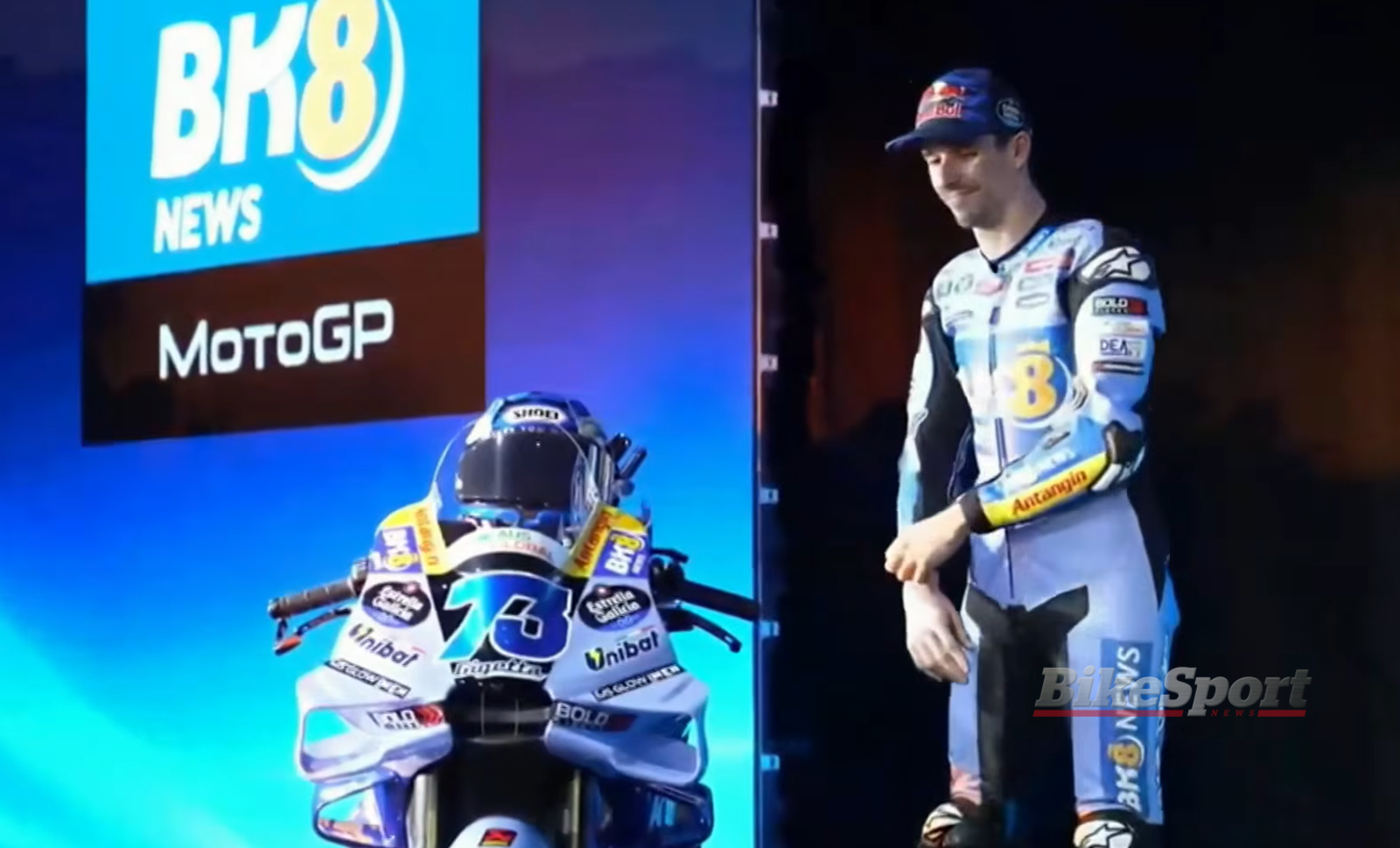
    Gresini launched its 2026 campaign at a presentation in Kuala Lumpur held after the Sepang shakedown, confirming BK8 as title sponsor. Alex Márquez attended the event, but teammate Fermin Aldeguer missed it after breaking his left femur in Valencia in January. Both riders remain on Gresini’s roster for 2026 and are out of contract at the end of the year.

    Márquez will ride a factory-spec Ducati GP26 in 2026, his first factory-spec machinery since 2020. The move reflects Ducati’s expansion of GP26 allocations to four bikes. Aldeguer is set to run the year-old 2025-spec GP25, confirming a two-tier setup within the team.

    Márquez’s upgrade follows a strong 2025 in which he won at Jerez, Barcelona and Sepang and finished runner-up in the Championship. Aldeguer was Rookie of the Year after a win in Indonesia. Transfer-market chatter linking Márquez to KTM alongside Maverick Viñales was mentioned at the launch but remains speculative.

    Gresini confirmed its immediate testing schedule around the official Sepang pre-season tests on February 3–5 and a second test on February 21–22, ahead of the season opener at Buriram on 1 March 2026. Márquez is scheduled to run the GP26 at the first Sepang test, while Aldeguer will miss that session as he continues rehabilitation. However, the latter is in contention for the February 21–22 test and the season opener.

    The launch tied together sporting momentum, sponsorship continuity and near-term logistics as Gresini builds toward the opening rounds. With a string of wins since switching to Ducati in 2022 and a second-place finish in the 2025 teams’ standings, the outfit enters 2026 aiming to convert that form into another competitive campaign.

    More
  • Red Bull's DM-01 Delivers Reliable Baseline Despite Hadjar Crash

    Red Bull’s DM-01 Delivers Reliable Baseline Despite Hadjar Crash

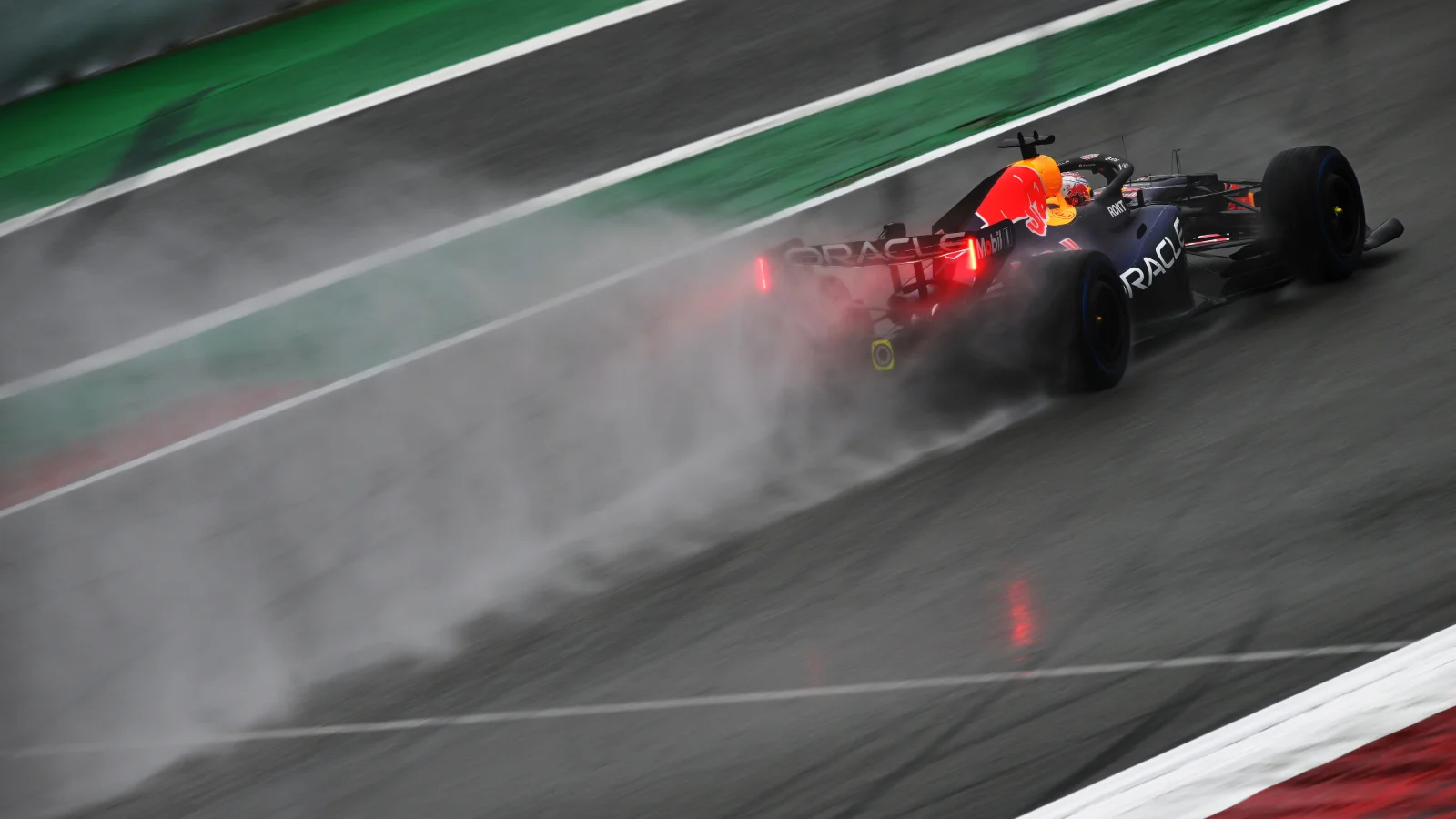
    Red Bull’s 2026 car showed encouraging pace during the Barcelona shakedown, but the test week was disrupted when Isack Hadjar, who topped day one, crashed at the end of day two. The incident forced the team to fly spare parts in from Milton Keynes, sidelining their schedule for Wednesday and Thursday. Max Verstappen was kept off the track until Friday, but Red Bull still completed 185 laps across the opening two days, while sister team Racing Bulls logged 319.

    The primary objective of the preliminary test, which verified the reliability of Red Bull’s first-ever power unit, the DM-01, was achieved, with the engine running reliably in both Red Bull’s and customer Racing Bulls vehicles. Team principal Laurent Mekies said the power unit had “surpassed expectations” and provided a usable baseline, while Sky Sports commentator Karun Chandhok noted that chassis and power unit appeared well-matched during initial running. The DM-01, developed in collaboration with Ford and named in honor of late co-founder Dietrich Mateschitz, delivered the mileage rivals found impressive and underpinned the optimistic technical readout from Milton Keynes.

    Aerodynamically the new car drew praise despite being the first Red Bull design created without Adrian Newey’s direct input after his spring 2024 move to Aston Martin. Technical director Pierre Wache’s group retained Newey-like principles, notably keeping the front wheels as far from the sidepods as possible to reduce tyre wake and adopting push-rod suspension at both ends. That combination of conservative suspension choices and carried-over aerodynamic thinking suggests Red Bull favored a more traditional interpretation of the 2026 regulations. Drivers and commentators described the RB22 as more predictable, with Hadjar saying the 2026 cars “don’t feel too different.” At the same time, former driver Juan Pablo Montoya cautioned that the main risk might lie in electronics and system integration, and drivability and smooth power delivery could reveal “glitches” as engineers optimize the package. Taken together, the shakedown left Red Bull technically strong on the power-unit front and aero development, while flagging integration and drivability work as the next priorities. The crash-related parts logistics were the only notable brake on early progress.

    More
  • Mercedes Mileage Sets Pace; AMR26 Debut Draws Scrutiny

    Mercedes Mileage Sets Pace; AMR26 Debut Draws Scrutiny

    On the penultimate day of the Barcelona pre-season test, Mercedes established a clear benchmark, as George Russell posted the fastest unofficial lap of 1:16.641, and the Silver Arrows completed 168 laps to wrap up their allocated three days of running. Kimi Antonelli also featured near the top in the morning running, and Mercedes’ mileage advantage contrasted with other teams still sorting out reliability work. Ferrari ran both Lewis Hamilton and Charles Leclerc across the sessions, combining for about 170 laps, despite Hamilton recovering from a minor spin. Leclerc posted a 1:19.128 on Day 4 before closing to within 0.2 seconds of Russell’s benchmark on the final shakedown day. Those times framed the early performance picture heading into the next test and the season opener in Bahrain.

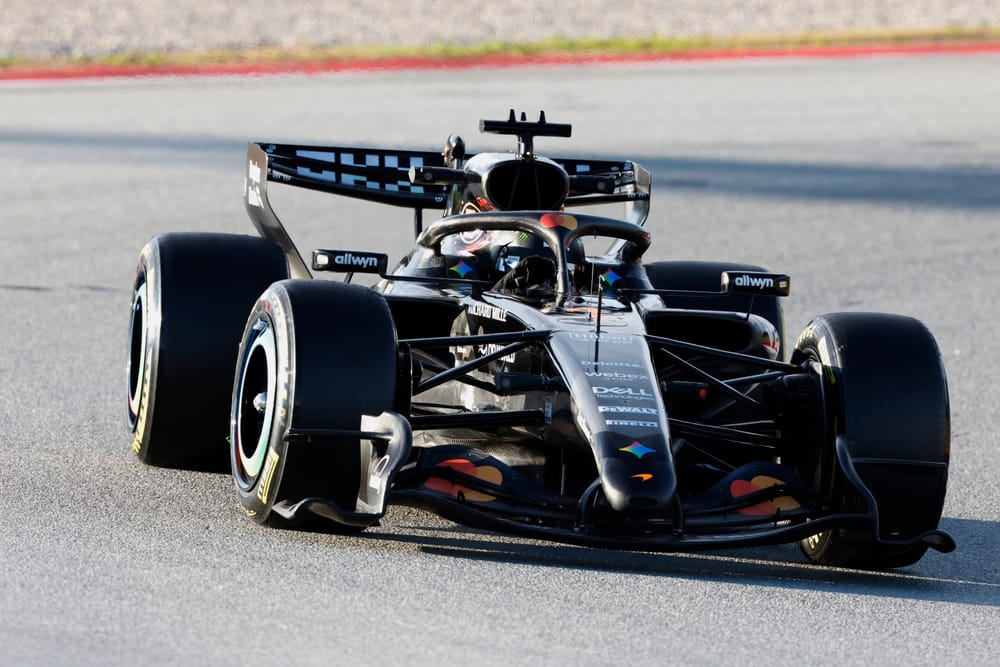
    Aston Martin’s Adrian Newey–designed AMR26 finally arrived in Barcelona and made a headline-grabbing debut. Lance Stroll completed a single timed lap of 1:46.404 on Day 4 before the car stopped on track and triggered a red flag. The all‑black AMR26 was powered by a Honda unit, and the team followed up on Friday with Fernando Alonso at the wheel for a more measured run. Reports indicated that Aston Martin ran Alonso with a restricted speed range of roughly 230–275 km/h while checking systems and the new power unit. The late introduction, brief stoppage, and the high-profile driving rotation put the revised Aston Martin–Honda pairing at the center of attention throughout the shakedown.

    The rest of the test was marked by a mix of reliability and logistical setbacks. McLaren curtailed running for Oscar Piastri after a fuel‑system issue. Red Bull stayed away while awaiting spare parts following Isack Hadjar’s heavy crash earlier in the week, Haas missed a day with mechanical problems, Alpine and Audi postponed their programs to Friday, and Williams was absent for the entire shakedown because of FW48 build delays. Taken together, the Barcelona sessions left Mercedes with the clearest pace and mileage advantage, as several teams continue to address technical and logistical concerns before further pre-season running.

    More
  • James Key: Audi Validates R26 Systems in Barcelona

    James Key: Audi Validates R26 Systems in Barcelona

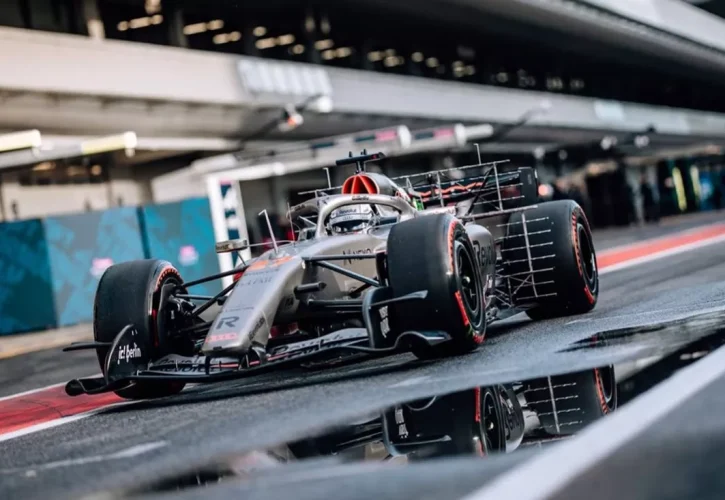
    Audi centered its Barcelona shakedown around reliability as it brought the new R26 and its first in‑house power unit to the track, with technical director James Key saying the team would be “pretty pleased” to leave if a solid final day followed a disrupted opening. The week began with Gabriel Bortoleto stopping on Day 1 after a technical fault that triggered one of three red flags and limited Audi to roughly 27 laps. A later morning hold‑up, reportedly involving Nico Hülkenberg, was traced to a hydraulic leak that was fixed, allowing Hülkenberg to return in the afternoon and complete 68 laps. Key stressed that the priority was collecting fundamental track data so engineers in Neuburg could begin mapping the power unit and gearbox and tune energy‑recovery strategies. Audi deliberately ran fewer laps than some rivals. They used three of the five available Barcelona running days and reserved the final permitted day on Friday as its third run to complete the program. The team characterized the faults as expected prove‑out issues for a brand‑new chassis and a first F1 power unit rather than reasons for alarm.

    Overall, Key judged the Barcelona program “on target,” provided the last day went well, framing the sessions as a critical opportunity to validate systems and gather baseline data for early 2026 development. Engineers addressed the early setbacks and achieved substantive afternoon running, which the team described as productive for identifying and fixing initial issues with the power unit. Having taken over the Sauber entry and built its first F1 powertrains, Audi plans to focus resources on the official pre‑season tests in Bahrain next month. The squad emphasized methodical troubleshooting and data collection over maximizing lap count at this stage of integration. Key summed up the approach with a measured tone. “This is why we test,” highlighting that the priority remained technical validation and gathering the on‑track information required to progress development.

    More
  • Piastri Stopped by Fuel-System Fault in Barcelona Test

    Piastri Stopped by Fuel-System Fault in Barcelona Test

    McLaren’s MCL40 debut in Barcelona was disrupted when Oscar Piastri encountered a fuel‑system fault that stopped him after 48 laps on the penultimate day of the shakedown. The team had only taken to the track on Wednesday, with Lando Norris completing 76 laps, and used the limited sessions to start adapting to the radically revised chassis and power unit for 2026. Piastri finished fourth on the unofficial timesheets, 1.974 seconds off the fastest lap set by Mercedes’ George Russell, but the afternoon was lost when engineers stripped the car down to locate and repair the fuel-system issue.

    McLaren described the outing as a shakedown focused on exposing bugs, gathering data, and practicing energy management rather than chasing representative race pace. Technical staff, led by Performance Technical Director Mark Temple, confirmed the fault prevented further running ahead of the final Barcelona day and that engineers were working to fix the problem. Piastri said he expected to return on Friday, with only one Barcelona day remaining before two further tests in Bahrain. The team planned to split running between Piastri and Norris to recover mileage and continue setup work.

    The interruption left McLaren short of valuable laps compared to rivals. Mercedes and Ferrari logged significantly heavier mileage across the test, increasing pressure to find setup direction and improve the car’s feel and pace. Team statements emphasized that every minute of track time was precious, and the setback may force McLaren to prioritize reliability fixes alongside performance evaluation as they prepare for the Bahrain tests and the season opener. Despite the disruption, the Woking-based outfit framed the session as useful for troubleshooting early teething issues on the MCL40.

    More
  • Mercedes' W17 Sets Benchmark with 1:16s Pace in Barcelona

    Mercedes’ W17 Sets Benchmark with 1:16s Pace in Barcelona

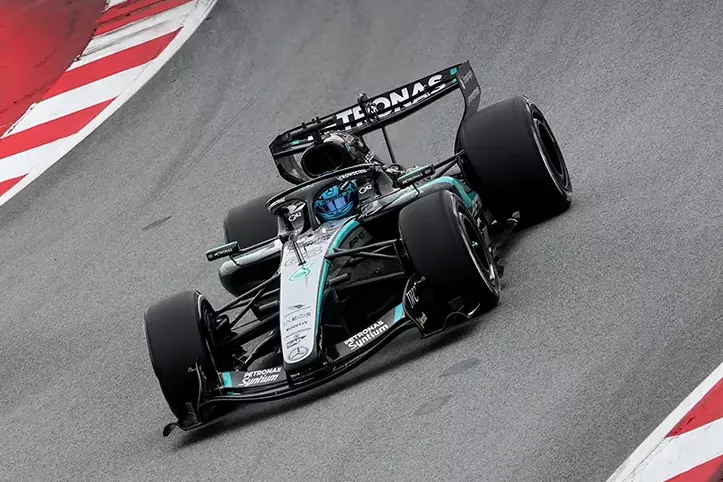
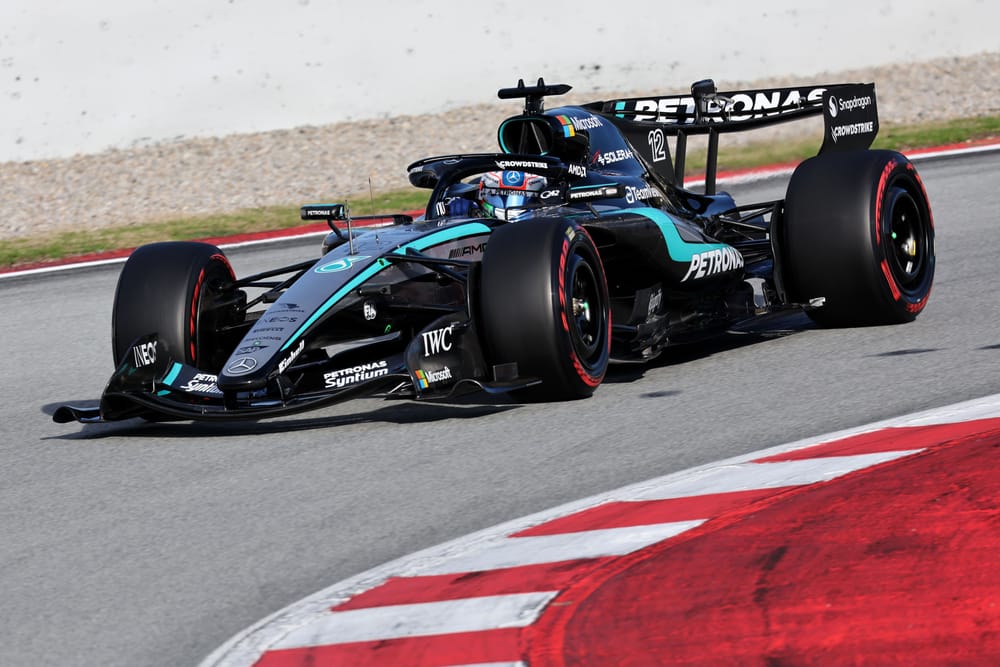
    Mercedes’ W17 set the benchmark during the Barcelona pre-season shakedown, posting lap times in the 1:16–1:17 range that underlined both single-lap pace and race-pace potential. George Russell returned the quickest unofficial time of the shakedown with a 1:16.445, while Kimi Antonelli provided session-leading runs, including a 1:17.081 on Thursday. Several laps were quicker than Mercedes’ best race lap from last year’s Spanish Grand Prix. McLaren and Ferrari showed competitive early running, with Oscar Piastri and Lewis Hamilton among the quickest non-Mercedes drivers, but interruptions to their programs left Barcelona as an early snapshot rather than a definitive measure of season potential.

    Reliability and mileage proved the standout story. Russell and Antonelli combined for exactly 500 laps across the permitted three running days and led the mileage charts. The W17 completed multiple full race simulations, Antonelli ran a complete race sim on his second half-day in the car, and engineers described the package as having worked “faultlessly,” with clean data captured throughout. Mercedes’ new hybrid power package also logged heavy mileage with customer teams McLaren and Alpine, reinforcing early signs of durability, and Trackside Engineering Director Andrew Shovlin said the team was “ahead of where we hoped” on mileage; most lost track time during the shakedown came from rival failures and red flags rather than Mercedes issues.

    After extensive race-pace work, Mercedes moved on to qualifying mode on the final day, using Barcelona as a probing ground before setup exploration in Bahrain. The combination of straight-line speed, consistent lap times, and trouble-free mileage strengthened Mercedes’ status as one of the pre-season favorites. But teams cautioned that differing test programs, fuel loads, and setups limit how much the times alone reveal about true race competitiveness. Nonetheless, the W17 achieved the primary objective of the shakedown by proving mechanical and power-unit readiness ahead of the next on-track commitments.

    More