NXTbets Inc

  • Hungary update set to test Aston Martin's season turnaround

    Hungary update set to test Aston Martin’s season turnaround

    Aston Martin has unveiled the first details of a major update package for its troubled 2026 Formula 1 car, with the changes set to debut on both cars at the Hungarian Grand Prix before the summer shutdown. Team principal Adrian Newey said the chassis and gearbox architecture will stay largely intact, while the focus has been on reducing weight and revising aerodynamic and mechanical elements. The package includes a new nose, updated aerodynamic surfaces and a slightly altered rear suspension, with the aim of getting the car closer to the minimum weight limit and closing the gap to rivals.

    Newey said the AMR26 has been held back by outdated design tools, inefficient processes, a delayed start under the new regulations and integration issues with Honda’s power unit. Those problems left the car overweight and forced performance compromises. Aston Martin has scored only one point this season, from Fernando Alonso in Monaco, and has trailed the field in pace. The team’s frustration was clear in Austria, where it arrived without upgrades, Lance Stroll retired with reliability problems and Alonso finished three laps down after qualifying nearly a second slower than the next slowest driver.

    The Hungarian upgrade is being treated as a critical test of whether Aston Martin can turn its season around, and of whether Alonso will stay beyond this year. Newey said Alonso is likely to remain with the team if the package delivers a clear step forward, while Aston Martin believes the update must produce more than marginal gains to change the season’s trajectory and strengthen Alonso’s belief in the project. The team said it has been encouraged by similar feedback from both drivers and expects the larger, more comprehensive package to show whether its development direction can deliver real progress.

    More
  • Cadillac pace rises, but brake failures sink Austrian GP

    Cadillac pace rises, but brake failures sink Austrian GP

    Cadillac’s improved pace at the Austrian Grand Prix was overshadowed by another reliability setback, as Sergio Perez and Valtteri Bottas both retired within the first four laps because of overheating brake failures. Bottas stopped on lap 2 and later returned to the pits with smoke coming from his car, while Perez’s race ended after four laps. Perez said the brake problem was unacceptable and the team could not have those kinds of issues, and both drivers said Cadillac needs to start finishing races.

    The double DNF cut short a weekend that had pointed to progress for Cadillac after it brought a major upgrade package to the Red Bull Ring. The team showed stronger qualifying pace, with both cars knocked out in Q1, and Bottas said the new sidepods and floor made the car feel more consistent. Cadillac was still running nearly a second faster than Aston Martin, and Perez said the team had been competitive enough to be in the mix with Williams before the failures.

    Reliability issues had already affected Cadillac from Friday practice onward. Perez lost track time after an electrical issue in FP1 and FP2, and Bottas had a sparking and then burning front floor tray caused by a build error. Perez said the problem did not appear in practice and seemed to worsen with race-day heat and traffic, while Bottas said there was no warning before the brakes overheated almost immediately. Team principal Graeme Lowdon said the car’s outright pace has improved, but the reliability problem must be solved before Silverstone, and Perez said he expects progress by then.

    More
  • Russell keeps Austrian GP pole after yellow-flag review

    Russell keeps Austrian GP pole after yellow-flag review

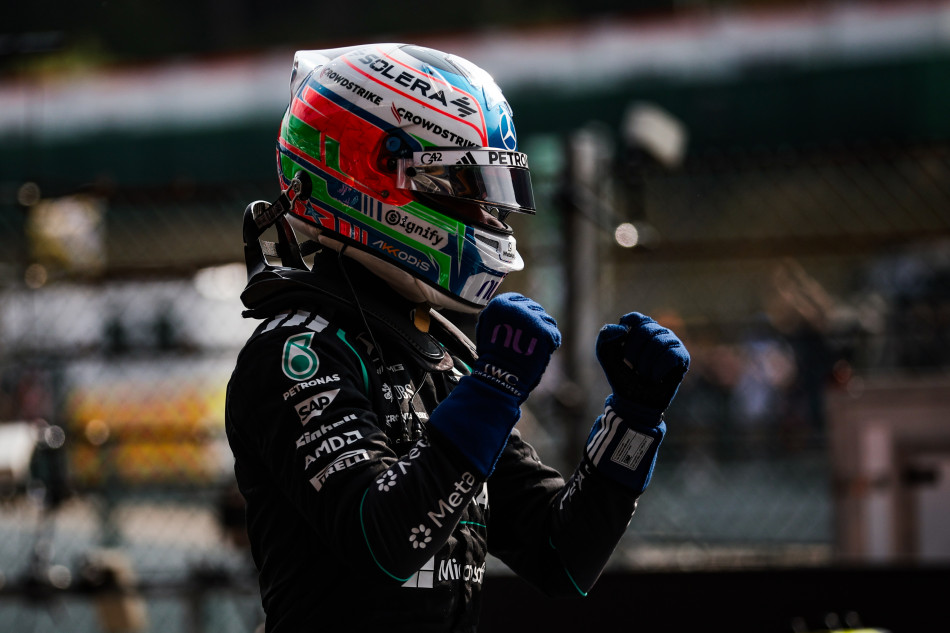
    George Russell’s pole position for the Austrian Grand Prix became the central controversy of qualifying after his late Q3 lap at the Red Bull Ring was reviewed for a possible yellow-flag violation. Russell clocked 1:06.113 to take provisional pole, then came under scrutiny after Max Verstappen crashed at Turn 9 and triggered the yellow flags that effectively ended the fight for the front row. Stewards later allowed the lap to stand, with the official timing screens showing only single yellow flags, and Russell said he lifted for 100 meters at the final corner.

    The result gave Russell his fourth pole of the 2026 Formula 1 season and the 11th of his career, while keeping Mercedes’ perfect pole record intact this year. Ferrari had briefly looked set for a front-row lockout after Charles Leclerc went quickest ahead of Lewis Hamilton, but Leclerc ultimately qualified second and Hamilton third. Kimi Antonelli took fourth, Verstappen was classified fifth despite his crash, and Lando Norris and Oscar Piastri followed in sixth and seventh.

    Russell had already shown strong pace across the weekend, topping final practice after narrowly beating Antonelli by 0.038 seconds. That session, and the close running among Mercedes, Ferrari, McLaren and Red Bull, pointed to a tight qualifying battle before Verstappen’s crash reshaped the final minutes.

    More
  • Russell leads all 71 laps to win Austrian GP for Mercedes

    Russell leads all 71 laps to win Austrian GP for Mercedes

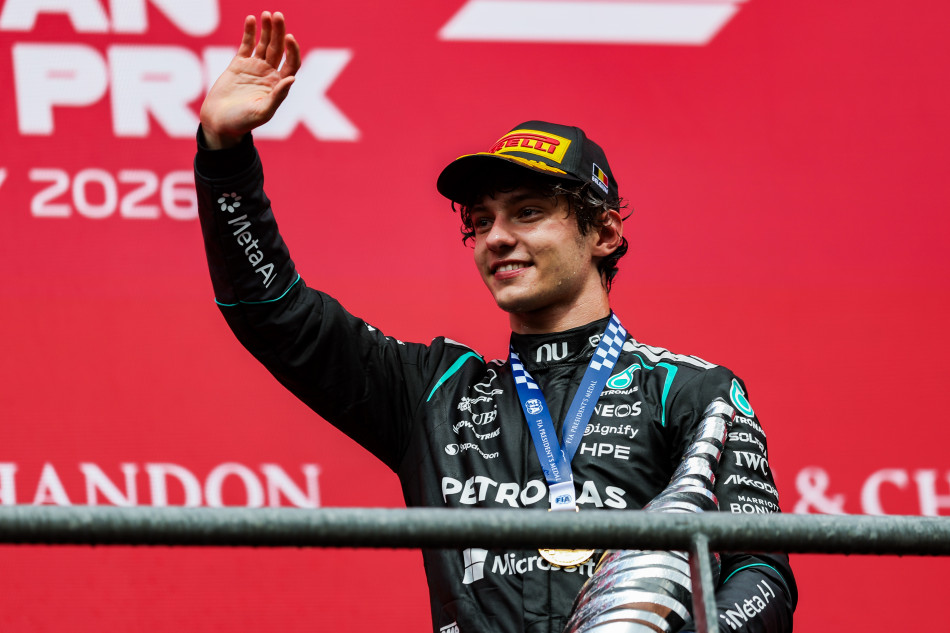
    After a qualifying session shaped by Max Verstappen’s crash and yellow flags, George Russell converted pole position into victory at the Austrian Grand Prix at the Red Bull Ring, leading all 71 laps to win for Mercedes by 1.611 seconds over Verstappen. Kimi Antonelli recovered from a poor start to finish third and complete a Mercedes double podium, and Russell’s second Grand Prix win of the season, his first since the Australian Grand Prix in March, cut Antonelli’s championship lead even though the rookie remained top of the standings.

    Verstappen challenged Russell at several stages and Red Bull’s race pace improved, but he could not close the gap after the final pit stops. Oscar Piastri was fourth for McLaren and Lewis Hamilton fifth for Ferrari, which again missed the podium after a mistimed Safety Car pit stop and a three-stop strategy that did not pay off. Among the other classified finishers were Isack Hadjar, Lando Norris, Charles Leclerc, Liam Lawson, Arvid Lindblad, Gabriel Bortoleto, Nico Hülkenberg, Pierre Gasly, Oliver Bearman, Franco Colapinto, Esteban Ocon, Alexander Albon and Fernando Alonso. Lance Stroll, Carlos Sainz, Sergio Pérez and Valtteri Bottas did not finish.

    More
  • Team-order confusion shadows Racing Bulls' Austria breakthrough

    Team-order confusion shadows Racing Bulls’ Austria breakthrough

    Racing Bulls left the Austrian Grand Prix with a historic double points finish and a messy in-race team-order dispute, as Liam Lawson took ninth and Arvid Lindblad finished 10th at the Red Bull Ring. The result was Racing Bulls’ first double-points finish since the team’s Minardi-era debut in 1985, and its third consecutive double top-10 finish. The team moved to 44 constructors’ points and to within 13 points of fifth-placed Alpine. Lawson extended his points streak to four straight Formula 1 races, the first time a New Zealand driver had scored in four consecutive F1 races since Denny Hulme in 1973. He stayed 10th in the drivers’ standings on 30 points, with six points finishes in his seven completed races this season.

    The race was clouded by confusion over instructions from the pit wall. Lawson was told to manage overheated brakes, Lindblad was instructed to hold position, and Lindblad later passed Lawson after the first pit stops and stayed ahead through the middle stint. Lawson voiced frustration on the radio, after an early message had briefly raised concern that his car might be on fire before he later said the issue was brake smoke in the first stint that settled down after the opening laps. Racing Bulls later restored the order by pitting Lawson earlier in the second stops, which let him retake the position. A team spokesperson said the episode came from a misunderstanding about the hold-position instruction, and both drivers downplayed the incident after the race.

    Lawson said Racing Bulls had made a step in race pace and said the car settled after the opening laps. He was also cleared of any penalty after an alleged practice-start infringement, with stewards ruling that his actions were appropriate in the circumstances. Lawson said he had not expected an attack from Lindblad and suggested they might need to talk after the race. Lindblad said he was happy with the result, called the weekend a positive learning experience and said he had issues with hard tires and braking.

    More
  • Raul Fernandez leads Aprilia 1-2 in Assen sprint

    Raul Fernandez leads Aprilia 1-2 in Assen sprint

    Aprilia set the pace through the Dutch MotoGP weekend at Assen, with Jorge Martin taking pole position and Ai Ogura, Marco Bezzecchi and Raul Fernandez filling the next three grid spots in qualifying. Aprilia riders were fastest in every session except Q1, and Bezzecchi briefly had his best lap deleted for a yellow-flag infringement while Fernandez also lost a lap for track limits. Francesco Bagnaia led the non-Aprilia group in fifth, Fabio di Giannantonio was sixth, Marc Marquez qualified seventh after losing two laps for track limits, and Pedro Acosta was eighth after a technical issue on his KTM.

    The sprint underlined Aprilia’s strength. Raul Fernandez won the 2026 Dutch MotoGP sprint, his second Sprint victory of the season, ahead of Ogura in second for a Trackhouse Aprilia one-two. Di Giannantonio finished third, Bezzecchi recovered from an early mistake to take fourth, Martin was fifth, Marquez sixth and Bagnaia seventh after a wheelie at the start. Fermin Aldeguer did not start because of a vertebra fracture suffered on Friday. Riders used medium front and soft rear tires in the sprint, and Michelin said the medium front tire was the preferred choice for Sunday’s 26-lap race, with rear choices likely to vary between soft and medium.

    Marquez said the weekend had been a difficult one at Assen, calling himself uncomfortable and inconsistent and saying he was riding in “safe mode” because the circuit’s direction changes did not suit him. He said he could not push hard enough, that he was giving 100% but could do no more, and that at some circuits simply surviving could still leave him well outside the podium places. He had said his goal was to survive and limit damage, and after a sixth-place warm-up finish he expected to run around seventh in the grand prix. In the warm-up, Bezzecchi led the session, Ogura was the only other rider in the 1m 31s range, Bagnaia was third and Alex Marquez, who was injured, was fifth. Yamaha also brought test rider Augusto Fernández in as a wild-card entry to gather data and continue development work at the 4.54-kilometer circuit known as The Cathedral of Speed.

    More
  • Silverstone could expose 2026 F1 battery limits, Verstappen says

    Silverstone could expose 2026 F1 battery limits, Verstappen says

    Max Verstappen said a Red Bull simulator run at Silverstone made him laugh because Formula 1’s 2026 cars felt dramatically different on the British Grand Prix circuit’s fast, flowing layout, with drivers spending long stretches flat out and having barely any battery available around the lap. He said Silverstone could be the toughest track of the season so far for battery depletion because its straights and high-speed corners leave little chance to recharge, and he pointed to Copse and the Maggots-and-Becketts sequence as especially demanding sections that could slow the cars through the lap.

    Verstappen contrasted Silverstone with tracks such as Monaco and Austria, where heavier braking zones give drivers more opportunity to manage the car’s systems. He said the new regulations have improved the chassis compared with the stiff ground-effect cars, but the energy-management rules still make the cars feel unnatural. He also suggested the same issue could be even more pronounced at Spa-Francorchamps because of its longer straights, longer lap distance and faster corners.

    His comments came after he finished second at the Austrian Grand Prix, his best result of the season, where Red Bull introduced a seven-part upgrade package. Verstappen said the updated car made him feel competitive for the first time this year, with the biggest gains in grip and corner speed, and that those improvements helped him challenge for the win before a rear-axle problem hurt his pace in the second half of the race. He said Red Bull still needs to understand what went wrong late in the race, and he added that he was pleased Formula 1 and the FIA had listened to his feedback, which helped shape regulation changes planned for 2027 and 2028.

    More
  • Wolff contrasts Mercedes restraint with Ferrari's upgrade push

    Wolff contrasts Mercedes restraint with Ferrari’s upgrade push

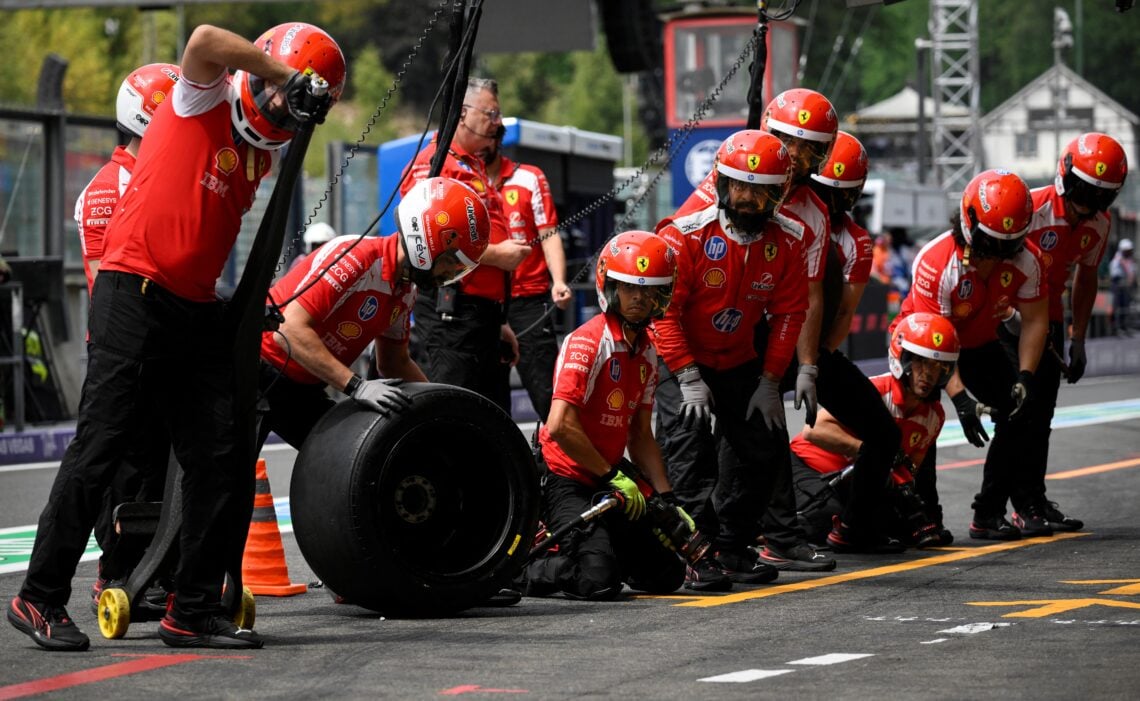
    Mercedes team principal Toto Wolff has questioned how Ferrari can keep loading major upgrades onto its 2026 Formula 1 car while staying under the sport’s $215 million cost cap, calling the team’s development pace “limitless” and saying Ferrari may soon run out of budget room after “throwing things at their car.” Wolff’s criticism came after Ferrari added another update package at the Austrian Grand Prix, where it also made its first ADUO-influenced engine change. He pointed to Ferrari’s repeated revisions to the SF-26 since the April break, including aerodynamic updates in Miami and Barcelona, a new engine specification, revised front wing elements and the unusual rear-wing package nicknamed the “Macarena wing.” Ferrari’s development push has helped it close the gap to Mercedes, and it has outperformed Mercedes at Barcelona.

    The dispute has grown as Formula 1 teams face tighter cost controls intended to limit spending. Rival teams have become increasingly frustrated by the perception that Ferrari is committing unusual resources to steady performance gains, and Wolff remains the most vocal critic. He suggested Ferrari could slow its pace later in the season, while noting that Ferrari and Audi have moved quickly to use the FIA’s Additional Development and Upgrade Opportunities system to improve their engines.

    Wolff contrasted Ferrari’s approach with Mercedes’ more cautious spending, saying Mercedes has held back parts it already has ready so it can deploy upgrades strategically and has no immediate engine upgrades planned. The comments came after Mercedes won in Austria, where George Russell took his first victory since the season opener and held off Max Verstappen and rookie Andrea Kimi Antonelli, who finished third. Ferrari finished fifth and eighth at the Red Bull Ring, and Formula 1 CEO Stefano Domenicali told Wolff the battle made for good television.

    More
  • Grandview Offers $6,000 USAC Non-Wing, $3,000 358 Mods June 16

    Cummins leads all 30 laps for second straight Butler win

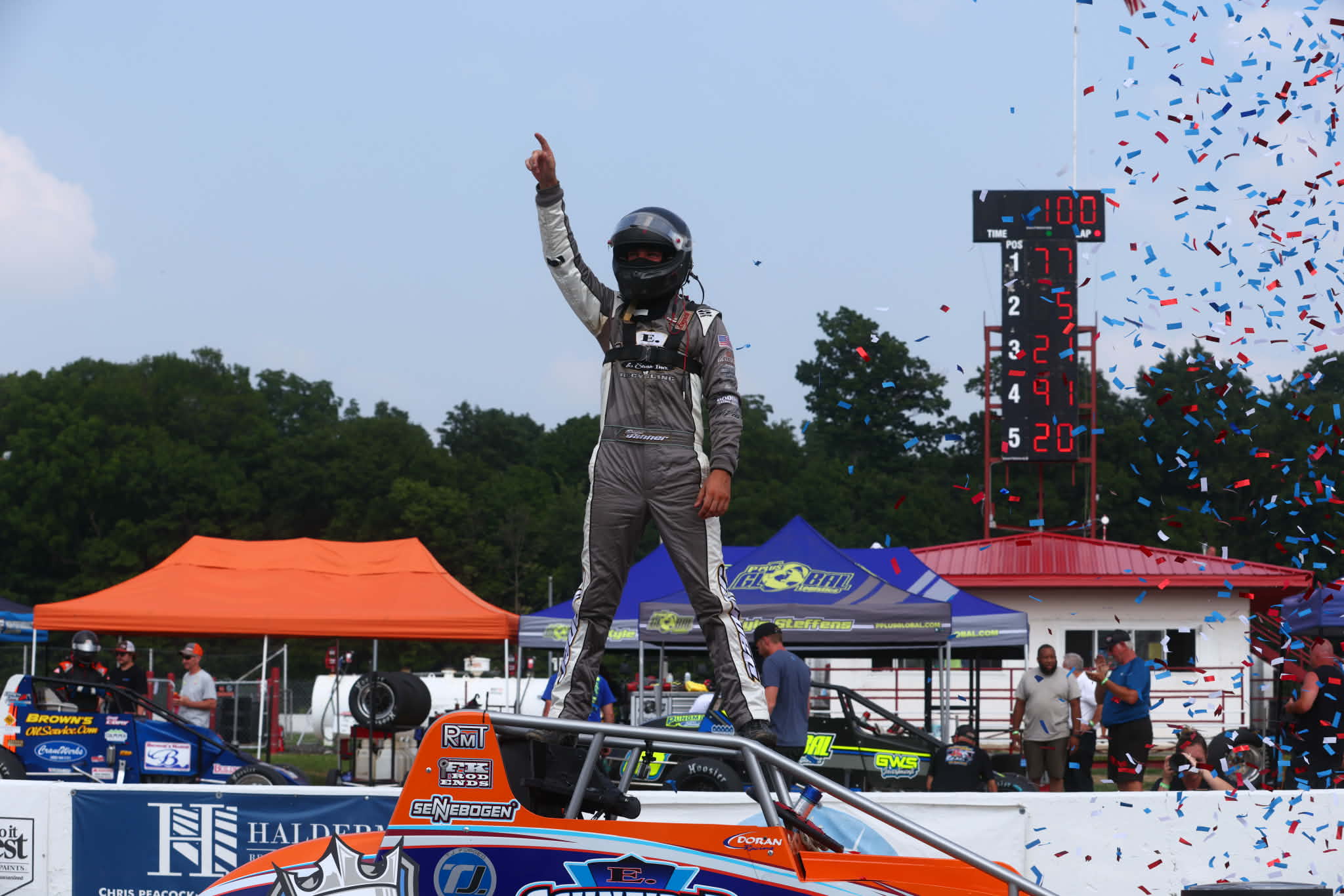
    Kyle Cummins won the USAC AMSOIL Sprint Car National Championship feature Saturday night at Butler Motor Speedway in Quincy, Michigan, leading all 30 laps after starting second. The victory was his second straight at Butler, his sixth USAC National Sprint Car Series win of the 2026 season and the 36th of his career. He moved to 14th on the series’ all-time wins list, became the first driver to win back-to-back USAC National Sprint Car features in Michigan since Jack Hewitt in 1994-95, and earned the K&N Clean Air Award for leading every lap.

    Chase Stockon finished second, Mitchel Moles third, Briggs Danner fourth and Robert Ballou fifth. C.J. Leary started from the pole and finished sixth, while Justin Grant was seventh after setting fast time in qualifying with a 14.872-second lap. Cummins also extended his points lead over Moles.

    The race was interrupted by a flip involving Keith Sheffer II on lap 2, and Jason Ferguson also flipped during qualifying. Hayden Reinbold earned hard-charger honors by advancing from 22nd to 13th. The series was scheduled to race July 3-4 at Lincoln Park Speedway in Putnamville, Indiana.

    More