NXTbets Inc

  • Logan Zarin heats up, reaches regular WoO features

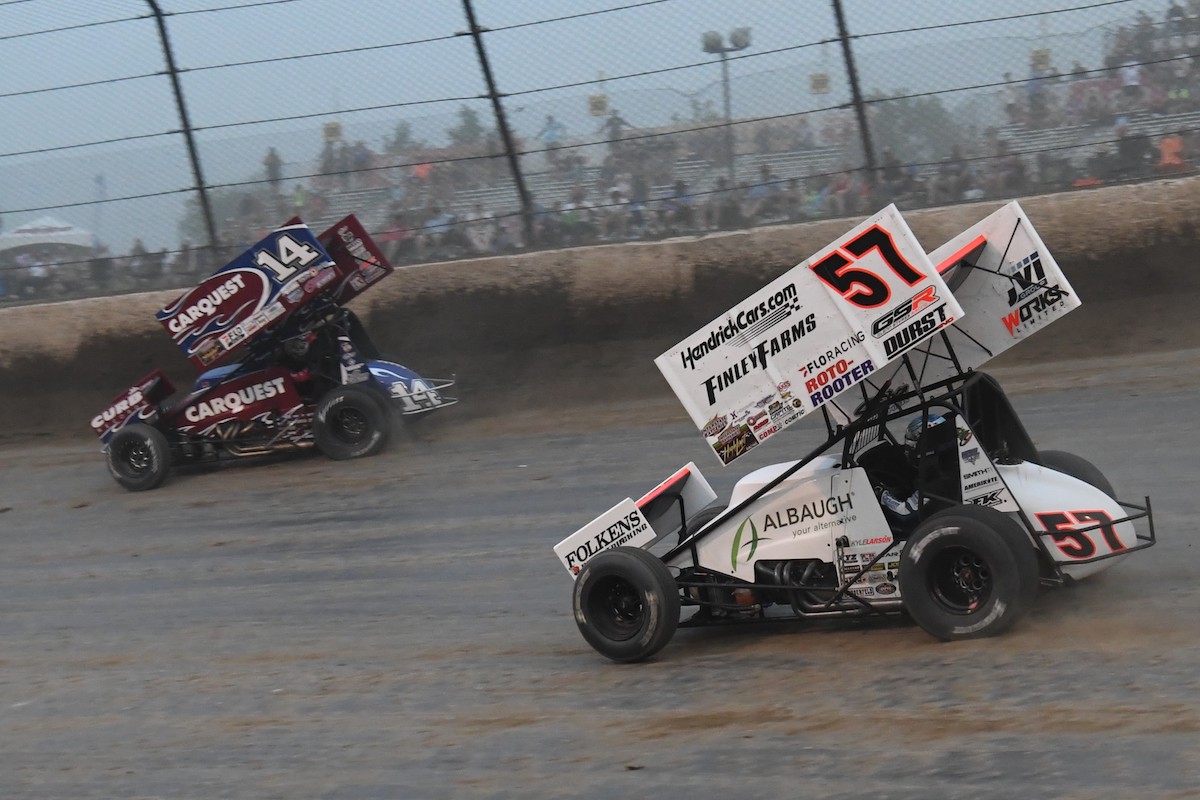
    Two months into his rookie World of Outlaws Late Model Series campaign, Logan Zarin says he is ‘finally starting to hit on something’ and feels like he belongs. The western Pennsylvania native began the season relying on Last Chance Showdowns and provisionals through the first nine races, posting a 20.2 average finish and recording three DNQs.

    A 14th-place run at Smoky Mountain Speedway in mid-March sparked a change: since that race Zarin has started every feature, transferred out of heat races at East Alabama and at Senoia, improved his season average to 16.0 and recorded a career-best 13th-place finish at Senoia Raceway later that month.

    Zarin credits guidance from shock consultant Vinny Guliani, studying race footage and an increased focus on qualifying with helping the team dial in the car, saying better qualifying has set the team up for stronger nights. His immediate goal is to make features and run competitively as he gains more experience on the WoO tour. He is scheduled to race at Farmer City Raceway on April 10–11 — his first time on a Midwest quarter-mile black-dirt bullring — and then plans a five-night Northeast swing: May 13 at Georgetown, May 14 at Selinsgrove, May 15–16 at Marion Center and May 17 at Bedford.

    More
  • Austin slump forces Ducati into urgent setup push

    Ducati’s recent slump — centered on worsening front-end and braking performance — has become a clear wake-up call that has forced urgent setup and development work, team and industry figures said. Factory general manager Gigi Dall’Igna described the lackluster weekend in Austin as a wake-up call and warned the team must work hard on setup and development to regain winning form.

    Engineers and riders pointed to a loss of front-end grip and weaker braking and corner-entry performance versus the Aprilia RS-GP; those problems have cost Ducati tire life and race pace and have materially affected early 2026 results.

    More
  • After praise for engine, Red Bull weighs RB22 overhaul

    After praise for engine, Red Bull weighs RB22 overhaul

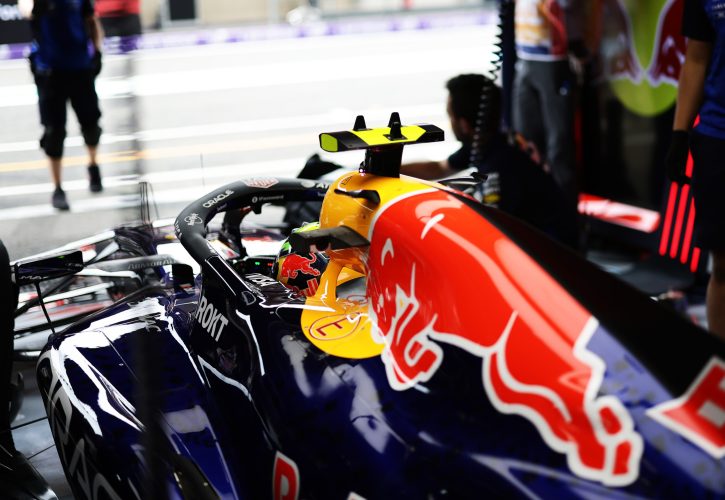
    Rival teams regard Red Bull’s new power unit as strong in the squad’s first year as an engine manufacturer, but the team’s 2026 slump has been traced inside the factory to persistent RB22 chassis problems. After three races the squad had just 16 points and sat sixth in the Constructors’ Championship — their worst opening sequence since 2008 — and engineers are privately debating whether the RB22 should be heavily revised or even scrapped.

    Technical staff and drivers singled out the chassis rather than the power unit. Isack Hadjar described the RB22 as a “terrible” chassis, “just slow in the corners,” and warned the team currently has “no lead on how we can make a fast one,” while saying drivers can still “drive the car fast.” Team principal Laurent Mekies said the expected gap to Mercedes has widened to roughly a second and about half a second to Ferrari, that the squad has been “starting to scratch heads” since China, and that engineers are diagnosing complex balance and lift/extraction problems while carrying out targeted development work. The team plans to use an enforced five-week break to work intensively on the RB22 ahead of Miami.

    Those technical setbacks have fuelled internal unease. Sources reported staff privately questioning whether the team were better off under Christian Horner, and long-serving mechanic Ole Schack resigned citing a changed working atmosphere. Horner still retains supporters within the factory after two decades and eight title-winning campaigns, but Mekies — who took over in July and initially helped reignite Max Verstappen’s title bid last season — now faces increased scrutiny over his leadership and technical direction. The situation has also heightened pressure on Verstappen, who has threatened to retire at the end of the season and has partly linked that threat to the 2026 regulations. Any decision to abandon or deeply rework the RB22 would carry major logistical and competitive consequences, and reports stress such moves remain internal discussions rather than confirmed decisions.

    More
  • Ferrari runs Mugello TPC, Monza filming to test aero and ERS

    Ferrari runs Mugello TPC, Monza filming to test aero and ERS

    Ferrari has scheduled a focused April on-track program — a Mugello Testing of Previous Cars (TPC) session and a Monza filming day — explicitly to validate aerodynamic updates and energy-recovery systems, translate simulator gains into real-world feedback and keep cars and personnel race-ready ahead of the Miami Grand Prix. The activity fills a five-week gap created by the cancellations of the Bahrain and Saudi Arabian Grands Prix and, Ferrari says, is designed to secure engine gains, protect the team’s positive start to 2026 and close the straight-line speed shortfall that rivals including Lewis Hamilton have highlighted.

    The first element is a two-day TPC at Mugello using last year’s SF-25 under relaxed FIA rules. Test and simulator drivers Antonio Giovinazzi, Arthur Leclerc and Antonio Fuoco are set to run the car to convert simulator data into on-track feedback and to validate setups and driver inputs. Sources differ on the exact start date — reporting either April 1-2 or beginning April 2 — but all agree the outing will be carried out by Ferrari’s test outfit rather than regular race drivers.

    Ferrari will follow Mugello with additional, limited on-track work: a two-day artificial wet test at Fiorano on April 9-10 and a 200 km filming day at Monza in late April (reported as April 21 or 22). At Monza Charles Leclerc and Lewis Hamilton are expected to drive the SF-26 for up to 200 km to gather energy-recovery-system data, produce promotional footage and trial aerodynamic updates — including a revised “Macarena” wing earmarked for a Miami debut. Team statements and multiple reports describe Monza as particularly demanding for energy management under the 2026 rules, and Ferrari emphasized that all sessions will be conducted within the FIA’s TPC and filming-day limits as low-profile work to refine systems ahead of Miami.

    More
  • Kevin Thomas Jr. sweeps USAC sprint features in Arizona

    Fox No. 53 to contest 30 USAC Sprint races with Leary

    The Fox No. 53 will contest a concentrated 30-race USAC AMSOIL National Sprint Car slate in 2026 with C.J. Leary sharing the seat for events focused in Indiana, Ohio and Illinois. Leary’s Sprint Car debut in the No. 53 is scheduled for April 3 at Red Hill Raceway in Sumner, Illinois and April 4 at Paragon Speedway in Indiana for the Chuck Amati Classic; when he is not in the No. 53 he plans to run other USAC events in a different ride.

    Leary will split his 2026 USAC program with a full-time Silver Crown ride for Team AZ-Petty-Rossi/Curb-Agajanian, piloting the No. 21 DRC/Stanton-powered car in an 11-race dirt-and-pavement Silver Crown schedule that opens May 8-9 at the Kansas State Fairgrounds in Hutchinson. Teammate Mario Clouser will drive the No. 20 DRC/Stanton-powered entry; Clouser, from Auburn, Illinois, drove for three teams in 2025, led 42 of 100 laps at the Kansas State Fairgrounds, earned his first IRP pole and compiled podiums en route to a career-best fifth in the 2025 Silver Crown standings. Team AZ confirmed primary technical support from DRC/Stanton and commercial backing from Avanti Windows & Doors, Curb Records, Pella and AMSOIL for the 2026 Silver Crown campaign.

    Leary brings strong USAC credentials to both programs: he is the 2019 USAC National Sprint Car champion, has 24 career USAC series wins and entered the announcement with a streak of 321 consecutive USAC feature starts dating to 2017, six starts short of Justin Grant’s benchmark of 327. His Silver Crown résumé includes a runner-up finish in the 2025 championship with two late-season wins at Lucas Oil Indianapolis Raceway Park (pavement) and Du Quoin State Fairgrounds (dirt).

    The Fox No. 53 program is tied to the Fox family and the Gohr Racing legacy, with longtime mechanic Galen Fox involved. The car carries 19 career USAC National Sprint Car feature wins—two by Brad Fox and 17 by Jon Stanbrough—which the No. 53 team will look to add to during the concentrated 2026 slate.

    More
  • Dirty air, aero gaps hamper Márquez as Aprilia posts 1-2

    Dirty air, aero gaps hamper Márquez as Aprilia posts 1-2

    Marc Márquez’s weekend at the United States Grand Prix at COTA was defined more by penalties, aero and injury issues than by his finishing position. A Sprint crash with Fabio Di Giannantonio earned him a mandatory long‑lap penalty — a sanction Márquez said resulted from a risky pass attempt — that cost him exactly 2.505 seconds when taken on lap 4 and dropped him to 11th early in the race. He recovered to fifth after an extended scrap with Enea Bastianini, finishing just 0.143 seconds clear of the Italian. Márquez said rivals “increase the intensity” when they race him and that Sprint mistakes and first‑lap penalties carry over to the main race.

    Aerodynamics and “dirty air” compounded Márquez’s problems at COTA. He told reporters being stuck in dirty air made it “practically impossible” to ride competitively and estimated the effect at roughly a second per lap. The race also underlined wider technical gaps: Aprilia completed a one-two with Marco Bezzecchi (who won, Aprilia’s third straight factory win) and Jorge Martin, while Ducati staff acknowledged tire-wear problems at COTA and introduced short-term Aprilia-style rear aero and leg wings.

    Ducati technical staff and analysts warned the team is playing catch-up after Aprilia’s winter step. Team principal Davide Tardozzi said further engineering updates are expected by Jerez as Ducati tries to close the gap. Tardozzi added Márquez was “not in good shape” following shoulder injuries sustained in Indonesia and will use the break before Jerez to work on his shoulder. Márquez said, “It’s me who’s missing, not the bike,” complained he lacked feel in the opening laps, that fresh tires made the Desmosedici feel “aggressive,” and that he needed six to ten laps to ride competitively. Despite showing strong mid-race pace — Tardozzi highlighted he could gain roughly eight tenths over 5–6 laps — Márquez sat fifth in the championship, 36 points adrift of the leader, and warned a turnaround was not guaranteed as he prepares to focus on starts and arm recovery before Jerez.

    More
  • Bezzecchi wins COTA GP; Razgatlioglu best Yamaha, 25s back

    Bezzecchi wins COTA GP; Razgatlioglu best Yamaha, 25s back

    Marco Bezzecchi won the United States Grand Prix at Circuit of the Americas on an Aprilia, while Toprak Razgatlioglu scored his first MotoGP premier-class point by finishing 15th after overtaking a fading Fabio Quartararo late in the race. “I’m happy with the point, but we were 25 seconds behind the leader,” Razgatlioglu said, underlining the roughly 25-second gap to the frontrunners and the limits of the Yamaha package.

    Razgatlioglu credited Pramac teammate Jack Miller and lessons learned on and off track for helping him finish and collect a point, saying he had adopted a calmer, smoother “Superbike” riding style that helped manage troublesome Michelin tires. He also said he learned from following Quartararo during the event and from testing with Miller, but admitted weaknesses remained, notably in early braking zones, and he matched and then surpassed his 2025 crash tally in recent rounds.

    Pramac director Gino Borsoi called the result “a morale boost,” and the team noted it was the first MotoGP championship point for the updated Yamaha M1 V4 package while stressing their ambitions remained higher and hoping it would be the first of many. Yamahas nonetheless filled the final four finishing positions at Austin, underscoring the gap to the Aprilia-led frontrunners, and Razgatlioglu praised the Circuit of the Americas and vowed to push for better results as the championship moved toward the European rounds.

    More
  • Suzuka exposes Ferrari's power-unit deficit, Vasseur says

    Suzuka exposes Ferrari’s power-unit deficit, Vasseur says

    At the Japanese Grand Prix in Suzuka, Ferrari’s straight-line speed and power-unit weakness — particularly the SF‑26’s lack of pace down the straights — were laid bare, drivers and team figures said. Charles Leclerc called the power unit “maybe our main weakness at the moment,” and Lewis Hamilton described a “really confusing” loss of power that left him struggling to defend and ultimately finish sixth. Team principal Fred Vasseur acknowledged a clear straight-line deficit and said the team must investigate whether it stems from engine power, timing/strategy or overtake-mode deployment; he and others pointed to Suzuka’s long straights as having exposed the problem.

    The on-track consequences were immediate. Leclerc recovered from early Safety Car misfortune and an early pit stop that left him in traffic to fight back past teammates and rivals and secure third, but said he had to manage his tires carefully and that the Safety Car had hurt the team’s strategy. Hamilton briefly gained places by pitting under the Safety Car but slipped from a podium position as he struggled to extract performance from the SF‑26 and lost places to rivals; he suspected his engine was down because others had more straight-line speed despite running the same car. Vasseur noted Hamilton had dropped out of “overtake mode,” which removed an overtake boost and contributed to the drop-off.

    Ferrari plans to use the upcoming month-long break to analyze the car and seek performance improvements before Miami, focusing on the power unit and straight-line performance while also advancing tires, aero and chassis work. Leclerc warned upgrades might not arrive in time for Miami, and reports from Suzuka prompted a renewed push to close the gap — the team opened the season clearly second behind Mercedes and appeared to lose ground to McLaren — even as Leclerc’s podiums provided a morale boost and Vasseur praised the driver’s racecraft in what he called one of the season’s most entertaining races.

    More
  • Third slow getaway leaves Mercedes exposed in Suzuka

    Third slow getaway leaves Mercedes exposed in Suzuka

    Mercedes’ vulnerability — recurring poor race starts compounded by an inability to cope with traffic and dirty air — was laid bare at the Japanese Grand Prix in Suzuka. Team principal Toto Wolff conceded that ‘poor starts have been a recurring issue’, calling the team’s launches ‘mediocre’ and saying a bad getaway nearly cost them in Japan; he also admitted this was the third time this season Mercedes had to recover from a slow launch.

    Former drivers Damon Hill and Jacques Villeneuve warned the team should be concerned, with Villeneuve adding that Mercedes’ package is “vulnerable in dirty air” and needs to be in “fresh air” to be competitive, because traffic and turbulent airflow limit recovery opportunities.

    The race itself illustrated the problem. Kimi Antonelli, who started on pole and later won at Suzuka to become the youngest leader of the 2026 standings, botched his own launch and dropped to sixth before a late safety car — triggered by Ollie Bearman’s crash — and a timely pit stop reshaped the running and allowed him to retake the lead. Mercedes’ recovery efforts were visible but imperfect: George Russell fought back to fourth after a setup change left his W17 uncooperative and both Mercedes drivers were hampered by traffic. Wolff both praised Antonelli’s racecraft and quipped about modern drivers learning in “automatic driving schools” while again pointing to the team’s recurring poor getaways.

    The combined pattern of slow starts and an aerodynamic/flow weakness when following other cars has prompted external concern and demonstrated that other teams and drivers can threaten Mercedes on race day. Unless the team addresses clutch/launch procedure and its loss of performance in dirty air, those vulnerabilities look set to undermine Mercedes’ results going forward.

    More