




F1 drivers to take Silverstone parade lap in Lego minicars
NXTbets Pro | Published On: July 2, 2026
Silverstone parade
Formula 1 drivers will take part in a parade lap at the British Grand Prix at Silverstone on Sunday, riding 22 individual Lego minicars 90 minutes before the race at 1:30 p.m. BST. The display turns the usual pre-race procession into a full-scale showpiece. Each driver gets a drivable Lego-built vehicle of their own, instead of sharing a set of cars. Formula 1 and Lego say the stunt is meant to give fans a spectacle, not to serve as a competitive part of the race weekend.
The parade adds a new visual layer to one of motorsport’s biggest events. The minicars will line up with the full driver roster and move around the circuit in place of the usual parade equipment. The format keeps the focus on presentation and novelty. It also gives each driver a separate machine to take onto the lap, which sets this year’s run apart from other one-off promotional displays. The timing, just before the race, puts the parade in front of the largest possible crowd on site and gives the concept a prominent place in the Sunday schedule.
Lego minicars build
Each minicar is built from 28,000 Lego bricks, weighs 280 kilograms and can reach 25 kilometers per hour. The cars use standard go-kart wheels, a practical choice for a vehicle that needs to move on a racing circuit while still carrying the look of a Lego build. The result is part toy, part engineering project and part exhibition piece. The numbers show how much work went into making the cars drivable, not just decorative.
The build came together at Lego’s factory in Kladno, Czechia, where 20 designers and engineers assembled the vehicles over more than 6,400 hours. That scale of effort turned the idea into a working fleet rather than a single show car. Building 22 separate minicars meant repeating the same challenge across every vehicle while keeping the finished products consistent enough for a parade lap. The setup also makes the logistics clear. Each car has to be light enough to move, sturdy enough to carry a driver and simple enough to run in a line on race day. The facts behind the project point to a hands-on production, with the construction as much a part of the story as the parade itself.
Miami inspiration
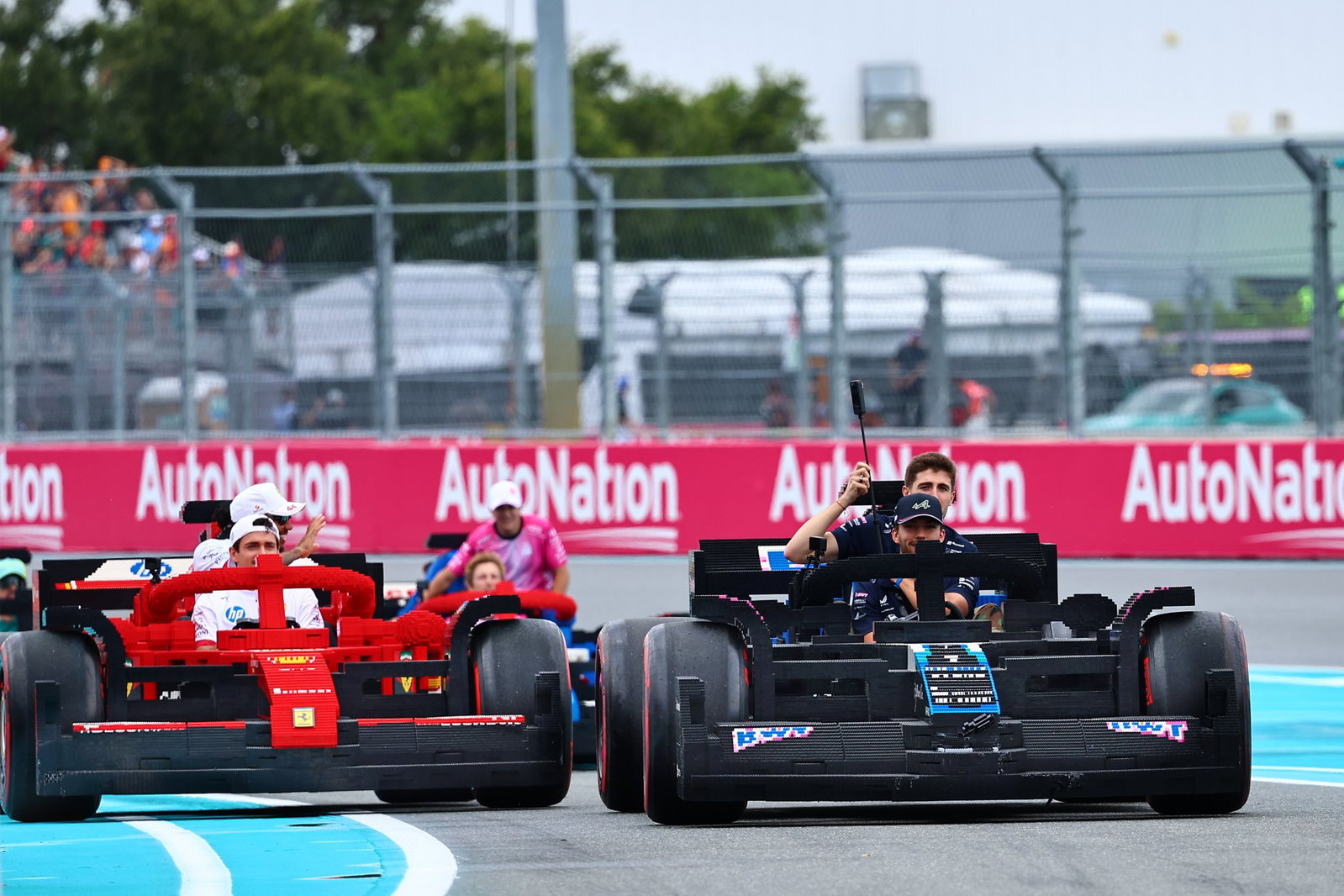
Formula 1 and Lego said the British Grand Prix parade was inspired by the viral Lego drivers’ parade at last year’s Miami Grand Prix. That earlier display left a strong mark because it brought the same mix of racing and playfulness to a grand prix weekend and spread quickly online. Silverstone now takes that idea and scales it into a different format, with 22 individual cars instead of a shared fleet. The change gives each driver a separate vehicle and shifts the emphasis from a group display to a more personalized parade.
The Miami event also provides the contrast that explains why Silverstone’s version is drawing attention. Last year’s parade featured 11 life-size cars shared among drivers, and some were damaged. Silverstone avoids that setup by giving every driver his or her own Lego-built minicars, which changes the logistics and the presentation. It keeps the focus on the visual impact and the novelty of the concept. The British Grand Prix version is built to entertain, not to decide anything on track. It turns the parade lap into a fan-facing moment that extends the weekend beyond the racing itself and gives Silverstone a distinct place in the series of Lego-backed showcases that Formula 1 and Lego have pushed into the public eye.