NXTbets Inc

  • 2026 F1 overhaul forces teams to rethink race strategy

    2026 F1 overhaul forces teams to rethink race strategy

    The 2026 Formula 1 season begins under a wide technical and regulatory overhaul that will change race strategy and overtaking. New elements — roughly 50/50 hybrid power units, active front and rear wings, revised chassis dimensions, lighter minimum weights, and smaller Pirelli tyres — will force teams and drivers to relearn setup, driving techniques and energy management.

    Several distinct technical shifts define the package. Cars are shorter, narrower and lighter with a return to a more raked aerodynamic platform; active aero, including moving rear wings, now reduces drag on straights and can be adjusted in different conditions. DRS has been removed and replaced by an electrical “overtake mode” (also called boost mode or straight‑mode drag reduction), which provides temporary additional power under predefined rules.

    Power units are integrated engine-and-battery systems designed to run on fully sustainable fuels, and regulations expand energy-recovery and deployment options. Early testing has highlighted new engineering demands — changes such as revised compression ratios and altered energy-harvesting architectures have been discussed in the paddock — and teams face heavier energy-management workloads in race simulations.

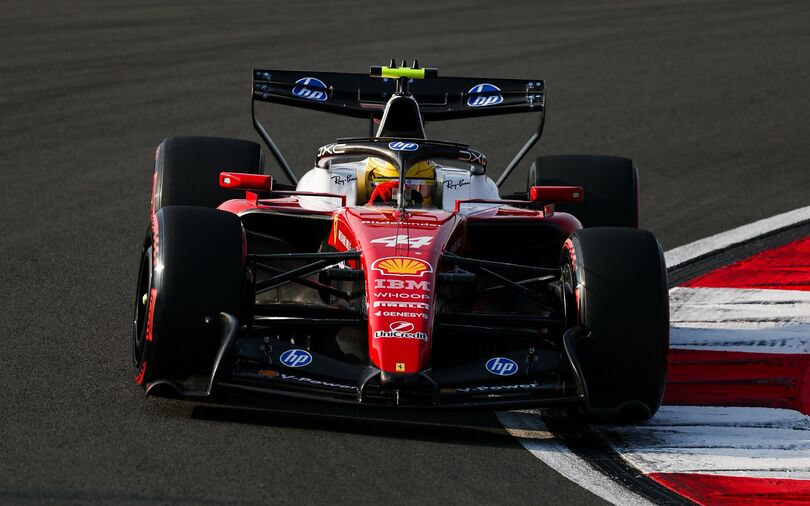
    Early running in Bahrain produced high-profile experiments during testing, notably Ferrari’s rotating “upside-down” rear wing, and paddock discussion flagged a contested Mercedes power‑unit issue rather than an established fact. Broadcasters and pundits warned the opening rounds could be unpredictable; Sky Sports commentator Martin Brundle said “all bets are off,” predicting continual flip-flopping as upgrades arrive. Pre-season form is a useful but imperfect guide: Lando Norris enters the season as reigning champion, with McLaren hoping to remain competitive, while Mercedes, Ferrari and Red Bull appear to be credible threats. Eleven teams completed varying amounts of pre-season running, and the opener in Melbourne (March 6–8) — the first round of a 24-race calendar — will be a crucial test of how teams translate winter development into race pace, energy strategy and overtaking. Analysts say the season narrative will be driven less by a settled pecking order and more by how quickly teams master the new hybrid architecture, active aero and overtaking systems as upgrades and circuit characteristics reshuffle the championship picture.

    More
  • Albert Park to open 2026 F1 season in Melbourne

    Albert Park to open 2026 F1 season in Melbourne

    The 2026 F1 season will open in Melbourne with the Australian Grand Prix at Albert Park, running across the March long weekend, March 6–8 (organizers list March 5–8). The race is scheduled to start at 15:00 AEDT on Sunday, March 8. Albert Park is a 5.278 km, 14-corner semi-permanent street circuit first used for F1 in 1996; the grand prix will run 58 laps (just over 306 km). Teams will arrive to debut F1’s new-generation cars, and support categories FIA Formula 2 (F2) and FIA Formula 3 (F3) will each run two races during the weekend.

    On-track running is scheduled across Friday–Sunday. Session times listed by most sources are: FP1 — March 6, 12:30–13:30 AEDT; FP2 — March 6, 16:00–17:00 AEDT; FP3 — March 7, 12:30 AEDT (some sources give only a start time); qualifying — March 7, 16:00 AEDT; grand prix — March 8, 15:00 AEDT. Broadcasters for the Australian opener include Sky Sports F1 in the U.K. (live, with a 04:00 UK start for the race), Channel 4 highlights, Apple TV and U.S. linear partners including ESPN/ESPN+, Fox Sports in Australia, and radio/independent coverage such as BBC Radio 5 Live and RaceFans Live.

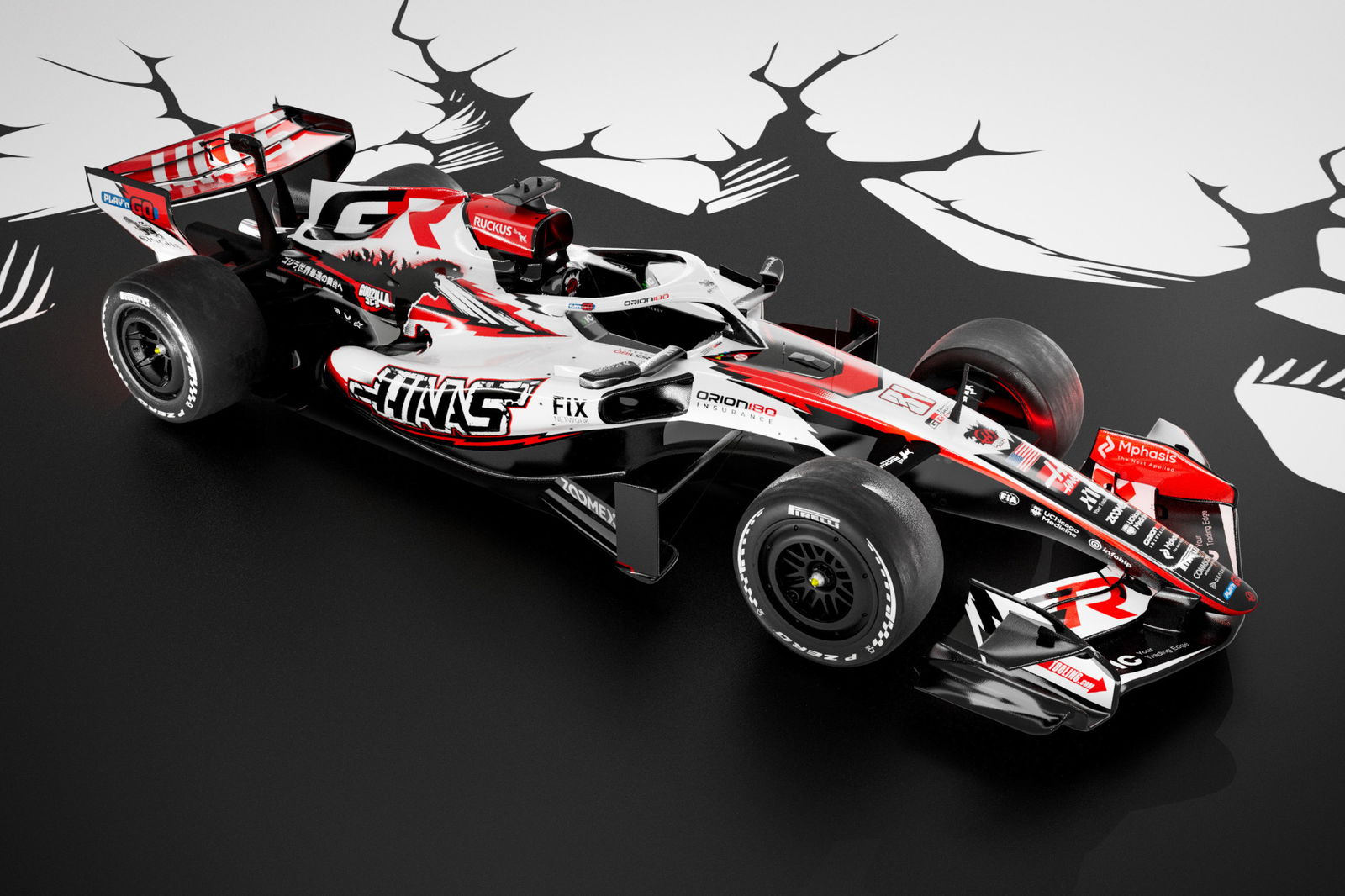
    Off-track activity will spread beyond Albert Park, with organizers and local venues staging fan zones, pop-ups, street-side activations and waterfront events across the Melbourne CBD and the St Kilda foreshore. The program includes ticketed and free experiences; organizers say it will turn the city into a “motorsport playground” and boost foot traffic over the long weekend. Pre-season testing in Barcelona and Bahrain saw Ferrari set the pace — Charles Leclerc posted a 1:31.992 in Bahrain — while Red Bull’s power unit kept Max Verstappen competitive; Alpine and Haas showed promising multi-stint form, and Aston Martin reported battery issues.

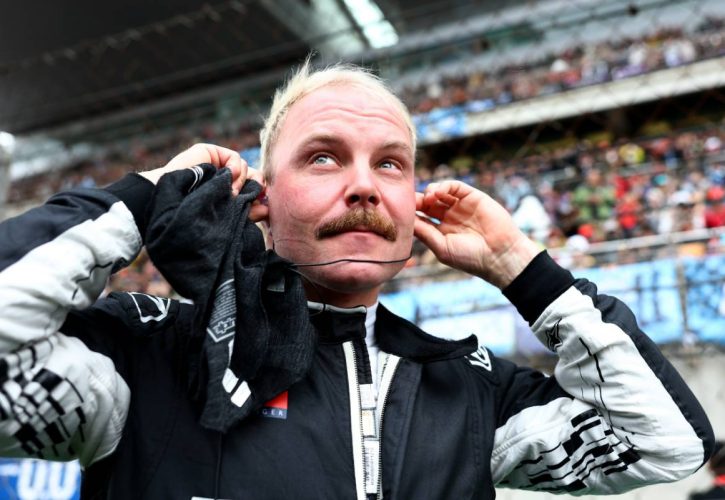
    The season starts amid a major technical and regulatory overhaul: shorter, lighter cars with active aerodynamics; roughly 50/50 electric/internal-combustion power units running on sustainable fuels; expanded energy-recovery systems; and the replacement of DRS with an electrical “overtake mode.” The 24-race calendar moves next to Shanghai (March 13–15), which will host the year’s first sprint. Cadillac joins as the 11th constructor, with Sergio Pérez and Valtteri Bottas named to its entry. The 2026 grid includes one rookie, Arvid Lindblad, and features the returns of Bottas and Pérez.

    More
  • FIA orders hot and cold engine tests after Mercedes row

    FIA orders hot and cold engine tests after Mercedes row

    The FIA published unanimous amendments to the 2026 F1 regulations a week before the season-opening Australian Grand Prix, introducing a technical fix to compression-ratio testing after rivals accused Mercedes of conducting tests at ambient temperatures that effectively exceeded the 16:1 compression limit. Under the changes, compression-ratio tests will be carried out in both hot and cold conditions from June 1 for the remainder of the season, while testing at full operating temperature (130°C) has been deferred until 2027. The FIA said it will continue to evaluate related energy-management issues and signaled that qualifying changes will place greater emphasis on electrical energy management.

    The wider 2026 rule reset — described by observers as the biggest regulatory overhaul in the sport’s history — forces teams to start from scratch with new cars, engines and active aerodynamics, and power units that split energy roughly 50/50 between combustion and batteries. The package combines immediate regulatory fixes with transitional timelines and contains a number of qualifying and calendar adjustments: Q1 and Q2 eliminations increase from five drivers to six; Q3 is extended to 13 minutes; the interval between Q2 and Q3 is shortened from eight to seven minutes; the one-off 2025 Monaco rule requiring three sets of dry tires was shelved; and the arrival of Cadillac as F1’s 11th team was cited as a partial prompt for the qualifying tweaks. The reset, across a 24-race calendar running until December, widens the scope for surprising results and unexpected championship contenders.

    The timing of the amendments sharpened tensions ahead of the Australian opener, with reports of possible protests in Melbourne and the FIA proposing a potential mid-season rule change in response to the controversy. Commentators pointed to historical season-opening disputes — from the drivers’ strike at Kyalami in 1982 to the 2009 Australian “lie-gate” and other legal and technical upheavals — to frame the present unease. Analysts say teams that best integrate engines and chassis, manage electrical energy and execute rapid in-season development are most likely to convert the 2026 reset into sustained on-track success; Mercedes, aided by a strong pre-season showing and its 2014 pedigree, are widely viewed as early favorites, while Ferrari, McLaren and Red Bull remain credible contenders. The Monaco Grand Prix on June 7 will be the first race to fall under the revised compression-ratio testing regime.

    More
  • F1 and FIA drop Monaco two-stop tire rule after 2025 trial

    F1 and FIA drop Monaco two-stop tire rule after 2025 trial

    Formula 1 and the FIA have abandoned the mandatory two-stop tire rule at the Monaco Grand Prix after a one-season 2025 trial, saying the experiment produced tactical distortion rather than more genuine on-track overtaking.

    The 2025 tweak had forced cars to use three tire sets to encourage two-stop strategies and add uncertainty on Monaco’s narrow streets. Teams quickly gamed the requirement by running cars together, using one car to slow the field and open pit-stop windows for teammates, and producing unusually slow laps that did little to change the battle at the front. Noted examples included Racing Bulls using Liam Lawson to protect Isack Hadjar and Williams swapping positions between Alex Albon and Carlos Sainz to secure pit-stop advantages; some drivers were reportedly forced to lap more than four seconds slower.

    The tactics prompted widespread unease and public criticism from commentators including Scott Mitchell-Malm, Ben Anderson and Gary Anderson, and uncomfortable reactions from figures such as Williams team principal James Vowles. F1 managing director Jon Noble said the tweak added some uncertainty, while FIA single-seater director Nikolas Tombazis had warned the change was not guaranteed to stay. After reviewing the season-long trial, the governing bodies removed the Monaco one-off clauses from the sporting regulations and restored the standard tire requirement used elsewhere. The World Motor Sport Council initially retained the tweak in paperwork for 2026 before reversing that decision; the WMSC also approved extending Q3 by one minute to 13 minutes.

    The FIA concluded the trial created distortion rather than added drama and suggested simply changing tire rules is unlikely to fix Monaco’s racing issues, indicating more complex or structural adjustments will be needed. The controversy around the experiment was underlined by incidents such as George Russell cutting a chicane and Fernando Alonso’s engine failure during the trial.

    More
  • Cadillac names F1 chassis MAC-26 for Mario Andretti

    Cadillac names F1 chassis MAC-26 for Mario Andretti

    Cadillac named its first Formula 1 car MAC-26 — standing for Mario Andretti Cadillac 2026 — as a tribute to Mario Andretti, the 1978 F1 World Champion. The naming also recognizes the Andretti family’s multi-year campaign to secure an entry into the F1 World Championship. Mario Andretti said racing “has been the joy of my life” and expressed appreciation for the tribute.

    The Cadillac Formula 1 Team will make its competitive debut next weekend in Australia. Dan Towriss, CEO of the Cadillac Formula 1 Team and head of Andretti Global, said the chassis name reflects Mario’s spirit and underscores the belief that an American team belongs in Formula 1. The announcement framed the Cadillac entry as both a sporting milestone and a symbolic nod to American racing heritage.

    The article noted the Andretti effort faced resistance from former Liberty Media executive Greg Maffei, but also had support from the FIA, substantial funding, and backing from a major automaker.

    More
  • Honda, Aston Martin scramble to fix Sakura V6 vibrations

    Honda, Aston Martin scramble to fix Sakura V6 vibrations

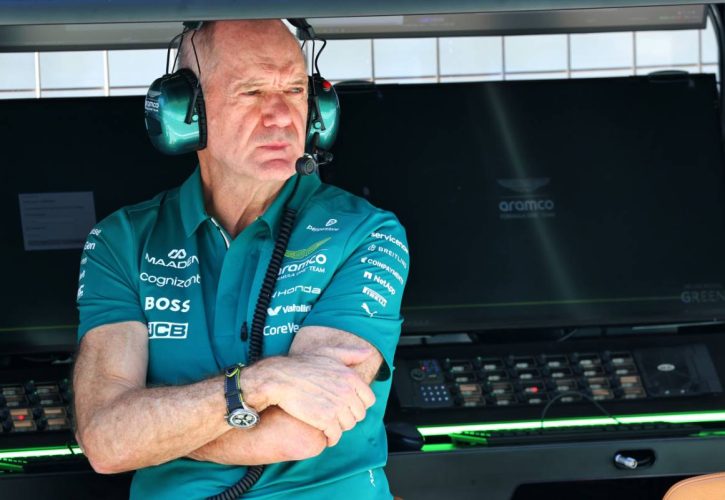
    Excessive vibrations from Honda’s new Sakura V6 repeatedly damaged Aston Martin’s battery system during pre‑season running, forcing Honda to stop on‑track work and severely curtailing the team’s testing program. HRC head Ikuo Takeishi said the battery looked as if it had been ‘shaken’ inside the monocoque, and Honda described the vibrations as ‘dangerous’ and ‘extremely challenging.’ Repeated battery‑system failures prompted Honda to halt running, and a shortage of spare parts meant Aston Martin completed just six install laps on the final day of Bahrain testing.

    Honda has identified excessive combustion‑engine vibrations from the Sakura V6 as the source of the damage but has not found a single root cause, saying the problem appears multifactorial. Engineers at HRC are running bench tests and using simulations at the Sakura facility and a virtual test rig to reproduce the issue, while developing both chassis and power‑unit countermeasures to reduce vibration. Honda and Aston Martin are assessing fixes under a tight timeline ahead of the season opener in Australia and the engine homologation deadline on March 1; HRC says it is collaborating with Aston Martin owner Lawrence Stroll and technical director Adrian Newey, and Honda aims to have the package competitive by the Japanese GP at Suzuka.

    The disruption left Aston Martin with sharply limited preseason mileage: across three pre‑season tests the AMR26 completed about 400 laps in total, including 128 laps over three days in Bahrain and 2,115 km of running overall — roughly a third of the distance some rivals logged, while many teams recorded more than 300 laps and several exceeded 400. The shortfall was compounded by the AMR26’s late delivery, a shortage of spare parts and a complex integration program that included a new in‑house gearbox, new electronics and suspension. Tetsushi Tsunoda, head of power‑unit development at HRC, described the situation as a ‘double handicap,’ citing late supplier signings and prior regulatory limits on early investment; Honda drew a parallel with past vibration and correlation troubles in 2017 and said it will focus on combustion and other development work to close the performance and reliability gap as the season progresses.

    More
  • Formula One revenue jumps 14% to $3.87B; profits rise

    Formula One revenue jumps 14% to $3.87B; profits rise

    Formula One closed 2025 with annual revenue up 14% to $3.87 billion, operating income rising 28% to $632 million and adjusted OIBDA increasing 20% to $946 million. Reports varied slightly on headline figures — one summary rounded F1 revenue to $3.9 billion — but the company also posted a record fourth-quarter revenue of $1.38 billion, a 22% jump from Q4 2024.

    The gains were broad-based: primary F1 revenue totaled $3.09 billion, with the revenue mix split among race promotion (26.7%), media rights (31.3%) and sponsorship (21.7%) — sponsorship exceeded 20% of primary revenue for the first time since Liberty Media’s acquisition. Ancillary streams supported growth as well, with hospitality and licensing up 20% to $787 million. Fan engagement rose, with attendance of 6.75 million (up 4%) and live TV viewership reported broadly as up about 21% year‑over‑year (one source cited a 24% increase). Liberty attributed media‑rights growth to F1 TV subscriptions and one‑time movie revenue.

    Parent Liberty Media also reported improved results and strategic moves tied to the strong performance: consolidated revenue was $4.48 billion for fiscal 2025 and overall operating income rose to $577 million from $287 million a year earlier. In July, Liberty completed an acquisition of an 84% stake in MotoGP for $3.1 billion and disclosed pro-forma 2025 MotoGP revenue of $573 million (up 14%), pro-forma operating income of $54 million (up 86%) and adjusted OIBDA of $201 million. Liberty highlighted longer-term commercial stability — including a Concorde Agreement through 2030, new sponsorship deals such as Standard Chartered and media-rights extensions — alongside venue and rights arrangements that support F1’s revenue outlook.

    More
  • Hamilton pushes to revive Ferrari career as Leclerc looms

    Hamilton pushes to revive Ferrari career as Leclerc looms

    Lewis Hamilton has entered this season at Ferrari determined to revive his form after a disappointing 2025. That year he finished sixth in the drivers’ standings, did not record a single grand prix podium and was frequently eliminated in Q1. His intra-team duel with Charles Leclerc remains the clearest measure of recovery: Leclerc outqualified Hamilton 23 times to seven, took seven podiums and finished 86 points ahead in 2025. Some critics have been blunt — Roberto Boccafogli called Hamilton ‘clearly outclassed’ — and Ralf Schumacher warned Hamilton could ‘pull the plug’ on his F1 career if he cannot match Leclerc in the opening three or four races. Hamilton has publicly ruled out retirement and his Ferrari contract runs until the end of 2027; figures such as Bernie Ecclestone have reportedly urged him privately to retire.

    Ferrari and Hamilton are relying on this season’s regulation overhaul and encouraging pre-season testing to deliver improvement. Ferrari topped running in Barcelona and Bahrain, with Leclerc posting the fastest test time and the SF-26’s revised rear-wing package praised for its straight-line speed. F1 presenter Will Buxton highlighted Hamilton’s strong showings in testing and predicted he can return to winning ways. Ferrari CEO Stefano Domenicali said Hamilton felt confident ahead of the rule changes.

    Behind the scenes, Ferrari has reshuffled engineering support — Riccardo Adami moved into a different role and Hamilton has a new race engineer — as the team seeks clearer communication and technical gains. Observers warn that if meaningful improvement does not arrive with the new regulations, Ferrari’s high-profile signing could be seen as a gamble that backfired, adding pressure on team principal Fred Vasseur and potentially jeopardizing Leclerc’s long-term commitment.

    More
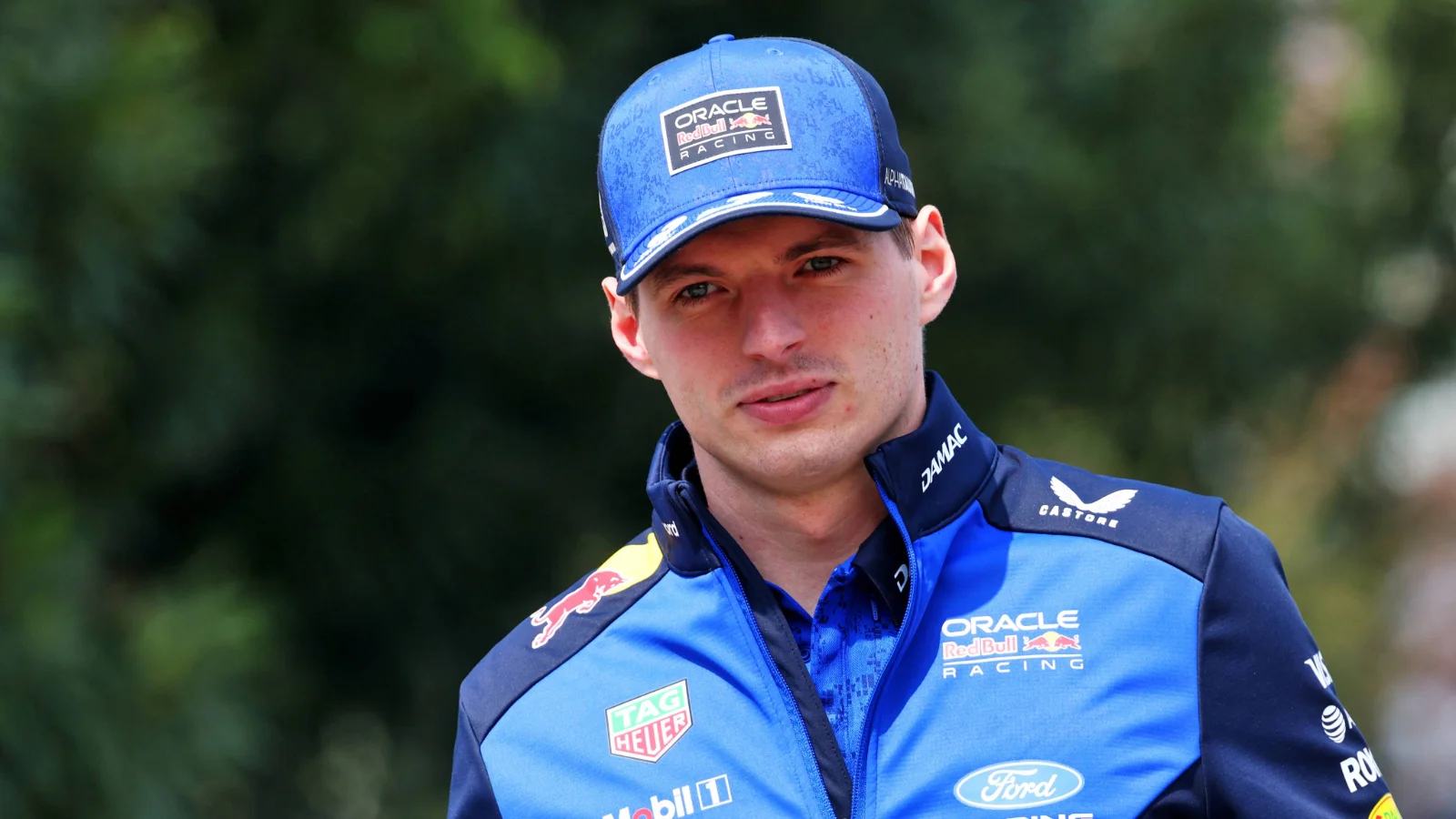
  • Isack Hadjar promoted to Red Bull seat with Verstappen

    Isack Hadjar promoted to Red Bull seat with Verstappen

    Isack Hadjar, 21, has been promoted into a full-time race seat at Red Bull Racing and will partner four-time world champion Max Verstappen for the 2026 F1 season. The move was announced ahead of the Abu Dhabi finale and was reported again as the paddock headed to the Australian Grand Prix in Melbourne. The appointment makes Verstappen’s fourth different teammate in 16 months.

    Hadjar earned the promotion after a strong rookie campaign that included a podium at the 2025 Dutch Grand Prix and an impressive qualifying and race record; he outscored Liam Lawson and Yuki Tsunoda across 2025. His first season also featured notable errors — a formation-lap crash in Australia, a collision with Kimi Antonelli in Britain and costly mistakes in Baku. Hadjar joined Red Bull’s junior programme in 2021, carried out FP1 outings in 2023 and 2024 and provided simulator support; Red Bull credited Lawson as a “senior figure” who helped mentor Hadjar, and team boss Laurent Mekies and prior FP1 sessions were said to have smoothed his transition into the senior Milton Keynes operation.

    Team and paddock voices framed the timing as opportune. Sergio Perez called the promotion a “massive opportunity,” while Alex Albon and others suggested the 2026 regulation changes will act as a reset likely to suit a young driver stepping into Red Bull’s high-performance environment. Verstappen described their early working relationship after Bahrain testing as “very open,” said Hadjar should enter 2026 with confidence, and — speaking of his own mindset — added, “I can beat anyone.” Hadjar did suffer a wet-weather crash during a closed-door Red Bull test in January 2026. The move comes as Red Bull prepares to start 2026 with a new Red Bull–Ford engine, a technical change that has prompted questions about the team’s title prospects and underscored the significance of integrating a young teammate.

    More