NXTbets Inc

  • Brundle Warns 2026 F1 Power Units May Break Article 27.1

    Brundle Warns 2026 F1 Power Units May Break Article 27.1

    Martin Brundle warned that autonomous, self-learning energy deployment in the new 2026 Formula 1 cars may be breaching Article 27.1 of the sporting regulations by undermining driver control and making race decisions for drivers.

    Speaking on The F1 Show and Sky Sports F1, Brundle said the power units appear capable of overriding driver inputs and argued regulators must examine whether that behavior contravenes the rule that the driver must drive “alone and unaided.”

    He called the current power delivery architecture “fundamentally flawed” and said “drivers should not be surprised by a car’s behavior.”

    More
  • Mercedes, McLaren to Test Pirelli Tires at Nurburgring

    Mercedes, McLaren to Test Pirelli Tires at Nurburgring

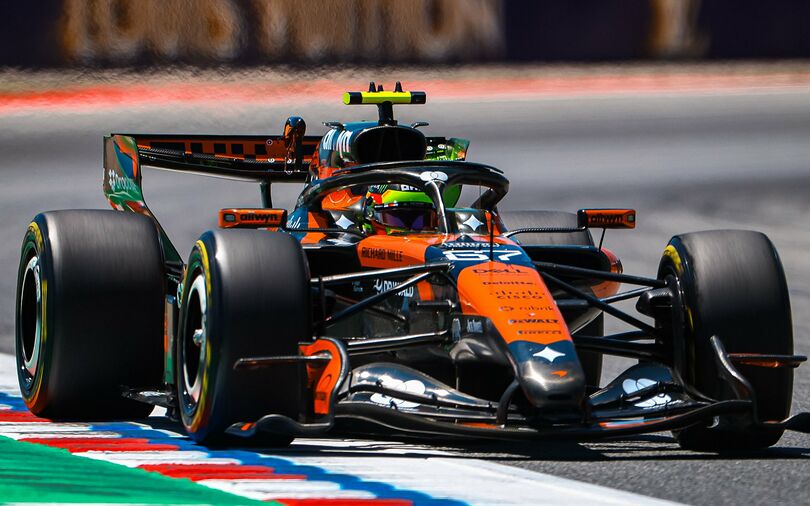
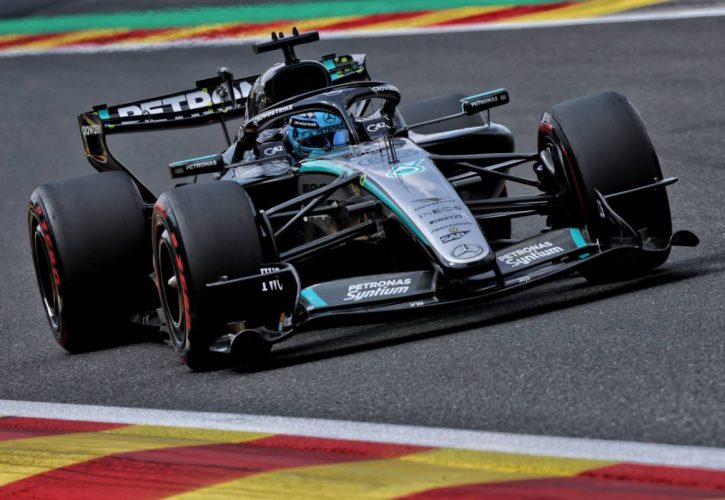
    Mercedes and McLaren will run a two-day Pirelli tire test at the Nurburgring on April 14-15. The outing will bring current-era F1 cars back to the circuit for the first time since the 2020 Eifel Grand Prix.

    Pirelli describes the sessions as a technical tire program and the test has been promoted informally as a “Spring Break” Mercedes test. One report named Mercedes drivers as George Russell and Kimi Antonelli and McLaren drivers as Lando Norris and Oscar Piastri, split across the two days; another source said drivers had not been confirmed, though both teams are expected to divide duties across the test days.

    The sessions will run on the Nurburgring’s GP layout and are scheduled as non-competitive tire work to provide data for Pirelli’s development program. Several sources said the work will focus on dry compounds after recent Pirelli running at Suzuka, but Pirelli has not formally confirmed whether sessions will target wet or dry tires and can artificially wet the surface if required. The GP layout’s 17 corners, large run-off areas and advanced monitoring make the track well suited to precise data gathering as teams evaluate tire behavior, car setup and long-run performance to inform future compounds and construction.

    The Nurburgring outing replaces a planned pre-season wet trial in Bahrain and fills on-track time lost after the Bahrain and Saudi Arabian Grands Prix and the Bahrain test were canceled. Reports linked those cancellations to missile strikes tied to the US and Israel offensive on Iran. Organizers and supporters hope the return of top-level cars will strengthen calls to reinstate the Nurburgring on the official F1 calendar, and the work will give drivers preparation ahead of the championship resuming at the Miami Grand Prix on May 3.

    More
  • Alpine Denies Sabotage, Rebukes Online Abuse

    Alpine Denies Sabotage, Rebukes Online Abuse

    Alpine issued an open letter rejecting social‑media sabotage claims and condemning online abuse, calling the allegations “completely unfounded” and “illogical and counterproductive.” The team stressed it would not intentionally handicap itself and said the statement was meant to defend its drivers and quash rumor‑driven speculation. It added both cars run the same equipment apart from some small, low‑performance parts used in China after a gearbox‑component switch.

    The letter followed a string of on‑track incidents and hostile fan reaction. At the Chinese GP in Shanghai, Franco Colapinto finished 10th, 49 seconds behind teammate Pierre Gasly, after a collision with Esteban Ocon; Alpine said Ocon accepted responsibility. Some Argentine fans publicly suggested specification differences, used pejorative language about Colapinto’s car and directed death threats at Ocon. Colapinto said the team needed to “understand a few things on the high‑speed corners” and to source missing parts after the incident.

    Alpine also addressed the high‑speed crash at the Japanese GP at Suzuka involving Colapinto and Haas driver Ollie Bearman. Bearman reportedly experienced a 50G impact after taking avoiding action for an estimated 45 km/h speed differential while Colapinto was harvesting energy. The team said “abuse of any kind is unacceptable,” confirmed it actively moderates its channels and is coordinating with F1 and the FIA, which has said it will examine the speed differential and will not issue immediate penalties, and will participate in planned April meetings to review regulations. Alpine urged fans to engage respectfully, highlighted driver welfare and fan conduct as immediate concerns, and said internal procedures and social‑media moderation are being used to address misconduct.

    More
  • Audi says ADUO won't fix poor starts, targets 2030

    Audi says ADUO won’t fix poor starts, targets 2030

    Audi has acknowledged its biggest weakness this season — poor race starts — stems from a structural flaw in the new power unit and cannot be fixed quickly by the FIA’s ADUO process. Acting team principal Mattia Binotto said fixing the deficit is a “top priority” but warned that “miracles are not possible.” The team notes ADUO provides structured concessions, ranging from a single immediate change for small deficits to larger allowances and extra dyno time for more serious shortfalls, but its quarterly checkpoints and long engine lead times make a rapid on-track cure unlikely. Reports vary on when the first ADUO review will occur; some suggest it could be considered at early-season rounds such as Monaco or Miami.

    Audi engineers say the problem is hardware-related rather than down to clutch settings or driver reaction times. They point to a relatively large turbo compressor whose higher inertia delays boost arrival. That delayed boost forces the electrical part of the powertrain to cover torque shortfalls, burning harvested energy early in the lap and leaving the unit disadvantaged against rivals.

    Rookie Gabriel Bortoleto was blunt: “starts have been terrible so far.” Both drivers lost places off the line in Japan — Bortoleto fell from P8 to P13 and Nico Hülkenberg from P13 to P19, turning promising grid slots into damage-limitation races. Binotto said Audi will pursue a staged recovery rather than chasing quick fixes and is targeting to be world-championship competitive by 2030; the team hopes only modest improvements may be possible during a five-week break and accepts that closing the gap to Ferrari and Mercedes will be a long-term programme.

    More
  • Ricciardo relieved after Red Bull replaces him with Lawson

    Ricciardo relieved after Red Bull replaces him with Lawson

    Daniel Ricciardo said he was “grateful” that Red Bull and sister team Racing Bulls replaced him with Liam Lawson late in the 2024 season, speaking on Ford CEO Jim Farley’s podcast. He said the decision was taken out of his hands and that he felt relieved the team made the call because it would have been difficult for him to walk away on his own; the Singapore Grand Prix was his final race of the year.

    Ricciardo’s exit closed a 14-season Formula 1 career with 257 starts; sources differ on whether he won seven or eight Grands Prix. He traced the end of his time in the sport to a difficult two-year period following the loss of his McLaren seat in 2022.

    He returned mid-2023 to Racing Bulls by taking Nyck de Vries’s seat, but his comeback was interrupted by a broken hand in practice at the 2023 Dutch Grand Prix. Racing Bulls retained him into 2024 before later replacing him; being let go twice in two years “had taken a lot out of me,” he said, leaving him “pretty exhausted” and prompting him to be honest with himself about stepping away.

    More
  • After praise for engine, Red Bull weighs RB22 overhaul

    After praise for engine, Red Bull weighs RB22 overhaul

    Rival teams regard Red Bull’s new power unit as strong in the squad’s first year as an engine manufacturer, but the team’s 2026 slump has been traced inside the factory to persistent RB22 chassis problems. After three races the squad had just 16 points and sat sixth in the Constructors’ Championship — their worst opening sequence since 2008 — and engineers are privately debating whether the RB22 should be heavily revised or even scrapped.

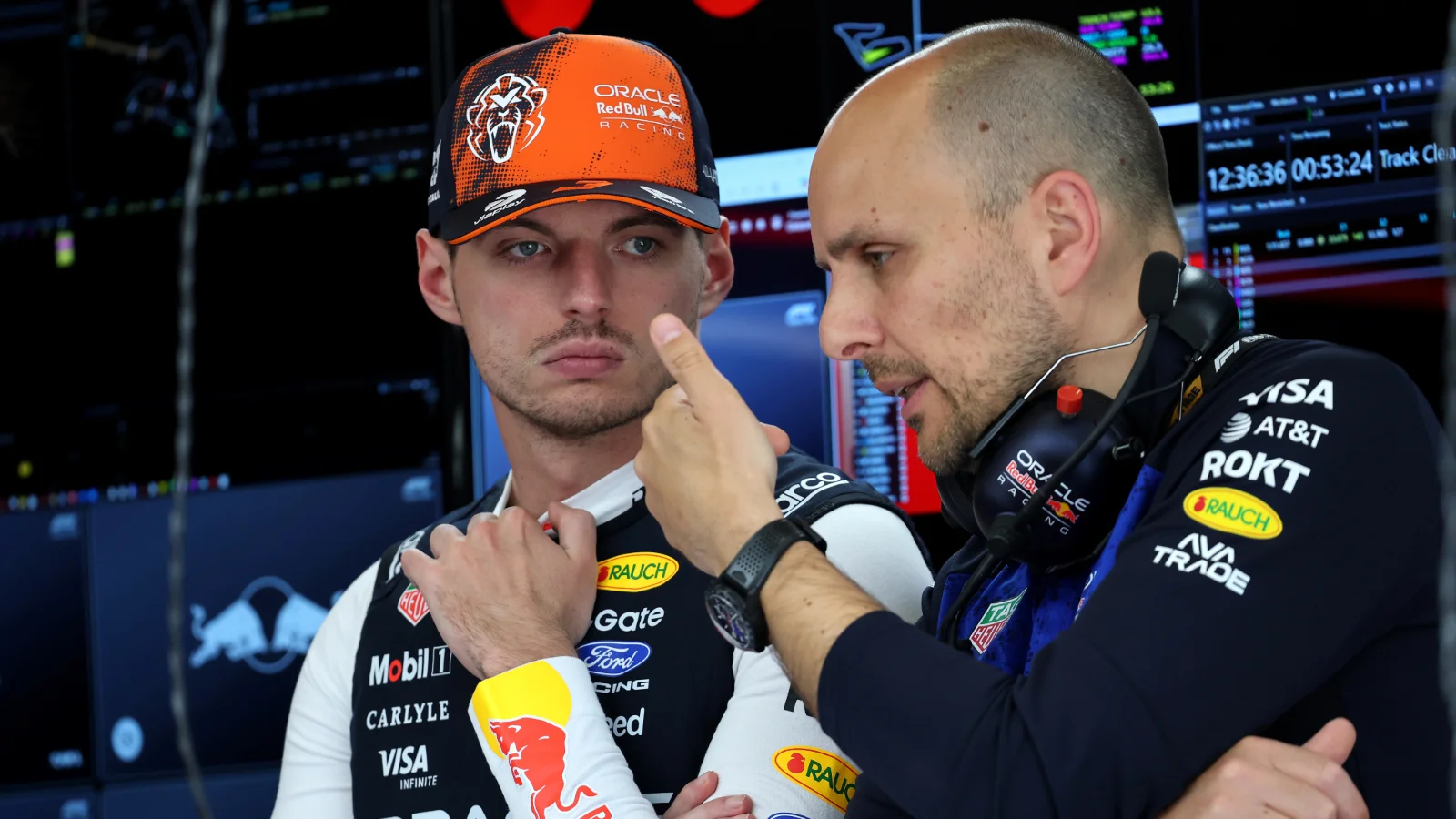
    Technical staff and drivers singled out the chassis rather than the power unit. Isack Hadjar described the RB22 as a “terrible” chassis, “just slow in the corners,” and warned the team currently has “no lead on how we can make a fast one,” while saying drivers can still “drive the car fast.” Team principal Laurent Mekies said the expected gap to Mercedes has widened to roughly a second and about half a second to Ferrari, that the squad has been “starting to scratch heads” since China, and that engineers are diagnosing complex balance and lift/extraction problems while carrying out targeted development work. The team plans to use an enforced five-week break to work intensively on the RB22 ahead of Miami.

    Those technical setbacks have fuelled internal unease. Sources reported staff privately questioning whether the team were better off under Christian Horner, and long-serving mechanic Ole Schack resigned citing a changed working atmosphere. Horner still retains supporters within the factory after two decades and eight title-winning campaigns, but Mekies — who took over in July and initially helped reignite Max Verstappen’s title bid last season — now faces increased scrutiny over his leadership and technical direction. The situation has also heightened pressure on Verstappen, who has threatened to retire at the end of the season and has partly linked that threat to the 2026 regulations. Any decision to abandon or deeply rework the RB22 would carry major logistical and competitive consequences, and reports stress such moves remain internal discussions rather than confirmed decisions.

    More
  • Ferrari runs Mugello TPC, Monza filming to test aero and ERS

    Ferrari runs Mugello TPC, Monza filming to test aero and ERS

    Ferrari has scheduled a focused April on-track program — a Mugello Testing of Previous Cars (TPC) session and a Monza filming day — explicitly to validate aerodynamic updates and energy-recovery systems, translate simulator gains into real-world feedback and keep cars and personnel race-ready ahead of the Miami Grand Prix. The activity fills a five-week gap created by the cancellations of the Bahrain and Saudi Arabian Grands Prix and, Ferrari says, is designed to secure engine gains, protect the team’s positive start to 2026 and close the straight-line speed shortfall that rivals including Lewis Hamilton have highlighted.

    The first element is a two-day TPC at Mugello using last year’s SF-25 under relaxed FIA rules. Test and simulator drivers Antonio Giovinazzi, Arthur Leclerc and Antonio Fuoco are set to run the car to convert simulator data into on-track feedback and to validate setups and driver inputs. Sources differ on the exact start date — reporting either April 1-2 or beginning April 2 — but all agree the outing will be carried out by Ferrari’s test outfit rather than regular race drivers.

    Ferrari will follow Mugello with additional, limited on-track work: a two-day artificial wet test at Fiorano on April 9-10 and a 200 km filming day at Monza in late April (reported as April 21 or 22). At Monza Charles Leclerc and Lewis Hamilton are expected to drive the SF-26 for up to 200 km to gather energy-recovery-system data, produce promotional footage and trial aerodynamic updates — including a revised “Macarena” wing earmarked for a Miami debut. Team statements and multiple reports describe Monza as particularly demanding for energy management under the 2026 rules, and Ferrari emphasized that all sessions will be conducted within the FIA’s TPC and filming-day limits as low-profile work to refine systems ahead of Miami.

    More
  • Suzuka exposes Ferrari's power-unit deficit, Vasseur says

    Suzuka exposes Ferrari’s power-unit deficit, Vasseur says

    At the Japanese Grand Prix in Suzuka, Ferrari’s straight-line speed and power-unit weakness — particularly the SF‑26’s lack of pace down the straights — were laid bare, drivers and team figures said. Charles Leclerc called the power unit “maybe our main weakness at the moment,” and Lewis Hamilton described a “really confusing” loss of power that left him struggling to defend and ultimately finish sixth. Team principal Fred Vasseur acknowledged a clear straight-line deficit and said the team must investigate whether it stems from engine power, timing/strategy or overtake-mode deployment; he and others pointed to Suzuka’s long straights as having exposed the problem.

    The on-track consequences were immediate. Leclerc recovered from early Safety Car misfortune and an early pit stop that left him in traffic to fight back past teammates and rivals and secure third, but said he had to manage his tires carefully and that the Safety Car had hurt the team’s strategy. Hamilton briefly gained places by pitting under the Safety Car but slipped from a podium position as he struggled to extract performance from the SF‑26 and lost places to rivals; he suspected his engine was down because others had more straight-line speed despite running the same car. Vasseur noted Hamilton had dropped out of “overtake mode,” which removed an overtake boost and contributed to the drop-off.

    Ferrari plans to use the upcoming month-long break to analyze the car and seek performance improvements before Miami, focusing on the power unit and straight-line performance while also advancing tires, aero and chassis work. Leclerc warned upgrades might not arrive in time for Miami, and reports from Suzuka prompted a renewed push to close the gap — the team opened the season clearly second behind Mercedes and appeared to lose ground to McLaren — even as Leclerc’s podiums provided a morale boost and Vasseur praised the driver’s racecraft in what he called one of the season’s most entertaining races.

    More
  • Third slow getaway leaves Mercedes exposed in Suzuka

    Third slow getaway leaves Mercedes exposed in Suzuka

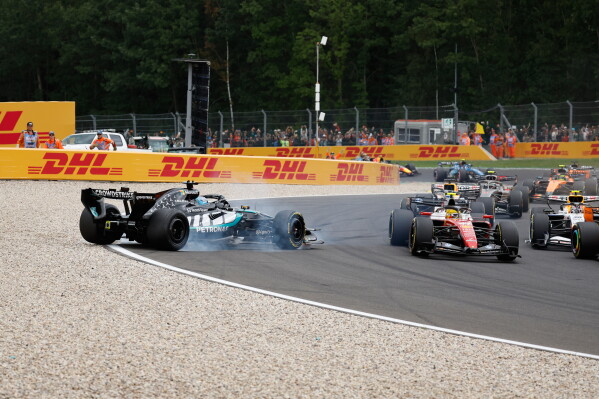
    Mercedes’ vulnerability — recurring poor race starts compounded by an inability to cope with traffic and dirty air — was laid bare at the Japanese Grand Prix in Suzuka. Team principal Toto Wolff conceded that ‘poor starts have been a recurring issue’, calling the team’s launches ‘mediocre’ and saying a bad getaway nearly cost them in Japan; he also admitted this was the third time this season Mercedes had to recover from a slow launch.

    Former drivers Damon Hill and Jacques Villeneuve warned the team should be concerned, with Villeneuve adding that Mercedes’ package is “vulnerable in dirty air” and needs to be in “fresh air” to be competitive, because traffic and turbulent airflow limit recovery opportunities.

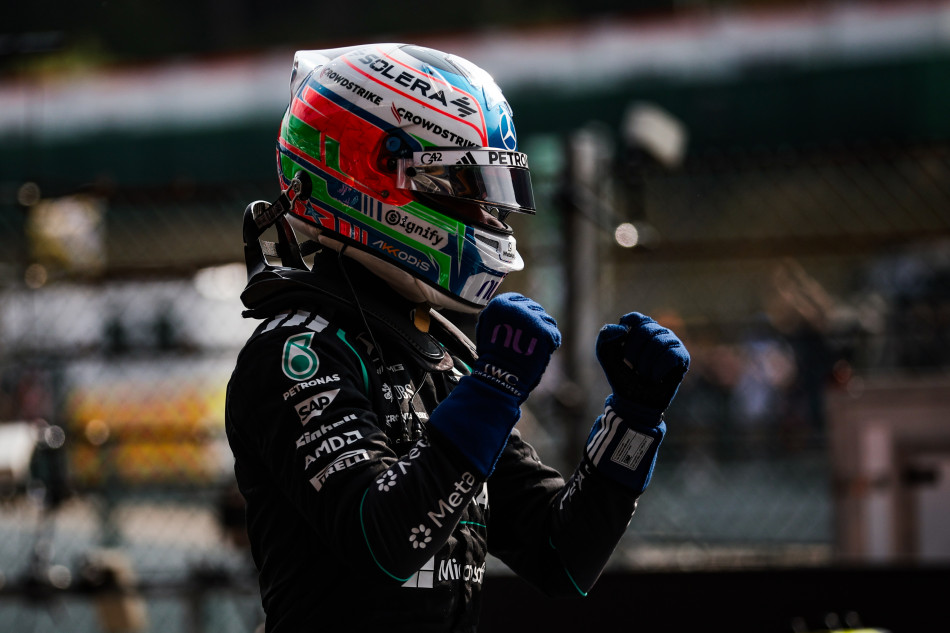
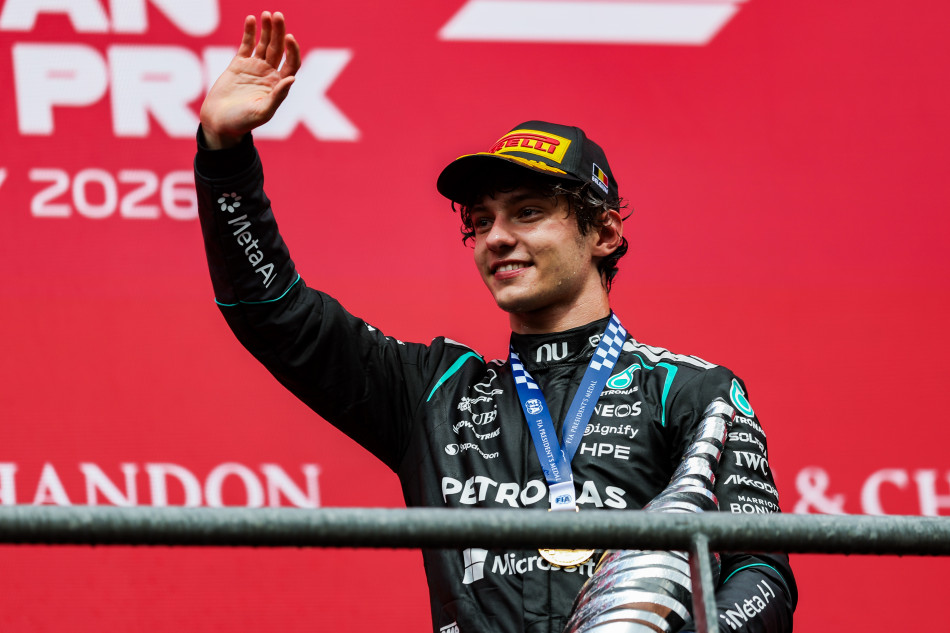
    The race itself illustrated the problem. Kimi Antonelli, who started on pole and later won at Suzuka to become the youngest leader of the 2026 standings, botched his own launch and dropped to sixth before a late safety car — triggered by Ollie Bearman’s crash — and a timely pit stop reshaped the running and allowed him to retake the lead. Mercedes’ recovery efforts were visible but imperfect: George Russell fought back to fourth after a setup change left his W17 uncooperative and both Mercedes drivers were hampered by traffic. Wolff both praised Antonelli’s racecraft and quipped about modern drivers learning in “automatic driving schools” while again pointing to the team’s recurring poor getaways.

    The combined pattern of slow starts and an aerodynamic/flow weakness when following other cars has prompted external concern and demonstrated that other teams and drivers can threaten Mercedes on race day. Unless the team addresses clutch/launch procedure and its loss of performance in dirty air, those vulnerabilities look set to undermine Mercedes’ results going forward.

    More