NXTbets Inc

  • Piastri Says Webber will Step Back, Eyes Melbourne Test

    Piastri Says Webber will Step Back, Eyes Melbourne Test

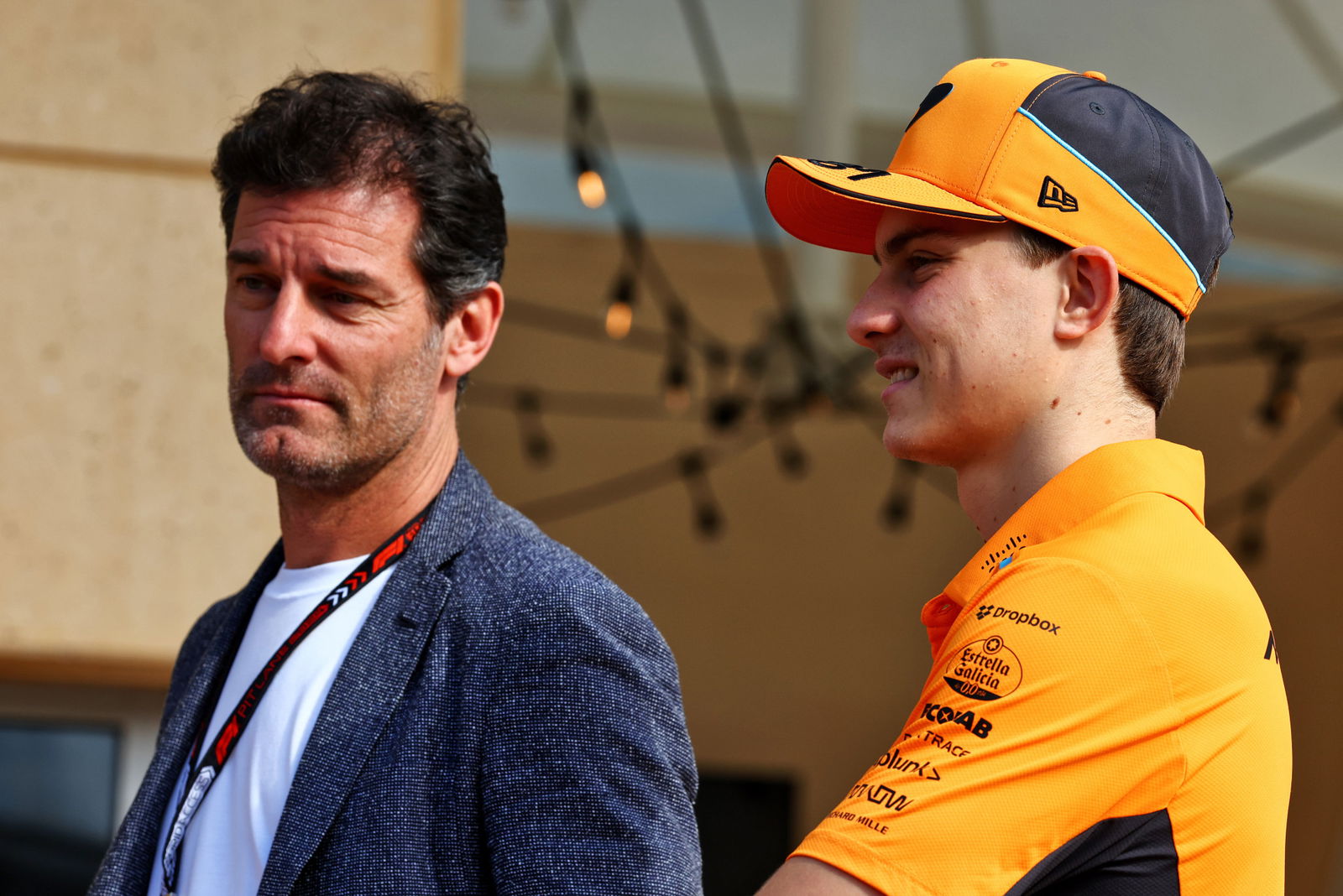
    Oscar Piastri reshuffled his management and trackside support for the 2026 Formula 1 season, with long-time manager Mark Webber stepping back from regular trackside duties to concentrate on commercial matters while remaining part of the driver’s management. Piastri confirmed the change during pre-season testing in Bahrain, describing it as a planned shift that will see Webber attend fewer events and saying that “there wasn’t anything specific, we just made a decision for things to look a bit different.”

    The reorganization places engineer Pedro Matos as Piastri’s main presence at grand prix weekends. Matos worked with Piastri as his race engineer at Prema when the Aussie won the 2021 FIA Formula 2 title and earlier in British F4 in 2017, and will now take on weekend engineering duties. Australian mental-performance coach Emma Murray will increase her involvement during race weekends, and is best known for her work with three-time Supercars champion Scott McLaughlin. Piastri framed the changes as practical adjustments to support on-track performance as drivers and teams adapt to the sport’s new technical cycle.

    Piastri credited Webber with playing a key part in his move from Alpine to McLaren and said Webber had been a steady presence across his first three F1 seasons. He denied any dramatic fallout from the reshuffle and said the revamped support team and car will face their first true test at his home race in Melbourne (March 6–8). Separately, commentators, including former driver Ralf Schumacher and unnamed podcast hosts, suggested McLaren had instigated some restructuring to restore calm after Piastri’s difficult second half of the 2025 season. He led the championship for 15 rounds but ultimately finished third behind teammate Lando Norris and Max Verstappen, an assertion presented as outside commentary rather than Piastri’s account.

    More
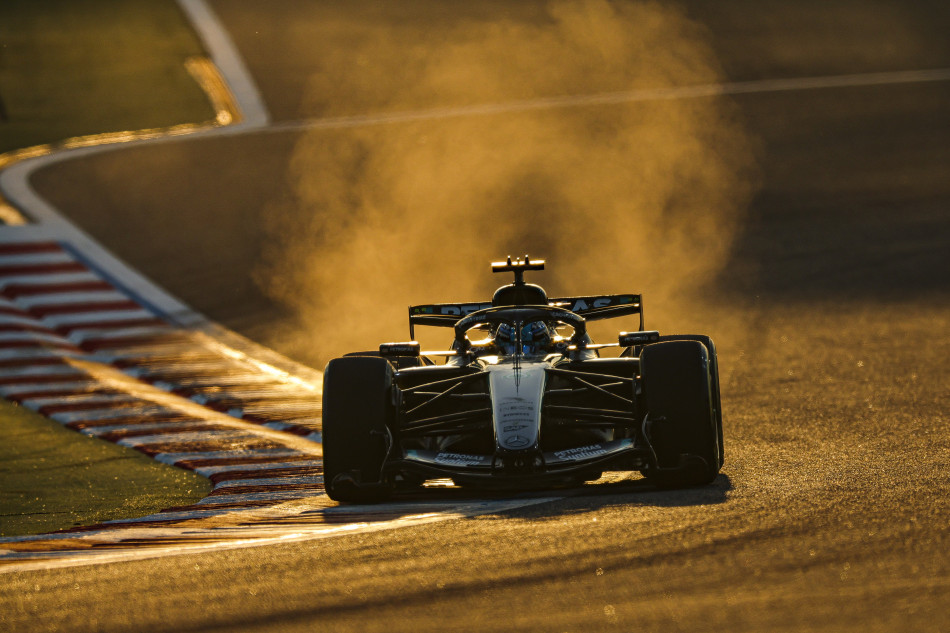
  • FIA orders extra starts, blue-light alerts for Mercedes W17

    FIA orders extra starts, blue-light alerts for Mercedes W17

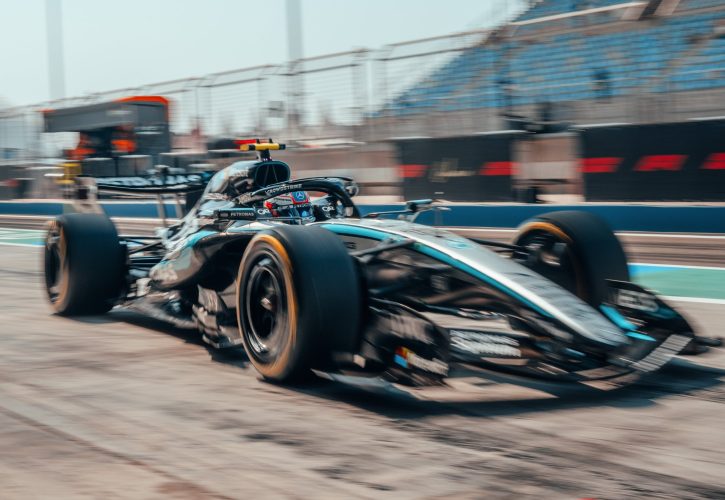
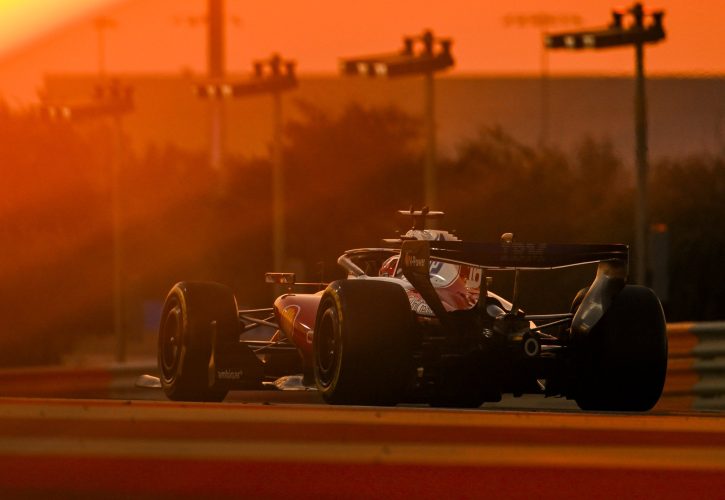
    Mercedes has acknowledged a growing problem with race starts on its new W17 under the 2026 regulation changes, with George Russell warning the team was “stumbling” and saying two of his practice starts were “worse than my worst-ever start in Formula 1.”
    Russell said poor starts in Bahrain had cost positions, even causing him to spin his tires and be overtaken by teammate Lewis Hamilton before Turn 1, and he warned that fixing launches was the “tallest hurdle” the team must clear to avoid losing races.
    The issue prompted the FIA to organize extra practice starts during the Bahrain weekend and introduce blue-light warnings to improve safety around launches.

    More
  • F1 Teams Adapt to Sustainable Fuel and Power Unit Changes

    F1 Teams Adapt to Sustainable Fuel and Power Unit Changes

    The three-day final pre-season test at the Bahrain International Circuit was teams’ last intensive on-track assessment before the season opener in Melbourne. Run under a new technical rule set — including major changes to chassis, aerodynamics and power units plus the introduction of sustainable fuels — the test imposed a steep learning curve across the F1 paddock. Mercedes, McLaren, Ferrari and Red Bull arrived with significant updates and much of the running focused on systems integration: revised hybrid energy harvesting and deployment, new software and cooling maps, reliability work and race-management procedures.

    On-track sessions ran daily from 07:00–16:00 local time. Early indicators showed the front-running teams operating in a similar performance window, but lap times were considered deceptive because squads used different fuel loads, tire compounds and bespoke run programmes. Midfield teams concentrated on extracting gains from fresh upgrades while adapting to the broader technical changes.

    Live paddock coverage accompanied the running: PlanetF1 provided session-by-session updates and flagged that fans could stream all laps (some reports suggested using a VPN such as ExpressVPN to follow the feeds), while F1i and other outlets published curated photo galleries. A number of outlets used inconsistent day labels in their pictorial recaps, sometimes describing sessions as “penultimate.” Teams balanced aggressive data collection with deliberate concealment of detailed setup and outright-pace information — keeping ballast, setups and full programmes under wraps and leaving open the possibility of late low-fuel runs. Testing concluded after the three-day session; squads will return to base to analyze the collected data and finalize preparations ahead of the Australian Grand Prix in Melbourne.

    More
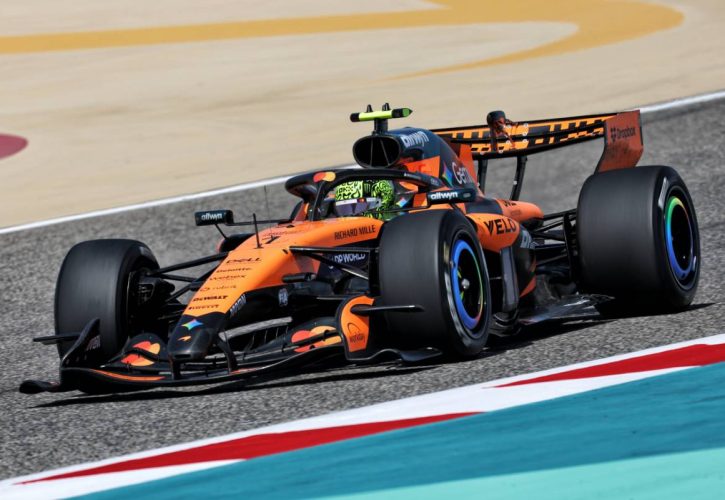
  • Norris Leads Bahrain Test but McLaren Race Pace Trails Rivals

    Norris Leads Bahrain Test but McLaren Race Pace Trails Rivals

    McLaren arrived at Bahrain pre-season testing with a stark contrast between single-lap pace and race-distance concerns. Lando Norris set the session benchmark with a 1:33.453 lap, edging George Russell by 0.006s and Max Verstappen by 0.131s, while teammate Oscar Piastri also showed strong one-lap speed. Reports varied on the tire compound used for Norris’s flyer (sources cited C3 and C4). Most teams, including McLaren, spent the latter part of the test on race simulations and systems checks rather than chasing outright lap times, and no driver improved on the fastest marks in the second half of the session.

    Despite the single-lap headline, McLaren’s long-run work was notably less convincing. Team feedback and testing programs, including extended race-distance stints, pointed to a missing technical or set-up characteristic compared with the 2025 car, a shortfall Norris said has given rivals an edge. Independent timing analysis of comparable simulations (runs by Kimi Antonelli, Lewis Hamilton, and Oscar Piastri) suggested McLaren may be roughly one second a lap slower in race pace than Mercedes and Ferrari. Those same windows also showed Red Bull and Max Verstappen looking strong. If that gap holds into the Australian season opener, McLaren risks starting as low as fourth on the grid, a scenario that could jeopardize its bid to retain both World Championship titles.

    The test also delivered early technical signals from other teams: Ferrari debuted a 180° rotating rear wing under the new active-aero rules (reports said it reverted to a standard position under braking) but largely stayed off track and returned late for standing-start practice. Reliability checks dominated the program, as Lewis Hamilton was limited to five laps by a chassis issue before returning to complete FIA systems checks and practice starts. One more round of Bahrain running remains before the Australian Grand Prix, giving McLaren another opportunity to close the observed race-pace gap.

    More
  • Aston Martin reliability woes in Bahrain; Alonso 4s off

    Aston Martin reliability woes in Bahrain; Alonso 4s off

    Aston Martin’s final preseason outing in Bahrain was repeatedly hamstrung by reliability problems that prompted on-track stoppages and cost the team valuable running. The week’s disruptions included Lance Stroll’s spin into the Turn 11 gravel — blamed on a loss of drive while downshifting — which brought the session’s first red flag and required a crane recovery that stopped running for about seven minutes.

    Later in the test Fernando Alonso’s car suffered a power-unit/engine issue and stopped on track, reported at the exit of Turn 4 during a race simulation, forcing another red-flag interruption and leaving Alonso unable to rejoin that stint.

    Those problems left Aston Martin with markedly reduced mileage and patchy programs. Alonso was limited to the stint that ended in the stoppage (most sources recording about 28 laps; one put his total at 34) and was down the order — recorded as 12th and roughly four seconds off the fastest test benchmark — while the team had already logged the fewest laps in the previous week’s Bahrain running. Team engineers attempted to recover running after the failures, but the interruptions, plus an earlier Stroll incident, underlined recurring pace shortfalls and reliability concerns for Aston Martin as teams wrapped up final preseason preparations.

    More
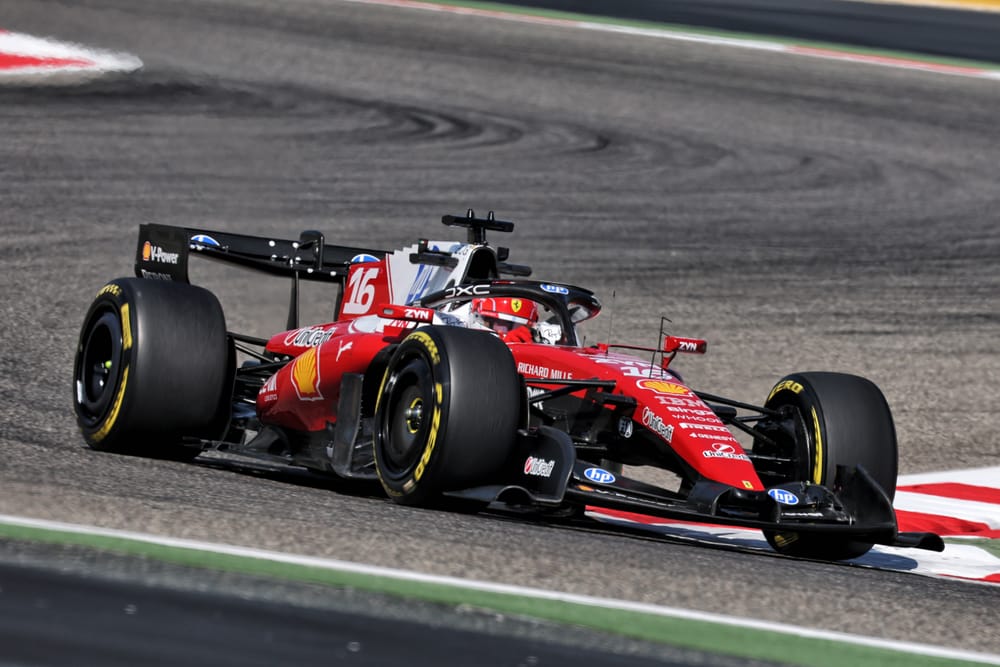
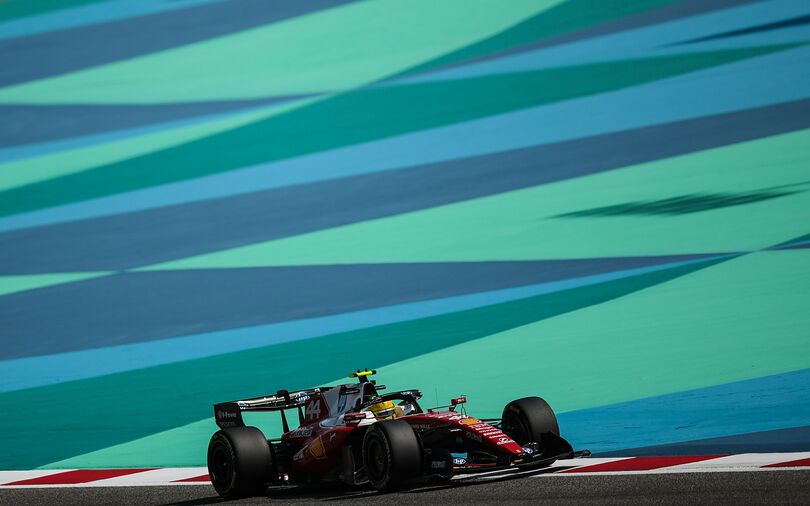
  • Ferrari probes SF-26 after active rear wing flipped

    Ferrari probes SF-26 after active rear wing flipped

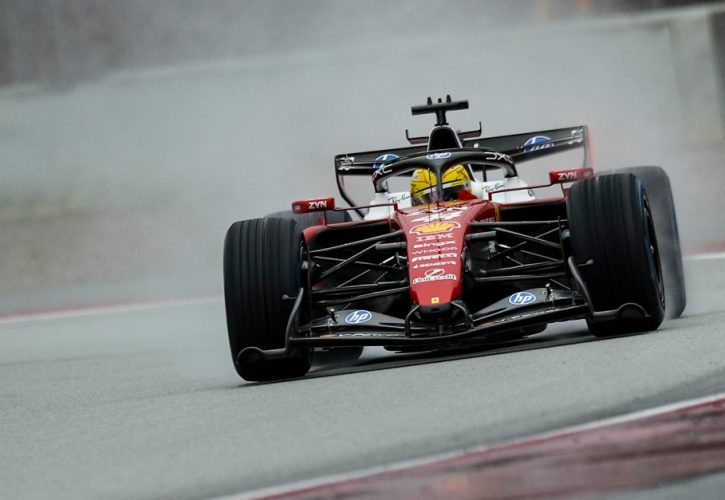
    Ferrari’s novel active rear wing — a rotating flap on the SF-26 designed to cut drag — dominated the opening days of the Bahrain pre-season test. Team observers saw the flap rotate fully upside‑down in straight mode during Lewis Hamilton’s brief outing, prompting Ferrari to investigate and adopt a cautious program: one SF‑26 was reported confined to the garage and another was limited to just five laps in a session. Hamilton ran the SF‑26 only briefly, spent much of the morning in the garage, completed five laps in one outing and later returned for a standing‑start exercise.

    On-track timings were tight. Lando Norris set the fastest lap of the test with a 1:33.453 on the C4 tire, edging George Russell’s 1:33.459 by 0.006s; Russell had earlier topped a session with the 1:33.459 on C3 rubber. Oscar Piastri was within 0.01s of Russell, Charles Leclerc posted a 1:33.739 on prototype Pirelli rubber, and Max Verstappen posted a 1:33.584 after more than 50 laps. Mileage leaders included Russell, who was reported to have completed roughly 76-77 laps, while several rookies and backmarkers logged more limited programs (for example, Isack Hadjar completed 66 laps overall).

    Reliability and restricted mileage affected several teams. Aston Martin suffered a power-unit issue that limited Fernando Alonso to about 28 laps and left the team with one of the lower daily totals (around 54 laps reported), while Lance Stroll’s spin brought out a red flag. Cadillac-run entries struggled for consistent track time. Reports about individual drivers’ lap counts varied: some logs showed Sergio Pérez at about 24 laps on one day, while Valtteri Bottas was variously reported as having only two installation laps in one session and higher totals in others. Red Bull also detected a pressure problem at times that curtailed running. Programs were further constrained late in the day by FIA-mandated practice-start checks, leaving teams to balance useful mileage with ongoing technical investigations ahead of the season opener.

    More
  • F1 Commission sends refinements to WMSC; Bahrain checks

    F1 Commission sends refinements to WMSC; Bahrain checks

    The F1 Commission agreed a set of targeted refinements to send to the World Motor Sport Council for approval, and the FIA said it will not make immediate, sweeping changes to the 2026 regulations. The FIA pledged further evaluation rather than wholesale revisions and will run additional energy-management checks across three days at the second pre-season test in Bahrain, examine proposals to reduce any extra risk at standing starts, and evaluate potential updates to race systems and on-car management there.

    Drivers and teams warned the 2026 overhaul could worsen overtaking, drivability and energy management rather than improve racing. Audi’s Gabriel Bortoleto said following another car “doesn’t look great.” Haas’s Esteban Ocon warned the cars appear to lose front load and that, so far, it looks difficult to pass. Max Verstappen dismissed some concerns as “a lot of nothing.”

    Lewis Hamilton amplified technical concerns about drivability and energy recovery, saying teams cannot recover sufficient battery power under the revised hybrid rules and that drivers are being forced to rev very high and drop into first and second gears to regenerate energy. He warned high revs and large gaps between gear ratios raise the risk of instability when a car is loaded mid-corner and can cause sudden snaps, and cited “about 600 meters of lift‑and‑coast at Barcelona” appearing in qualifying. Hamilton also argued the hybrid system now supplies nearly half of the car’s power, making energy deployment and management central to on-track performance.

    Teams, power-unit manufacturers and FOM pledged to work through outstanding technical issues before the season opener in Melbourne. The FIA and many teams also highlighted positive elements of the 2026 cars — reduced weight, smaller dimensions, improved ride quality and stronger initial acceleration — while warning that premature or large-scale regulatory changes could increase instability and that any refinements remain subject to formal approval procedures.

    More
  • Ferrari unveils exhaust flap on SF-26 to boost downforce

    Ferrari unveils exhaust flap on SF-26 to boost downforce

    Ferrari unveiled a novel exhaust-mounted flap on the SF-26 during final pre-season testing in Bahrain. The device, variously described in paddock reports as a full-width flap, a small “flick-up” wing or a miniature beam wing, sits directly behind the tailpipe and around the rear-wing pylons in an area of bodywork that is usually restricted. Ferrari said the flap redirects hot exhaust upward to boost rear-wing efficiency and acts as an extension of an enlarged diffuser to raise rear downforce; the team stressed it interacts with diffuser sub-structures and replaces earlier small winglets, stopping short of calling the solution a blown diffuser. The car also displayed a smaller-than-average exhaust tailpipe with a metal upper section and a visible temperature strip.

    The flap required and received special FIA permission because of its proximity to the rear axle line and because it exploits allowable volumes in the 2026 regulations around the twin rear-wing pillar and tail-section box regions. Ferrari kept the development hidden until Charles Leclerc put the car on track, and Motorsport Italia called the solution “unprecedented.” Rivals immediately noted the concept would likely demand a complete rear-end redesign to replicate — McLaren’s Andrea Stella was reported to have inspected the component at length — and teams said the small performance edge it might provide could persist for months as others chase packaging changes. Several outlets said the late timing of Ferrari’s reveal and the diffuser-extension packaging would make rapid copying ahead of the Australian Grand Prix difficult, though teams with the necessary internal volume could eventually adopt a similar idea.

    Ferrari linked the flap-and-diffuser package to its decision to run a smaller turbo this season to help race starts and continued work on engine and gearbox compatibility and hybrid recharge behavior in first gear during the Bahrain sessions. On-track times gave context but left questions: Charles Leclerc posted the third-quickest time in testing while both Leclerc and Lewis Hamilton trailed Max Verstappen and Red Bull on energy-recovery metrics, underscoring lingering hybrid-performance differences. If the exhaust-mounted flap proves effective in races, Ferrari could gain an early aerodynamic advantage and influence the shape of the F1 2026 aerodynamic battleground before the season begins.

    More
  • Pirelli to Test Wet Tires in Abrasive Bahrain for 2026

    Pirelli to Test Wet Tires in Abrasive Bahrain for 2026

    Pirelli will run an unusual wet-weather tire test at the Bahrain International Circuit from February 28 to March 1 to evaluate and improve its full-wet and intermediate compounds for 2026 development. The program is a response to driver complaints that the current full-wet has been difficult or effectively unusable. Pirelli’s stated objective is to shorten the crossover time between full-wet and intermediate so the full-wet becomes a viable strategic option rather than a last resort.

    The two-day test will use McLaren and Mercedes mule cars, fitted with 2026-like prototype tires matched to the revised 18-inch-wheel F1 cars. Pirelli will evaluate both intermediate and full-wet compounds and adjust constructions and compounds to suit new car dynamics. This will include narrower front and rear tires, higher acceleration forces, and sudden vertical loads when straight-line mode deactivates.

    Bahrain was chosen because its abrasive, high-severity surface will place greater stress on wet rubber and is expected to reveal wear modes and weaknesses that do not appear on European tracks with a permanent sprinkler system. The environment should produce tougher, more representative data for development and race strategy. Pirelli plans three wet sessions in 2026 (Bahrain, Fiorano, and either Paul Ricard or Magny-Cours), and noted that sweeping regulation changes have left it with limited usable data from current cars.

    Wetting the circuit presents a logistical challenge, as sources differ on the method. Some say Bahrain lacks conventional sprinkler tanks and organizers coordinating an alternative full-track wetting system. Other reports suggest that the circuit can be uniformly wet using a full-track sprinkler system, and Pirelli says consistent water levels are essential because inconsistent wetting could skew results. Pirelli is limited to a maximum of 40 testing days, which increases the importance of each wet session. The Bahrain data will directly influence 2026 tire specifications, including whether to retain separate intermediate and full-wet compounds or consolidate to a single “super intermediate.” Pirelli is proceeding with targeted testing even as its future supply position remains under scrutiny.

    More