NXTbets Inc

  • McLaren demands grid-time and battery fixes before Melbourne

    McLaren demands grid-time and battery fixes before Melbourne

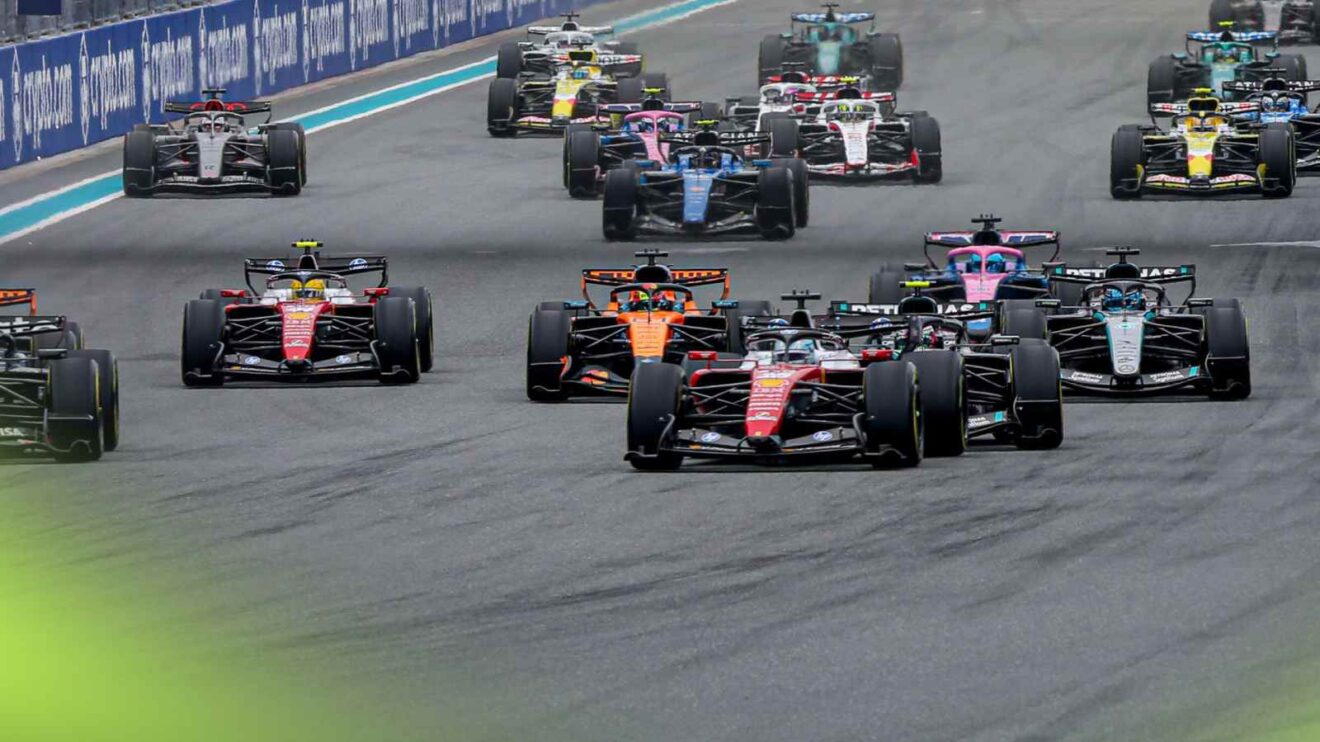
    McLaren urged urgent safety changes to 2026 Formula 1 race-start procedures after testing showed the new, high-electric-output power units have complicated starts and increased collision risk. Team principal Andrea Stella called the refinements “imperative,” warning that the near-50% electric output of the 2026 power units, combined with the removal of the MGU-H and DRS, has created conditions that can leave power units unprepared on the grid, foster widespread lift-and-coast behavior and produce large closing-speed differentials. Stella proposed straightforward fixes — allowing more time on the grid and adjusting battery power allocation — and said those measures should be adopted before the season opener in Melbourne; he expects the issues to be tabled urgently at the next F1 Commission meeting. Stella also referenced the severity of past high-closing-speed incidents, citing Mark Webber’s 2010 Valencia accident and Riccardo Patrese’s 1992 Estoril crash to underline the stakes.

    The technical problem is that, with the MGU-H removed and much greater electric output, teams must keep the V6 turbo spooled for around 10 seconds to avoid lag and battery overcharging. Drivers were observed holding the throttle for more than 10 seconds during shakedowns and testing, and mistiming the spooling can trigger anti-stall interventions or slow getaways. The final day of Bahrain pre-season testing ended chaotically: a scheduled FIA practice start went badly wrong, Lewis Hamilton’s Ferrari stalled with under 10 minutes remaining, only three of seven cars launched cleanly on a second attempt (Isack Hadjar, Kimi Antonelli and Sergio Perez), Oscar Piastri hesitated, and Franco Colapinto nearly crashed after an anti-stall issue. Teams attributed the instability to the new technical package; paddock analysis suggested roughly one in 20 starts are being fumbled, and drivers such as Gabriel Bortoleto described the routine as “complicated,” saying he sometimes “loses count” and calling it “quite a mess.”

    The testing episode has intensified pressure on the FIA, teams and drivers to find mitigations before race starts under the new regulations. McLaren warned that drivers starting at the back may not be guaranteed the full 10 seconds needed to spool the turbo, a concern echoed by Valtteri Bottas, who said a likely penalty putting him at the back for Melbourne made him doubt there would be enough time to spool properly. Any change to the start sequence will have to balance safety, operational practicality and competitive fairness: a comparable proposal was previously rejected after Ferrari, and Ferrari principal Fred Vasseur opposed it on the grounds that Ferrari’s power-unit development favored a shorter start sequence. The start-procedure proposal will be revisited in fresh talks as stakeholders seek urgent agreement before the season begins.

    More
  • Bahrain tests muddle F1 pecking order despite Ferrari pace

    Bahrain tests muddle F1 pecking order despite Ferrari pace

    Uncertainty remains over the true F1 pecking order after the three-day Bahrain pre-season test. Ferrari showed impressive long-run pace, heavy mileage and an organized, reliable program — Charles Leclerc praised the team’s runs — and Alpine’s Steve Nielsen suggested Ferrari could be “the class of the field.” At the same time, paddock figures and rival drivers cautioned that several teams appeared to be masking their true speed: some said Mercedes had been hiding performance, others, including Max Verstappen, accused sandbagging, while Red Bull technical director Pierre Wache warned his team were “not the benchmark for sure.” These reactions meant visible timesheets and runs told conflicting stories rather than a definitive hierarchy.

    There were concrete signs on both sides. Mercedes topped parts of running, with Andrea Kimi Antonelli leading day three and the team posting a fastest lap and a 1-2 in week one. McLaren showed strong reliability — Oscar Piastri set a Bahrain test record with 161 laps and Andrea Stella said the team completed sign-off checks. Ferrari logged heavy mileage and posted top times on day two; the SF-26’s reliability and Leclerc’s clean long runs fueled the impression the team may have conserved qualifying performance during testing. Observers also flagged Red Bull’s new power-unit efficiency and suggested some performance might still be held in reserve.

    Team principals and technical directors repeatedly warned that a three-day test is a poor one-off gauge of season order because teams can mask pace with differing programs, fuel loads, engine modes, energy deployment, lift-and-coast driving and electrical settings. Stella, Leclerc and Wache emphasized that comparisons of single laps are unreliable. A clearer running order will likely emerge only once cars run in competitive trim under weekend procedures — after the second Bahrain test, scheduled for Feb 18–20, and the season-opening Australian Grand Prix in Melbourne and its early-March qualifying session.

    More
  • 2026 F1 cars debut at Bahrain test; Cadillac joins field

    2026 F1 cars debut at Bahrain test; Cadillac joins field

    Pre‑season Formula 1 testing began at the Bahrain International Circuit, giving fans their first public look at the new 2026 cars and power units and replacing the strictly private shakedowns that preceded it. The Sakhir running brought every team on track together for the first time this year; Williams had missed the earlier Barcelona shakedown.

    Organizers scheduled three days of running, each made up of two four‑hour sessions, with morning action from 7am GMT and the planned daily program finishing by 4pm. After two days of running, teams concentrated on systems checks, high mileage and data gathering rather than outright lap performance, using short and long programs to validate components, refine setups and check reliability.

    Engineers practiced pit stops, collected telemetry and made iterative setup changes while addressing intermittent mechanical glitches, with observers expecting more performance‑focused runs by the afternoon of Day 3. On Day 2 McLaren’s Lando Norris posted the fastest lap among 18 runners; Red Bull showed competitive pace in early running, and Aston Martin planned to put Fernando Alonso into the AMR26 for his first on‑track running during the test.

    Media on site provided live reporting and extensive photo coverage, documenting established drivers such as Max Verstappen, Lewis Hamilton, Charles Leclerc and George Russell alongside younger drivers Andrea Kimi Antonelli, Gabriel Bortoleto and Arvid Lindblad. Photographs also showed Sergio Pérez in Cadillac’s entry — Cadillac is the new entrant joining the 11 teams at Sakhir — and coverage framed the tests as a pivotal moment for teams to validate systems and gather baseline data ahead of the season.

    More
  • Hamilton: Ferrari SF-26 'Slower Than GP2' in Bahrain

    Hamilton: Ferrari SF-26 ‘Slower Than GP2’ in Bahrain

    Lewis Hamilton sharply criticized the pace, drivability, and technical rules of Formula 1’s 2026 cars after the opening morning of official pre‑season testing in Bahrain. Driving Ferrari’s SF‑26, he called the new package “slower than GP2” and described the engine and energy‑management systems as “ridiculously complex.” He said the car felt “shorter, lighter” and “like rallying,” warned that adaptive algorithms that learn a driver’s style could be disrupted by incidents such as lock‑ups, and cautioned that the added complexity risks confusing fans.

    The criticism centered on the radical shift in the 2026 power‑unit formula, roughly a 50/50 split of power between the internal‑combustion engine and electrical systems. The change has left many cars energy‑starved and forced teams to prioritize energy recovery. That has produced unconventional tactics in testing and qualifying, including deliberate backing off on straights, running lower gears to harvest battery, and long lift‑and‑coast stretches reported as roughly 600 meters. Hamilton nonetheless said basic energy management had felt “pretty straightforward” so far, while conceding that race trim could change the picture.

    He qualified his remarks by noting Bahrain’s gusty, dusty, and hotter conditions compared with the Barcelona shakedown, contradicting earlier positive comments that the 2026 cars were “more fun” after Barcelona. Early in testing, he ran wide several times, spun in the morning, and finished roughly one second behind session leader Max Verstappen. He stressed it was still too early to judge the package because teams have not yet optimized tires, aero, ride height, or mechanical balance and are “all in the same boat” as they learn the new systems.

    More
  • Audi Debuts Narrow Vertical Sidepod on B-Spec R26 in Bahrain

    Audi Debuts Narrow Vertical Sidepod on B-Spec R26 in Bahrain

    Audi brought a B-spec R26 to the Bahrain pre-season tests, carrying a markedly revised aerodynamic approach. The changes centered on a radically narrow, inverted forward-stretched vertical sidepod inlet and an almost two-tier bodywork arrangement that integrates the upper side-impact spar into the main body while allowing its tip to protrude. Surface-shaping changes include a pelican-style G-line (a pronounced surface crease to help guide airflow), a gentler gulley on the upper sidepod, a channel on the top surface, and a ramped undercut that directs flow toward the floor edges. Those elements are intended to shorten the pathway to the diffuser, increase downwash, and deliver cleaner, higher-energy airflow to the underfloor and rear. Observers compared the concept to Mercedes’ 2022 “zeropod” experiment, although Audi retained conventional sidepod bodywork rather than adopting a full zeropod layout.

    Audi ran an early-January Barcelona shakedown using a more conventional inwashing sidepod layout, but that outing was limited to 240 laps by a technical issue. The team completed a later closed test in January and arrived in Bahrain with the B-spec R26. Gabriel Bortoleto ran the revamped car on Wednesday morning at Sakhir, and Nico Hülkenberg drove the afternoon session. The R26 carried large Kiel probe rakes (arrays of flow sensors) and wrapped sensors to correlate on-track airflow with CFD and wind-tunnel work. Audi also introduced hardware changes, including a new twin-pod front-wing activation system and a revised rear-wing activation layout designed to exploit the sport’s relaxed deployment rules.

    Team management says the updates are part of an iterative aero development path rather than a wholesale concept switch. However, commentators called the package a clear technical wildcard for the start of the season. Audi engineers are using the Bahrain running to evaluate cooling, reliability, and unconventional flow management under full-test conditions. Factory development will continue, with a second three-day shakedown in Bahrain scheduled for February 18–20 and further parts planned ahead of the Australian season opener on March 8.

    More
  • Honda Deal Triggers Aston Martin Reshuffle, Cowell Reassigned

    Honda Deal Triggers Aston Martin Reshuffle, Cowell Reassigned

    Aston Martin reassigned Andy Cowell from the Group CEO and team-principal roles he held through 2025 to chief strategy officer ahead of the 2026 season. Technical chief Adrian Newey assumed the team principal role late in 2025. The move prompted questions in the paddock about whether a designer is the right fit for team leadership. As part of the wider reorganization, Aston Martin also reassigned Mike Krack to a trackside performance role.

    The personnel changes were closely tied to Aston Martin’s switch from Mercedes-supplied engines to a bespoke Honda power unit, a technical shift sources say reshaped Cowell’s responsibilities. The team refocused him on optimizing technical partnerships with Honda, Aramco, and Valvoline. As a result, he attended Honda’s power-unit launch in Tokyo and Aston Martin’s 2026 car unveiling.

    Cowell joined Aston Martin in 2024 after two decades at Mercedes High-Performance Powertrains and a spell out of the sport after 2020. Aston Martin insiders and PlanetF1 sources described relations as strained as Cowell’s remit narrowed after the engine homologation process, and some reports characterized the split as acrimonious. Reports differ on Cowell’s departure timeline, with several outlets saying he could leave in June or before the summer break, while others expect him to remain on Aston Martin’s books through year-end.

    More
  • Alonso Warns 2026 F1 Energy Rules will Hurt Driving

    Alonso Warns 2026 F1 Energy Rules will Hurt Driving

    Fernando Alonso warned that the 2026 Formula 1 regulations, with increased electrification, strict energy-management rules, and tighter technical limits, risk reducing driver control and even taking some of the joy out of driving. Speaking after his first day in the Aston Martin AMR26 and again at the team launch in Saudi Arabia, the two-time world champion said the rules push electrification toward a near 50/50 split between electric and combustion power, making harvesting and electrical deployment central to race strategy. It also forces lifting and coasting, even during qualifying, as drivers may need to recharge the hybrid battery mid-session.

    Alonso singled out specific technical constraints he called “over-restrictive,” including ramp-down rates, activation zones for overtake mode, and a rule requiring maximum energy deployment for one second at corner exits. He warned that extensive team simulation work under the new package left little room for individual talent to alter race outcomes, saying teams “had most answers by Thursday and there were few surprises by Sunday.” In addition, Also warned that the changes had reduced some of the “adrenaline” that came with lighter, louder cars of the late 1990s and early 2000s. He described the heightened energy-management requirements as “a bit annoying,” but also said teams and drivers would adapt, pointing to series such as IndyCar and the World Endurance Championship.

    Reactions in the paddock were mixed: Lando Norris and Toto Wolff suggested smarter drivers could still gain an edge under the new rules, while Aston Martin designer Adrian Newey and driver Lance Stroll were more skeptical or indifferent about how racing style would change. Mercedes’ George Russell said he did not find the situation unnatural, and Haas rookie Oliver Bearman called it “a bit sad.” Aston Martin has pursued radical new design concepts for pre-season testing, and there were reported concerns about Honda’s power unit after a Barcelona shakedown. Alonso’s views carried extra weight given he is 44, has started a record 425 Grands Prix, and has an Aston Martin contract due to expire at the end of the season.

    More
  • Cadillac Appoints Marc Hynes as Chief Racing Officer

    Cadillac Appoints Marc Hynes as Chief Racing Officer

    Cadillac has appointed Marc Hynes as Chief Racing Officer of its new Cadillac F1 team. He will lead driver development and align the squad’s sporting and technical operations as Cadillac prepares for its 2026 debut. Hynes’s remit includes aligning the driver roster with engineering, streamlining sporting and technical procedures, and shaping team culture and performance to strengthen collaboration between technical and sporting departments.

    Hynes brings both racing and management pedigree. He was the 1999 British F3 champion and previously led driver development at the Marussia/Manor operation. He managed Project Forty Four and worked closely with Lewis Hamilton’s management from 2015–2021, briefly reuniting with Hamilton in 2024 before separating again ahead of his move to Cadillac. Team principal Graeme Lowdon, a former Marussia/Virgin colleague who now co-owns Equals Management with Hynes, described him as a major asset for the new operation.

    Operationally, Hynes will work alongside Lowdon and directly manage race drivers Valtteri Bottas and Sergio Perez, while overseeing reserve driver Zhou Guanyu and test driver Colton Herta. Herta is competing in F2 in 2026 and seeking promotion to F1. Cadillac says Hynes will focus on driving peak performance across the driver program, where he intends to create “clarity, alignment, and discipline” so drivers and engineers can perform at their best as the team establishes its driver pathway and on-track program.

    More
  • Antonelli Unhurt in Single-Car Crash, Fit for Bahrain

    Antonelli Unhurt in Single-Car Crash, Fit for Bahrain

    Kimi Antonelli walked away unhurt after a crash near his home in Serravalle, San Marino, on Saturday, Mercedes confirmed. The 19-year-old called the police to the scene after his privately owned Mercedes AMG GT 63 PRO 4MATIC+ struck a guardrail. Local officers attended, and Mercedes said Antonelli was the only person involved. The limited-edition “Motorsport Collectors Edition” AMG GT 63, one of 200 examples with hand-painted Petronas livery and a 4.0-liter twin-turbo V8, was damaged in the incident.

    The Brackley-based Formula 1 squad described the incident as an isolated road accident and said it had no impact on the driver’s fitness ahead of the competitive build-up to the new season.

    He is scheduled to drive the W17 in multiple sessions at the Bahrain test, including the opening day’s afternoon slot, alternating with teammate George Russell. The crash comes as Antonelli prepares for his second Formula 1 season with Mercedes, after recording three podiums in his rookie campaign, and taking his first pole in the Miami sprint. The Italian went on to finish seventh in the drivers’ championship, and Mercedes entered the Bahrain test among the title favorites as teams fine-tune cars ahead of the season-opening races.

    More