NXTbets Inc

  • Boost Button Replaces DRS, Makes Overtakes Energy-Driven

    Boost Button Replaces DRS, Makes Overtakes Energy-Driven

    A closed five-day shakedown in Barcelona gave teams their first practical look at the 2026 regulation changes. Lando Norris drove McLaren’s MCL40, describing a slimmer, lighter chassis with active aerodynamics and an approximately 50/50 electric–biofuel power split. Peak electrical output was reported at about 350 kW, and Norris warned that full battery deployment could lift straight-line speeds to roughly 380 kph but would likely drain the pack by the end of a long straight.

    On track, the cars produced stronger forward G‑forces and reduced cornering grip, which altered balance until drivers adjusted over a few laps. The new push-button Boost (Overtake) Mode replacing DRS makes overtaking dependent on finite battery reserves and recharge cycles rather than solely aerodynamic tow.

    Those changes carry clear strategic and tactical implications. Battery deployment limits, kilowatt caps, and defined timing windows will force split-second energy management that affects qualifying, overtaking, and race strategy. Norris warned this could increase on-track “chaos,” producing momentum swings, defensive uses of Boost, and what he called “yo‑yoing” overtakes followed by recovery laps. Mercedes sophomore Kimi Antonelli called it “chess at speed,” saying anticipating rivals and instant energy trade‑offs will become core racecraft. The Italian added that juniors who have adapted quickly to the new cars may cope sooner, though established drivers will adapt as well. Teams therefore face a steeper operational burden as drivers must manage on‑car systems in real time as well as wheel‑to‑wheel skills.

    Practically, teams will use pre‑season sessions to develop deployment and recharge strategies so performance during key qualifying laps and race maneuvers is not compromised. Bahrain testing and the season opener in Australia are the next critical checkpoints. Engineers and strategists will continue to refine timing windows, recharge profiles, and active‑aero responses as track data accumulates. The combination of greater electrical power, active aerodynamics, and system‑dependent overtaking means on‑car systems and strategy will play a larger role across the 2026 season, changing how races are planned and executed.

    More
  • Haas' Komatsu: Ocon and Team share Blame for 2025

    Haas’ Komatsu: Ocon and Team share Blame for 2025

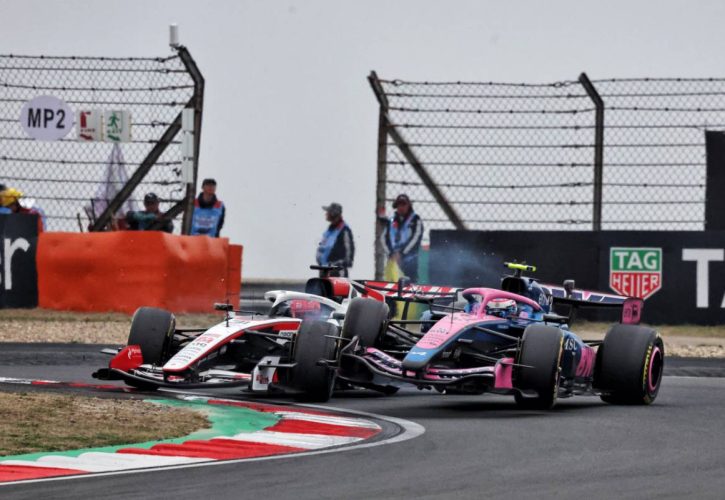
    Haas team principal Ayao Komatsu said the team “expected more” from Esteban Ocon after a difficult 2025 season, adding that “nobody’s satisfied” with the sporting result and describing responsibility as roughly “50/50” between driver and team. Ocon joined Haas for 2025 after Nico Hülkenberg moved to Sauber. Despite a previous Grand Prix win and additional podiums, he was narrowly outscored 38–41 and outqualified 11–17 (excluding technical issues) by rookie teammate Oliver Bearman. Komatsu highlighted issues Ocon raised, notably braking instability and inconsistent car behaviour that Bearman did not appear to suffer, and pointed to weekends such as Baku, where Ocon was “miles off” in qualifying, versus Abu Dhabi, where a poor Friday was followed by recovery to Q3 and a seventh-place finish, as evidence of inconsistency alongside underlying ability. He urged the team to speed up its engineering and set‑up processes so small faults do not compound across a race weekend, saying those technical and operational fixes are essential for Haas to unlock both drivers’ performances as it plans for 2026.

    Komatsu also acknowledged ongoing contract uncertainty and confirmed Ocon had been mentioned among names at risk heading into the 2026 silly season. He described “very good ongoing talks” over the winter that have improved Ocon’s understanding of how driver and team should work together and helped align expectations for a critical year in the driver’s F1 career. Haas says the situation is being actively managed and expects clearer on‑track performance and cohesion in 2026. Both performance and contract outcomes will likely determine Ocon’s immediate future and whether roster changes are required.

    More
  • Stroll Backs In-House AMR26 with Honda Power Swap

    Stroll Backs In-House AMR26 with Honda Power Swap

    Adrian Newey’s first Aston Martin design, the AMR26, completed a delayed on-track shakedown in Barcelona and immediately marked a clear technical departure for the team. Sky Sports F1 analyst Bernie Collins called the program a “mammoth undertaking,” noting Aston Martin’s move to an in-house gearbox and hydraulics and the switch to a Honda power unit. These steps were driven by significant investment from Lawrence Stroll that separates the car from the Mercedes-based drivetrains used previously. The late rollout limited track time, with only Fernando Alonso managing a full day of testing, leaving many performance questions unanswered ahead of the season opener.

    Technically, the AMR26 emphasizes undersurface-focused aerodynamics and unusually tight packaging. Observers pointed to a chamfered nose, a tapered front wing, aggressive rake, and a floor designed to generate the majority of downforce, plus numerous airflow vanes and a markedly larger airbox. PlanetF1’s Matt Somerfield highlighted the sidepod treatment and a cavernous gap beneath them that recalled past double-floor concepts. Newey described the car as a holistic package requiring close collaboration between aerodynamic and mechanical designers and said it contains “quite a few features that haven’t necessarily been done before.” He also warned that the AMR26 will be “very different” at the start of the season. Rival reaction combined curiosity and caution. Williams principal James Vowles labeled Newey’s suspension choices “very extreme,” joking that wishbones were placed “in places that I don’t think they should be,” while Mercedes driver George Russell called it the most standout design on the grid but stressed that striking looks must translate into lap-time performance. With unconventional rear-suspension packaging that appears to favor aerodynamic downforce or lower drag over traditional mechanical cornering, the car’s true competitiveness will be judged in Melbourne when full weekend running provides a clearer measurement under race conditions.

    More
  • Compression Theory Sparks Paddock Strain Before Melbourne

    Compression Theory Sparks Paddock Strain Before Melbourne

    A technical theory published earlier this month by Auto Motor und Sport (AMuS) generated a pre‑season controversy. It suggests that Mercedes, and separately Red Bull Powertrains, may have found a way to meet the FIA’s new 16.0:1 geometric compression cap in the garage while producing higher effective compression on track. AMuS reported Mercedes used 3D‑printed pistons to raise static compression to about 17:1. It also described a tiny one‑cubic‑centimeter pocket linked to the combustion chamber near the pre‑chamber spark plug that would stop expanding at operating temperature and thereby increase running compression; AMuS said Red Bull Powertrains had identified the same underlying principle but had not found a reliable implementation. Reported estimates of the on‑track gain varied by outlet, ranging from 10–13 hp up to 15–20 hp, depending on the publication. Translating these gains into time leads to a 0.2 – 0.3 second per lap advantage.

    The allegation is an unconfirmed technical theory, but it focused attention on Article C5.4.3, which currently measures compression “at ambient temperature.” It prompted rival manufacturers, led publicly by Ferrari, Audi, and Honda, to press the FIA and the Power Unit Advisory Committee (PUAC) to change measurement procedures so compliance would be checked with engines hot or via in‑use sensors. Teams discussed the issue at a late‑January technical experts meeting and then in subsequent PUAC sessions. Formally changing the written procedure would require support from four of the five engine manufacturers plus the FIA and Formula One Management.

    Red Bull’s position was viewed as pivotal to securing that supermajority, and sources indicated it may back closing the loophole to avoid leaving Mercedes with a pre‑season advantage. Mercedes team principal Toto Wolff publicly defended the work as legal and transparent, pointing to the team’s recent five‑day shakedown and apparent reliability as evidence of legitimacy.

    The FIA initially measured engines cold and declared them compliant, but Autosprint recently reported the governing body plans to retest all V6 power units under hot, running conditions starting at the Australian Grand Prix to verify compliance in race‑like conditions. With the March 1 homologation deadline approaching, rapid regulatory change before Melbourne looks difficult, so any substantive rewrite is likely to be deferred into 2027. The dispute centers on measurement methodology and enforcement rather than a new hardware ban, but it has raised political and sporting tensions in the paddock and risks overshadowing the start of the season.

    More
  • Horner Praises Ricciardo, Faults Red Bull Car

    Horner Praises Ricciardo, Faults Red Bull Car

    Former Red Bull team principal Christian Horner said Daniel Ricciardo could have been an F1 World Champion if Red Bull had produced a car that matched the Australian’s talent. He made the comments while preparing for a three‑stop speaking tour in Australia.

    Horner praised Ricciardo’s on and off‑track behaviour, arguing that machinery, not the driver, was the main reason Ricciardo never converted his early promise into a title. He said he will expand on the assessment during events in Melbourne, Sydney, and Perth later this month. He made similar remarks on The Christian O’Connell Show, contrasting Ricciardo’s peak pace with periods when Red Bull’s car was not the most competitive on the grid.

    Ricciardo’s career timeline was recalled. He debuted in F1 in 2011 as an HRT replacement, progressed via Toro Rosso, and was promoted to Red Bull’s senior team in 2014 to replace Mark Webber. In 2014, he won three races, added five more podiums, and finished third in the Drivers’ Championship (notably ahead of teammate Sebastian Vettel). He also recorded seven wins with Red Bull and eight in his career, with the best championship results of third in 2014 and 2016. He left the senior Red Bull team after the 2018 Azerbaijan clash, later raced for Renault and McLaren, then returned to the Red Bull family as a reserve in 2023. He was promoted to AlphaTauri after Nyck de Vries was dropped, and in 2024 was replaced by Liam Lawson with six races remaining. Ricciardo retired from F1 after the Singapore Grand Prix late in 2024.

    Horner’s comments were set against Red Bull’s later rise after switching to Honda power, when Max Verstappen and the team dominated the early 2020s and collected multiple World Championships. The remarks underline how car performance and team decisions can shape a driver’s record while highlighting Ricciardo’s enduring popularity and legacy in the sport.

    More
  • Hamilton Parts with Hynes Weeks Before 2026 Season

    Hamilton Parts with Hynes Weeks Before 2026 Season

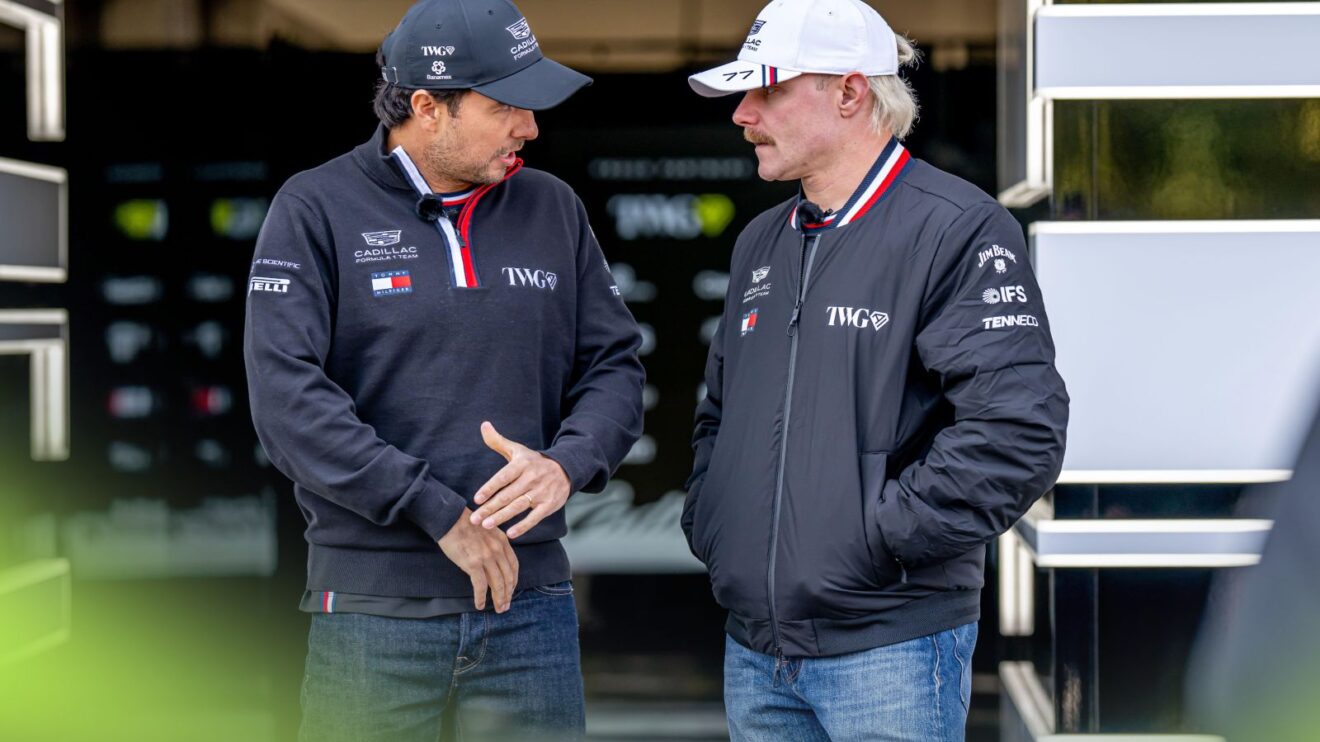
    Lewis Hamilton has split from long-time manager Marc Hynes weeks before the start of the 2026 F1 season. The split was described as mutual. The pair first worked together in 2015, paused the relationship in 2021 when Hynes left his role as chief executive of Hamilton’s Project 44, and reunited ahead of Hamilton’s move to Ferrari for 2025. Hynes is reportedly set to join the nascent Cadillac F1 team and continues to manage Zhou Guanyu, Cadillac’s 2026 reserve driver. Reports say he is expected to work with Cadillac team principal Graeme Lowdon on Zhou’s management. Hamilton has privately hinted at adjustments to his personal and team setup over the winter but has not publicly commented on Hynes’s departure.

    The change comes amid a reshuffle at Ferrari. The team moved Riccardo Adami to head Ferrari’s Academy and TPC programmes, Bryan Bozzi filled in at the recent Barcelona shakedown, and Cedric Michel‑Grosjean is expected to step up in the race operation. These staff moves, together with Hamilton’s split, alter his immediate support network ahead of the new campaign.

    Those personnel shifts sit alongside wider technical and competitive change across F1. Last season, Lando Norris won his maiden world championship by two points over Max Verstappen in Abu Dhabi. Teams are preparing technical updates for 2026, Williams confirmed a mixed pushrod–pullrod suspension layout. Adrian Newey said Aston Martin fell roughly four months behind rivals during AMR26 development. Together, these developments underline a period of transition as F1 enters the 2026 season.

    More
  • Verstappen Vows Title Push as Red Bull Debuts Power Unit

    Verstappen Vows Title Push as Red Bull Debuts Power Unit

    As Formula 1 moves into a new technical era in 2026, Max Verstappen has declared his intention to reclaim the drivers’ title. He narrowly lost the 2025 championship to Lando Norris by two points despite recording the most wins and pole positions that year. His record last season read eight victories and eight poles, but he never led the standings during the season. That close finish raises the stakes for 2026, where wholesale regulation changes have reset the pecking order, and early running will be closely examined. Red Bull faces particular scrutiny because it will race as an engine constructor for the first time after Honda’s exit, making the performance of Red Bull Powertrains’ power unit central to its prospects.

    Team leadership under Laurent Mekies opted not to prioritize 2026 development as early as some rivals, a timing decision that observers say could affect Red Bull’s early-season form. Former driver Jan Lammers suggested the team would be “very happy” simply to be among the top three or top six immediately, but questioned whether Verstappen would accept settling for anything short of first. Those comments underscore how engine performance and development timing have turned the campaign into a technical test for Red Bull and a make-or-break moment for Verstappen’s title bid.

    Mercedes emerged from the recent Barcelona running as an early favorite, and George Russell said he wants a direct, wheel-to-wheel championship showdown with Verstappen. Russell warned that Red Bull remains a major threat despite reported engine uncertainty and described the 2026 field as tightly matched. The Briton cited McLaren’s Lando Norris, Ferrari (with Lewis Hamilton posting strong shakedown times), and an improving Aston Martin now backed by Honda and influenced by Adrian Newey, alongside Fernando Alonso. He said he hopes the title battle becomes a multi-team dogfight decided “fair and square” on track. With the new regulations in place, early-season reliability and power-unit competitiveness are likely to determine how quickly contenders can mount serious challenges for the championship.

    More
  • Piastri Backs McLaren's Refined 'Papaya Rules' After Monza

    Piastri Backs McLaren’s Refined ‘Papaya Rules’ After Monza

    Oscar Piastri publicly backed McLaren’s calibrated approach to letting him and Lando Norris compete on equal terms, saying he wanted to avoid “causing some headaches for ourselves that we didn’t need.” Speaking at the 2026 Autosport Awards, Piastri pointed to the Italian Grand Prix in Monza as a concrete example, where the team asked him to let Norris through after a slow pitstop, and he strongly disagreed with that direction. He described the move to streamline McLaren’s racing principles as a “wise decision” and said he hoped it would stop carry-over distractions from the 2025 season. Piastri also said he expects his rivalry with Norris to “look a lot different” as they enter their fourth year together at McLaren.

    Team principal Andrea Stella confirmed the outfit had reviewed the internal “Papaya Rules” and would reaffirm and streamline them after additional discussions with both drivers. The principles are framed around fairness, integrity, and equal opportunity and will be refined rather than abolished, Stella said, intending to sharpen execution and reduce internal headaches. McLaren’s stated aim for 2026 is to preserve on-track wheel-to-wheel competition while better synchronizing driver behavior and team processes so intra-team rivalry produces wins instead of damaging conflict. The changes focus on adjusting behavioral rules and team processes, not on removing the competitive framework that underpinned strong performances in 2025.

    The review followed a season in which Piastri led much of 2025 but faded late, losing the points lead in Mexico City and ultimately finishing third behind Max Verstappen. Piastri had acknowledged that the Papaya Rules “caused headaches” during 2025 and said tweaks should retain their benefits while minimizing negative effects. McLaren framed the reset as central to internal governance and on-track strategy heading into 2026, seeking clearer role execution and messaging between its drivers. The team will try to balance clarity and fairness with competitive independence, making internal guidance sharper so that the Piastri–Norris rivalry remains healthy and productive.

    More
  • Barcelona Tests Recast F1 Performance Around Batteries

    Barcelona Tests Recast F1 Performance Around Batteries

    After last week’s Barcelona shakedown, teams and drivers concluded that the 2026 regulation changes have shifted the core performance challenge from purely mechanical grip and corner speed to intensive battery energy management. The new package keeps the 1.6-liter V6 turbo hybrid but removes one recovery motor, increases usable electrical energy roughly threefold into an effectively 4 MJ battery, and pairs that storage with an approximately 350 kW electric unit that supplies nearly half of the peak power. That architecture, combined with a ‘‘boost’’ deployment system and tighter state-of-charge rules, produced noticeably larger straight-line speed swings in Barcelona. Fully unleashed cars reached roughly 380 km/h, while any full depletion of the battery can cost a rival about 350 kW of electric assistance. Teams flagged that battery size is broadly unchanged physically, so hardware, control software, and packaging refinements will remain a focus before and during the season.

    Drivers reported that many traditional techniques still matter but now sit alongside new, energy-focused behaviors. Competitors, including George Russell, Lando Norris, Ollie Bearman, and Esteban Ocon, said late braking and carrying speed through a corner remain important. However, maximizing harvest requires earlier corner approaches, staying in lower gears more often, and much more precise throttle and rev control on exit. Russell described the cars as “more intuitive” than expected, while Haas principal Ayao Komatsu warned of counterintuitive trade-offs between energy recovery and drivability. Teams expect software and small hardware tweaks to continue; engineers suggested that subtle re-harvesting techniques and mastering micro-deployments could emerge as one of the clearest on-track differentiators.

    Those handling and energy-management demands are already reshaping race dynamics and strategy in ways drivers likened to ‘‘speed chess.’’ World champion Lando Norris warned of “more chaos in races,” predicting increased on-track position changes, yo-yoing, and defensive moves as drivers time-limited electric bursts and manage vulnerability when the battery runs low. Mercedes rookie Kimi Antonelli described the same dynamic as requiring two-steps-ahead thinking, and Norris sketched scenarios where a well-timed boost between two turns creates an overtake but leaves a car exposed later in the lap. With a further three-day pre-season running scheduled in Bahrain beginning February 11, teams will use that window to refine when and how to deploy stored energy. The learning curve for both engineering and cockpit technique is expected to continue through the 2026 season.

    More