NXTbets Inc

  • Team-order confusion shadows Racing Bulls' Austria breakthrough

    Team-order confusion shadows Racing Bulls’ Austria breakthrough

    Racing Bulls left the Austrian Grand Prix with a historic double points finish and a messy in-race team-order dispute, as Liam Lawson took ninth and Arvid Lindblad finished 10th at the Red Bull Ring. The result was Racing Bulls’ first double-points finish since the team’s Minardi-era debut in 1985, and its third consecutive double top-10 finish. The team moved to 44 constructors’ points and to within 13 points of fifth-placed Alpine. Lawson extended his points streak to four straight Formula 1 races, the first time a New Zealand driver had scored in four consecutive F1 races since Denny Hulme in 1973. He stayed 10th in the drivers’ standings on 30 points, with six points finishes in his seven completed races this season.

    The race was clouded by confusion over instructions from the pit wall. Lawson was told to manage overheated brakes, Lindblad was instructed to hold position, and Lindblad later passed Lawson after the first pit stops and stayed ahead through the middle stint. Lawson voiced frustration on the radio, after an early message had briefly raised concern that his car might be on fire before he later said the issue was brake smoke in the first stint that settled down after the opening laps. Racing Bulls later restored the order by pitting Lawson earlier in the second stops, which let him retake the position. A team spokesperson said the episode came from a misunderstanding about the hold-position instruction, and both drivers downplayed the incident after the race.

    Lawson said Racing Bulls had made a step in race pace and said the car settled after the opening laps. He was also cleared of any penalty after an alleged practice-start infringement, with stewards ruling that his actions were appropriate in the circumstances. Lawson said he had not expected an attack from Lindblad and suggested they might need to talk after the race. Lindblad said he was happy with the result, called the weekend a positive learning experience and said he had issues with hard tires and braking.

    More
  • Silverstone could expose 2026 F1 battery limits, Verstappen says

    Silverstone could expose 2026 F1 battery limits, Verstappen says

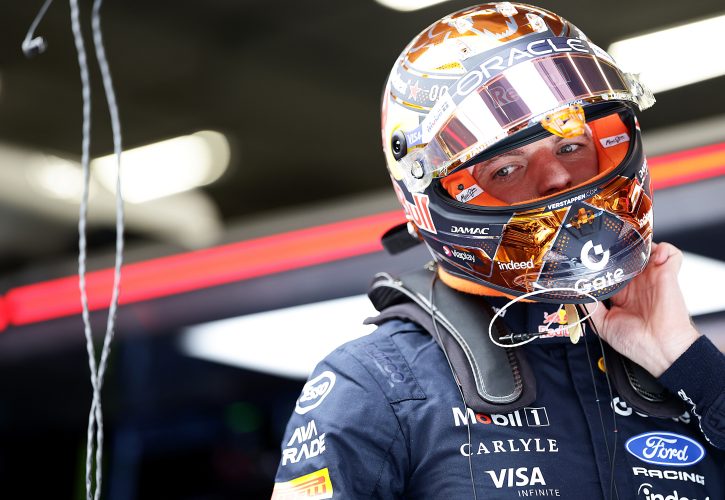
    Max Verstappen said a Red Bull simulator run at Silverstone made him laugh because Formula 1’s 2026 cars felt dramatically different on the British Grand Prix circuit’s fast, flowing layout, with drivers spending long stretches flat out and having barely any battery available around the lap. He said Silverstone could be the toughest track of the season so far for battery depletion because its straights and high-speed corners leave little chance to recharge, and he pointed to Copse and the Maggots-and-Becketts sequence as especially demanding sections that could slow the cars through the lap.

    Verstappen contrasted Silverstone with tracks such as Monaco and Austria, where heavier braking zones give drivers more opportunity to manage the car’s systems. He said the new regulations have improved the chassis compared with the stiff ground-effect cars, but the energy-management rules still make the cars feel unnatural. He also suggested the same issue could be even more pronounced at Spa-Francorchamps because of its longer straights, longer lap distance and faster corners.

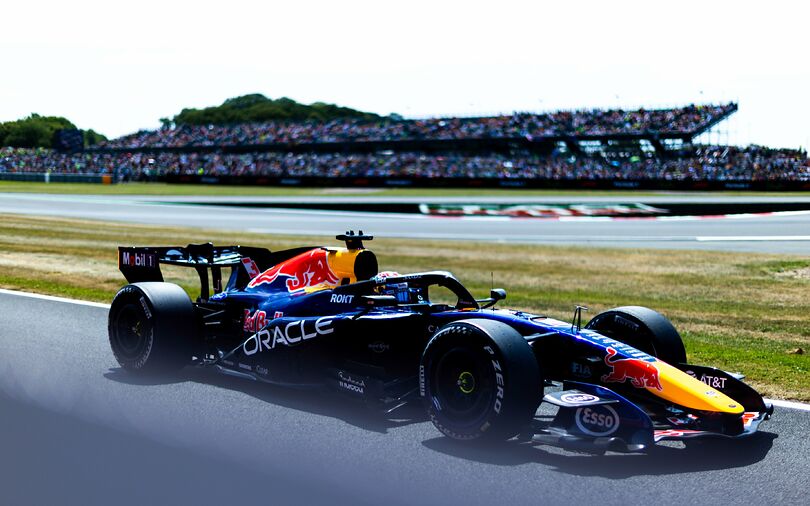
    His comments came after he finished second at the Austrian Grand Prix, his best result of the season, where Red Bull introduced a seven-part upgrade package. Verstappen said the updated car made him feel competitive for the first time this year, with the biggest gains in grip and corner speed, and that those improvements helped him challenge for the win before a rear-axle problem hurt his pace in the second half of the race. He said Red Bull still needs to understand what went wrong late in the race, and he added that he was pleased Formula 1 and the FIA had listened to his feedback, which helped shape regulation changes planned for 2027 and 2028.

    More
  • Wolff contrasts Mercedes restraint with Ferrari's upgrade push

    Wolff contrasts Mercedes restraint with Ferrari’s upgrade push

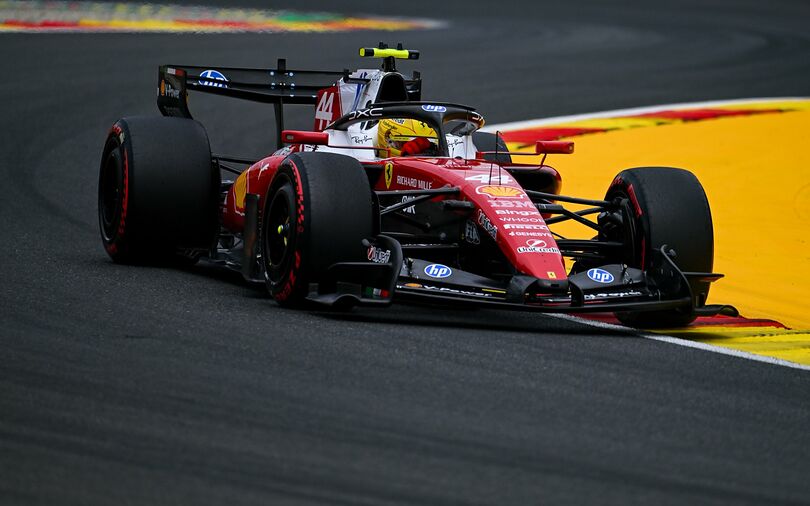
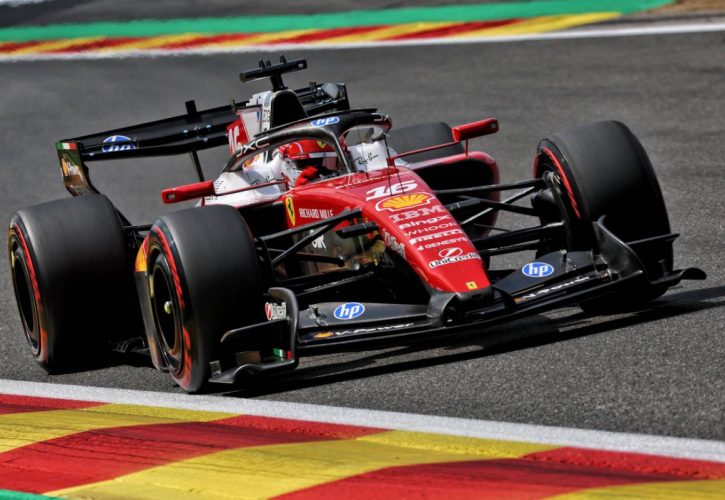
    Mercedes team principal Toto Wolff has questioned how Ferrari can keep loading major upgrades onto its 2026 Formula 1 car while staying under the sport’s $215 million cost cap, calling the team’s development pace “limitless” and saying Ferrari may soon run out of budget room after “throwing things at their car.” Wolff’s criticism came after Ferrari added another update package at the Austrian Grand Prix, where it also made its first ADUO-influenced engine change. He pointed to Ferrari’s repeated revisions to the SF-26 since the April break, including aerodynamic updates in Miami and Barcelona, a new engine specification, revised front wing elements and the unusual rear-wing package nicknamed the “Macarena wing.” Ferrari’s development push has helped it close the gap to Mercedes, and it has outperformed Mercedes at Barcelona.

    The dispute has grown as Formula 1 teams face tighter cost controls intended to limit spending. Rival teams have become increasingly frustrated by the perception that Ferrari is committing unusual resources to steady performance gains, and Wolff remains the most vocal critic. He suggested Ferrari could slow its pace later in the season, while noting that Ferrari and Audi have moved quickly to use the FIA’s Additional Development and Upgrade Opportunities system to improve their engines.

    Wolff contrasted Ferrari’s approach with Mercedes’ more cautious spending, saying Mercedes has held back parts it already has ready so it can deploy upgrades strategically and has no immediate engine upgrades planned. The comments came after Mercedes won in Austria, where George Russell took his first victory since the season opener and held off Max Verstappen and rookie Andrea Kimi Antonelli, who finished third. Ferrari finished fifth and eighth at the Red Bull Ring, and Formula 1 CEO Stefano Domenicali told Wolff the battle made for good television.

    More
  • Ferrari blames Austrian GP struggle on pace, not strategy

    Ferrari blames Austrian GP struggle on pace, not strategy

    Ferrari’s Austrian Grand Prix left the team arguing that its bigger problem was pace, not strategy. Team principal Fred Vasseur said Ferrari’s race was lost earlier when the cars were pushed too hard and began to overheat, while the team struggled to match Mercedes and Max Verstappen. Ferrari had started second and third with Charles Leclerc and Lewis Hamilton, but finished eighth and fifth after its pace fell away. The team was the only top-four outfit to commit to three pit stops, and its straight-line speed was also compromised.

    Hamilton said he had already warned Ferrari about tire management, strategy and straight-line speed at the Red Bull Ring. He said the car still lacked outright pace, estimating Ferrari was about two to three tenths off the front-runners. Vasseur said the team had taken strategic risks to try to make up for being slower, and Leclerc backed that view, saying no strategy would have looked good without stronger underlying pace. Hamilton’s hard-tire stint after the virtual safety car did not deliver the progress Ferrari expected, and he later used a different engine mode to help control temperatures.

    The result contrasted with Ferrari’s upbeat qualifying, when Leclerc took second and Hamilton third behind Mercedes’ George Russell, whose pole came after Max Verstappen’s crash triggered yellow flags. Vasseur said Ferrari remained in the fight and could still challenge if it executed properly, but he also said the underperforming upgrade package had not met expectations. That has increased pressure on the team ahead of the British Grand Prix, with Ferrari now looking to solve its performance and race-management problems rather than focus on one bad call.

    More
  • Friday promise fades as McLaren misses front-row fight

    Friday promise fades as McLaren misses front-row fight

    McLaren’s strong Friday pace turned into a disappointing qualifying result at the Austrian Grand Prix, as Lando Norris and Oscar Piastri finished sixth and seventh at the Red Bull Ring. Norris said the team ended up “where we deserve to be,” while Piastri called McLaren “just not quick enough” after the team failed to turn promising practice speed into a front-row challenge.

    Norris was 0.009 seconds ahead of Piastri, and both McLaren drivers were about four-tenths of a second slower than pole-sitter George Russell of Mercedes. Ferrari filled second and third on the grid with Charles Leclerc and Lewis Hamilton, and McLaren also slipped behind Max Verstappen. Norris said his lap felt decent and that gaining more places would have required mistakes from others, while Piastri said he may have overpushed while searching for extra time.

    The team had looked competitive in practice, with both drivers near the front on Friday, but McLaren said the MCL40 lacked the outright speed needed to fight at the front on a single lap. Norris sustained minor rear brake duct damage in Q1, but McLaren repaired the car quickly enough for him to continue. Both drivers and the team pointed to Sunday’s expected heat, tire degradation and strategy as possible chances to recover in the 71-lap race.

    More
  • Wolff says Verstappen is off Mercedes radar for now

    Wolff says Verstappen is off Mercedes radar for now

    George Russell moved to shut down fresh driver-market speculation around Mercedes, saying he was “100 percent” certain he would race for the team next season and in 2027. Speaking to Sky Sports F1 during the Austrian Grand Prix weekend, Russell said there had been no real discussion about his future with team principal Toto Wolff, that there was “not even a question mark” over his place at Mercedes, and that there would be no announcement this weekend. The comments came as rumors about Max Verstappen’s next move gathered pace.

    Wolff then reinforced the message after FP3 in Austria, saying Mercedes plans to keep its current lineup for 2027, that Russell will remain with the team and that Verstappen is not a current target. Wolff called Verstappen “off the radar” for now, said he is very happy with Russell and Kimi Antonelli, and saw no reason to change a pairing he believes is working well. He also defended Russell’s season, saying the Briton has had poor luck and limited results without needing to prove his speed, while Mercedes’ strong form has put the team in position to lead the constructors’ championship this season.

    The wider paddock speculation has centered on Verstappen’s future with Red Bull and beyond, with reports linking him to both Mercedes and McLaren and saying he may be exploring the market, including possible secret talks with McLaren about a 2027 move. Earlier comments from Russell about talks involving Wolff and Verstappen helped fuel discussion of a possible Mercedes shake-up, and the rumors have also raised questions about Lando Norris, Oscar Piastri and other drivers. Broader driver-market talk has reached Red Bull’s junior ranks too, although Racing Bulls boss Alan Permane dismissed reports that Nikola Tsolov could be promoted, calling them rumor.

    More
  • Aston Martin pauses AMR26 tweaks as rivals keep spending

    Aston Martin pauses AMR26 tweaks as rivals keep spending

    Fernando Alonso criticized Formula 1 rivals for continuing to pour effort into 2026 car development despite the FIA cost cap, joking that some teams must have a “money machine” in their factory. He pointed to Ferrari’s update package in Barcelona, Red Bull’s planned major upgrade for Austria, Cadillac’s long list of changes and McLaren as examples of teams still finding performance late in the season. Alonso also cited the FIA’s Friday documentation on visible car changes as evidence that some teams were pushing harder than others under the rules.

    Alonso contrasted that approach with Aston Martin’s decision to pause smaller updates and wait for a larger package around the summer break. The team has found the AMR26 difficult to improve through minor changes, so it has chosen a one-step development push under technical partner Adrian Newey’s direction. Chief trackside officer Mike Krack said the issue came down to budget management and commitment, and Alonso said he supported the plan because Aston Martin needed more than “a few tenths” while running near the back of the grid.

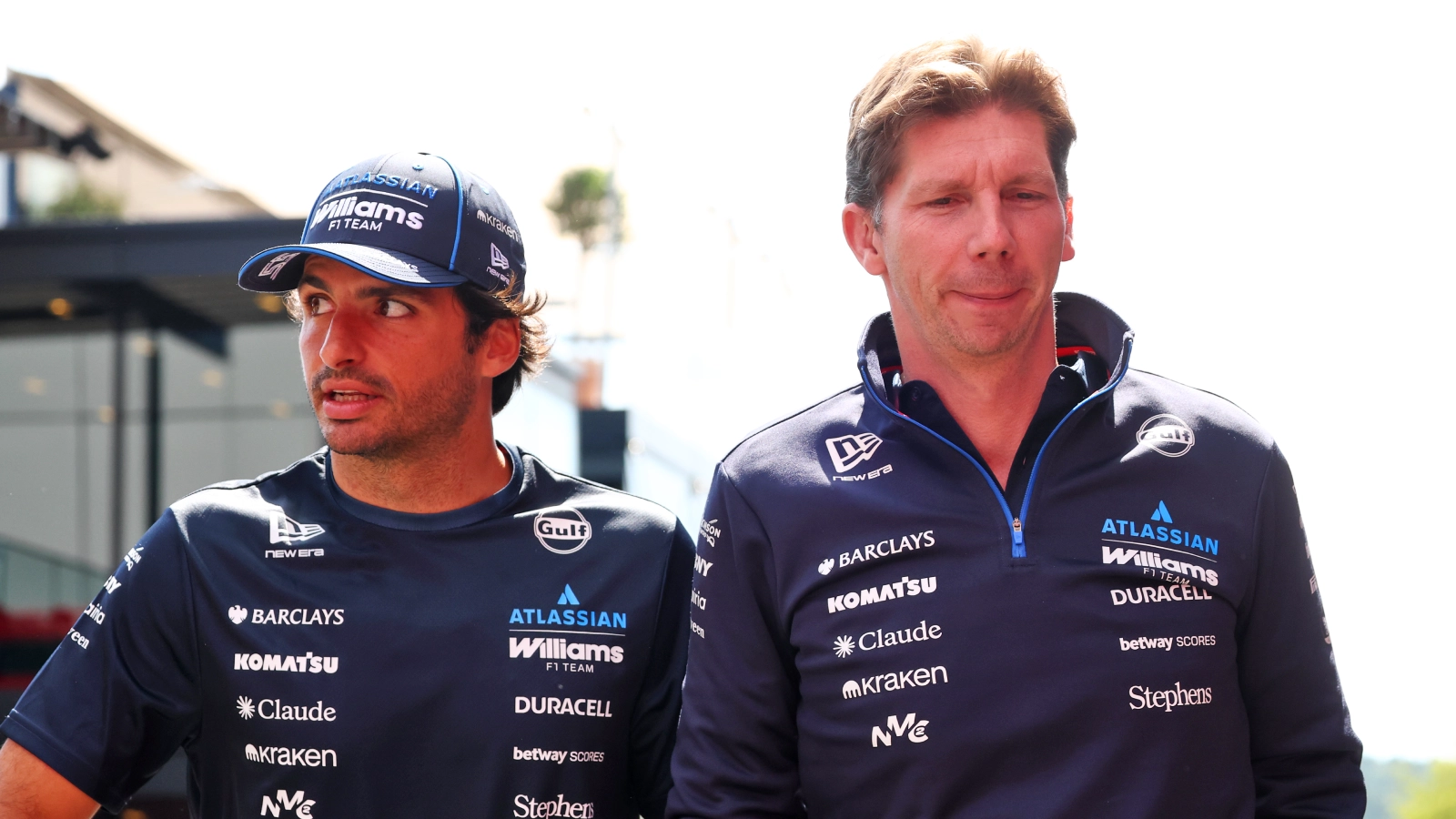
    Aston Martin has scored only one point this season, with Alonso saying his Monaco 10th-place finish accounted for it, although one report said that result came after penalty-related position changes rather than on pure pace. Alonso said the team had been working “flat-out” and urged people not to underestimate it. Carlos Sainz also described the budget pressure facing Williams, saying the team planned aero upgrades for Silverstone and Azerbaijan, was managing its spending carefully and was delaying lighter components until earlier parts had been fully used.

    More
  • FIA closes Ferrari exhaust winglet loophole for 2027

    FIA closes Ferrari exhaust winglet loophole for 2027

    The FIA has rewritten Formula 1’s 2027 technical regulations to ban Ferrari-style exhaust winglet concepts, closing a loophole Ferrari used to generate rear downforce. The update, published after approval by the FIA World Motor Sport Council in Macau, adds an exclusion zone around the tailpipe in Article C2.3.7 and tightens rules on exhaust-support structures, with the FIA saying it wants to stop similar ideas from developing further.

    Ferrari introduced the device on its SF-26 during pre-season testing in Bahrain, directing exhaust gases toward a small winglet above the tailpipe to improve airflow and rear downforce. The concept remained legal under the 2026 rules and will stay legal for the rest of this season. Ferrari has been evaluating whether to keep running it at every circuit, and in Austrian Grand Prix practice Lewis Hamilton’s car kept the winglet while Dino Beganovic’s ran without it.

    The revised wording also appears aimed at a separate tailpipe-bracket loophole that Mercedes and other teams had found earlier in the season, with teams including Mercedes, McLaren and Red Bull later developing similar interpretations. Those versions will also be blocked when the 2027 rules take effect, as the FIA moves to cut off aerodynamic workarounds across the grid.

    More
  • Ferrari Upgrade Offers Progress, Not a Fix, in Austria

    Ferrari Upgrade Offers Progress, Not a Fix, in Austria

    Ferrari’s Austrian Grand Prix weekend began with another reminder of how much work the team still faced, as Charles Leclerc said after Friday practice that the team was likely to struggle at the Red Bull Ring. Leclerc said Ferrari’s running exposed weaknesses in both straight-line speed and cornering, and he called for a lot of work overnight before qualifying. Lewis Hamilton finished fifth in both practice sessions, while Leclerc was eighth in FP2 after missing FP1 so rookie Dino Beganovic could drive the SF-26.

    Leclerc said the problems were broader than his absence from first practice and said he was surprised by Ferrari’s lack of cornering pace, since that had usually been one of the team’s strengths. He said there was no obvious fix for the straight-line deficit, and both he and Hamilton were unhappy with the car. Team principal Fred Vasseur also described the day as difficult, saying Austria’s hot, high-altitude conditions were unfavourable and that Ferrari’s new engine was only a decent step forward rather than a major breakthrough.

    Ferrari had arrived in Spielberg with a fresh power unit introduced through the ADUO performance-balancing mechanism, part of an upgrade push aimed at improving its chances of returning to the podium. Leclerc said the development pointed the team in the right direction, but he did not consider Ferrari the favourite for the weekend and said Mercedes still had the edge on the circuit’s long straights. He said the update was progress rather than a complete fix, and while he expected Ferrari to be competitive in the race, he thought the team might be more vulnerable in qualifying.

    More