NXTbets Inc

  • Mercedes' W17 Sets Benchmark with 1:16s Pace in Barcelona

    Mercedes’ W17 Sets Benchmark with 1:16s Pace in Barcelona

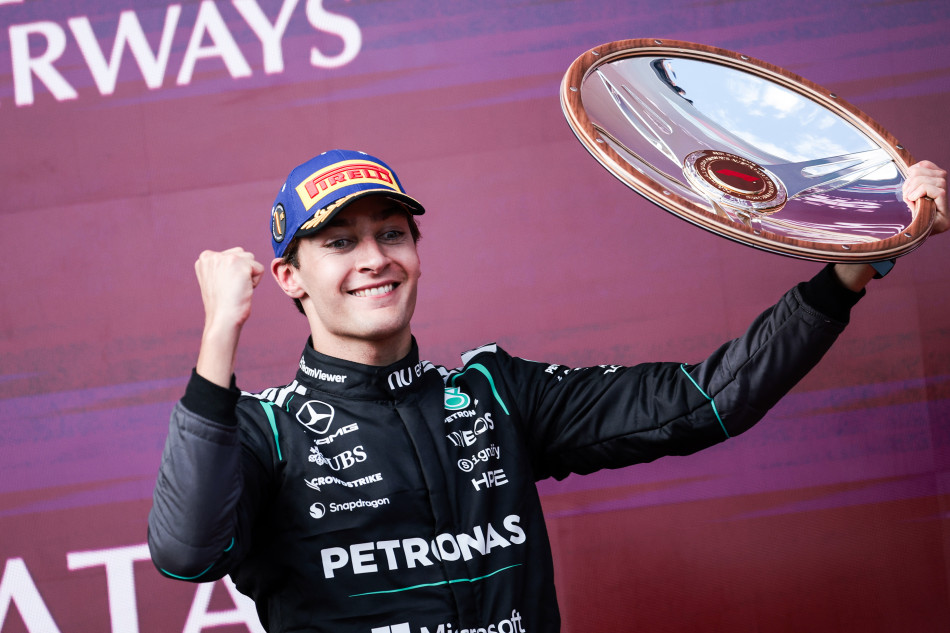
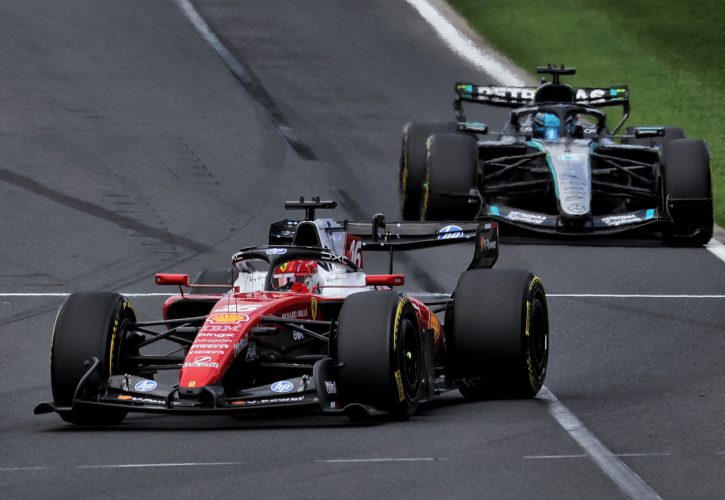
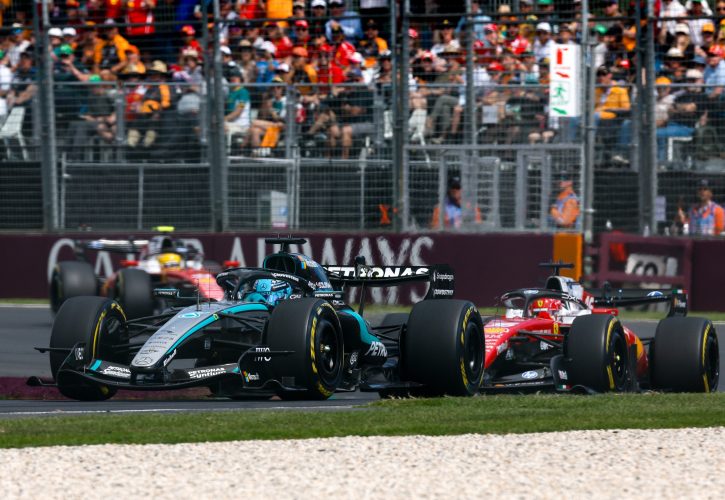
    Mercedes’ W17 set the benchmark during the Barcelona pre-season shakedown, posting lap times in the 1:16–1:17 range that underlined both single-lap pace and race-pace potential. George Russell returned the quickest unofficial time of the shakedown with a 1:16.445, while Kimi Antonelli provided session-leading runs, including a 1:17.081 on Thursday. Several laps were quicker than Mercedes’ best race lap from last year’s Spanish Grand Prix. McLaren and Ferrari showed competitive early running, with Oscar Piastri and Lewis Hamilton among the quickest non-Mercedes drivers, but interruptions to their programs left Barcelona as an early snapshot rather than a definitive measure of season potential.

    Reliability and mileage proved the standout story. Russell and Antonelli combined for exactly 500 laps across the permitted three running days and led the mileage charts. The W17 completed multiple full race simulations, Antonelli ran a complete race sim on his second half-day in the car, and engineers described the package as having worked “faultlessly,” with clean data captured throughout. Mercedes’ new hybrid power package also logged heavy mileage with customer teams McLaren and Alpine, reinforcing early signs of durability, and Trackside Engineering Director Andrew Shovlin said the team was “ahead of where we hoped” on mileage; most lost track time during the shakedown came from rival failures and red flags rather than Mercedes issues.

    After extensive race-pace work, Mercedes moved on to qualifying mode on the final day, using Barcelona as a probing ground before setup exploration in Bahrain. The combination of straight-line speed, consistent lap times, and trouble-free mileage strengthened Mercedes’ status as one of the pre-season favorites. But teams cautioned that differing test programs, fuel loads, and setups limit how much the times alone reveal about true race competitiveness. Nonetheless, the W17 achieved the primary objective of the shakedown by proving mechanical and power-unit readiness ahead of the next on-track commitments.

    More
  • Aston Martin AMR26 Debuts in Barcelona After Delays

    Aston Martin AMR26 Debuts in Barcelona After Delays

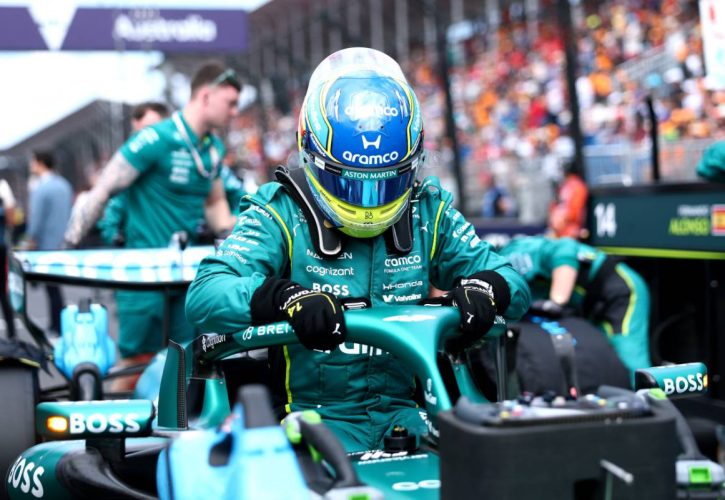
    Aston Martin’s 2026 F1 car, the AMR26, made its first track appearance at the Barcelona pre-season shakedown on Thursday. The team flew the chassis into Girona the night before, and mechanics assembled it overnight at the Barcelona circuit, with the car rolling out late on the fourth day of the Shakedown. Lance Stroll completed the final hour of running, while Fernando Alonso was scheduled to run on Friday, as the team began collecting early data. Build delays forced Aston Martin to miss at least one of the three permitted test days, compressing its program and leaving reduced on-track time.

    Dressed in an all-black livery carrying only an Aston Martin nose logo, the AMR26 displayed an aggressive undercut sidepod, an unconventional engine-cover solution, and a large gap beneath the airbox. This is the clearest view yet of Adrian Newey’s aerodynamic direction for the team. It is the first Aston Martin produced under Newey’s technical leadership after Andy Cowell stepped down. Newey now combines the roles of managing technical partner and team principal.

    Aston Martin will use Honda power units for 2026 and will operate from new facilities at Silverstone, meaning the rollout also served as an initial check on packaging and power-unit integration. Owner Lawrence Stroll’s championship ambitions framed the off-season changes as the team aims to improve on a seventh-place finish in 2025. Honda cautioned that the power-unit switch may not deliver an easy start, and the late build, plus the lost test day, curtailed early development and reliability assessments, leaving engineers with limited time to evaluate the AMR26 ahead of fuller pre-season running and the season-opening events.

    More
  • FIA Posts Horner Photos from Paris; No Deals Confirmed

    FIA Posts Horner Photos from Paris; No Deals Confirmed

    FIA president Mohammed Ben Sulayem met Christian Horner at the FIA headquarters in Paris earlier this month, with the governing body posting photos with the caption “Good to see you, my friend.” The FIA did not disclose the purpose of the encounter. Horner was officially in Paris to attend the Retromobile classic car show, which is marking its 50th anniversary and runs through February 1.

    Horner has kept a low profile since his dismissal in July 2025 by Red Bull, ending a 20-year tenure that transformed the team. Since then, he has been working behind the scenes, contacting teams after the summer break, pursuing investors in the U.S. and the Middle East, and exploring two main routes back into Formula 1 (F1).

    One route involves a consortium reportedly interested in buying Otro Capital’s stake in Alpine, widely reported as 24% (some sources say 26%). The negotiation has been publicly acknowledged by figures such as Flavio Briatore. The other is speculation that Horner could back a bid to add a new, 12th F1 team. Reports say early talks with Aston Martin showed promise before stalling.

    Red Bull has agreed to shorten Horner’s gardening leave, meaning he will be free to take a new role from the end of April. Media reports have also cited a departure payout in the region of £52 million to £80 million under a contract that originally ran to 2030.

    Journalists who covered the Paris meeting described it as cordial but offered no firm evidence of commercial or regulatory discussions. Sky Sports reporter Craig Slater said Horner did not raise the Alpine purchase or a new team plan during the conversation. Neither Horner, the FIA, Alpine, Otro Capital, nor Red Bull has provided official confirmation of any hiring, investment, or deal linked to the meeting. The combination of Horner’s low profile since July 2025, his involvement in investor talks around Alpine, and the publicized meeting with Ben Sulayem has renewed media and fan speculation about a possible F1 return, but no concrete proof has emerged.

    More
  • McLaren's MCL40 Debuts Aggressive Aero and Bargeboards

    McLaren’s MCL40 Debuts Aggressive Aero and Bargeboards

    McLaren’s MCL40 made its public debut at the Circuit de Barcelona-Catalunya during the team’s pre-season shakedown, with Lando Norris taking the car out after McLaren skipped the first two days of running. Norris completed 77 laps and posted a best time of 1:18.307 to sit third on the timesheets behind Mercedes’ Kimi Antonelli and George Russell, while Sky Sports’ Ted Kravitz and others noted the MCL40’s “more aggressive” appearance compared to Mercedes and Ferrari. Observers pointed to a detailed front wing, an expanded bargeboard region, and a strong floor–sidepod package, and McLaren chief designer Rob Marshall described the day as productive for systems data and driver feedback, reporting only minor gremlins during the outing.

    Norris’s first impressions emphasized a marked improvement in straight-line acceleration under the 2026 regulations. The car reached around 340–350 km/h noticeably quicker than previous seasons, thanks to higher permitted electrical deployment, lower downforce, and lower wings in “straight mode.” He said cornering felt a bit slower and that the added battery and power‑unit management complexity made the car harder to fully understand initially, but that the MCL40 still “feels like a McLaren” with strong power delivery. The session was framed as an early learning exercise rather than a performance benchmark, giving the team baseline data on aerodynamic behavior, energy management demands, and reliability to carry into the remainder of testing.

    Running with the traditional No. 1 was a symbolic milestone. Norris described seeing the number on his car, suit, and timing screens as “surreal,” and his run marked the first time McLaren had carried No. 1 since Jenson Button’s 2010 Abu Dhabi appearance. Norris acknowledged the extra scrutiny that comes with the championship number but said it had not changed his working approach. McLaren planned to continue its evaluation program with Oscar Piastri running the MCL40 the following day and further work scheduled in Bahrain. The team suggests that the shakedown provides an early technical direction, highlighting how drivers will adapt to altered handling and increased energy‑management responsibilities under the new rules.

    More
  • Ferrari Trials Wet Partial Active Aero on SF-26 in Barcelona

    Ferrari Trials Wet Partial Active Aero on SF-26 in Barcelona

    During the Barcelona closed‑doors shakedown, Ferrari used wet conditions to evaluate a partial active aero mode on the SF‑26. The configuration kept the rear wing closed while flattening the second and third elements of the front wing. The team ran full‑wet Pirelli tires and logged telemetry to assess aerodynamic behaviour and hybrid energy trade‑offs. Charles Leclerc completed wet laps in the setup, and unofficial social‑media footage also showed Lewis Hamilton in the same configuration.

    The partial mode was added in the December 2025 draft regulations, after earlier rules had barred active‑aero use in wet conditions. Under the 2026 technical package, active aerodynamic devices may change state on straights, close automatically when a driver lifts or brakes, and a separate Overtake Mode has replaced DRS. The FIA will publish circuit‑specific Activation Zones under Article B7.1.1 at least four weeks before each event, leaving teams with more activation zones than under the DRS regime. When fully enabled, those zones allow both front and rear wings to open and are usable every lap.

    Drivers and teams said the 2026 cars already feel very different. They carry considerably less downforce, and the new systems increase cockpit workload by adding manual wing operation, Overtake Mode management, and a greater need to manage electrical power during races. The wet partial mode offers a degraded option that leaves only the front wing in its straight‑line configuration, giving teams a way to use active aero without opening the rear wing in wet conditions. Ferrari’s shakedown aimed to check hardware, tire behaviour, and the balance between aerodynamic gains and hybrid energy demand. An early test of how lighter cars and 50‑50 electric/biofuel power units will affect race operations.

    More
  • Mercedes Tops Barcelona Shakedown as Russell, Antonelli Lead

    Mercedes Tops Barcelona Shakedown as Russell, Antonelli Lead

    On the third day of the closed-door Barcelona shakedown, Mercedes logged heavy mileage and topped the unofficial timesheets. George Russell set the morning benchmark with a 1:17.580, and teammate Kimi Antonelli lowered that to 1:17.382 in the afternoon. Russell had completed about 92 laps by lunchtime and Antonelli roughly 91 in the afternoon, resulting in around 183 laps between them. Mercedes reported no major reliability issues with the W17.

    The session emphasized mileage and system validation rather than a straight performance shootout. The German-owned garage focused on long runs and setup work while repeatedly producing the day’s best times. Teams described the running as program-focused and treated the unofficial timings as indicative rather than definitive.

    Six teams ran in drier Wednesday conditions. McLaren made the public debut of its black-liveried MCL40, with Lando Norris completing a 70-plus lap program and posting the third-fastest time. Alpine logged substantial miles through Franco Colapinto and Pierre Gasly. Haas’ Ollie Bearman posted the quickest lap outside Mercedes but was limited to roughly 40 laps after an early stoppage. Audi and Racing Bulls each triggered red flags, with the former’s Nico Hülkenberg stopped between Turns 9 and 10. Red Bull and Ferrari did not run, while Aston Martin was due to appear the following day, and Williams missed the shakedown entirely.

    More
  • Williams FW48 Reportedly Fails Crash Tests, 44-66lbs Overweight

    Williams FW48 Reportedly Fails Crash Tests, 44-66lbs Overweight

    F1’s 2026 technical overhaul forced teams into an early, fundamental reshaping of chassis, aerodynamic packaging, and power units, and introduced substantially tougher crash and driver‑protection tests. Key rule changes include a lower minimum car mass (from 1763.7 to 1693.15 lbs), higher roll‑hoop static loads (from 105/140 kN to 129/172 kN), a survival‑cell fuel‑tank side‑load increase (from 50 kN to 110 kN), stiffer wheel‑contact, cockpit‑floor, and nose push‑off checks. The alterations for the upcoming session also include a new lateral push‑off‑to‑failure test that requires failure rearward of 650 mm at thresholds above 52.5 kN. Many early‑launch cars already show larger roll hoops, bulkier airboxes, and noses reinforced by stronger structures. Teams are expected to iterate designs throughout the season as they balance compliance with competitive pace.

    Williams has faced early development setbacks. The team skipped a behind‑closed‑doors Barcelona shakedown to concentrate on its FW48. Initial reports said the car failed three mandatory FIA crash tests. However, an Italian outlet later reported the FW48 had passed the crash test required for homologation. Those accounts conflict, and the pass report has not been independently verified. Multiple sources place the FW48 roughly 44-66 lbs over the new 1693.15 lbs minimum, and missing the Barcelona running trimmed on‑track preparation time ahead of the opening races.

    Any remedial chassis work to meet the new mass and safety limits will count against the sport’s cost cap, potentially reducing funds available for mid‑ and late‑season upgrades. Williams is reported to be shifting focus to aggressive weight‑reduction work before its next scheduled on‑track running in Bahrain. Whether those fixes restore on‑track competitiveness without creating further homologation or budget issues is a pivotal early‑season question.

    The situation highlights the wider 2026 tension between much tougher mandatory safety requirements and the cost‑cap constraints that now shape development across the grid. This presents a particular challenge for teams that showed momentum in 2025, with Williams having finished fifth in the Constructors’ Championship on points from Alex Albon and Carlos Sainz.

    More
  • Norris Posts MCL40's First Laps with Number 1

    Norris Posts MCL40’s First Laps with Number 1

    McLaren’s new 2026 car, the MCL40, made its on‑track debut when Lando Norris drove it out of the garage on day three of the Barcelona pre‑season test at the Circuit de Barcelona‑Catalunya. The installation lap came shortly before 11 a.m. local time and the car ran in a predominantly black testing livery to underline that this was a shakedown rather than a race specification. Norris, the reigning world champion, ran for the first time with the number 1 on his nose and was credited with the MCL40’s first laps.

    The Woking‑based team deliberately sat out the first two days of the five‑day test and confirmed it would use its permitted three consecutive days of running, Wednesday, Thursday, and Friday, as part of a planned program to maximize development time. Team principal Andrea Stella framed the delayed start as “Plan A,” not a sign of preparation delays, and McLaren had earlier released renders but chose not to carry out a prior shakedown before the test. As a consequence of that preparation choice, McLaren was the only team that needed to run on three straight days during the Barcelona test. The outing was described as a controlled shakedown intended to confirm systems and gather initial data rather than provide lap times or performance benchmarks, and at the time no official on‑track photograph had been released.

    Wednesday’s running was interrupted by about 40 minutes of red flags after incidents involving Audi and Haas, underscoring a disrupted opening that affected several teams’ programs. Other outfits faced preparation issues, too. Red Bull’s program remained uncertain after Isack Hadjar’s crash earlier in the week, Aston Martin planned to concentrate running on Thursday and Friday, and Williams withdrew from the test citing build delays even though its FW48 chassis had passed FIA homologation. McLaren’s MCL40 debut, therefore, arrived amid differing timetables across the paddock and represented an early, practical step in the team’s validation and setup work for the 2026 season, with no technical performance details disclosed.

    More
  • Ferrari Debuts SF-26 with Active Wings, Compact Chassis

    Ferrari Debuts SF-26 with Active Wings, Compact Chassis

    Ferrari launched its 2026 challenger, the SF-26, at Maranello and completed an initial shakedown that the team called a meaningful milestone. Team principal Fred Vasseur warned that, with F1 entering an all-new active-aerodynamic era, the season-opener in Melbourne will be unlikely to decide the championship.

    The 2026-spec changes are substantial, ranging from a chassis roughly 20 cm shorter, about 30 kg lighter, and movable front and rear wings that provide new aerodynamic control. Power-unit changes include full use of sustainable fuel and a power delivery split of roughly 50/50 between electrical and combustion sources. Vasseur said drivers will have a larger operational role managing wing settings, engine modes, and overtake/boost functions.

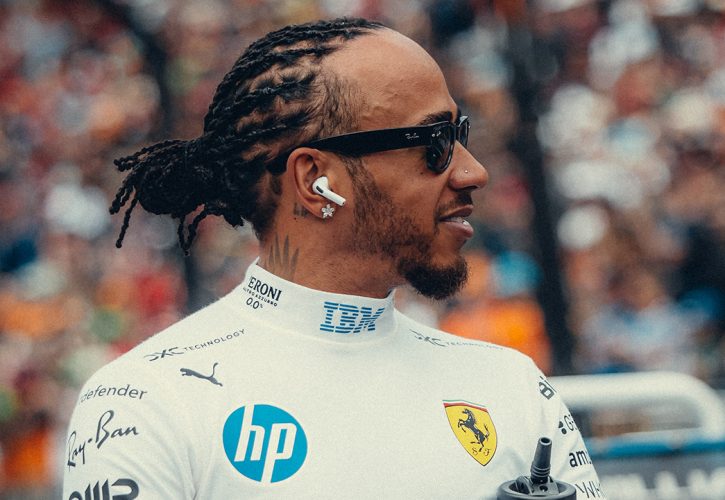
    Ferrari ran the SF-26’s shakedown in Barcelona with Lewis Hamilton and Charles Leclerc taking baseline runs. Hamilton briefly went into the gravel on his first outing as the team deliberately concealed its final design.

    The car’s package features a return to push-rod suspension after 2025 ride-height problems, very compact sidepods, and a hole in the rear diffuser as part of a low-drag approach.

    The FIA has delayed formal approval, describing Ferrari’s concept as “aggressive” and saying it will take a closer look under the updated regulations before clearing the design to race. Regulators took extra time partly because the approvals timeline was affected by the departure of Jason Somerville in November 2025, which prompted heightened scrutiny of team proposals.

    Vasseur emphasized that teams are effectively starting from scratch given the scale of the rule changes. Several squads, including Ferrari, missed the opening day of Barcelona testing and are likely to bring more basic cars to Australia. The initial focus will be on fundamentals, data collection, and iterative improvements as teams develop active-aero systems and power-unit integrations. Rapid in-season evolution means early race results will be unlikely to reflect ultimate championship trajectories.

    More