NXTbets Inc

  • Button would 'jump at' demo run in Newey car

    Button would ‘jump at’ demo run in Newey car

    Jenson Button said he was “jealous” that Aston Martin drivers Fernando Alonso and Lance Stroll get to drive cars shaped by Adrian Newey and admitted he would love to try a Newey-designed car himself. Writing on the Aston Martin website in his “Jenson’s Journal,” the 2009 world champion — who retired at the end of 2025 and joined Aston Martin as a multi-year ambassador in February after moving his ambassador role from Williams — described watching Newey operate up close as “fascinating” and called him “old school” for sketching ideas in a notebook. Button said he even tried to sneak a peek at Newey’s notebook and that he would “jump at the chance” to do a demonstration run in a Newey car, though he joked that a full 24-race season in one would be too much.

    Aston Martin, with Newey serving as its managing technical partner and team principal for 2026, endured a sluggish start under the new regulations. Media reports said the team had not yet scored a race win and had failed to record a classified finish early in the season, with Honda power-unit problems, including severe vibrations in Australia that limited running and disrupted qualifying, among the issues.

    Button warned the new technical era has altered power-unit behavior, with hybrid deployment and brake-pressure interaction now influencing available power and forcing drivers to manage systems differently. Given Newey’s long record of championship-winning designs, Button and others have framed his arrival as a potential technical boost for the Silverstone-based squad.

    More
  • Andretti Expects Cadillac to Challenge F1 Top 10 in 2026

    Andretti Expects Cadillac to Challenge F1 Top 10 in 2026

    Mario Andretti, a Cadillac board member, told the Drive to Wynn podcast he hopes the Silverstone-based, Ferrari-powered squad will be “challenging the Top 10 by the end of the 2026 Formula 1 season,” and he said ambitious goals are needed to progress toward race wins.

    Two races into Cadillac’s debut F1 campaign the team sits at the back of the grid but has shown early signs of improvement. Valtteri Bottas finished 13th in Shanghai — the team’s best result to that point — and both cars completed the Chinese Grand Prix, marking Cadillac’s first double finish. Reports differ on Sergio Pérez’s exact placing in China: some outlets listed him 14th while others listed 15th. Bottas called the result “decent and a good starting point.”

    The opening rounds have underlined the scale of the challenge. Drivers are still adapting — Andretti described Bottas and Pérez as “a bit rusty” after time away from full-time seats — and the team has faced technical shortcomings, including a lack of outright pace, perceived downforce and rear-stability issues, trouble extracting consistent performance from the Ferrari power unit and difficulties managing battery charge. Cadillac had not yet recorded a trouble-free weekend, and Bottas said the squad is, for now, primarily able to compete with Aston Martin. Qualifying deficits have narrowed from roughly four seconds early on to about two seconds: Bottas was 2.261s off Charles Leclerc’s Q1 benchmark in Shanghai, while Pérez had been about 3.1s adrift in Melbourne qualifying.

    Team leaders stress an aggressive development programme. Parts are due in Japan and a larger upgrade package is planned after the spring break as engineers work “flat out” to convert improving reliability into stronger on-track performance. Andretti tempered expectations with realism about the scale of the task but said the season’s unpredictability and the strength of the Ferrari power unit could create opportunities for rapid gains.

    More
  • Racing Bulls unveils cherry-sakura livery for Suzuka

    Racing Bulls unveils cherry-sakura livery for Suzuka

    Racing Bulls unveiled a Japan-inspired one-off livery as a promotional and cultural activation ahead of the Japanese Grand Prix at Suzuka. The team said the design was explicitly inspired by Red Bull’s Spring Edition “cherry sakura” can and the new flavor from the energy drink backer, and intended the visual treatment as a marketing push rather than a technical change. Coverage variously described the car as crimson- or cherry-colored, while other reports noted it reworks Racing Bulls’ usual blue into a white, red and silver palette—a difference reflected in the team’s social posts and event imagery. Fans reacted positively on social platforms, many joking that driver Liam Lawson was “winning the livery championship.”

    The livery was revealed at the Red Bull Tokyo Drift event in Tokyo, where drivers Liam Lawson and Arvid Lindblad attended and Racing Bulls presented the design alongside a drift demonstration by Mad Mike (Mike Whiddett). The motif was created with Japanese calligrapher Bisen Aoyagi, whose shodo brush strokes and calligraphic treatment wrap both the car and a matching team kit; Aoyagi is also slated to produce special artwork for the team during the Suzuka weekend.

    CEO Peter Bayer framed the Tokyo unveiling as a strategic effort to deepen the team’s connection with younger fans and the host nation. After the Tokyo showcase, the car was scheduled to visit landmarks including Meguro River, Tokyo Tower and Shibuya before making its track debut at Suzuka. Racing Bulls — Red Bull’s second Formula 1 team — presented the one-off look as a cultural collaboration and product-promotion tied to a high-profile race weekend, part of a wider trend of circuit-specific liveries in F1; coverage noted similar gestures in recent seasons, including a Japan-themed Red Bull livery last year to honor Honda and a bespoke Haas design linked to its partnership with Toyota, underlining that such treatments function as marketing and local cultural activations rather than competitive developments.

    More
  • Ralf Schumacher Rebukes Verstappen, Urges Red Bull to Lead

    Ralf Schumacher Rebukes Verstappen, Urges Red Bull to Lead

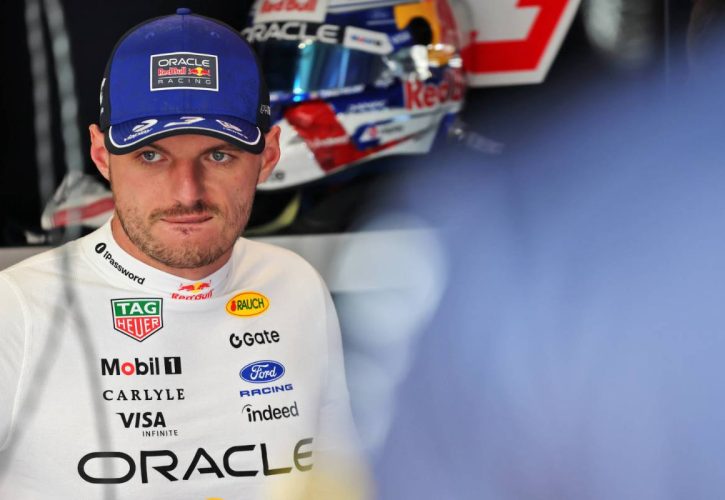
    Ralf Schumacher publicly rebuked Max Verstappen for airing strong complaints about Formula 1’s 2026 technical regulations and urged him to show leadership and restraint as Red Bull struggled early in the season. Schumacher called on Verstappen to embrace a formal team-leader role to steady the team rather than withdraw into public criticism, saying Verstappen currently “takes center stage.” He contrasted Verstappen’s posture with how Michael Schumacher would have responded, adding that Verstappen “has proved he’s no Michael Schumacher,” and urged Red Bull sporting director Laurent Mekies to hire stronger, more media-savvy personnel to share the spotlight.

    Verstappen had criticized the new power units as “Formula E on steroids” and said anyone who liked them “doesn’t know what racing is like.” He first made the remark during pre-season testing and had raised concerns privately with the FIA. The paddock pushed back: Guenther Steiner mocked Verstappen’s stance, saying “it’s not the fault of the regulations… Max is not happy because the car is not where he likes it to be” and that Verstappen “always throws the toys out of the pram when it doesn’t go his way.” Some observers also noted Helmut Marko’s absence had focused more attention on Verstappen.

    The dispute coincided with tangible problems for Red Bull: on-track incidents, reliability concerns and a perceived drop in pace for Red Bull’s RB22. Verstappen had eight championship points after two weekends, suffered a qualifying crash in Australia and retired at the Chinese Grand Prix, and showed struggles with race starts compared with teammate Isack Hadjar. The debate has taken on both sporting and leadership dimensions: Schumacher argued Verstappen’s public airing of grievances has amplified attention on the driver rather than on team leadership, and suggested Red Bull looked like only the fourth-best team in the early part of the season. Reactions among top drivers were split — Lewis Hamilton praised the new regulations and took a podium for Ferrari in China — underscoring divergent views within the paddock as calls continued for responsibility and restraint from one high-profile figure toward another during a challenging phase for the team.

    More
  • McLaren investigates Mercedes power unit faults in Shanghai

    McLaren investigates Mercedes power unit faults in Shanghai

    Both McLaren cars failed to start the Chinese Grand Prix after separate electrical faults that have been reported to be linked to the Mercedes power unit. Engineers identified a critical control‑unit fault on Lando Norris’s car during pre‑race preparations while Oscar Piastri’s car shut down on the grid. McLaren and Mercedes‑AMG HPP opened a joint, intensive investigation into how the new hybrid power units are integrating with the car’s electronic systems. McLaren has publicly complained of a lack of information from Mercedes HPP since Melbourne, adding an organizational communications strain to the technical probe. Team principal Andrea Stella said the partners worked intensively to try to resolve the issues and that the team will focus on learning lessons and returning stronger.

    Telemetry from Shanghai also forced McLaren to reassess its on‑car package. A shorter‑wheelbase configuration introduced after this season’s floor decision produced persistent handling problems, with GPS data showing time loss in medium‑to‑high‑speed corners. As a result, McLaren shifted development priority at its Woking base toward chassis and drivability improvements, re‑evaluating where to concentrate upcoming updates and saying it would likely reallocate resources and testing focus.

    The double DNS had immediate sporting consequences. McLaren sits third in the constructors’ standings on 18 points, roughly 80 points behind leaders Mercedes; Norris has 15 championship points and Piastri three. Piastri is yet to complete a racing lap this season after his Melbourne crash, which some reports linked to an unexpected 100kW battery power event. The Shanghai non‑starts were McLaren’s first double DNS since the 2005 United States Grand Prix, Norris’s first missed grand prix start in his eight‑year career and Piastri’s second consecutive DNS — the first McLaren driver to miss two races in a row since Bruce McLaren in 1969. Drivers and team figures framed the setback as a technical and developmental challenge: Piastri described the Mercedes units as “incredibly complex” and warned that small changes can have unintended consequences, while Norris said engineers knew the shortcomings and that development work and reliability fixes are the immediate priority as McLaren aims to salvage its season amid growing external pressure.

    More
  • Ferrari retools engine to blunt Mercedes' Brixworth power

    Ferrari retools engine to blunt Mercedes’ Brixworth power

    Ferrari moved quickly to target Mercedes’ early power-unit advantage after collecting data from the opening two rounds and began planning a reconfigured engine intended to blunt the reported “super-clipping” performance. Technical director Enrico Gualtieri said the work is a targeted technical response, not a regulatory complaint, and signals an on-track engineering battle prompted by Mercedes’ Brixworth power unit.

    To close the deficit, Ferrari scheduled a private test at Monza to better understand the shortfall created by the Brixworth unit. The team described itself as the second-fastest and stressed it would prioritize technical development over immediate personnel or strategic changes. The cancellations of the Bahrain and Saudi Arabian races gave teams extra development time, and Ferrari is expected to bring a significant upgrade package by the Miami Grand Prix in May.

    The push for upgrades followed a pair of results that underlined Mercedes’ edge: back-to-back one-two finishes in the opening rounds, with George Russell winning the Australian Grand Prix and Kimi Antonelli taking his maiden victory in China, while Ferrari finished third in Australia and fourth in China. Charles Leclerc said he abandoned the chase in China because Mercedes had “blistering pace,” estimating the Mercedes W17 was roughly five-tenths of a second per lap quicker than Ferrari’s SF-26 in race trim, even though Ferrari showed clear cornering speed in Shanghai.

    Mercedes lead the constructors’ championship by 31 points — a margin Russell warned could evaporate once upgrades arrive — underscoring why Ferrari has prioritized rapid technical development.

    More
  • Leclerc, Verstappen Clash Over Battery-Assisted Overtakes

    Leclerc, Verstappen Clash Over Battery-Assisted Overtakes

    The 2026 technical and energy-rule changes — notably a nimbler chassis, reduced downforce and power units that are now almost half-electric — have sharply divided opinion about whether Formula 1’s on-track action remains driver-led or has become battery-assisted and “artificial.” Empirical changes in overtaking patterns and closer, “yo-yo” finishes in the opening rounds show the new regulations are materially altering race dynamics: some passes are now staged around strategic battery deployment or active-aero boosts, while other design tweaks have made cars aerodynamically friendlier to passing.

    Drivers and commentators are split. Charles Leclerc defended the package, saying from the cockpit the new cars “doesn’t feel so artificial,” that he enjoyed driving them and that drivers are converging on similar risk zones that create fresh passing opportunities; he conceded, however, that some overtakes can look artificial when a competitor fully drains the battery. By contrast Max Verstappen and others including Lando Norris, Carlos Sainz and Esteban Ocon have been openly critical — Verstappen saying fans who enjoy the new style “don’t understand racing.” Broadcasters and pundits pushed back too: David Croft used Lewis Hamilton’s close, multi-lap exchanges with George Russell and Leclerc in Shanghai to argue F1 “isn’t all about batteries,” calling those moves examples of “organic racing,” and David Coulthard described Hamilton’s maneuvers as “creative.”

    Race-by-race detail underlines the complexity. Melbourne produced battery-driven passing and yo-yo position changes — overtakes at places such as Turn 14 that were often reversed down the pit straight — while Shanghai delivered authentic outbraking duels into Turn 14 and the Turn 1/2/3 sequence, highlighted by the Hamilton–Leclerc fight and aided by cars designed to stay close enough for retaliation. Teams have also used aggressive starts and strategic battery deployment — Ferrari’s strong start, establishing itself as Mercedes’ closest challenger, was built in part on those tactics. F1 is expected to tinker quickly — rule changes are anticipated within weeks and a more complex plan to vary harvest, deployment and storage limits by track has been postponed to gather data — as the sport seeks to reconcile electrical strategy with the traditional, driver-led spectacle (and to avoid potentially hazardous scenarios that might have been exacerbated at tracks such as Jeddah).

    More
  • Lawson radio call, Safety Car timing shape Shanghai

    Lawson radio call, Safety Car timing shape Shanghai

    Liam Lawson’s strategic performance at the Chinese Grand Prix was defined by a tense radio exchange with rookie teammate Arvid Lindblad amid a decisive tire and pit-stop sequence. Under attack from Lindblad, Lawson jumped on team radio to tell engineers he was “trying to box” because he was about to pit and did not want to lose positions; Lindblad, on hard tires, attempted and failed a move into the Turn 14 hairpin while closing on Lawson, who was on fading medium tires.

    Lawson pitted on lap 10 for hard tires and a Safety Car was deployed the same lap when Lance Stroll stopped on track. The safety-car timing was identified as the decisive operational factor shaping Lawson’s result — some reports said it allowed rivals cheap stops and cost him multiple positions, while others said the timing helped preserve his track position — and Lawson himself called the sequence “probably karma.” The radio message drew attention from commentators, with David Coulthard saying he was baffled and Jolyon Palmer later calling Lawson’s race the “perfect response.” The Sprint on Saturday also featured a tire gamble: Racing Bulls started Lawson on hards in the Sprint Race, a move that gained him six places and his first championship points.

    The strategic week resulted in consistent points for Lawson: he finished seventh in both the Sprint and the Grand Prix in Shanghai, collecting eight points. Lawson said the weekend showed Racing Bulls had “absolutely maximised the package.” The eight-point haul moved him to ninth in the drivers’ standings, level on points with Max Verstappen, four clear of Isack Hadjar and with twice the points of his rookie teammate, Arvid Lindblad, who crossed the line 12th in Shanghai. Pundits and fans praised Lawson’s tire management under the new regulations and described the Shanghai result as a momentum-shifting outing and a counterpoint to earlier intra-team comparisons from Melbourne, where Lindblad had finished ahead of Lawson.

    More
  • Perez accepts blame for Lap 1 crash with Bottas in Shanghai

    Perez accepts blame for Lap 1 crash with Bottas in Shanghai

    Sergio Perez publicly accepted responsibility for a first-lap collision with Cadillac team-mate Valtteri Bottas at the Shanghai International Circuit, saying “that was all on me.” Perez said he misjudged a closing gap and called it “the worst feeling” after the closing door sent him into a spin; on team radio he later joked that he “needed a mushroom,” referencing Mario Kart and the effect of 2026 regulations and batteries on overtaking.

    Reports described the contact as Perez’s front wheel striking Bottas’s sidepod at Turn 4, leaving a large piece missing from the left side of Bottas’s floor and briefly forcing Perez out of contention before an early safety car allowed him to rejoin the field.

    The incident shaped the race outcome: Bottas recovered to finish 13th, Cadillac’s best result in its early campaign, and, along with Perez’s 15th-place classification as the last running car, marked the team’s first double finish in Formula 1 in only their second race. Perez later suffered power-unit problems that cost him roughly five seconds and then a further 15–20 seconds, contributing to his 15th place; Bottas said the Lap 1 collision nearly cost him his finishing position and described the result as a “proud one.” The double finish was aided by rivals’ DNFs and non-starts, and team principal Graeme Lowdon called the outcome a positive sign for Cadillac’s reliability. Despite the milestone and conciliatory public comments from both drivers, the intra-team contact raised concerns about Cadillac’s pace and potential internal friction: media analysis called the double finish a modest positive amid ongoing worries about reliability and lack of speed, and pundit Jolyon Palmer warned the incident would leave Cadillac “absolutely seething.” Cadillac has upgrades planned for the Japanese Grand Prix (April 27–29) and further work after the spring break ahead of the Miami race (May 1–3) to address performance deficits.

    More