NXTbets Inc

  • Red Bull's RB22 Sets Early Pace Amid Test Disruptions

    Red Bull’s RB22 Sets Early Pace Amid Test Disruptions

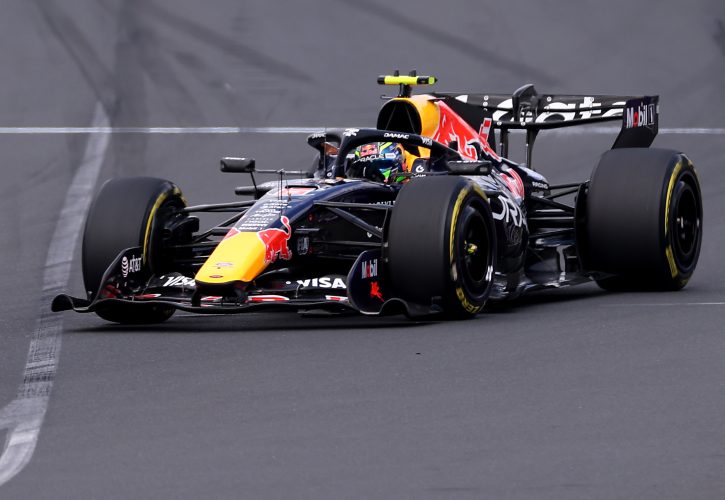
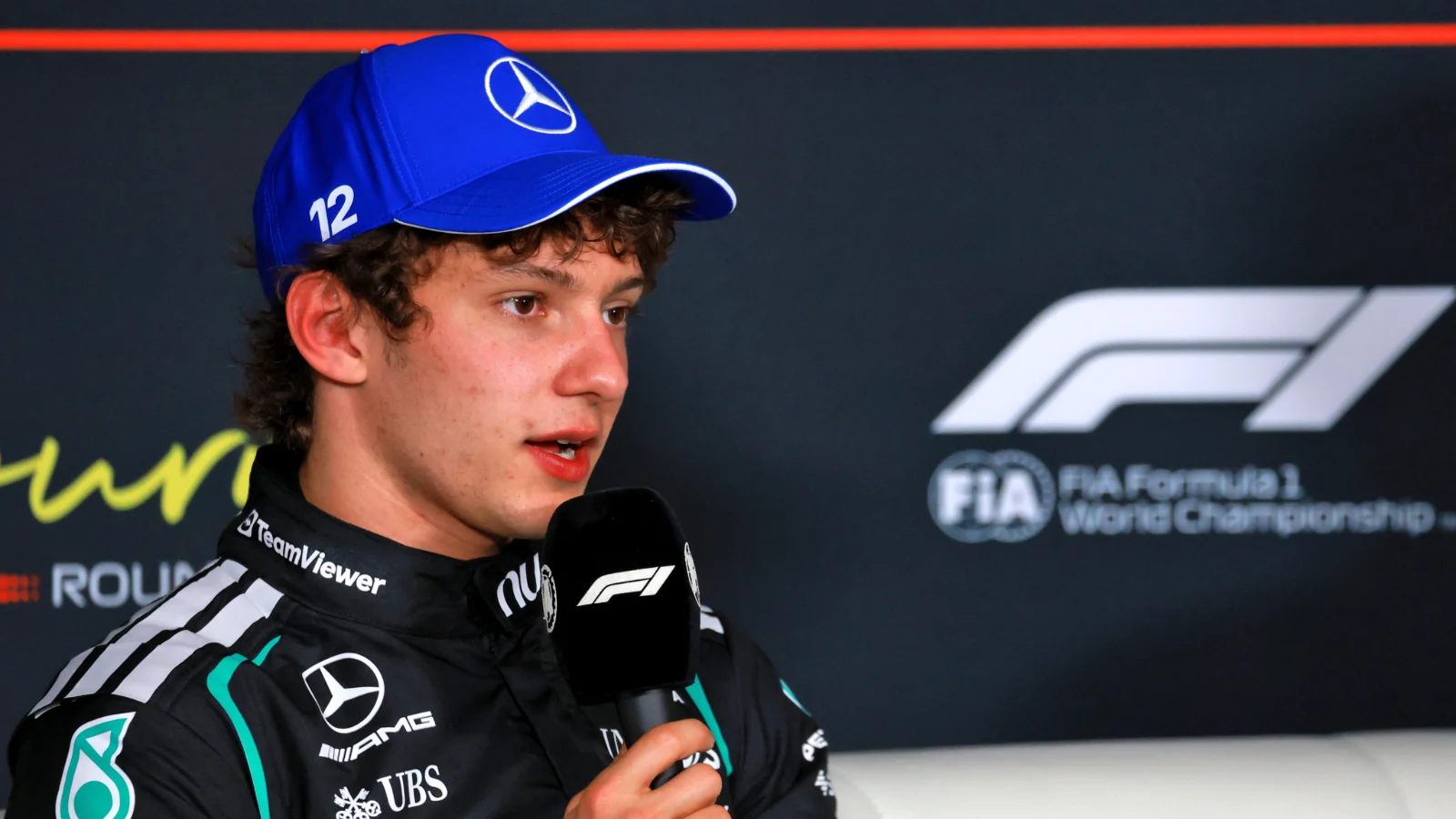
    Formula 1’s closed-door 2026 pre-season test got underway at Barcelona with seven of 11 teams running on Monday. Mercedes provided the first car on track when Kimi Antonelli rolled out shortly after 9 a.m. Isack Hadjar set the quickest unofficial lap of the day in the Red Bull RB22, with widely reported timing showing a 1:18.159, while George Russell ended the day around half a second back. Red Bull ran its new RB22, debuting its bespoke power unit developed with Ford. Teams used the session mainly to gather mileage and debug systems rather than make definitive performance comparisons. The day featured multiple stoppages, including a sensor-related red flag for Alpine and a separate Audi stoppage. Several entrants, including Audi and Cadillac, had limited running while Haas and others piled up laps.

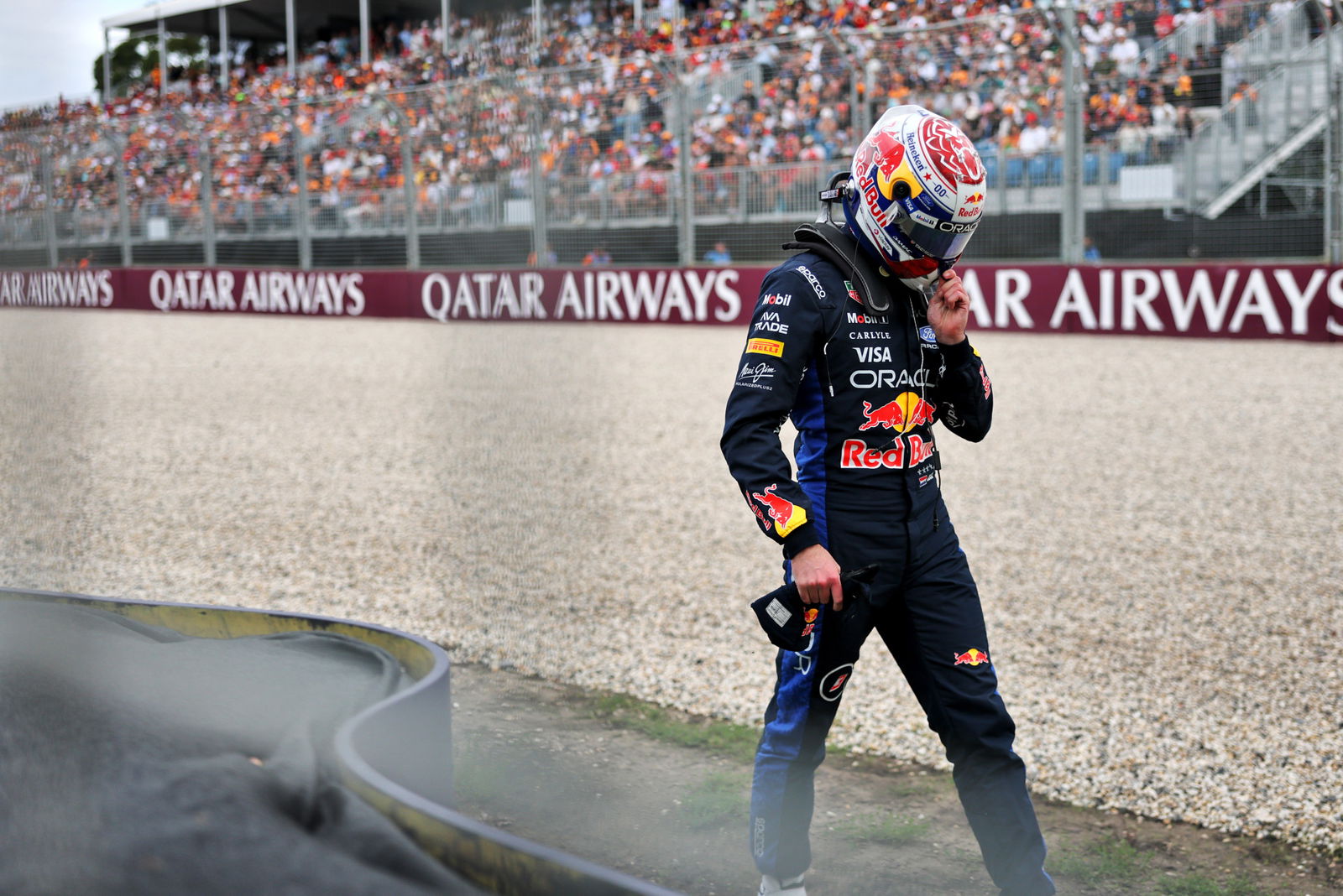
    On Tuesday morning, limited running was compounded by mixed weather and another red flag when Max Verstappen briefly beached the RB22 at Turn 5 after taking over from Hadjar, prompting a stoppage before the car was recovered. Rain curtailed programs across the paddock, with Mercedes, Alpine, Audi, and Cadillac canceling their morning runs and Haas sitting out to analyze data from day one. Only Red Bull and Ferrari logged laps during the wet first half of the second day, while Aston Martin confirmed it would not run until later in the week. Teams are allowed to use any three of the five test days, so the disrupted sessions shifted many squads’ plans for system checks, aerodynamic evaluations, and tire work.

    Mileage figures underlined the differing priorities. Esteban Ocon completed a session-leading 154 laps for Haas, and several teams reported curtailed programs owing to reliability or set-up work, most notably Cadillac and Audi. The private nature of the shakedown, removal of unofficial timing streams, and the succession of red flags and weather interruptions mean early lap times should be treated as provisional rather than conclusive. Still, Red Bull’s early pace and the RB22’s consistent running provided an encouraging first read for the defending constructors. The coming days in Barcelona will be crucial for teams that have yet to complete meaningful mileage. Overall, the Catalunya shakedown delivered a mix of useful data gathering and interrupted running as teams began to evaluate their new cars and power units under the 2026 regulations.

    More
  • Christian Horner in Talks to Buy Otro's 24% Alpine stake

    Christian Horner in Talks to Buy Otro’s 24% Alpine stake

    Multiple outlets reported that Christian Horner is part of a group in talks to buy Otro Capital’s 24% stake in Alpine. Alpine and de facto team boss Flavio Briatore said approaches have been made to existing shareholders, including Otro Capital and Renault. However, the Italian stressed these were shareholder-level discussions rather than direct approaches to team management. Under the terms of the 2023 sale, Renault retained a veto, so any transaction would require Renault’s approval. As it stands, Alpine said no sale has been announced, and talks remain exploratory.

    Otro acquired the stake in 2023 for around £170 million (about €200 million at the time), and it is being marketed for roughly $800 million (around £585 million). Interest in the stake reflects rising valuations across F1, despite Alpine’s recent on-track struggles, where the team finished last in the 2025 constructors’ championship.

    Horner was dismissed from Red Bull after the July 2025 British Grand Prix and left the organisation in September 2025, but he cut a deal to shorten his gardening leave and will be eligible to return to the paddock at the end of April. He has denied the allegations that prompted 2024 inquiries and was cleared in an internal probe at the 2024 Bahrain Grand Prix and later by an independent KC in August 2024.

    Reports say Horner is working with wealthy backers rather than putting up all purchase funds personally, but financing details remain unconfirmed. Briatore described the situation as “a lot of confusion,” and Alpine reiterated that any sale would require negotiation with Otro, consensus among shareholders, and Renault’s sign-off. Horner is also scheduled for a speaking tour in Australia in late February and early March before the season opener.

    At the time of reporting, the potential buy-in remained an unfolding, unfinalized development.

    More
  • Isack Hadjar Sets Pace as Red Bull Leads Barcelona Shakedown

    Isack Hadjar Sets Pace as Red Bull Leads Barcelona Shakedown

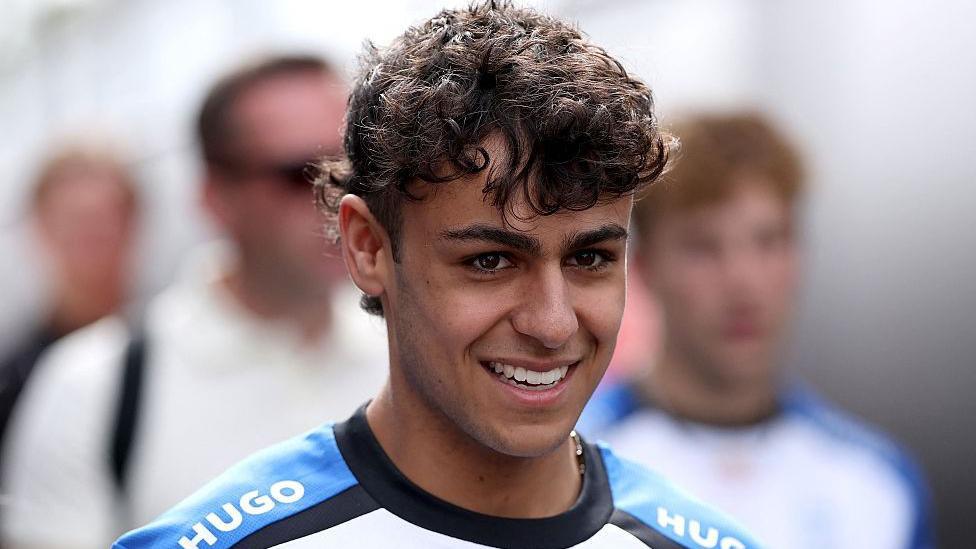
    The opening morning of the Barcelona shakedown ran behind closed doors and was interrupted several times, with Red Bull leading the running and new signing Isack Hadjar setting the unofficial pace.

    Hadjar’s best-reported laps were in the mid-to-low 1:18s, with accounts listing times such as 1:18.159, 1:18.835, and 1:18.1, and a 1:20.3. Media and teams cautioned that differing tire choices and private running programs made direct comparisons unreliable. An unofficial timing stream that had been available during the session was later removed, and at least three red flags stopped running for incidents involving Franco Colapinto (Alpine), Gabriel Bortoleto (Audi), and Liam Lawson (Racing Bulls).

    Only seven of the 11 teams ran on the opening day. McLaren and Ferrari deferred their appearance to later in the week, while Williams missed the shakedown after failing initial FIA crash tests, and Aston Martin’s appearance was pushed back. Mercedes completed more than 20 laps in the morning, made a midday driver change with Kimi Antonelli giving way to George Russell after lunch, then spent significant time in the garage later in the session. Haas driver Esteban Ocon logged the highest reported mileage of the day with around 154 laps, Sergio Perez largely did installation laps, and Sky Sports reporter Ted Kravitz described Red Bull’s heavy program of 108 laps as “eye-catching.”

    The stop–start, closed nature of the shakedown made it primarily a debugging and mileage-gathering exercise rather than a conclusive performance test. Teams focused on reliability checks, systems validation, and running different tire compounds while keeping program details private. Hadjar’s strong debut and Red Bull’s substantial mileage were the clearest takeaways from the opening morning. However, the limited participation and red-flag interruptions mean a fuller picture of relative competitiveness will have to wait for subsequent sessions.

    More
  • Mercedes Posts 151 laps as Teams Focus on Mileage

    Mercedes Posts 151 laps as Teams Focus on Mileage

    F1 opened the new technical era with a tightly controlled, closed-doors shakedown at the Circuit de Barcelona-Catalunya. Seven of the 11 teams ran on the first day, while Ferrari and McLaren deferred their programmes. Williams skipped the Barcelona shakedown entirely because of car delays. Organisers disabled live timing and limited teams to three of the five test days, making Barcelona a guarded prelude to the longer February Bahrain tests and prioritising system checks and data gathering over public performance comparisons.

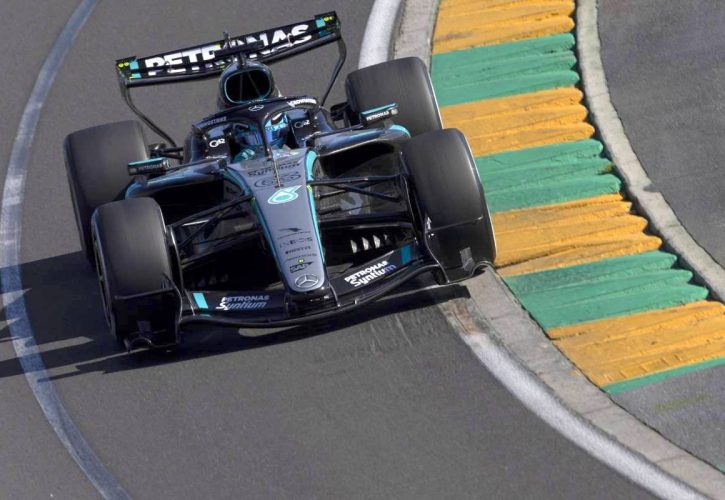
    The primary story was mileage and reliability. Mercedes split running between Kimi Antonelli in the morning (56 laps) and George Russell in the afternoon (95 laps) for a combined 151 laps (about 700 km). Haas and Esteban Ocon also logged heavy mileage (Ocon roughly 154 laps), and Red Bull completed over 100 laps.

    Isack Hadjar put the RB22 on top of the unofficial times with a 1:18.159, with Pirelli reporting that Red Bull ran predominantly on the C3 soft compound. Timings and comparisons from the Barcelona shakedown should be treated as unofficial and were several seconds slower than last year’s Spanish Grand Prix practice benchmarks, reflecting the day’s emphasis on durability rather than outright pace.

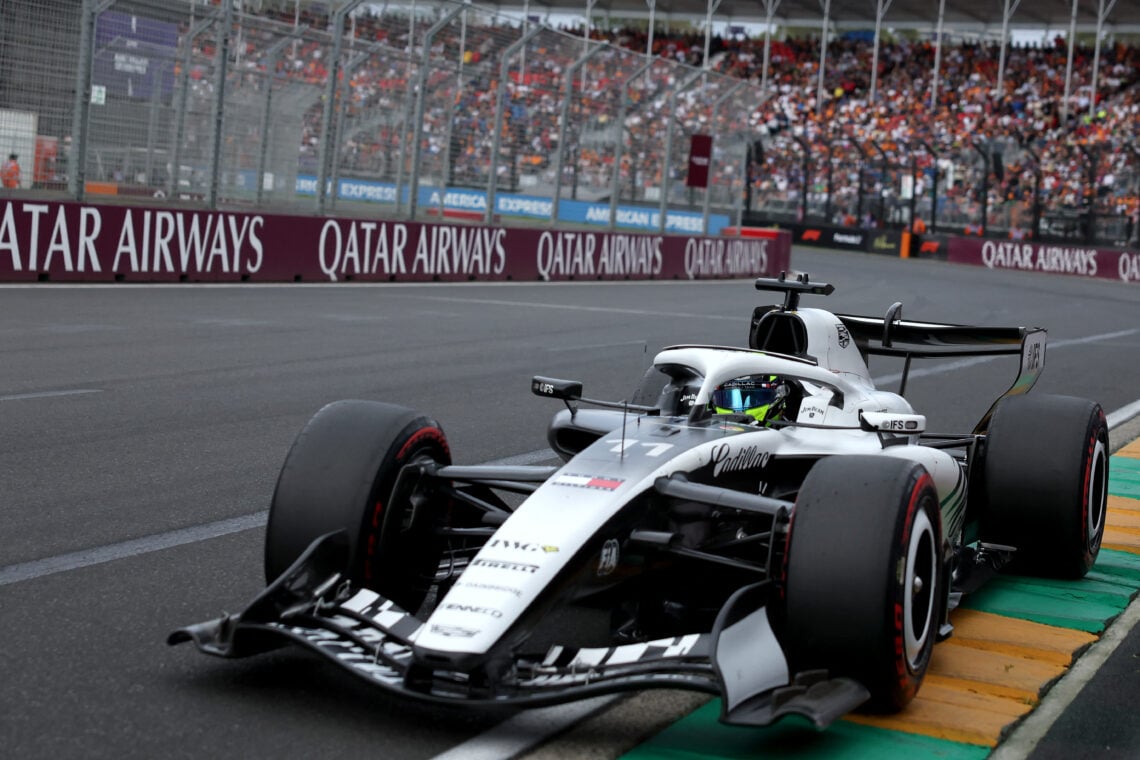
    The day offered the first meaningful look at the new power units and how teams are adapting to revised hybrid and aerodynamic rules. Red Bull debuted its RBPT unit developed with Ford and showed encouraging mileage and apparent reliability. George Russell singled out both Red Bull’s new engine and the Ferrari-supplied unit used by Haas for strong running. New manufacturer entries had a mixed start. Audi’s Gabriel Bortoleto stopped at Turn 10 with an issue under investigation, and Cadillac’s Valtteri Bottas completed a limited programme of roughly 30 laps before Sergio Pérez later ran the car. Alpine triggered a morning red flag with a sensor problem while Franco Colapinto had a brief wobble before returning to the pits.

    With running deliberately restricted and several teams yet to appear, the Barcelona shakedown served chiefly as a reliability and systems check. It signalled the start of a markedly different technical era in F1 but left many performance questions unresolved ahead of the February Bahrain tests.

    More
  • Williams Turns to VTT at AVL, Plans Bahrain Catch-Up

    Williams Turns to VTT at AVL, Plans Bahrain Catch-Up

    A behind-closed-doors private shakedown for 2026 cars at the Circuit de Barcelona-Catalunya opened with several teams delaying or shortening their on-track programs. Aston Martin skipped the first day but planned to run later in the week, and PlanetF1 reported that McLaren and Ferrari also had shortfalls. PlanetF1 additionally suggested that the Adrian Newey–designed AMR26 had passed the relevant FIA safety tests, although some late component specifications still required homologation, leaving room for late-stage technical and regulatory checks before full pre-season running resumed.

    Williams confirmed it would not take part in the Barcelona shakedown, announcing the FW48 was behind schedule and that the team would instead run a virtual test-track (VTT) program and preparatory checks, most likely at AVL in Austria. Coverage cited build delays that teams have linked to the sweeping 2026 chassis and power-unit regulations and reported that compliance with FIA crash-test rules acted as a gating requirement for on-track appearances. Some outlets said crash or stress-test timing was a factor in Williams’ absence. Under team principal James Vowles, Williams also acknowledged diverting development time to the 2025 car during late-season work, a decision the team said contributed to the FW48 delay. Missing the Barcelona shakedown, the first of three pre-season events required by the regulations, reduces Williams’ early on-track mileage and data collection compared with rivals who ran in Spain, and the team will rely on Bahrain to complete critical validation and setup work that real laps would ordinarily provide. While the VTT and preparatory program aim to limit the shortfall, reporting noted that virtual runs cannot fully substitute for live running, leaving Williams with a catch-up task once on-track testing resumes.

    More
  • Hadjar Crash Ends Red Bull’s Day

    Hadjar Crash Ends Red Bull’s Day

    Rain during Tuesday morning of the Barcelona pre-season test forced Mercedes, Alpine, Audi, and Cadillac to cancel planned running; Haas remained offline to analyze opening day data, and Aston Martin confirmed it would miss both Tuesday and Wednesday, expecting to run only the final two days. McLaren had planned to start on Tuesday alongside Ferrari, but only Ferrari and Red Bull logged laps in the early session. Red Bull had topped Monday after strong running from Isack Hadjar, with him and his partner Max Verstappen logging laps across the two opening days. Verstappen briefly beached the RB22 at Turn 5 on an outlap, triggering a red flag of just over five minutes, but he recovered, and testing resumed.

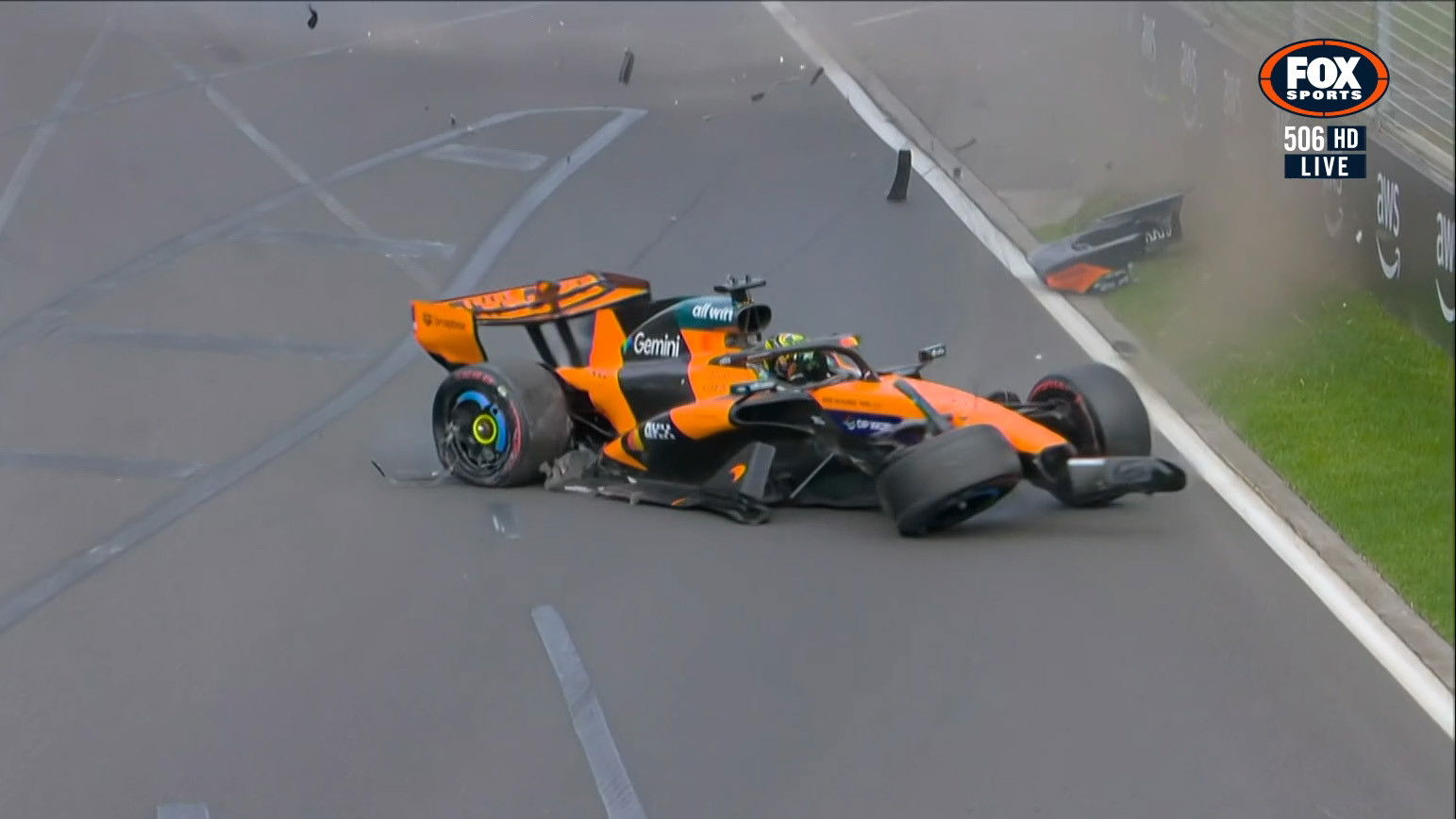
    Late on Tuesday, Hadjar crashed the RB22 into the tire barriers at the final corner with roughly 30 minutes remaining, ending Red Bull’s second day early. The car skipped across the gravel and came to rest backwards against the barriers, with eyewitnesses reporting likely rear-wing damage. Initial accounts did not determine whether the loss of control stemmed from driver error or a mechanical issue, and team officials began assessing spare-part availability to see if any further running could be achieved before the 6 p.m. local checkered flag. Red Bull can choose when to use its remaining permitted test day before Friday to fly spares in from the U.K., and that decision will determine how much of its planned program it can recover ahead of the season.

    More
  • Ferrari Says Halts Were Intentional land Within Demo Cap

    Ferrari Says Halts Were Intentional land Within Demo Cap

    Charles Leclerc completed a limited shakedown of Ferrari’s SF-26 at Fiorano after Lewis Hamilton sampled the car moments earlier. Ferrari limited running to the 15-kilometer demonstration allowance. The brief outing proceeded in foggy, slightly wet conditions, with Tifosi present, and was primarily a systems check. Both drivers said sensors and basic systems checked out, but cautioned it was too early to judge on-track performance.

    Hamilton said the sight of the Tifosi and the short run reignited his passion, while Leclerc described the outing as exciting and emotionally significant. The Monégasque also warned that the 2026 regulations require drivers to relearn many software programs and to adapt energy management and driving style, calling the transition a “big challenge” that nonetheless excites him.

    Footage showing brief stops prompted scrutiny, but sources said those halts were intentional so Ferrari could maximize the demonstration allowance and return the cars to the garage rather than indicate technical trouble. The shakedown underscored Ferrari’s cautious rollout, prioritizing reliability and driver confidence before seeking performance gains.

    Ferrari expects to move beyond these checks at the Barcelona pre-season test, Jan 26–30, where engineers and drivers will search for the SF-26’s limits. Several other teams also carried out Fiorano shakedowns as preparations continue. However, Williams confirmed it will miss the Barcelona test to focus on Bahrain, while Aston Martin and McLaren planned limited attendance in the early days.

    More
  • Alpine Bets on Mercedes Power Unit and Briatore's Leadership

    Alpine Bets on Mercedes Power Unit and Briatore’s Leadership

    Alpine entered 2026 carrying the fallout from a miserable 2025 campaign that left the Enstone team bottom of the constructors’ standings. Pierre Gasly accounted for all 22 points while rookies Jack Doohan and Franco Colapinto failed to produce top‑10 finishes. That on‑track decline followed years of leadership churn, starting with the departure of Marcin Budkowski in January 2022, the removal of Otmar Szafnauer after the 2023 Belgian Grand Prix, and Bruno Famin leaving in 2024. More recently, Oliver Oakes led and then exited the garage in mid‑2025, handing the reins to Flavio Briatore, who took over as executive advisor and de facto leader. The Italian has set a hardline tone, privately and publicly warning there are “no more excuses.” He now effectively co‑leads the team alongside managing director Steve Nielsen and has made the engine supply switch a central plank of his plan to restore competitiveness.

    As part of that reset, Alpine controversially shut down Renault’s Viry powertrain plant and announced it will use Mercedes power units for 2026. The decision has prompted protests and debate amid a compression‑ratio controversy, but which the team argues could offer an advantage under the new regulations. Alpine revealed its 2026 challenger, the A526, aboard the MSC World Europa with Briatore, Nielsen, technical director Davide Sanchez, and drivers Gasly and Colapinto in attendance. The reveal prefaced an initial shakedown at Silverstone after postponing an earlier Barcelona test because of complications with the Mercedes engine. Alpine is now heading to pre‑season testing in Barcelona this week, with the engine change, new regulations, and an early running of the A526.

    Alpine has publicly set a target of at least a top‑five finish in the constructors’ standings, but leaders caution the reset may not succeed and have warned that further organizational instability could follow if results do not improve. The timing of tests, including Williams’ absence from the first pre‑season test, may create short‑term competitive openings, yet the true measure of progress will arrive once the season begins and the team’s collaboration with Mercedes is tested in race conditions. Taken together, the leadership overhaul and the switch to Mercedes power units represent a high‑stakes technical and managerial gamble designed to halt Alpine’s slide and attempt a resurgence in 2026.

    More
  • Newey's AMR26 Delay Raises Stakes After Campus Spend

    Newey’s AMR26 Delay Raises Stakes After Campus Spend

    Pre‑season testing began at the Circuit de Barcelona‑Catalunya this week under an expanded five‑day program that lets teams run on three days and restricts media access. Several teams elected to skip sessions: Aston Martin delayed the AMR26’s planned debut and missed the opening two days (first running not expected until mid‑week at the earliest), Williams will skip the entire Barcelona test, and McLaren will miss the opening day, leaving multiple garages empty and Aston Martin potentially forfeiting some or all of its three allotted running days.

    Aston Martin blamed technical and development hold‑ups, as engineers were still finalizing the Adrian Newey–designed AMR26 and finding it hard to translate extreme aerodynamic concepts into a completed chassis. The team’s switch to Honda as its works power‑unit supplier added pressure after Honda admitted “problems” with its new 2026 unit, citing integration and packaging challenges. Broader 2026 rule changes have also complicated efforts to meet design and weight targets. These updates include a smaller, lighter chassis, an approximately 50/50 electric/combustion power split, and a reduced minimum weight target of 768 kg. The delay is especially sensitive given the substantial investment in a new campus and Newey’s arrival.

    Missing early running reduces Aston Martin’s opportunity for setup work, mileage, and data collection and limits driver acclimation for Fernando Alonso and Lance Stroll ahead of the Bahrain test windows on February 11–13 and 18–20. The late start could compress development and comparative data gathering in a pre‑season that prioritizes reliability, particularly as manufacturers such as Audi and Honda try to maximize limited on‑track time. Ferrari is focused on establishing a reliable reference car and accumulating mileage to avoid repeating 2025 problems, while Alpine and other teams are prioritizing clean, incident‑free running. Reports say Aston Martin could attempt to run later in the Barcelona window or concentrate on the Bahrain sessions to make up lost mileage.

    More