
NXTbets Inc

  • Ferrari Tweaks Engineer Line-Up Ahead of 2026 Regs

    Ferrari Tweaks Engineer Line-Up Ahead of 2026 Regs

    Ferrari confirmed recently that Riccardo Adami has moved into a new role and that it has not yet named a permanent replacement for Lewis Hamilton’s race engineer. Charles Leclerc’s race engineer, Bryan Bozzi, will split duties and work with both drivers during the Barcelona pre-season shakedown while staffing is finalized. Reports say there is “no chance” of signing Peter Bonnington, Hamilton’s long-time race engineer at Mercedes, as a replacement.

    Former driver and commentator Martin Brundle said he was surprised the change had not been made earlier and warned the timing is risky given upcoming pre-season running. Brundle emphasized that Hamilton benefits from engineers who understand his “Lewis speak” to interpret feedback and extract performance. The pundit cited several terse radio exchanges between Hamilton and Adami during 2025 as evidence that communication and rapport needed addressing.

    Ferrari framed the engineering change as part of preparations for the new 2026 technical regulations and to improve in-race communication. The team has scheduled the SF-26 launch and planned two three-day tests in Bahrain in February as it prepares for the regulation change. The Barcelona shakedown, the lack of a named permanent race engineer, and the temporary split of Bozzi’s duties will be watched closely for signs of Hamilton’s readiness with the new car.

    The 2026 season begins at Albert Park and will include a new Madrid event in September, before concluding in Abu Dhabi.

    More
  • FIA Sets Hot-Test Method; Commission Vote to Decide

    FIA Sets Hot-Test Method; Commission Vote to Decide

    Rival manufacturers raised alarms about a perceived loophole in the new 16:1 compression-ratio limit after reports suggested Mercedes and, to a lesser extent, Red Bull, had found a way to pass ambient, stationary FIA checks while running an effectively higher compression on track. Industry estimates put the potential benefit at roughly 10–15 bhp (commonly expressed as about 0.3–0.4 seconds per lap), and observers warned that customer teams using Mercedes power units, namely McLaren, Williams, and Alpine, could also gain.

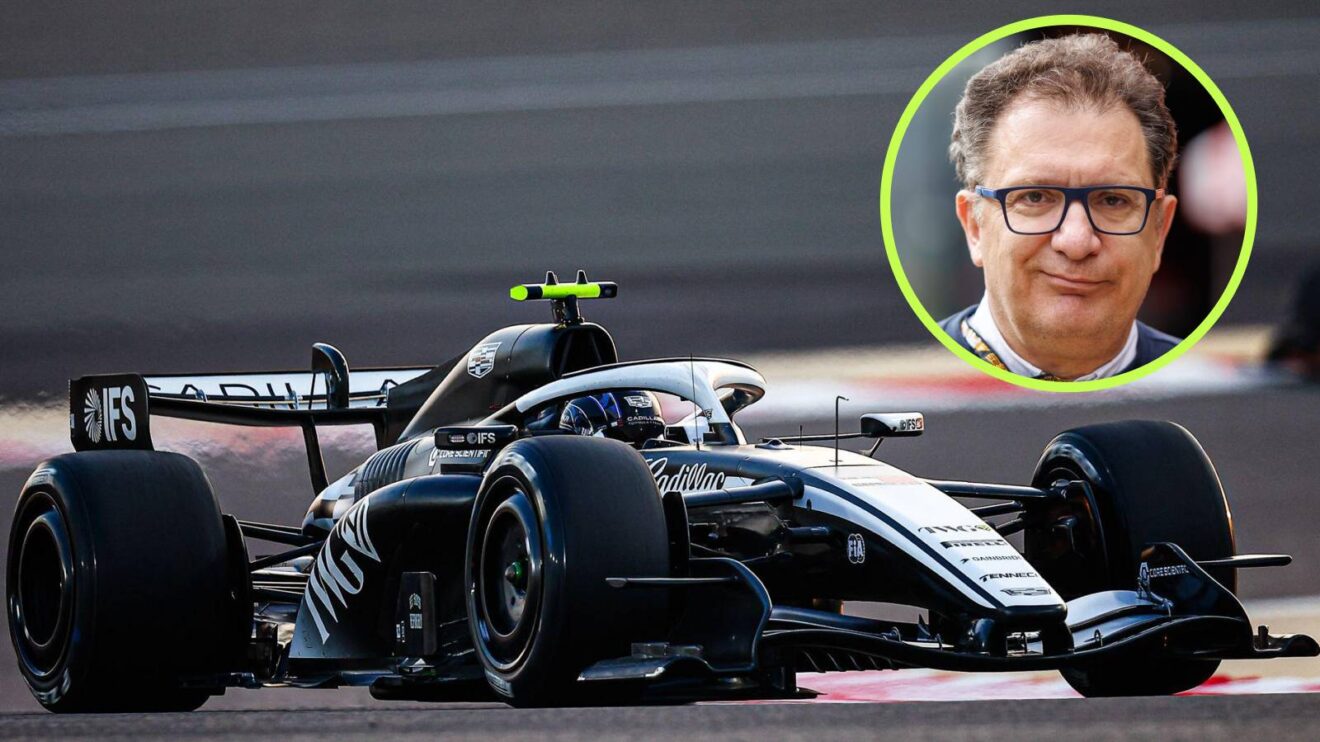
    Ferrari, Audi, and Honda formally pressed the FIA for clarity. Audi’s F1 project chief Mattia Binotto urged a measurement method that captures operating (hot) conditions and warned against filing protests without clear evidence. Audi technical director James Key called for decisive action to preserve the rules’ intent. Red Bull Powertrains (RBPT) technical director Ben Hodgkinson described its unit’s compliance as “crystal clear” and downplayed the controversy. The dispute focused on whether rule C5.4.3, which defines compression under ambient conditions, could be exploited through thermal expansion during the engine’s working cycle.

    Teams discussed responses ranging from formal protests to attempts to replicate the approach under the 2026 in-season development framework. The FIA convened engine technical experts and manufacturer representatives earlier this week to resolve the interpretation.

    Attendees agreed on a technical route to measure compression ratios at operating (hot) temperatures, creating a clear path to close the perceived loophole. However, ambient-temperature measurements remain the official standard for now; any formal change to testing or enforcement will require consultation with manufacturer principals and a vote in the F1 Commission. That Commission includes several Mercedes-powered teams and two Red Bull squads, so immediate implementation for the 2026 season was not expected.

    The meeting established a future measurement methodology and clarified enforcement intentions, but the timing and adoption of a hot-temperature testing regime for 2026 remain uncertain. Teams will watch the consultation and Commission process closely for any binding change.

    More
  • Mercedes Completes First Full Car-Engine Check of W17

    Mercedes Completes First Full Car-Engine Check of W17

    Mercedes completed the first shakedown of the W17 at Silverstone on Thursday, hours after unveiling the car in render form. Using one of its two permitted filming days, the team ran the full chassis-and-engine package for 67 laps, just under the 200 km promotional-day limit, in wet, cold conditions on the Silverstone International Circuit. George Russell and rookie Kimi Antonelli split driving duties; Mercedes ran on Pirelli’s grooved demo tyres and released footage that included shots of team principal Toto Wolff.

    Head of trackside engineering Andrew Shovlin described the outing as a sensible first step focused on safety, reliability, and driver familiarisation. The team prioritized basic systems checks and baseline data over performance runs.

    The session followed Alpine’s engine-only fire-up of Mercedes’ V6 hybrid at Silverstone the previous day and was Mercedes’ first on-track check of the complete car-and-engine combination. Mercedes said it will head to Barcelona to extend running and further acquaint both drivers with the W17 ahead of the pre-season test from January 26–30. The FIA granted extra testing scope this winter because chassis and engine rules are changing together for the first time since 2014, and nearly half of the 11-team grid had already completed early shakedowns. Mercedes positioned the Silverstone outing as a cautious, low-speed validation of hardware and software integration, a productive step ahead of broader pre-season running.

    More
  • Mercedes Reveals W17 for 2026 Electrified F1 Rules

    Mercedes Reveals W17 for 2026 Electrified F1 Rules

    Mercedes unveiled the W17, releasing official renders that offer the first visual preview of its clean-sheet car built to F1’s new 2026 chassis and engine regulations. The team presented the W17 as a technical response to rules that introduce roughly 50 percent electrification, fully sustainable fuels, and active aerodynamic elements; the images showed a largely black-and-silver livery with Petronas turquoise accents and new Microsoft branding on the airbox and front‑wing endplates. Mercedes confirmed George Russell and rookie Kimi Antonelli as its drivers and described the render release as an early strategic milestone rather than a final competitive statement.

    Mercedes outlined an intensive, staged development programme: detailed aerodynamic visuals were withheld ahead of a fuller season launch on Feb 2, and closed pre‑season testing in Barcelona is scheduled to run Jan 26–30. Technical chief James Allison has prioritised resources for the W17 while the team’s in‑house power unit programme continues development at Mercedes facilities in Brixworth and Brackley. The team signalled close collaboration with Petronas on advanced sustainable fuels and called the power unit programme a key pillar of the campaign; paddock observers noted progress under the new engine rules but stopped short of predicting a dominant advantage.

    Mercedes framed the W17, and its engine work as the foundation for rebuilding competitiveness after a modest seven‑win run during the 2022–2025 ground‑effect era and a recent constructors’ runners‑up finish. On‑track expectations rest on Russell converting results into a sustained title challenge and on Antonelli turning rookie promise into consistency; the W17’s first on‑track appearance is scheduled for the Barcelona test on Jan 26–30, with the Feb 2 launch planned to reveal more detailed aerodynamic and technical information once competitive secrecy eases.

    More
  • McLaren Delays MCL40 Day-One Run to Boost Development

    McLaren Delays MCL40 Day-One Run to Boost Development

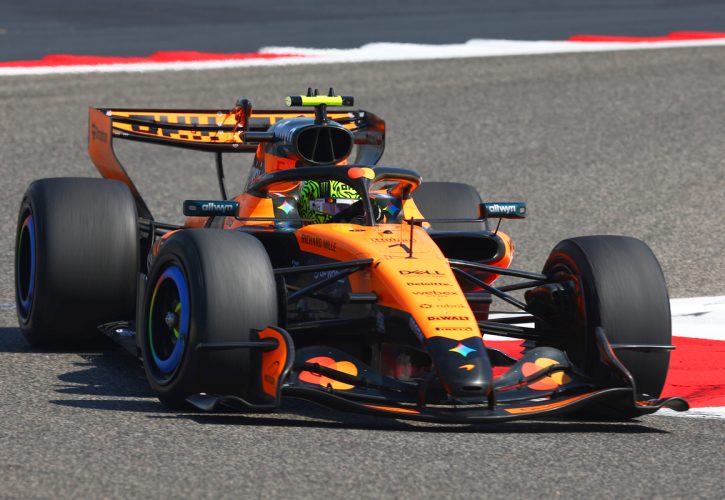
    McLaren will not run the new MCL40 on the opening day of the five-day closed Barcelona pre-season shakedown (January 26–30). Instead, the Woking garage will delay on-track running until day two or three while still using the three permitted test days. The car was started up late last week and is undergoing dyno and systems reliability work at AVL in Graz, Austria. McLaren will perform its on-track shakedown directly at Barcelona rather than hold a prior private run. Team principal Andrea Stella called the decision ‘plan A’, saying the deliberate delay is intended to maximize development time and ensure the car is properly built and signed off amid what he described as ‘almost unprecedented’ regulation changes.

    Technical staff framed the rollout as cautious and data-driven. Chief designer Rob Marshall said the Barcelona car will be ‘pretty much’ the package McLaren takes to the season opener. Only incremental updates are expected before the official pre-season tests in Bahrain. Technical director Mark Temple and Stella stressed the scale of the rule changes, noting that new electrical hybrid systems and tighter energy-management constraints will make battery use and recovery central to performance and strategy.

    McLaren will limit public visuals early, publishing a silhouette until the eve of Barcelona and holding a full livery reveal on February 9. The move underscores the team’s focus on internal validation before public exposure.

    The decision trades immediate on-track mileage for additional factory development and reliability validation, a calculated choice shaped by logistics (the car’s dyno programme in Austria) and cost-cap considerations. Several rivals, including Audi, Cadillac, Racing Bulls, Alpine, Mercedes, and Ferrari, have already completed or scheduled early shakedowns or filming days and could run on day one. McLaren’s later start reduces early running but keeps the team within regulatory allowances.

    Overall, the reigning Constructor Champions presented the approach as a strategic effort to protect long-term performance and preserve flexibility across the Barcelona test and the lead-up to the season opener. It allows McLaren to prioritize a controlled rollout of this season’s package over chasing early mileage.

    More
  • Drive to Survive S8 Chronicles Norris' 2025 Title Win

    Drive to Survive S8 Chronicles Norris’ 2025 Title Win

    Netflix announced today that Season 8 of Drive to Survive will be released on February 27, arriving on Netflix alongside the previous seven seasons.

    Netflix and the producers say Season 8 will offer behind-the-scenes access to the major storylines that shaped the 2025 F1 season. The latest installment will cover Lando Norris’s maiden drivers’ championship and McLaren’s constructors’ title, after Norris edged Max Verstappen by two points in a title fight that went down to the final race. The series will also address Lewis Hamilton’s first year at Ferrari, the dismissal of Christian Horner from Red Bull after two decades, Nico Hülkenberg’s first F1 podium, and Oscar Piastri’s role in the title battle.

    Netflix timed the release for about a week before the 2026 F1 season opens at the Australian Grand Prix, positioning the series as both a retrospective on 2025 and a promotional lead-in to the new campaign. Observers point to Drive to Survive’s role in growing F1’s global audience, citing attendance surges at races such as Austin, Miami, and Las Vegas, and related projects like the companion series F1: The Academy and the 2025 F1 film. Season 8 is expected to run about ten episodes of roughly 30 minutes to an hour each, continuing to blend on-track outcomes with off-track narratives that broaden mainstream interest in the sport.

    More
  • Mekies Warns Red Bull will be Underdog as 2026 Opens

    Mekies Warns Red Bull will be Underdog as 2026 Opens

    Red Bull enters the 2026 F1 season with its first in‑house power unit, built by Red Bull Powertrains with technical input from Ford. The new engine is scheduled to debut at the Australian GP in March, and the team has scheduled a closed‑door shakedown in Barcelona for January 26 as part of early preparations.

    A regulatory dispute has arisen over Article C.5.4.3 of the 2026 Technical Regulations, which sets a maximum geometric compression ratio of 16.0 measured at ambient temperature. Reports suggest Red Bull Powertrains and Mercedes may be exploiting wording in the article to run effectively higher compression ratios on track. The reports have prompted the FIA to convene technical experts to resolve differing interpretations. Red Bull technical chief Ben Hodgkinson defended the design, saying the team had pushed the package “right to the very limit,” expected measured targets around 15.999, and argued the nominal 16.0 limit is conservative given advances in combustion.

    Teams and the FIA agreed component limits for 2026 include four internal combustion engines/turbochargers and three MGU‑Ks per driver before penalties apply. The regulator granted an exception, giving Red Bull and Audi one extra power‑unit component across the board in 2027. Audi entered 2026 after purchasing Sauber and is the other new engine manufacturer alongside Red Bull Powertrains; the FIA’s concession to both newcomers could create a late‑season competitive swing in 2027 if either manufacturer contests the title.

    Red Bull also arranged to supply its sister team, Racing Bulls, through a technical partnership with Ford, extending its in‑house architecture beyond the works cars.

    Team principal Laurent Mekies described 2026 as a transition year in which in‑season development will be decisive. He warned Red Bull would not immediately match Mercedes and Ferrari in outright power and said a slow start could reignite speculation about Max Verstappen’s future. Verstappen is reported to have reaffirmed his commitment to Red Bull for 2026, despite holding exploratory talks with Mercedes and carrying a contract with performance-related exit clauses. Mekies said the team hoped to show “enough progress” during the season to secure Verstappen’s continuation.

    The technical switch, ongoing rule clarifications, and the FIA’s component concession leave Red Bull as an underdog entering 2026, with a recovery path defined by rapid development and regulatory outcomes.

    More
  • Red Bull finalises 2026 line-up, reshuffles junior pathway

    Red Bull finalises 2026 line-up, reshuffles junior pathway

    Red Bull finalised its 2026 driver line-up and plans to announce it on Tuesday ahead of the Abu Dhabi finale. The decision was made with input from Laurent Mekies, Helmut Marko and CEO Oliver Mintzlaff; management said the timing was chosen to avoid distracting Max Verstappen during the title run‑in and to allow any driver who misses out a proper send‑off in Abu Dhabi. Mekies emphasised that anyone racing in Abu Dhabi must be able to support Verstappen and praised Yuki Tsunoda’s recent pace as the team weighed its options.

    The core decision promotes Isack Hadjar into the senior Red Bull seat alongside Max Verstappen, creating a vacancy at sister team Racing Bulls that is set to be filled by 18‑year‑old FIA Formula 2 (F2) race winner Arvid Lindblad. The other Racing Bulls seat is contested between Liam Lawson and Yuki Tsunoda; reports said a high‑level meeting favoured retaining Lawson to partner Lindblad, while Tsunoda faces alternatives including a move to Racing Bulls, a reserve role, or release.

    The Qatar Grand Prix served as a final audition: Hadjar signalled he knew his future, Lawson finished ahead of Tsunoda and impressed team figures, and Tsunoda showed flashes of speed in the sprint despite an otherwise difficult season (15th in the standings with 33 points). The announced structure settles a key piece of Red Bull’s driver programme, reshuffles its junior pathway and has immediate implications for driver careers and partner‑team line‑ups in 2026. The Tuesday announcement is reported to finalise those placements and bring clarity after one of the off‑season’s most closely watched decisions.

    More
  • Ferrari Reassigns Riccardo Adami to Driver Academy

    Ferrari Reassigns Riccardo Adami to Driver Academy

    Ferrari announced it is moving Riccardo Adami off Lewis Hamilton’s car and appointing him manager of Ferrari’s Driver Academy and of its test and previous cars. Ferrari said it will use Adami’s trackside experience to help develop drivers and to manage the team’s test and previous cars, framing the change as an internal reallocation rather than a technical shake-up. Adami had been Hamilton’s race engineer throughout last season and previously worked with Carlos Sainz Jr. and Sebastian Vettel; Ferrari publicly thanked him for his commitment.

    The reassignment follows a season in which Hamilton underperformed relative to expectations and drew scrutiny after several awkward radio exchanges, though he publicly defended his working relationship with Adami. Ferrari acknowledged communications between the pair had sometimes been strained, citing their final radio exchange at the Yas Marina finale — where Hamilton, who finished P8, said, “Been a long season, guys. Grazie a tutti.” — and said there was room for improvement. Ferrari confirmed Hamilton will have a new race engineer for the upcoming season, but has not yet named a successor. The announcement came just over a week before the pre-season test in Barcelona and a week before Ferrari’s new-car launch, creating a tight timeline to appoint a replacement; the team said a decision is needed before on-track activity begins. Ferrari emphasised organisational continuity and positioned the move as a way to strengthen its performance culture and talent pipeline without signalling immediate changes to the car’s technical programme.

    More