NXTbets Inc

  • Engine Failures Force Yamaha to Pause Sepang Running

    Engine Failures Force Yamaha to Pause Sepang Running

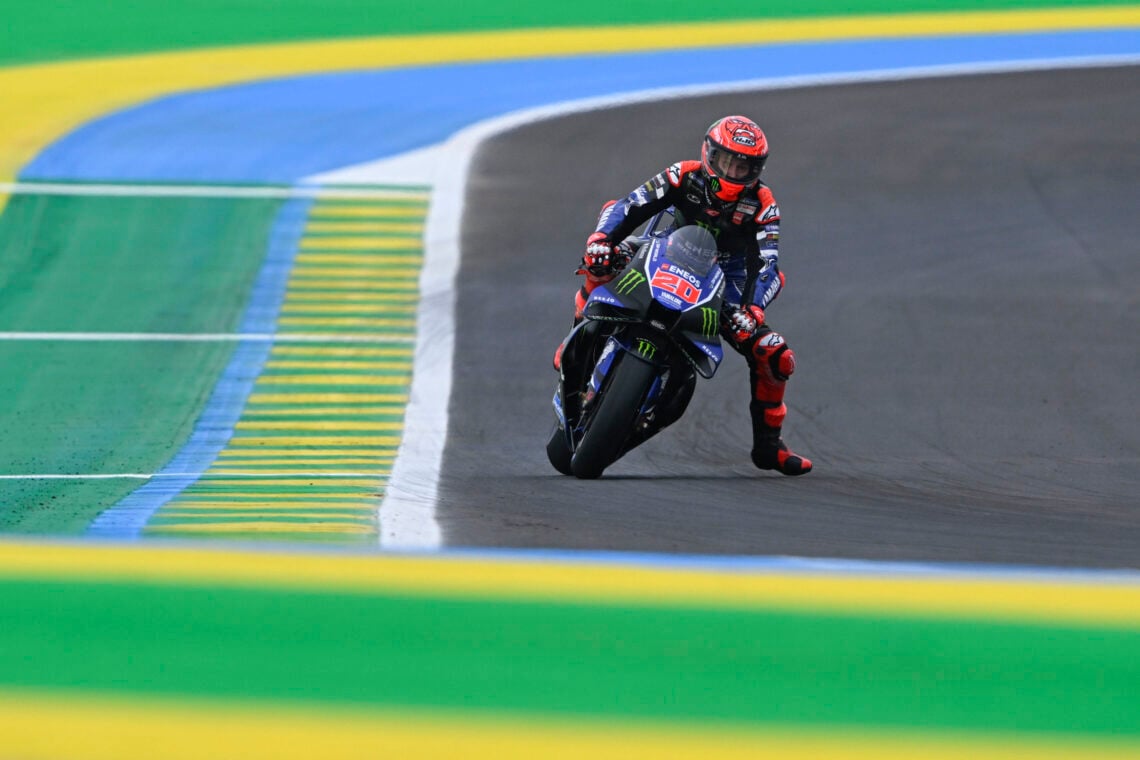
    Yamaha’s switch to a V4-powered M1 was tested under a difficult spotlight at the Sepang pre-season test, where engine failures, handling peculiarities, and a rider injury disrupted the program. The factory team sat out the second day on safety grounds after unspecified engine problems affected Fabio Quartararo and Toprak Razgatlioglu. Quartararo crashed on the opening day, fracturing a finger that required surgery and was ruled out of the remaining days. Reports from the test said both Quartararo and Razgatlioglu destroyed engines during the outing, while Alex Rins added that an unnamed rookie also broke an engine during the program. Yamaha paused running to investigate overnight in Japan and Italy, then resumed later with reduced mileage, using D-concession status to preserve options for further engine work and private tests.

    On pace, the new V4 left Yamaha more than a second off the outright lap times and last among the five manufacturers. Sporting manager Maio Meregalli singled out power as the primary shortfall, even as he described the chassis and balance as satisfactory. Jack Miller, who began the official test 14th and finished the final day 17th, downplayed the fault while also saying he needed more consistent track time. He recorded an average top speed of 327.8 km/h, roughly 10 km/h down on Fabio di Giannantonio’s Ducati. The Australian was the only Yamaha rider to complete a ten-lap race simulation, leaving him 13.957 seconds shy of Alex Marquez’s best Sprint benchmark that afternoon. Alex Rins was the quickest Yamaha on pace in 12th, but limited running across the squad made it difficult to assess the package conclusively.

    Beyond outright power, riders reported handling disturbances. Razgatlioglu experienced a recurring Michelin rear-tire behavior when lifting the bike to about 25 degrees that only calmed when the gearbox was shifted into fifth or sixth. Jack Miller declined to elaborate on the technical causes when questioned, and other riders gave similarly guarded responses, underscoring unresolved reliability and safety questions heading into the rest of the pre-season. Yamaha now shifts focus to the final pre-season test at Buriram on February 21–22, where early development work will concentrate on extracting more engine performance and resolving the issues uncovered at Sepang.

    More
  • Stroll Backs In-House AMR26 with Honda Power Swap

    Stroll Backs In-House AMR26 with Honda Power Swap

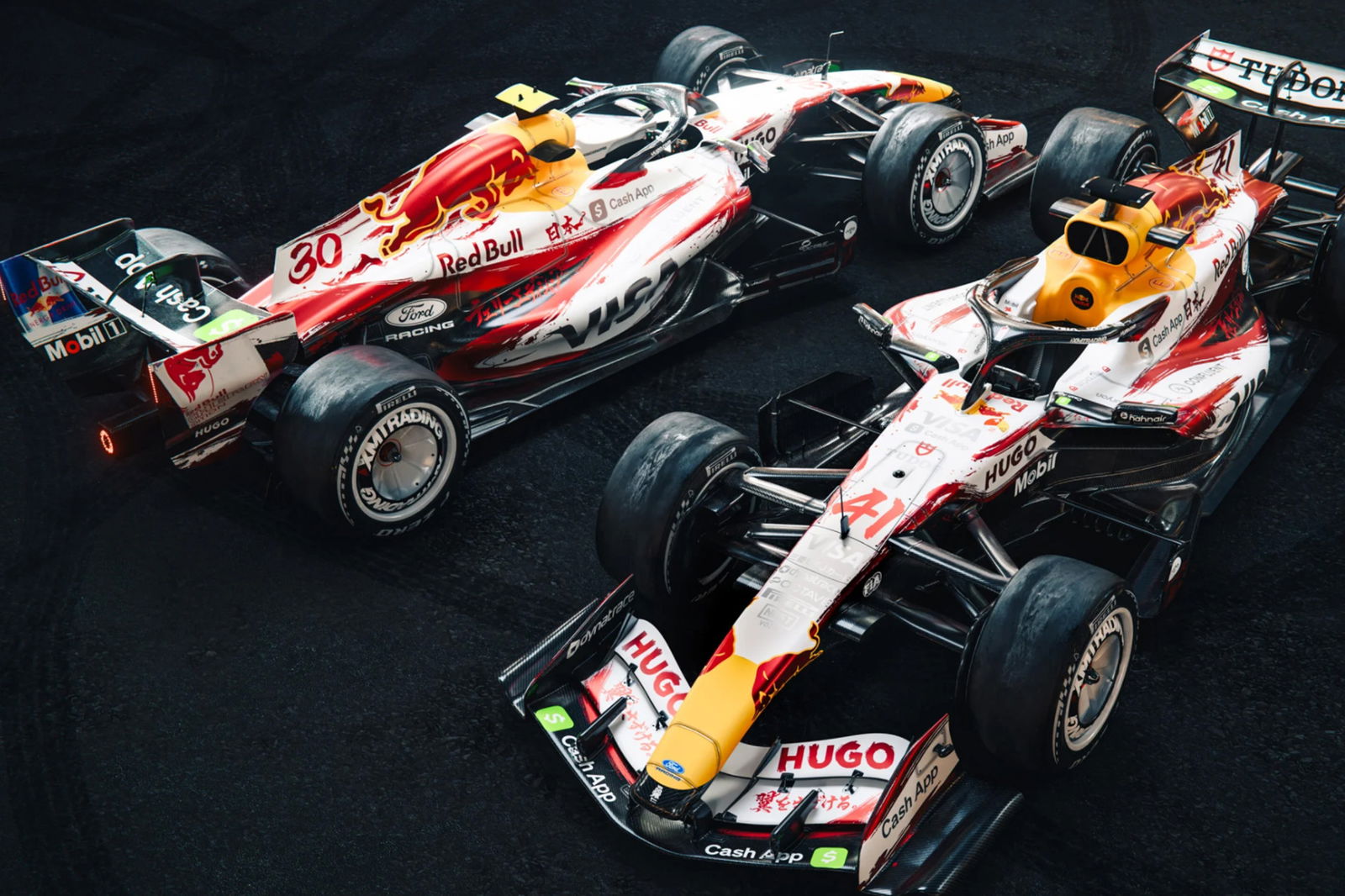
    Adrian Newey’s first Aston Martin design, the AMR26, completed a delayed on-track shakedown in Barcelona and immediately marked a clear technical departure for the team. Sky Sports F1 analyst Bernie Collins called the program a “mammoth undertaking,” noting Aston Martin’s move to an in-house gearbox and hydraulics and the switch to a Honda power unit. These steps were driven by significant investment from Lawrence Stroll that separates the car from the Mercedes-based drivetrains used previously. The late rollout limited track time, with only Fernando Alonso managing a full day of testing, leaving many performance questions unanswered ahead of the season opener.

    Technically, the AMR26 emphasizes undersurface-focused aerodynamics and unusually tight packaging. Observers pointed to a chamfered nose, a tapered front wing, aggressive rake, and a floor designed to generate the majority of downforce, plus numerous airflow vanes and a markedly larger airbox. PlanetF1’s Matt Somerfield highlighted the sidepod treatment and a cavernous gap beneath them that recalled past double-floor concepts. Newey described the car as a holistic package requiring close collaboration between aerodynamic and mechanical designers and said it contains “quite a few features that haven’t necessarily been done before.” He also warned that the AMR26 will be “very different” at the start of the season. Rival reaction combined curiosity and caution. Williams principal James Vowles labeled Newey’s suspension choices “very extreme,” joking that wishbones were placed “in places that I don’t think they should be,” while Mercedes driver George Russell called it the most standout design on the grid but stressed that striking looks must translate into lap-time performance. With unconventional rear-suspension packaging that appears to favor aerodynamic downforce or lower drag over traditional mechanical cornering, the car’s true competitiveness will be judged in Melbourne when full weekend running provides a clearer measurement under race conditions.

    More
  • Compression Theory Sparks Paddock Strain Before Melbourne

    Compression Theory Sparks Paddock Strain Before Melbourne

    A technical theory published earlier this month by Auto Motor und Sport (AMuS) generated a pre‑season controversy. It suggests that Mercedes, and separately Red Bull Powertrains, may have found a way to meet the FIA’s new 16.0:1 geometric compression cap in the garage while producing higher effective compression on track. AMuS reported Mercedes used 3D‑printed pistons to raise static compression to about 17:1. It also described a tiny one‑cubic‑centimeter pocket linked to the combustion chamber near the pre‑chamber spark plug that would stop expanding at operating temperature and thereby increase running compression; AMuS said Red Bull Powertrains had identified the same underlying principle but had not found a reliable implementation. Reported estimates of the on‑track gain varied by outlet, ranging from 10–13 hp up to 15–20 hp, depending on the publication. Translating these gains into time leads to a 0.2 – 0.3 second per lap advantage.

    The allegation is an unconfirmed technical theory, but it focused attention on Article C5.4.3, which currently measures compression “at ambient temperature.” It prompted rival manufacturers, led publicly by Ferrari, Audi, and Honda, to press the FIA and the Power Unit Advisory Committee (PUAC) to change measurement procedures so compliance would be checked with engines hot or via in‑use sensors. Teams discussed the issue at a late‑January technical experts meeting and then in subsequent PUAC sessions. Formally changing the written procedure would require support from four of the five engine manufacturers plus the FIA and Formula One Management.

    Red Bull’s position was viewed as pivotal to securing that supermajority, and sources indicated it may back closing the loophole to avoid leaving Mercedes with a pre‑season advantage. Mercedes team principal Toto Wolff publicly defended the work as legal and transparent, pointing to the team’s recent five‑day shakedown and apparent reliability as evidence of legitimacy.

    The FIA initially measured engines cold and declared them compliant, but Autosprint recently reported the governing body plans to retest all V6 power units under hot, running conditions starting at the Australian Grand Prix to verify compliance in race‑like conditions. With the March 1 homologation deadline approaching, rapid regulatory change before Melbourne looks difficult, so any substantive rewrite is likely to be deferred into 2027. The dispute centers on measurement methodology and enforcement rather than a new hardware ban, but it has raised political and sporting tensions in the paddock and risks overshadowing the start of the season.

    More
  • Horner Praises Ricciardo, Faults Red Bull Car

    Horner Praises Ricciardo, Faults Red Bull Car

    Former Red Bull team principal Christian Horner said Daniel Ricciardo could have been an F1 World Champion if Red Bull had produced a car that matched the Australian’s talent. He made the comments while preparing for a three‑stop speaking tour in Australia.

    Horner praised Ricciardo’s on and off‑track behaviour, arguing that machinery, not the driver, was the main reason Ricciardo never converted his early promise into a title. He said he will expand on the assessment during events in Melbourne, Sydney, and Perth later this month. He made similar remarks on The Christian O’Connell Show, contrasting Ricciardo’s peak pace with periods when Red Bull’s car was not the most competitive on the grid.

    Ricciardo’s career timeline was recalled. He debuted in F1 in 2011 as an HRT replacement, progressed via Toro Rosso, and was promoted to Red Bull’s senior team in 2014 to replace Mark Webber. In 2014, he won three races, added five more podiums, and finished third in the Drivers’ Championship (notably ahead of teammate Sebastian Vettel). He also recorded seven wins with Red Bull and eight in his career, with the best championship results of third in 2014 and 2016. He left the senior Red Bull team after the 2018 Azerbaijan clash, later raced for Renault and McLaren, then returned to the Red Bull family as a reserve in 2023. He was promoted to AlphaTauri after Nyck de Vries was dropped, and in 2024 was replaced by Liam Lawson with six races remaining. Ricciardo retired from F1 after the Singapore Grand Prix late in 2024.

    Horner’s comments were set against Red Bull’s later rise after switching to Honda power, when Max Verstappen and the team dominated the early 2020s and collected multiple World Championships. The remarks underline how car performance and team decisions can shape a driver’s record while highlighting Ricciardo’s enduring popularity and legacy in the sport.

    More
  • Toprak: I'll Probably Struggle First Five Races After Sepang

    Toprak: I’ll Probably Struggle First Five Races After Sepang

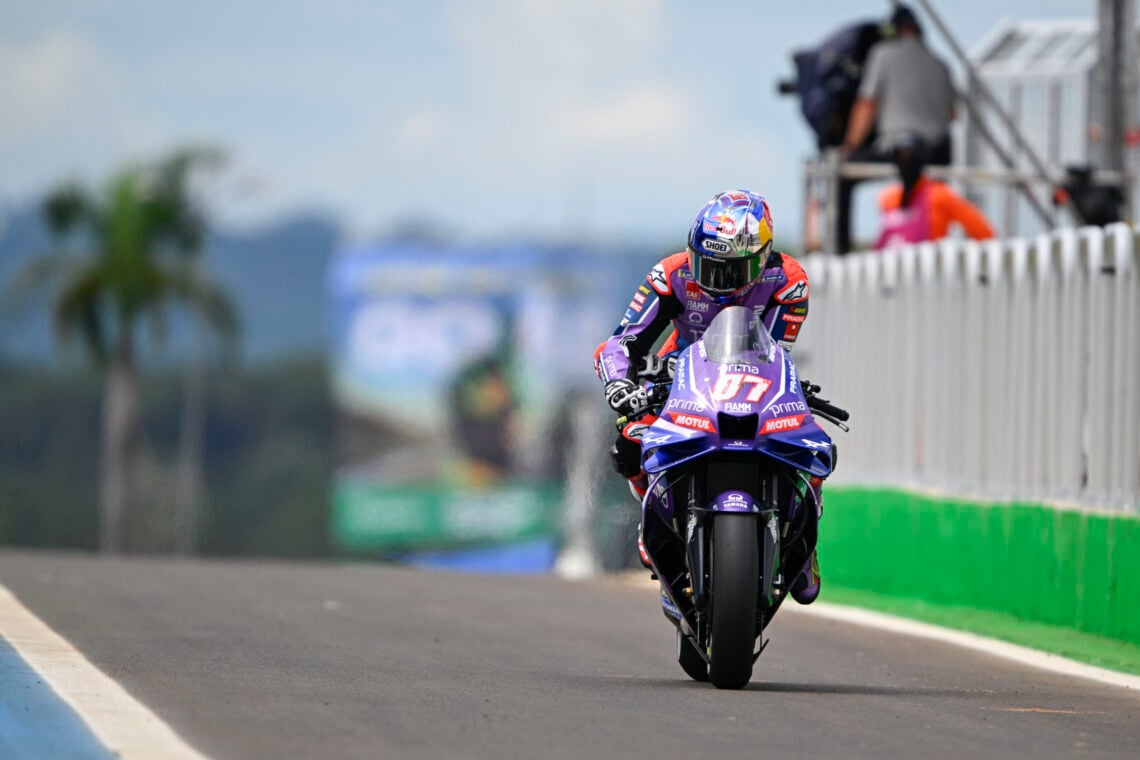
    Toprak Razgatlioglu delivered a downbeat assessment after the Sepang pre‑season MotoGP test, saying he expects to “probably struggle in the first five races” as he adapts from World Superbikes to MotoGP machinery. He completed the test with a best lap of 1:58.326, recorded around 18th–19th on the timesheets, well adrift of pacesetter Álex Márquez’s 1:56.402. After four-and-a-half days on track, he reported learning “something, but not a lot,” and said the five consecutive days left him physically tired, underlining how different the demands of a MotoGP race bike are compared with production‑based superbikes.

    The Sepang sessions also exposed technical and setup problems within Yamaha’s new V4 package. The factory briefly halted running when a Yamaha V4 stopped on track, before resolving the engine issue and returning to action. Razgatlioglu highlighted ergonomic and handling challenges that “you can’t turn with the throttle,” and he has had to ride the YZR‑V4 more like a Moto2 machine, explaining that suspension changes are planned to improve turning. He reported improved braking after trying a different seat and reattaching the rear wing (earlier runs had the wing removed because his original seat exceeded height limits), but remained uncertain about Michelin rear‑tire wear and said tire behavior still limited his ability to hit his target lap time.

    Others outside Yamaha framed Sepang as a learning and diagnostic outing. Pedro Acosta publicly urged Toprak to be cautious and not to overload expectations during his rookie transition, while Carlos Checa called him a likely top‑five rider but flagged two main uncertainties. The first is how well Yamaha’s new package will perform, followed by whether Toprak can adapt quickly to Michelin tires in the premier class. Yamaha plans further setup work and new parts at the Buriram test in just over two weeks, including additional rear‑wing trials and a possible 12‑lap race simulation to evaluate tire behavior. Taken together, the Sepang test highlighted both rookie adaptation issues and early reliability/setup and tire concerns for Yamaha’s V4 prototype, leaving Toprak’s immediate race competitiveness cautious rather than assured as the season opener approaches.

    More
  • Volusia DIRTcar Nationals Run Six Nights, Big Gator Looms

    Volusia DIRTcar Nationals Run Six Nights, Big Gator Looms

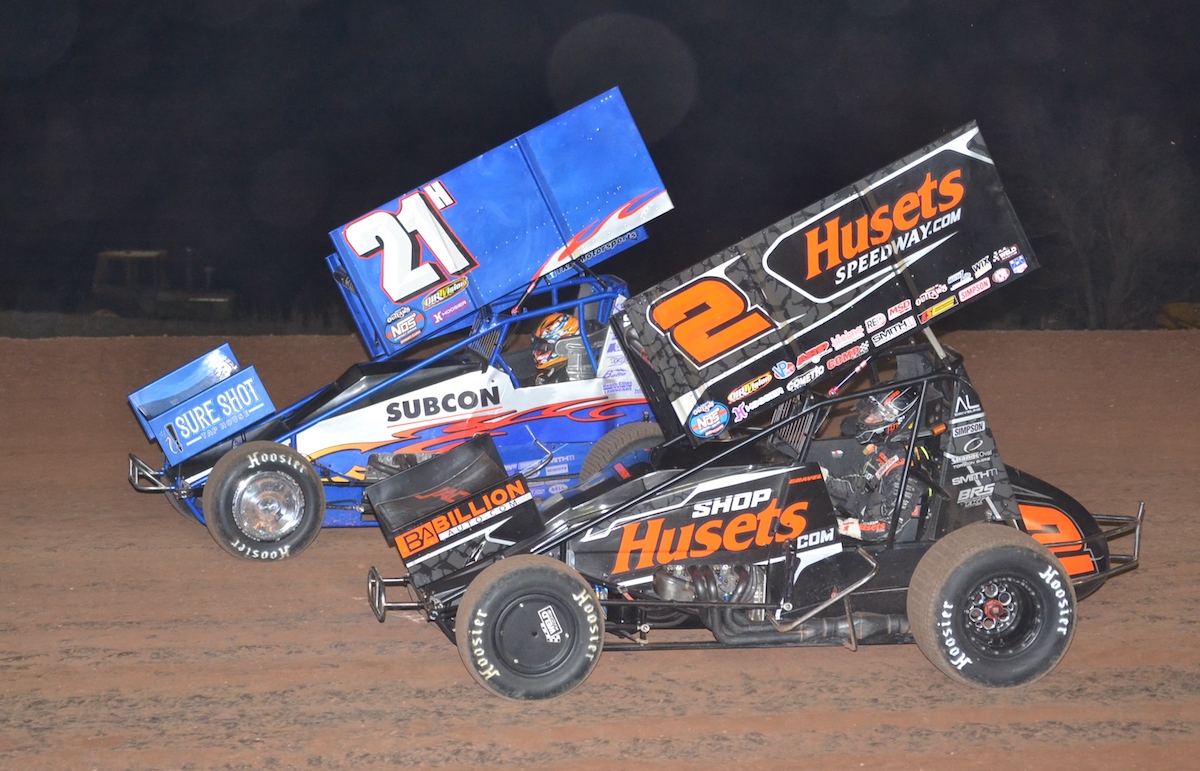
    Volusia Speedway Park will host the Federated Auto Parts DIRTcar Nationals for six straight nights, February 9–14. The week mixes non-points cards and World of Outlaws Late Model Series (WoO) points-paying mains. There are two $7,000-to-win shows on the first two days, a split-field night with three $5,000 features on night three, and $12,000-to-win mains on February 12–13. But the main event is reserved for the final night, when racers will contest the $20,000-to-win Big Gator finale. AMSOIL USAC Sprint Cars join the opening nights, and the Super DIRTcar Series runs from February 11–14, creating a stacked week of touring-series competition.

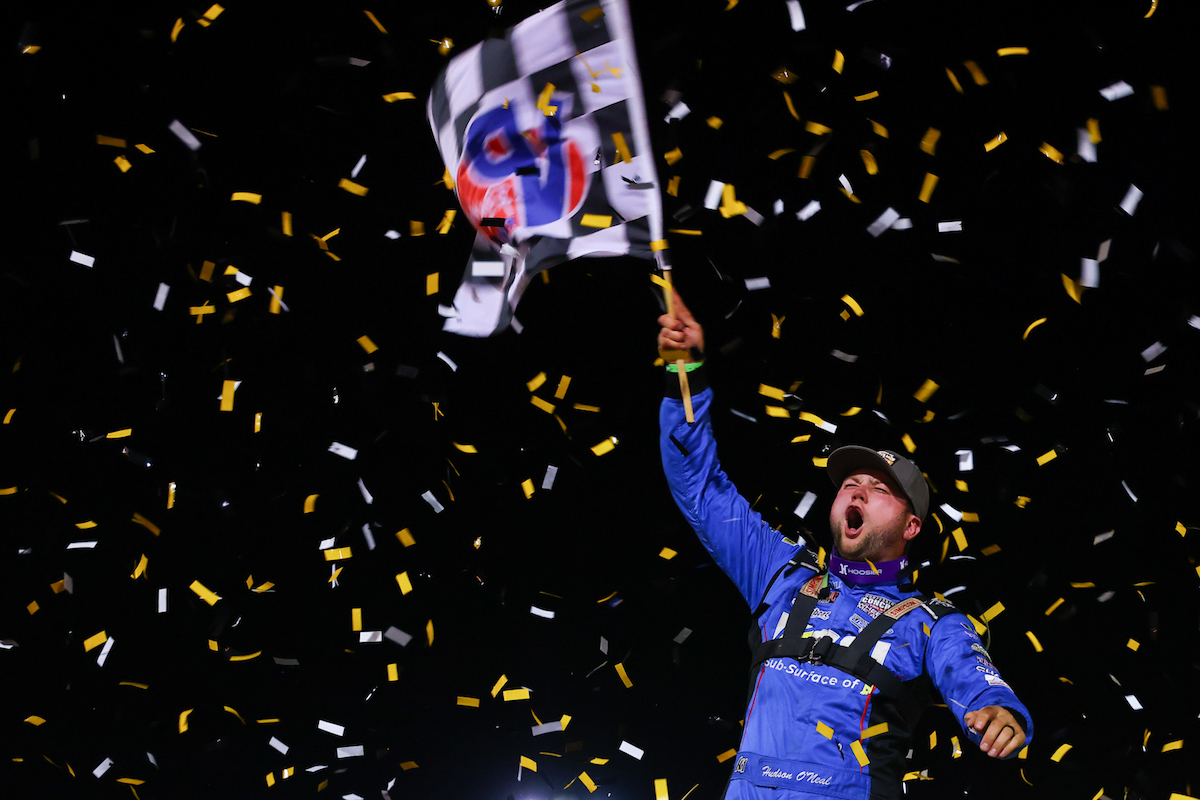
    This year’s entry list is expected to be among the season’s strongest, with established stars and in-form contenders entered for the WoO points events and the Big Gator finale. Brandon Sheppard, fresh off a Sunshine Nationals victory, leads the de facto WoO points entering Volusia ahead of Nick Hoffman, while two-time defending Volusia champion Bobby Pierce sits fifth, 18 points back. Hudson O’Neal has already posted three wins this year, and 2025 Big Gator champion Ricky Thornton Jr. arrives after two wins and a worst finish of sixth at Volusia last year. The list mixes veterans such as Dennis Erb Jr., Chris Madden, and Tim McCreadie with rising contenders and newcomers, including Daulton Wilson and Trey Mills.

    The Big Gator trophy was first awarded to Dennis Erb Jr. in 2012 and remains the marquee prize at the finale and often foreshadows season momentum. Josh Richards used Volusia success to power an 18-win championship campaign in 2016, and Brandon Sheppard turned strong Volusia weeks into series championships and crown-jewel victories in 2019, 2020, and 2024. Scott Bloomquist and Shane Clanton similarly leveraged Volusia as a springboard, while Devin Moran and Ricky Thornton Jr. translated Volusia form into major wins in recent seasons. With six nights on tap, this year’s DIRTcar Nationals and the Big Gator finale will serve as both a standalone crown and an early indicator of which drivers could carry momentum through the WoO season.

    More
  • Quartararo Denies Honda Deal After Sepang Setbacks

    Quartararo Denies Honda Deal After Sepang Setbacks

    Reports before the first official 2026 pre-season test at Sepang claimed Fabio Quartararo had signed a two-year deal to join Honda from 2027. However, the rider publicly denied a completed agreement, while confirming HRC remained one of the options he was considering. The Sepang test itself was disruptive. Quartararo crashed on day one, broke a finger, and missed the remainder of that session, then encountered an engine problem Yamaha could not fix during the test. Yamaha also missed running after an unexpected engine issue described by team management as something they had “never had” before, as Alex Rins posted Yamaha’s best finish (12th). Team sporting director Massimo Meregalli said the Sepang incident did not change decisions on Quartararo’s future and characterized the interruption as a delay that pushed parts of the negotiation and testing program toward the next test.

    Yamaha acknowledged it had reduced engine revs as a protective measure while continuing the development of its new V4, and planned to complete unfinished work during the upcoming Buriram test. The manufacturer emphasized continuity of its V4 program and insisted contract talks over 2027 were proceeding despite the Sepang interruption. Quartararo himself denied reports he had already signed for Honda even as questions about Yamaha’s pace of development and testing reliability intensified. Media reports and team comments linked the technical setbacks at Yamaha with increased speculation over the rider market, rather than presenting any confirmed move.

    Honda presented a contrasting picture of forward momentum at Sepang. Team manager Alberto Puig praised Quartararo as “fantastic,” highlighted steady technical progress at HRC, including a lighter bike and improved engine response. The former rider cautioned that immediate wins could not be guaranteed. Joan Mir set the fastest time on day two, in what was reported as the quickest Honda lap around Sepang, and described the current RC213V as the best bike he had ridden, adding weight to Honda’s on-track gains. Puig repeatedly denied that anything for 2027 had been decided, and said Honda would prioritize its current roster while seeking riders who were both fast and intelligent. He noted that Johann Zarco and Diogo Moreira were already locked in with LCR through 2027, leaving factory-team seats contested between Mir and Luca Marini. Puig framed the 2026 contract season as chaotic and said on-track results and the evolving rule environment would shape final decisions once the season got underway.

    More
  • Hamilton Parts with Hynes Weeks Before 2026 Season

    Hamilton Parts with Hynes Weeks Before 2026 Season

    Lewis Hamilton has split from long-time manager Marc Hynes weeks before the start of the 2026 F1 season. The split was described as mutual. The pair first worked together in 2015, paused the relationship in 2021 when Hynes left his role as chief executive of Hamilton’s Project 44, and reunited ahead of Hamilton’s move to Ferrari for 2025. Hynes is reportedly set to join the nascent Cadillac F1 team and continues to manage Zhou Guanyu, Cadillac’s 2026 reserve driver. Reports say he is expected to work with Cadillac team principal Graeme Lowdon on Zhou’s management. Hamilton has privately hinted at adjustments to his personal and team setup over the winter but has not publicly commented on Hynes’s departure.

    The change comes amid a reshuffle at Ferrari. The team moved Riccardo Adami to head Ferrari’s Academy and TPC programmes, Bryan Bozzi filled in at the recent Barcelona shakedown, and Cedric Michel‑Grosjean is expected to step up in the race operation. These staff moves, together with Hamilton’s split, alter his immediate support network ahead of the new campaign.

    Those personnel shifts sit alongside wider technical and competitive change across F1. Last season, Lando Norris won his maiden world championship by two points over Max Verstappen in Abu Dhabi. Teams are preparing technical updates for 2026, Williams confirmed a mixed pushrod–pullrod suspension layout. Adrian Newey said Aston Martin fell roughly four months behind rivals during AMR26 development. Together, these developments underline a period of transition as F1 enters the 2026 season.

    More
  • Cooper Webb Nets 50th SMX Win, 6th Triple Crown

    Cooper Webb Nets 50th SMX Win, 6th Triple Crown

    Yamaha announced an update to the 2026 YZ450F that prioritized refined power delivery and improved handling to make the bike easier to ride fast.

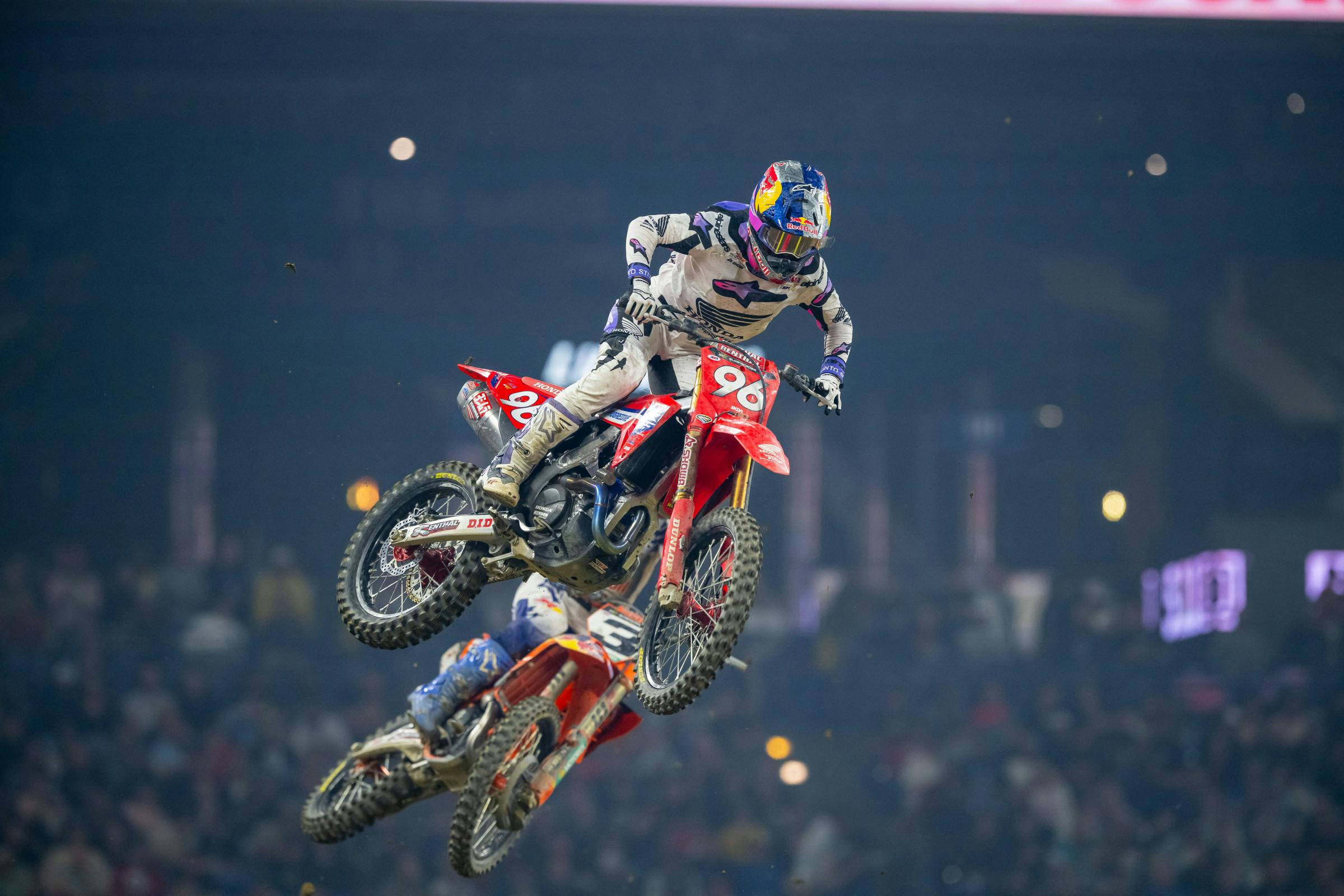
    At the most recent SMX League round, Cooper Webb won the 450SX overall with moto finishes of 4-2-3, earning his 31st 450SX class victory and his 50th career SMX League win. That milestone made Webb the 13th rider in SMX history to reach a half-century of wins and delivered his sixth Triple Crown in the process. The Yamaha rider also became only the fourth rider to take an overall round without winning a single moto race, underscoring his consistency and the influence of Triple Crown scoring on round outcomes.

    Hunter Lawrence finished second on the day (7-1-2), marking his fifth 450SX podium, his 70th SMX podium, and his 95th career SMX top-five. The event marked the Australian’s 150th 450SX start, and he now sits four points behind championship leader Eli Tomac. Ken Roczen took a Triple Crown race victory (1-5-4 across the program) and extended his totals to a 79th 450SX rostrum and a 166th career SMX top three. Tomac entered Victory Lane in one of the races to earn the 19th scalp of his career. He maintained the early-season points advantage, with the moto-level results continuing to sort the championship picture.

    In 250SX, Haiden Deegan swept the motos for his 10th 250SX class victory and his 28th SMX League win, moving him further up the all-time 250SX wins list and closing in on class records. Levi Kitchen finished second and Cameron McAdoo third. The latter’s result was his 25th 250SX podium, moving him into fifth all-time in that metric.

    Across both classes, the round reshaped round honors, season tallies, and career milestones, with Yamaha’s YZ450F update serving as a timely product backdrop to a weekend of notable achievements.

    More