NXTbets Inc

  • McLaren advances in Shanghai but trails Mercedes and Ferrari

    McLaren advances in Shanghai but trails Mercedes and Ferrari

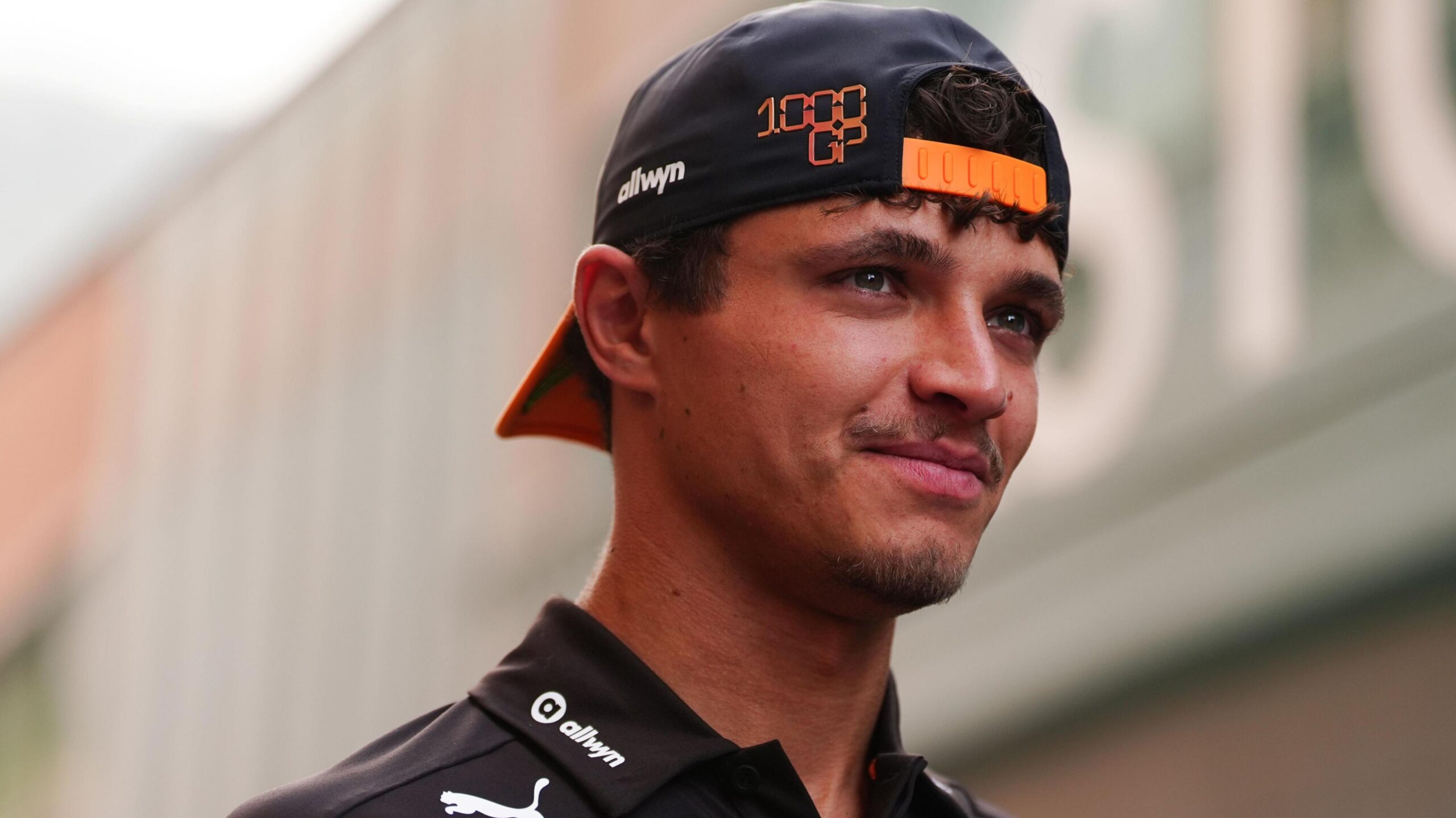
    McLaren showed clear progress in Shanghai but remained a distant third behind Mercedes and Ferrari. The team produced a strong sprint: Lando Norris was third and Oscar Piastri fifth in the sprint qualifying, and McLaren locked out the third row in conventional qualifying (Piastri P5, Norris P6). Drivers called the sprint “a positive Sprint Quali” and “a decent effort,” and team principal Andrea Stella said McLaren had made progress but was still not challenging the front two.

    GPS and sector data pinpointed where McLaren was losing time, particularly in the final sector. One report put George Russell about 0.529s quicker than Piastri in sector three, while others recorded more than six-tenths lost to Mercedes down the long back straight. Norris estimated the deficit cost “a good tenth-and-a-half” in the last sector.

    Drivers and engineers cited limited aerodynamic load and efficiency, mechanical-grip shortfalls and an ongoing learning curve with the new Mercedes power unit as the main causes. Stella said improving power-unit deployment could “gain a lot of lap time,” and McLaren said it would investigate where time was being lost despite the shared engine. With overtaking in Shanghai often best off the line, the team concentrated on maximizing starts and race trim, acknowledging tire wear and launch performance remain decisive and that converting promising starts into a podium will require further development.

    More
  • Williams admits FW48 overweight; upgrades planned

    Williams admits FW48 overweight; upgrades planned

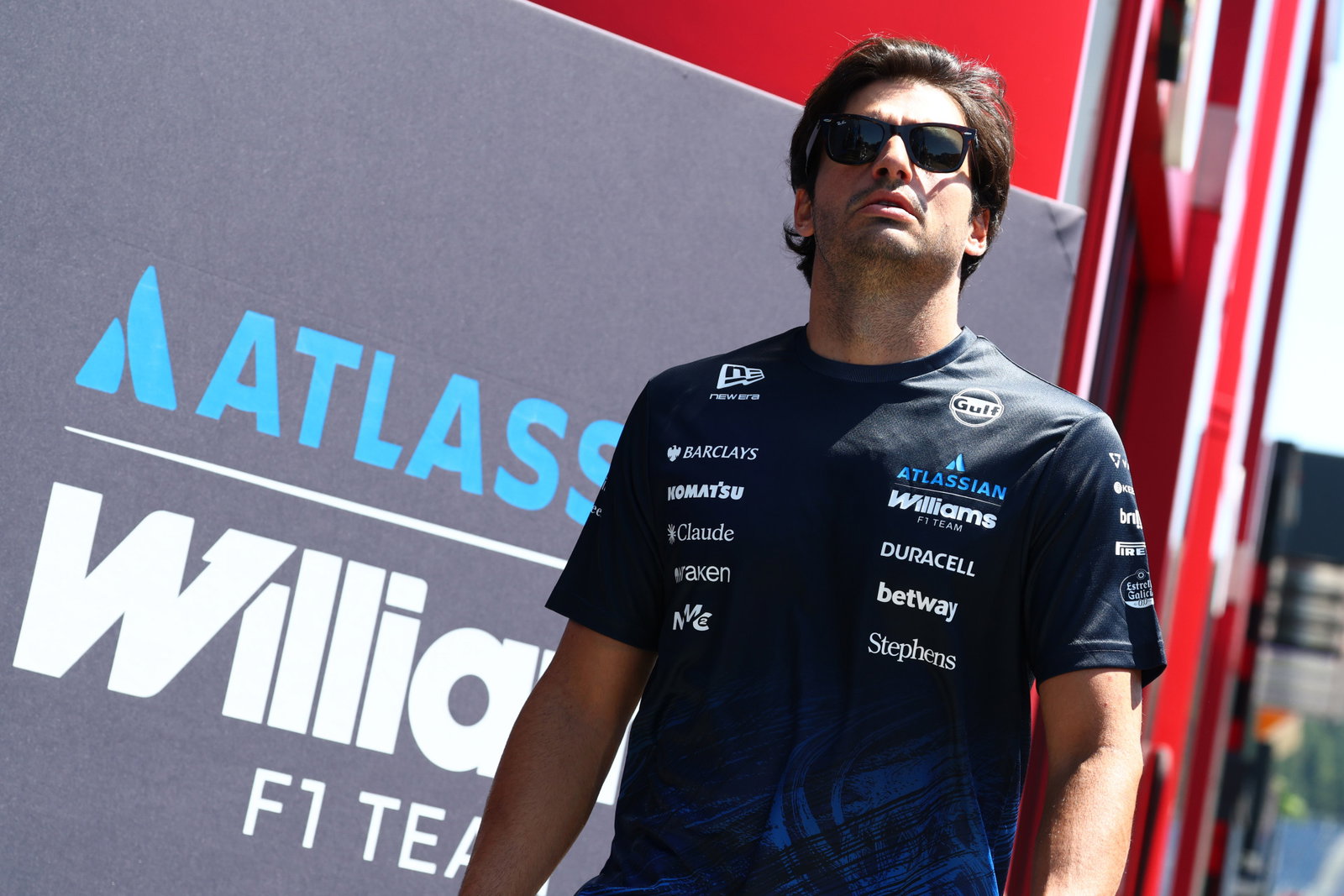
    Williams acknowledged that the FW48 suffered persistent performance problems in the Chinese Grand Prix weekend, with the car judged overweight, notably short of downforce and afflicted by recurring balance faults including a handling symptom described as “three‑wheeling.” The team estimated the weight penalty at roughly 20–25 kg, while other reports put the required reduction at about 65 pounds; drivers and engineers agreed that weight alone did not explain the deficit.

    Those weaknesses translated into poor track results: Williams occupied the bottom six positions in Chinese Grand Prix qualifying and recorded a double SQ1 exit in sprint qualifying. Carlos Sainz qualified 17th, missing Q2 by about 0.2s, and Alex Albon qualified 18th, around 0.5s slower than his teammate. In the Sprint, Sainz climbed from P17 to P12 on a no-stop hard-tyre strategy and set the Sprint fastest lap, while Albon, who started from the pit lane after overnight setup changes, finished P16. Albon called qualifying “terrible,” said the team “haven’t been able to fix our core issues” and described the result as “back to the drawing board,” while Sainz warned there were “many issues” carried over from Australia and said he was “a bit down on mileage.”

    Team principal James Vowles described qualifying as “painful,” noted only small overnight gains from tweaks and emphasized that substantive improvement will come through a planned long-term development programme rather than weekend fixes. Williams admitted it sacrificed 2025 development work and, despite an early commitment to the 2026 regulations, has had a difficult start to the season; the team plans to continue testing measures across race weekends while pursuing weight reduction, balance improvements and significant aerodynamic upgrades to restore competitiveness.

    More
  • Wolff likens Mercedes reboots to iPhone; Russell P2

    Wolff likens Mercedes reboots to iPhone; Russell P2

    During the main qualifying session in Shanghai, Mercedes discovered a broken front wing in Q2 and George Russell’s car then stalled in Q3. The car failed to restart and remained stuck in first gear while mechanics worked; reports vary on the exact location of the stoppage (Turn 2 or Turn 5). Russell radioed “It’s not fine” as the team replaced the wing, swapped the steering wheel, ran default settings and power-cycled the car multiple times before the gearbox finally dropped into neutral and the car could rejoin with only minutes to spare.

    Russell completed a final flying lap while running with no battery, cold tires and intermittent gearshift problems, and later said he could easily have ended up as low as P10. Mercedes has described the fault as electrical and said it remains under investigation. Team principal Toto Wolff likened the repeated reboots to “switching an iPhone on and off.”

    Despite the reliability scare and frantic garage work, Russell recovered to secure P2 on the grid, giving Mercedes a front-row lockout alongside teammate Kimi Antonelli, who took pole and became the youngest-ever polesitter in F1. Mercedes has continued technical checks and is treating the stoppage as a reliability problem it must resolve before the race.

    More
  • Kimi Antonelli, 19, takes youngest F1 pole in Shanghai

    Kimi Antonelli, 19, takes youngest F1 pole in Shanghai

    Kimi Antonelli became F1’s youngest-ever polesitter at 19, taking pole for the Chinese Grand Prix in Shanghai with a 1:32.064 on his final run after an earlier 1:32.322, edging Mercedes’ George Russell by 0.222 seconds.

    Mercedes endured a fraught Q3: Russell reported a front‑wing issue and then suffered a no‑power stoppage at the exit of Turn 4, radioing about “massive engine braking” and saying “I cannot shift the gears, stuck in first.” He limped back to the pits where Mercedes power‑cycled the W17 and replaced the front wing; Russell returned with 2:06 remaining but could not better Antonelli’s time. Lewis Hamilton qualified third. Ferrari and McLaren drivers filled the second and third rows — Charles Leclerc improved on a late run but remained more than 0.3 seconds off pole, and Oscar Piastri qualified fifth, narrowly ahead of teammate Lando Norris.

    The session featured disruptive incidents and very tight margins. Gabriel Bortoleto’s Q2 spin brought double‑waved yellows that affected late attempts, helping Isack Hadjar avoid elimination and preventing Arvid Lindblad and Esteban Ocon from mounting late challenges. Carlos Sainz and Alex Albon were among the early eliminations, while Fernando Alonso, Valtteri Bottas and Lance Stroll were also knocked out in the earlier rounds. Nico Hülkenberg missed Q3 by 0.002 seconds and Franco Colapinto by 0.005; Sergio Pérez was slowest in 22nd. Reports differed on Max Verstappen’s final place: some timing screens and outlets had him fourth after the fastest final sector, while other reports placed him eighth, nearly a second down on pole.

    More
  • Russell converts sprint pole; Mercedes set Shanghai pace

    Russell converts sprint pole; Mercedes set Shanghai pace

    George Russell won the Chinese Grand Prix sprint at the Shanghai International Circuit as Mercedes again set the pace across the weekend, converting a sprint-qualifying pole into victory and extending Russell’s early-season momentum. Russell and teammate Kimi Antonelli had locked out the front row in sprint qualifying, and Russell and Lewis Hamilton traded the lead repeatedly — swapping positions five times in the first five laps — before Russell pulled clear. Charles Leclerc finished second and Hamilton third, with Russell ending the 19-lap sprint roughly six-tenths of a second ahead in some reports and having stretched his advantage to around 3.5 seconds by the race midpoint in others.

    The sprint was shaped by tire degradation, incidents and a mid-race safety car after Nico Hulkenberg stopped on track. Heavy medium-tire wear prompted many front-runners to pit for soft tires, and the safety car brought a late wave of pit stops that reshuffled strategies; Mercedes gambled on their drivers’ ability to fight back and it paid off. Kimi Antonelli dropped off the line, was involved in contact with Isack Hadjar and was handed a 10-second penalty that he served during a pit stop under the safety car. Several drivers retired — including Arvid Lindblad, Valtteri Bottas and Hulkenberg — while others lost ground at the start (Max Verstappen fell back from eighth to 14th). Oscar Piastri briefly gained a place at the restart only to hand it back for an early pass before the line, and drivers who stayed out, such as Liam Lawson and Ollie Bearman, profited by scoring points.

    The result preserved Russell’s perfect start to the season and reinforced Mercedes as the team to beat heading into Sunday’s full Grand Prix, with the squad described as the benchmark for the Shanghai weekend. The race came amid major technical changes to Formula 1 — including a mandated 50/50 split between internal combustion and electric power — that have left drivers grappling with electric-power deployment and energy management, a backdrop to Mercedes’ strong showing. Reports differed on whether the sprint was Russell’s first ever sprint victory or his second, but all accounts agree the win underlined his and Mercedes’ early-season dominance.

    More
  • F1 cuts Bahrain and Saudi rounds; season falls to 22 races

    F1 cuts Bahrain and Saudi rounds; season falls to 22 races

    Formula 1 has moved to cancel its April Bahrain and Saudi Arabian Grands Prix, cutting the planned 24-race season to 22 events. Multiple outlets said the Bahrain round (mid-April) and the Jeddah race (the following week) were set to be left off the calendar; F1 and the FIA had been coordinating with the Bahrain and Jeddah promoters but declined public comment as decisions were being finalized. Reports linked the cancellations to recent strikes and reprisals in the Gulf, and organizers were expected to confirm the removals imminently.

    The removals create a significant gap in the early season, with reports varying on whether there will be a four- or five-week break between the Japanese Grand Prix at Suzuka (late March) and the Miami round (early May). Freight and equipment movements were disrupted: freight due to leave Japan would be diverted to Miami; sea-freight garage equipment and tire-test kits were reported to remain in Sakhir; crates were stuck in Jeddah; and F2 and F3 freight was said to be in Melbourne. Those issues complicate parts movement and support-series planning.

    Teams would gain roughly an extra month at their bases for development and simulator work, but many upgrade programs would be delayed and a mandated compression-ratio test is now expected to fall after five races instead of seven. Audi team principal Jonathan Wheatley described the situation as an operational “bump in the road.” FIA president Mohammed ben Sulayem said safety and well-being would guide decisions and expressed sympathy for those affected by the conflict. Organizers explored short-notice replacement venues including Portimão, Imola and Istanbul and considered running two races at the same circuit, but judged substitutes unlikely because promoters would probably not pay hosting fees and freight timing made logistics impractical; Imola was also unavailable for one of the April dates because the World Endurance Championship had moved its Qatar weekend there. Several outlets said F1 and the FIA planned to leave the Bahrain and Saudi rounds out of the calendar rather than seek substitutes, keeping the championship at 22 events and producing a condensed, operationally challenging early season for teams and organizers.

    More
  • Verstappen brands Red Bull RB22 'undriveable' after Shanghai

    Verstappen brands Red Bull RB22 ‘undriveable’ after Shanghai

    Max Verstappen publicly blasted Red Bull’s RB22 as “undriveable” and a “disaster” after a troubled Friday at the Chinese Grand Prix in Shanghai, saying “we never had anything this bad,” that the car was “horrendous” and suffered from “no grip, no balance.” He quipped he was “practicing with Mario Kart,” warned he was losing “massive amounts of time in the corners,” and said the new power-unit changes left him “conflicted” about his future. Verstappen ultimately qualified eighth for the sprint, about 1.7–1.8 seconds off George Russell’s sprint pole, and described driveability problems that compounded through the day.

    The on-track data and session details underscored those complaints: Verstappen slid from 11th in SQ1 to eighth in SQ3 as his deficit to Russell widened from around 1.140s in SQ1 to about 1.734s in the final shootout, and he had an off at the last corner during SQ2. Rookie teammate Isack Hadjar scraped into SQ3 and qualified 10th, roughly half a second behind Verstappen after a compromised SQ3 lap blamed on a battery deployment issue. Mercedes produced a dominant sprint qualifying performance, leaving Red Bull unusually exposed under the new 2026 regulations.

    Technical analysis and team reaction amplified the concern. Sky Sports’ Anthony Davidson flagged a clear “torque spike” on onboard audio that preceded an oversteer moment and warned the unpredictable power delivery forced Verstappen to drive defensively; commentators judged the faults to be fundamental and unlikely to have “quick fixes.” Red Bull’s Laurent Mekies was heard apologizing on the radio (“Sorry, Max”) and said there was “a lot to learn,” pointing to the new power unit and race-trim energy management as key areas to understand. The team has acknowledged it has fallen further off the pace of Mercedes, Helmut Marko cautioned that Verstappen would not win the 2026 title even as Red Bull begins racing its own power unit, and engineers face a difficult puzzle to close the gap before the Sprint and the race.

    More
  • Ferrari admits power-unit fault cost Leclerc Sprint pace

    Ferrari admits power-unit fault cost Leclerc Sprint pace

    An unexplained Ferrari power-unit deployment problem cost Charles Leclerc straight-line speed and effectively ruined his Sprint qualifying in Shanghai, leaving him sixth on the Sprint grid. Leclerc radioed the team during SQ3 — “This deployment, my god,” and “What the hell is happening?” — and said he lost “around four tenths” on the back straight and “about half a second” on his second SQ3 lap.

    Team figures varied slightly on the magnitude of the loss — Frédéric Vasseur said Leclerc “lost something like three tenths in the last straight line” — but the net result was a heavily compromised one-lap time: Leclerc was more than three tenths down on Lewis Hamilton and roughly a second adrift of George Russell, who set the SQ3 benchmark.

    Ferrari acknowledged the deployment issue and said it would analyze the data to determine whether the problem could be resolved or managed for the Sprint and the main race. The car’s situation in Shanghai highlighted a contrast between strong cornering and weak straight-line punch: Ferrari had briefly trialed a distinctive “Macarena” rear wing in FP1 before withdrawing it, a change that reportedly improved corner performance but exacerbated the deficit on the straights. Mercedes’ qualifying edge was clear — Hamilton and Russell topped the timesheets and rivals warned Ferrari must urgently close the power shortfall — yet Leclerc and the team said they remained confident they could be relatively stronger in race trim and hoped to recover during the races.

    More
  • Russell on Sprint pole as Antonelli probe threatens Mercedes

    Russell on Sprint pole as Antonelli probe threatens Mercedes

    FIA stewards opened post-session investigations into alleged impeding by Mercedes rookie Kimi Antonelli and Alpine’s Pierre Gasly during Sprint qualifying at the Chinese Grand Prix, actions that could carry three-place grid drops and threaten to undo Mercedes’ provisional front-row lockout. The summonses mean the Sprint starting order set in qualifying is provisional and could be reshuffled before Saturday’s Sprint race, with the stewards’ decision likely to have direct consequences for the top five.

    Officials were told Antonelli appeared to impede Lando Norris late in SQ2, with Norris saying on the radio he “was going to push that lap” after backing out when Antonelli was reportedly slow on the inside into Turn 1, while Max Verstappen accused Gasly of impeding him after Turn 14 and forcing him wide on his final push. Both drivers were called before the stewards; the FIA said it would probe the drivers’ actions themselves rather than simply the resulting track positions. Despite the alleged incidents, Norris and Verstappen both progressed to SQ3.

    Provisional results see George Russell on Sprint pole after a 1:31.520 lap with teammate Antonelli second, giving Mercedes a provisional 1-2. If Antonelli is penalized three places he would drop down the order — one widely reported scenario would see him fall to fifth, promote Norris onto the front row and bump Verstappen up from P8 — producing a significant reshuffle of the Sprint grid. The session also underlined wider issues in the field: Sergio Pérez missed the session with a fuel-system problem and Red Bull reported drivability and balance troubles, Verstappen calling the RB22 “horrendous,” leaving the stewards’ forthcoming ruling as the key determinant of the final Sprint grid.

    More