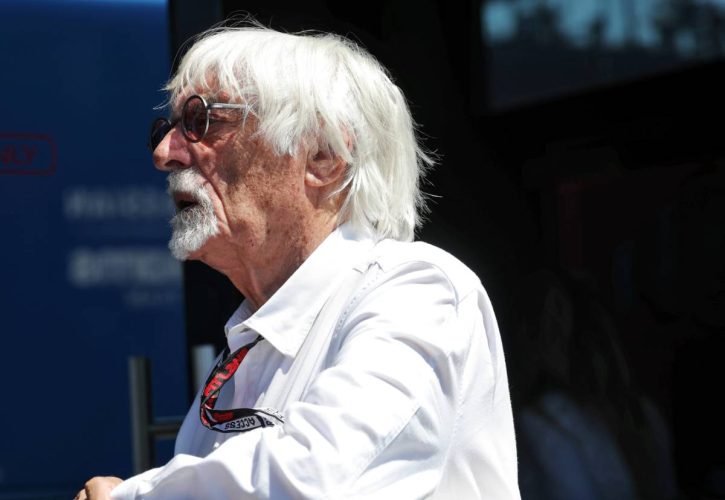
Bernie Ecclestone has pressed Ferrari’s top management to appoint Christian Horner, casting the Scuderia as a possible route back to Formula 1 for the former Red Bull boss. Ecclestone said he had already tried to steer Horner toward Ferrari after Horner left Red Bull in July 2025 after the British Grand Prix, and called Ferrari a logical destination. He also said he did not know whether Horner would actually end up there, with the situation still speculative and no appointment confirmed.
Ecclestone said Horner would face a difficult path at any team because people would compare him with what he achieved at Red Bull. Horner spent 20 years leading the team, winning eight drivers’ championships, six constructors’ titles and 124 of 130 Grand Prix victories. Red Bull paid him an £80 million severance package after his exit, and he remained on gardening leave until May 2026. Horner has said he would only return to Formula 1 in the right role with greater responsibility. Reports have also linked him with starting his own team, taking a stake in Alpine, a possible connection with BYD and a move to Aston Martin, although sources said there had been no new contact about Aston Martin since earlier discussions this year.
Speaking at the Austrian Grand Prix, Ecclestone also argued that Ferrari should consider Max Verstappen, saying signing the Red Bull driver would be cheaper than trying to build a better car. He said Verstappen may have missed his best chance to move to Ferrari last year and criticized what he described as too many Italians being involved in Ferrari’s decision-making. Verstappen remains under contract to Red Bull through 2028, with an escape clause that could allow him to leave if he is outside the top two at the summer break. He has also been linked with Mercedes and McLaren, though Toto Wolff and Zak Brown have downplayed the chances of immediate lineup changes. Ferrari’s current driver pairing is Charles Leclerc and Lewis Hamilton, and the team has extended Fred Vasseur’s contract through at least the end of 2027.
More