NXTbets Inc

  • Ferrari runs Mugello TPC, Monza filming to test aero and ERS

    Ferrari runs Mugello TPC, Monza filming to test aero and ERS

    Ferrari has scheduled a focused April on-track program — a Mugello Testing of Previous Cars (TPC) session and a Monza filming day — explicitly to validate aerodynamic updates and energy-recovery systems, translate simulator gains into real-world feedback and keep cars and personnel race-ready ahead of the Miami Grand Prix. The activity fills a five-week gap created by the cancellations of the Bahrain and Saudi Arabian Grands Prix and, Ferrari says, is designed to secure engine gains, protect the team’s positive start to 2026 and close the straight-line speed shortfall that rivals including Lewis Hamilton have highlighted.

    The first element is a two-day TPC at Mugello using last year’s SF-25 under relaxed FIA rules. Test and simulator drivers Antonio Giovinazzi, Arthur Leclerc and Antonio Fuoco are set to run the car to convert simulator data into on-track feedback and to validate setups and driver inputs. Sources differ on the exact start date — reporting either April 1-2 or beginning April 2 — but all agree the outing will be carried out by Ferrari’s test outfit rather than regular race drivers.

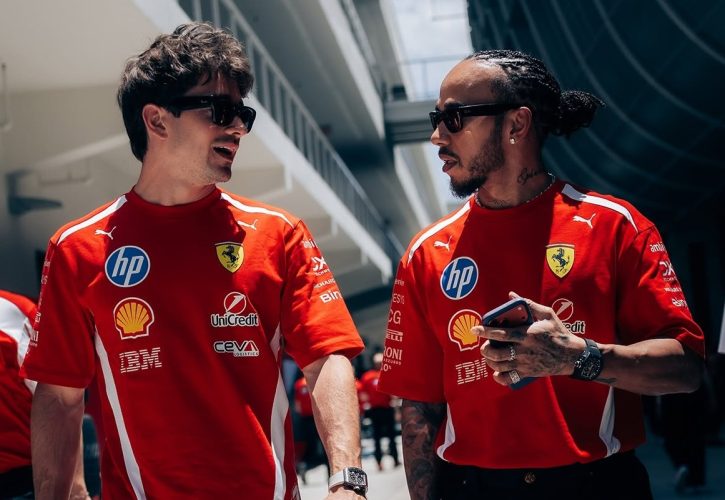
    Ferrari will follow Mugello with additional, limited on-track work: a two-day artificial wet test at Fiorano on April 9-10 and a 200 km filming day at Monza in late April (reported as April 21 or 22). At Monza Charles Leclerc and Lewis Hamilton are expected to drive the SF-26 for up to 200 km to gather energy-recovery-system data, produce promotional footage and trial aerodynamic updates — including a revised “Macarena” wing earmarked for a Miami debut. Team statements and multiple reports describe Monza as particularly demanding for energy management under the 2026 rules, and Ferrari emphasized that all sessions will be conducted within the FIA’s TPC and filming-day limits as low-profile work to refine systems ahead of Miami.

    More
  • Suzuka exposes Ferrari's power-unit deficit, Vasseur says

    Suzuka exposes Ferrari’s power-unit deficit, Vasseur says

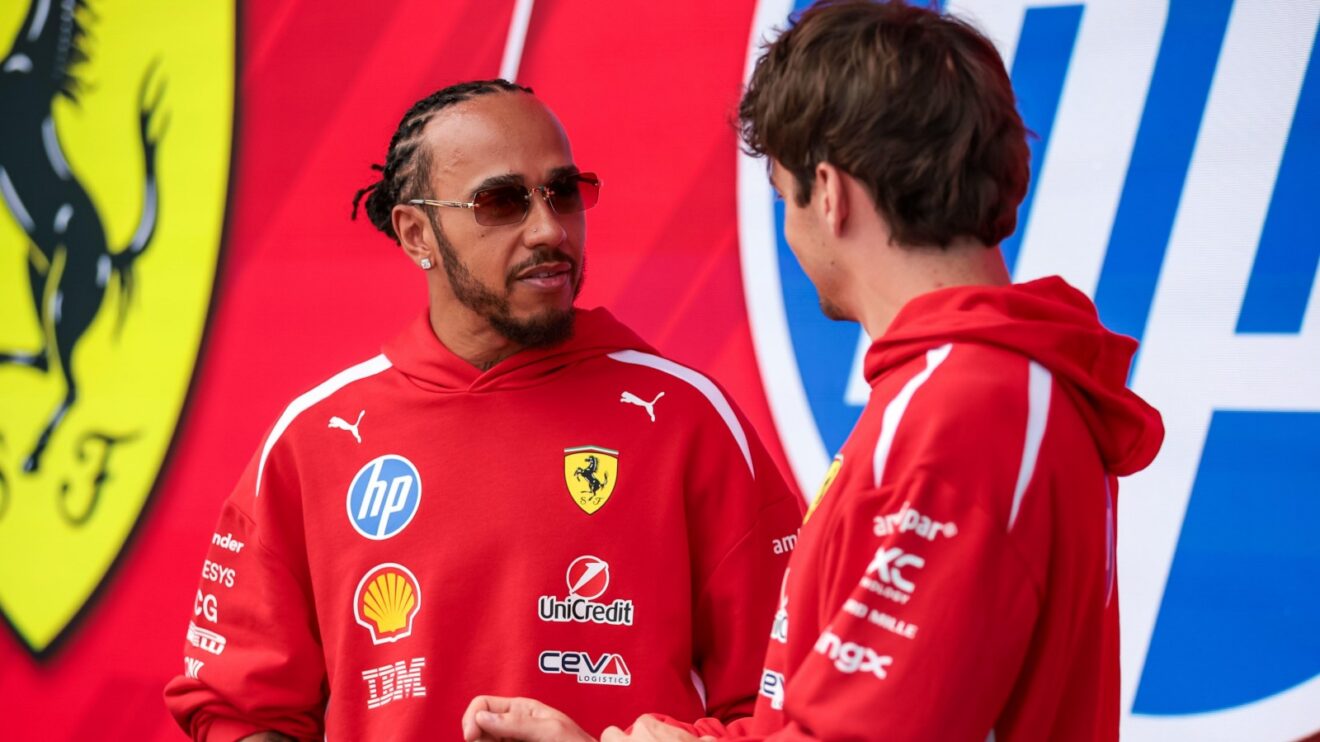
    At the Japanese Grand Prix in Suzuka, Ferrari’s straight-line speed and power-unit weakness — particularly the SF‑26’s lack of pace down the straights — were laid bare, drivers and team figures said. Charles Leclerc called the power unit “maybe our main weakness at the moment,” and Lewis Hamilton described a “really confusing” loss of power that left him struggling to defend and ultimately finish sixth. Team principal Fred Vasseur acknowledged a clear straight-line deficit and said the team must investigate whether it stems from engine power, timing/strategy or overtake-mode deployment; he and others pointed to Suzuka’s long straights as having exposed the problem.

    The on-track consequences were immediate. Leclerc recovered from early Safety Car misfortune and an early pit stop that left him in traffic to fight back past teammates and rivals and secure third, but said he had to manage his tires carefully and that the Safety Car had hurt the team’s strategy. Hamilton briefly gained places by pitting under the Safety Car but slipped from a podium position as he struggled to extract performance from the SF‑26 and lost places to rivals; he suspected his engine was down because others had more straight-line speed despite running the same car. Vasseur noted Hamilton had dropped out of “overtake mode,” which removed an overtake boost and contributed to the drop-off.

    Ferrari plans to use the upcoming month-long break to analyze the car and seek performance improvements before Miami, focusing on the power unit and straight-line performance while also advancing tires, aero and chassis work. Leclerc warned upgrades might not arrive in time for Miami, and reports from Suzuka prompted a renewed push to close the gap — the team opened the season clearly second behind Mercedes and appeared to lose ground to McLaren — even as Leclerc’s podiums provided a morale boost and Vasseur praised the driver’s racecraft in what he called one of the season’s most entertaining races.

    More
  • Third slow getaway leaves Mercedes exposed in Suzuka

    Third slow getaway leaves Mercedes exposed in Suzuka

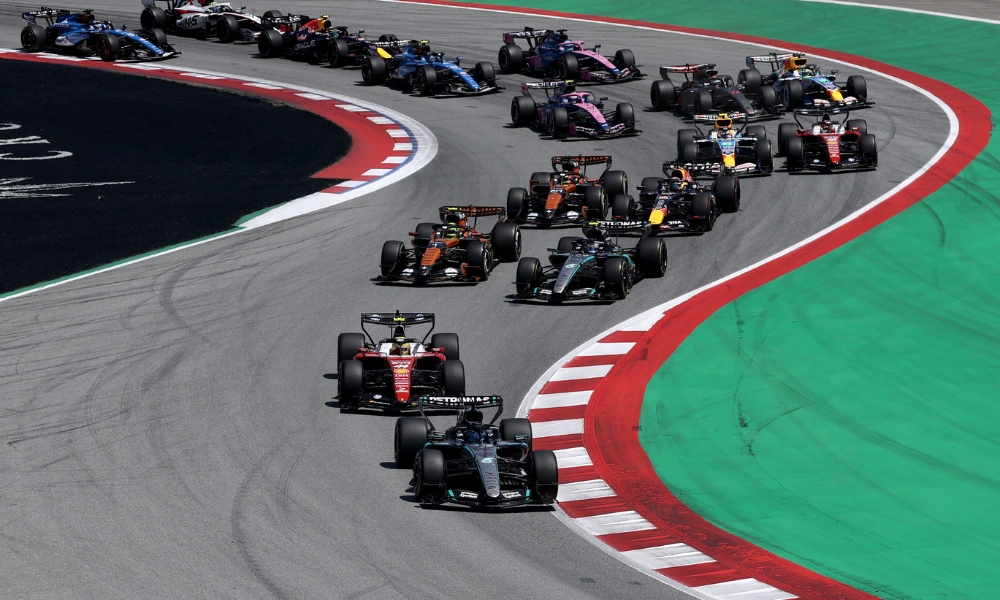
    Mercedes’ vulnerability — recurring poor race starts compounded by an inability to cope with traffic and dirty air — was laid bare at the Japanese Grand Prix in Suzuka. Team principal Toto Wolff conceded that ‘poor starts have been a recurring issue’, calling the team’s launches ‘mediocre’ and saying a bad getaway nearly cost them in Japan; he also admitted this was the third time this season Mercedes had to recover from a slow launch.

    Former drivers Damon Hill and Jacques Villeneuve warned the team should be concerned, with Villeneuve adding that Mercedes’ package is “vulnerable in dirty air” and needs to be in “fresh air” to be competitive, because traffic and turbulent airflow limit recovery opportunities.

    The race itself illustrated the problem. Kimi Antonelli, who started on pole and later won at Suzuka to become the youngest leader of the 2026 standings, botched his own launch and dropped to sixth before a late safety car — triggered by Ollie Bearman’s crash — and a timely pit stop reshaped the running and allowed him to retake the lead. Mercedes’ recovery efforts were visible but imperfect: George Russell fought back to fourth after a setup change left his W17 uncooperative and both Mercedes drivers were hampered by traffic. Wolff both praised Antonelli’s racecraft and quipped about modern drivers learning in “automatic driving schools” while again pointing to the team’s recurring poor getaways.

    The combined pattern of slow starts and an aerodynamic/flow weakness when following other cars has prompted external concern and demonstrated that other teams and drivers can threaten Mercedes on race day. Unless the team addresses clutch/launch procedure and its loss of performance in dirty air, those vulnerabilities look set to undermine Mercedes’ results going forward.

    More
  • Aston Martin falters at Suzuka amid Honda PU, aero woes

    Aston Martin falters at Suzuka amid Honda PU, aero woes

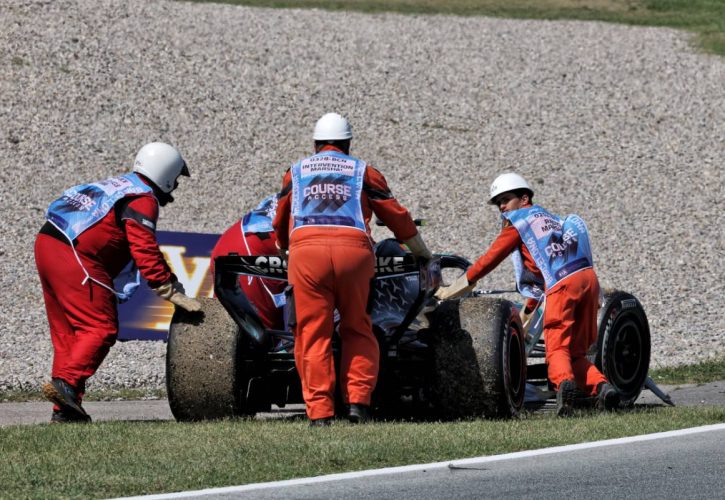
    Aston Martin’s weekend at the Japanese Grand Prix in Suzuka underlined that the team’s problems run well beyond simple reliability fixes. The team recorded its first race finish of the season, but both cars qualified on the back row. Fernando Alonso finished as a backmarker—widely reported as 18th, with one source listing him 19th—and Lance Stroll retired after roughly 30 laps with a suspected water-pressure issue.

    Persistent Honda power-unit output and reliability problems, combined with chassis and aerodynamic weaknesses and excess weight, mean the AMR26 needs major upgrades to be competitive.

    Team officials framed the result as incremental rather than celebratory; team principal Mike Krack called the outcome ‘not a cause for celebration,’ described it as ‘one small step,’ and warned there is a ‘mountain to climb.’

    More
  • Piastri boosts McLaren; Stella says Mercedes still ahead

    Piastri boosts McLaren; Stella says Mercedes still ahead

    Oscar Piastri’s second-place finish at Suzuka underlined a clear step forward for both the driver and McLaren: it was his first podium and his first championship points of the 2026 season after he leaped into the lead at the start. Piastri, who had missed the opening two rounds with back-to-back DNSs, said McLaren is “closing the gap to Mercedes” and described the reigning team as “beatable.” He also suggested a Safety Car intervention, triggered by Oliver Bearman’s high‑G crash, altered the race’s outcome and said he would have liked to see how the event unfolded without it, adding he felt he had been “pulling away a little bit” before the neutralization.

    The Suzuka result followed encouraging pace indicators earlier in the weekend: Piastri topped FP2 by around 0.1 seconds and converted that form into his best qualifying of the season, taking third on the grid — 0.354s off pole and roughly 0.056s behind George Russell — which gave McLaren a second-row start for the first time this year. Team figures framed the weekend as evidence of momentum: Andrea Stella credited closer collaboration with Mercedes HPP engineers and targeted setup work for lap-time gains, while McLaren CEO Zak Brown said the team will win “sooner rather than later.” At the same time Stella and Piastri cautioned that Mercedes still held a clear pace advantage and that a “pretty big gap” remained, highlighting the need to turn flashes of speed into consistent race results.

    Reliability and energy-system issues also shaped the narrative of progress versus risk. McLaren dealt with a battery problem that disrupted Lando Norris’s FP3 and cost long-run data, fitted a third energy store during FP3, and Stella flagged recurring issues with the Mercedes-supplied battery module. The Suzuka race itself was heavily influenced by energy-management battles and pit-stop timing, and George Russell lost track position amid power and tire issues. McLaren said it will bring upgrades for the next race aimed at producing more consistent podiums and further developments later in the season intended to contend for wins, with Suzuka offering both a morale boost and a clear reminder of the work still to be done to fully close the gap to Mercedes.

    More
  • Verstappen demands Red Bull fix RB22 before Miami

    Verstappen demands Red Bull fix RB22 before Miami

    Max Verstappen publicly demanded that Red Bull urgently fix persistent balance and handling problems with its RB22 after a bruising weekend in Suzuka, calling the car “completely undriveable,” saying the situation was “not sustainable” and that he was “beyond” frustrated. The problems showed in qualifying when Verstappen was eliminated in Q2 and started 11th.

    He blamed unpredictable rear behavior, chassis instability and setup changes that failed to restore high-speed stability, and said these issues were not caused by the power unit.

    Verstappen warned the team must improve the car “quite a lot” before Miami and said he would use the month-long break to work with Red Bull on finding more pace and a more stable balance, while also doing some racing for enjoyment.

    More
  • Glock urges Ferrari to curb Leclerc-Hamilton feud

    Glock urges Ferrari to curb Leclerc-Hamilton feud

    Tensions around Ferrari flared after the Japanese Grand Prix as several wheel-to-wheel battles between Charles Leclerc and Lewis Hamilton shaped the race. Leclerc finished third and Hamilton sixth, while Oscar Piastri showed strong pace in clean air and pulled away in the opening stints. A Safety Car and tactical pit-stop timing — including Hamilton’s extended first-stint gamble that was aided by the Safety Car — reshaped the final order.

    Both drivers voiced frustration after the race. Leclerc accused Mercedes of playing “cheeky” mind games after radio messages from George Russell’s engineer complicated his defence; he also criticized his SF-26 and called for substantial technical changes during the forthcoming break. Hamilton demanded an explanation from Ferrari over power issues he experienced, suggested Leclerc had a power advantage, and said Ferrari had not prioritized his power concerns; Leclerc did not report Hamilton’s problems during the race. Ferrari made no public reprimand after the event.

    Former driver Timo Glock publicly urged Ferrari to set clear limits and step in before rivalries escalate into damaging friction, warning that a hands-off approach could allow tensions to become combustible. Team principal Fred Vasseur downplayed the level of frustration, saying he supported hard wheel-to-wheel racing and did not share the drivers’ complaints, framing the exchange as part of normal competitive dynamics. Reports also suggested a possible change of race engineer for Hamilton ahead of the Miami GP, and Ferrari said it will use the forthcoming break to regroup and focus on converting consistent podiums into victories when the season resumes in Miami.

    More
  • Leclerc: Mercedes radio ploy tried to force battery use

    Leclerc: Mercedes radio ploy tried to force battery use

    Charles Leclerc accused Mercedes of running a “cheeky” team-radio mind game at the Japanese Grand Prix in Suzuka, saying Mercedes engineers broadcast misleading instructions intended to force battery deployment and provoke defensive errors. Leclerc told Sky Sports and race reporters that George Russell and a Mercedes engineer deliberately misrepresented their strategy over the radio, and that his own engineer, Bryan Bozzi, was relaying messages from Mercedes engineer Marcus Dudley. He said Russell repeatedly did the opposite of those radio instructions for several laps, which forced him to alter his defensive driving, created significant late pressure and required him to fend Russell off in the closing corners.

    Leclerc had qualified fourth and produced a strong start to move up early, spending the opening stints chasing McLaren’s Oscar Piastri, who enjoyed superior pace in clean air and pulled away. A late Safety Car bunched the field and precipitated a frantic finish: Russell launched an overtake at the final corner on Lap 51, but Leclerc fought back through Turn 1 and crossed the line 0.484 seconds ahead of Russell to secure a podium place. Reports vary on whether Leclerc was officially classified second or third in some accounts, but all sources agree he held off Russell to claim a podium.

    Leclerc called the chaotic finish “quite a fun race” and said Ferrari will use the midseason break to regroup and target upgrades before Miami. Telemetry analysis at Suzuka indicated Mercedes held an advantage of roughly 0.240 seconds per lap — an edge that would equate to about a 12-second margin over 53 laps — underlining the performance gap Ferrari must close. The Suzuka result left Leclerc third in the drivers’ standings on 49 points, with Ferrari hoping to turn consistent podiums into wins when the season resumes in Miami.

    More
  • Drivers Demand Fixes Before Miami GP Over 2026 Energy Rules

    Drivers Demand Fixes Before Miami GP Over 2026 Energy Rules

    Drivers escalated public criticism of Formula 1’s new 2026 power-unit and energy-management rules, accusing the sport of sidelining their safety and performance concerns. They are pushing for short-term mitigations before the Miami Grand Prix and for more substantive regulatory adjustments later in the season or next year.

    Lewis Hamilton said drivers “have no voting rights” and are not on the committee that shapes technical rules, and several drivers argued the FIA has been “only listening to teams.” Those statements highlight drivers’ concerns about their lack of formal influence over the rulemaking process.

    Carlos Sainz warned that the approach creates safety risks, pointing to the Ollie Bearman–Franco Colapinto crash — a closing-speed differential of roughly 50 km/h — as an example, and Bearman walked away without serious injury.

    More