NXTbets Inc

  • Mercedes Unveils W17 as Full Reinvention for 2026

    Mercedes Unveils W17 as Full Reinvention for 2026

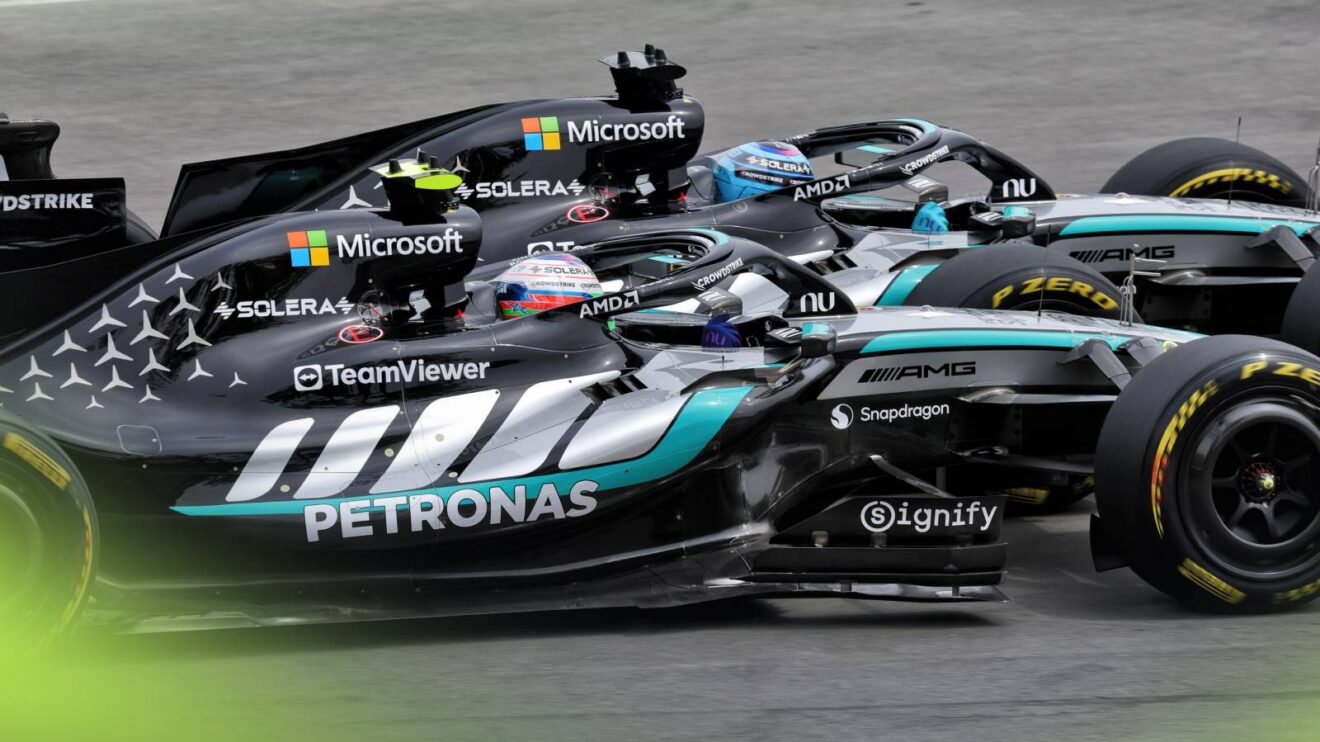
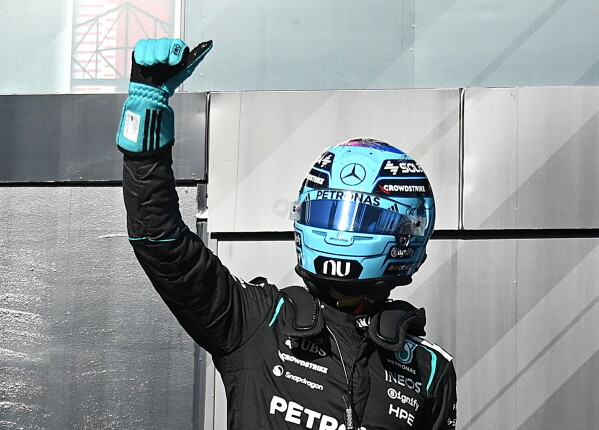
    At the team’s digital season launch, Toto Wolff described 2026 as “a line in the sand” and presented the W17 as a deliberate reinvention rather than an incremental update. He outlined sweeping changes to power units, aerodynamics, chassis dimensions, and energy deployment, including a near 50:50 combustion-electric split and the removal of the MGU-H. The team boss further stressed closer integration between Brackley and Brixworth, naming George Russell and rookie Kimi Antonelli as his race drivers, and confirming Fred Vesti as the reserve driver.

    Mercedes reinforced that intent with a heavy Barcelona shakedown, reporting roughly 500 closed laps and more mileage at the Circuit de Catalunya than any rival. Russell and Antonelli said they were satisfied with the W17’s progress. Rival teams have publicly and privately questioned a reported compression-ratio loophole in the 2026 engine rules and suggested it may have given Mercedes an early advantage. However, Wolff has pushed back publicly and expressed private frustration. Reporting stresses that the debate centers on scrutiny of the regulations rather than any formal ruling by the sport’s authorities.

    Wolff said he does not want “world dominance,” preferring close championship battles, and pointed to the new chassis and engine rules, the cost cap, and largely equal equipment as checks on wide performance swings. The immediate test of whether Mercedes’ early running translates into a sustained advantage will come at pre-season testing in Bahrain, with two test windows on Feb 11–13 and Feb 18–20, followed by the season-opening race in March. Those sessions will provide the first competitive measure of how the W17 performs under the new regulations and whether Mercedes’ reinvention yields a durable edge or simply early promise.

    More
  • Grant Clocks 14.856s Top Lap in Ocala USAC Practice

    Grant Clocks 14.856s Top Lap in Ocala USAC Practice

    Justin Grant posted the fastest lap in Sunday afternoon practice for the USAC AMSOIL Sprint Car National Championship at Ocala Speedway, turning a 14.856-second lap in his TOPP Motorsports/NOS Energy Drink – TOPP Industries – LA Poly/Maxim/Stanton Chevy entry. A noted figure at the Winter Dirt Games, Grant entered the session as an eight-time feature winner and the series’ winningest driver. He topped a 22-car timed practice that saw Mitchel Moles record the second-quickest time at 14.918, with Logan Seavey (15.006), Chase Stockon (15.013), and C.J. Leary (15.052) rounding out the top five. Organizers said more teams were expected to join the field as the week progressed. The times offered an early look at speed and contenders ahead of the headline race nights.

    The Ocala session was part of Winter Dirt Games XVII Presented by Yokohama Tire, the multi-event build-up tied into the Federated Auto Parts DIRTcar Nationals. Following the practice, the program was set to move to Volusia Speedway Park for events on February 9–10 and then return to Ocala Speedway for four consecutive nights of racing from February 11–14. Teams and drivers used the timed runs to assess setups and form as the series prepared for its Ocala headliners. Grant’s quick lap underlined his continued strength at the Winter Dirt Games venue while the close times among the top five signaled a competitive field for the upcoming nights. With additional entrants expected, the practice only began to shape the pecking order that will be tested once the multi-night program gets underway.

    More
  • Anthony Macri Outduels David Gravel to Win Big Gator

    Anthony Macri Outduels David Gravel to Win Big Gator

    Anthony Macri of Dillsburg, Pa., won the Federated Auto Parts DIRTcar Nationals finale at Volusia Speedway Park, taking the $20,000 prize and the Big Gator trophy. He achieved the feat after a dramatic last-lap duel with defending champion David Gravel. Macri started fourth and moved past Brian Brown for the lead on lap seven. On the final circuit, Gravel executed a white-flag slide job, threading a diamond line through lapped traffic, and briefly challenged for the top spot before Macri reclaimed the lead and held it into Turn 3 for the checkered flag.

    The victory was the eighth World of Outlaws win of Macri’s career, tying him with Jimmy Sills and Cody Darrah on the all-time list and making him the ninth different driver to win the Big Gator. The result capped a strong Volusia weekend for Macri, who had finished third and fourth on the first two nights of the meeting. David Gravel finished second, with Carson Macedo third, Buddy Kofoid fourth, and Brian Brown fifth.

    The feature opened with a four-wide parade lap that included Brent Marks, Macri, Gravel, and Brown. Photographers captured close racing and several on-track skirmishes through the card, including battles involving Sheldon Haudenschild, Bill Balog, Sam Hafertepe Jr., Scotty Thiel, and Spencer Bayston. Images also showed Carson Macedo sliding under Brian Brown and Brenham Crouch’s car being removed from the track, underscoring a busy night of action at Volusia. The World of Outlaws will return to Volusia Speedway Park March 1–2 for the Bike Week Jamboree, keeping the series’ early-season momentum at the Florida venue.

    More
  • Boost Button Replaces DRS, Makes Overtakes Energy-Driven

    Boost Button Replaces DRS, Makes Overtakes Energy-Driven

    A closed five-day shakedown in Barcelona gave teams their first practical look at the 2026 regulation changes. Lando Norris drove McLaren’s MCL40, describing a slimmer, lighter chassis with active aerodynamics and an approximately 50/50 electric–biofuel power split. Peak electrical output was reported at about 350 kW, and Norris warned that full battery deployment could lift straight-line speeds to roughly 380 kph but would likely drain the pack by the end of a long straight.

    On track, the cars produced stronger forward G‑forces and reduced cornering grip, which altered balance until drivers adjusted over a few laps. The new push-button Boost (Overtake) Mode replacing DRS makes overtaking dependent on finite battery reserves and recharge cycles rather than solely aerodynamic tow.

    Those changes carry clear strategic and tactical implications. Battery deployment limits, kilowatt caps, and defined timing windows will force split-second energy management that affects qualifying, overtaking, and race strategy. Norris warned this could increase on-track “chaos,” producing momentum swings, defensive uses of Boost, and what he called “yo‑yoing” overtakes followed by recovery laps. Mercedes sophomore Kimi Antonelli called it “chess at speed,” saying anticipating rivals and instant energy trade‑offs will become core racecraft. The Italian added that juniors who have adapted quickly to the new cars may cope sooner, though established drivers will adapt as well. Teams therefore face a steeper operational burden as drivers must manage on‑car systems in real time as well as wheel‑to‑wheel skills.

    Practically, teams will use pre‑season sessions to develop deployment and recharge strategies so performance during key qualifying laps and race maneuvers is not compromised. Bahrain testing and the season opener in Australia are the next critical checkpoints. Engineers and strategists will continue to refine timing windows, recharge profiles, and active‑aero responses as track data accumulates. The combination of greater electrical power, active aerodynamics, and system‑dependent overtaking means on‑car systems and strategy will play a larger role across the 2026 season, changing how races are planned and executed.

    More
  • Haas' Komatsu: Ocon and Team share Blame for 2025

    Haas’ Komatsu: Ocon and Team share Blame for 2025

    Haas team principal Ayao Komatsu said the team “expected more” from Esteban Ocon after a difficult 2025 season, adding that “nobody’s satisfied” with the sporting result and describing responsibility as roughly “50/50” between driver and team. Ocon joined Haas for 2025 after Nico Hülkenberg moved to Sauber. Despite a previous Grand Prix win and additional podiums, he was narrowly outscored 38–41 and outqualified 11–17 (excluding technical issues) by rookie teammate Oliver Bearman. Komatsu highlighted issues Ocon raised, notably braking instability and inconsistent car behaviour that Bearman did not appear to suffer, and pointed to weekends such as Baku, where Ocon was “miles off” in qualifying, versus Abu Dhabi, where a poor Friday was followed by recovery to Q3 and a seventh-place finish, as evidence of inconsistency alongside underlying ability. He urged the team to speed up its engineering and set‑up processes so small faults do not compound across a race weekend, saying those technical and operational fixes are essential for Haas to unlock both drivers’ performances as it plans for 2026.

    Komatsu also acknowledged ongoing contract uncertainty and confirmed Ocon had been mentioned among names at risk heading into the 2026 silly season. He described “very good ongoing talks” over the winter that have improved Ocon’s understanding of how driver and team should work together and helped align expectations for a critical year in the driver’s F1 career. Haas says the situation is being actively managed and expects clearer on‑track performance and cohesion in 2026. Both performance and contract outcomes will likely determine Ocon’s immediate future and whether roster changes are required.

    More
  • Roczen Nets 24th Win; Fourth Different 450SX Winner

    Roczen Nets 24th Win; Fourth Different 450SX Winner

    Round 5 of the Monster Energy Supercross at State Farm Stadium in Glendale, Arizona, saw Ken Roczen win the 450SX main aboard his Suzuki. Roczen seized the lead with roughly 16 minutes remaining, built about a 3.5-second advantage, and took the checkered flag 3.3 seconds ahead of Hunter Lawrence, with Cooper Webb third. Lawrence recorded his fourth straight runner-up result and, for the first time this season, assumed the championship lead, taking the red plate with a five-point advantage over Roczen. Defending points leader Eli Tomac was taken down entering the first turn after contact from Christian Craig, remounted from 22nd to finish 12th, and fell to third in the standings, eight points adrift of Lawrence. Roczen’s victory was his 24th career win and his fifth at State Farm Stadium, becoming the fourth different 450SX winner in five races this year.

    In 250 West, Haiden Deegan scored his fourth consecutive victory on a Yamaha, extending his championship margin to 27 points and reinforcing his early-season dominance. The event drew the largest crowd in Monster Energy AMA Supercross history, and Roczen’s win carried added emotion for his team after manager Larry Brooks was announced to be on leave following a cancer diagnosis. Television coverage that night included condensed and extended highlights plus an SMX Insider Post-Race Show. The Glendale results reshuffled the early-season standings in both classes and set up ongoing championship battles as the series moves forward.

    More
  • Engine Failures Force Yamaha to Pause Sepang Running

    Engine Failures Force Yamaha to Pause Sepang Running

    Yamaha’s switch to a V4-powered M1 was tested under a difficult spotlight at the Sepang pre-season test, where engine failures, handling peculiarities, and a rider injury disrupted the program. The factory team sat out the second day on safety grounds after unspecified engine problems affected Fabio Quartararo and Toprak Razgatlioglu. Quartararo crashed on the opening day, fracturing a finger that required surgery and was ruled out of the remaining days. Reports from the test said both Quartararo and Razgatlioglu destroyed engines during the outing, while Alex Rins added that an unnamed rookie also broke an engine during the program. Yamaha paused running to investigate overnight in Japan and Italy, then resumed later with reduced mileage, using D-concession status to preserve options for further engine work and private tests.

    On pace, the new V4 left Yamaha more than a second off the outright lap times and last among the five manufacturers. Sporting manager Maio Meregalli singled out power as the primary shortfall, even as he described the chassis and balance as satisfactory. Jack Miller, who began the official test 14th and finished the final day 17th, downplayed the fault while also saying he needed more consistent track time. He recorded an average top speed of 327.8 km/h, roughly 10 km/h down on Fabio di Giannantonio’s Ducati. The Australian was the only Yamaha rider to complete a ten-lap race simulation, leaving him 13.957 seconds shy of Alex Marquez’s best Sprint benchmark that afternoon. Alex Rins was the quickest Yamaha on pace in 12th, but limited running across the squad made it difficult to assess the package conclusively.

    Beyond outright power, riders reported handling disturbances. Razgatlioglu experienced a recurring Michelin rear-tire behavior when lifting the bike to about 25 degrees that only calmed when the gearbox was shifted into fifth or sixth. Jack Miller declined to elaborate on the technical causes when questioned, and other riders gave similarly guarded responses, underscoring unresolved reliability and safety questions heading into the rest of the pre-season. Yamaha now shifts focus to the final pre-season test at Buriram on February 21–22, where early development work will concentrate on extracting more engine performance and resolving the issues uncovered at Sepang.

    More
  • Stroll Backs In-House AMR26 with Honda Power Swap

    Stroll Backs In-House AMR26 with Honda Power Swap

    Adrian Newey’s first Aston Martin design, the AMR26, completed a delayed on-track shakedown in Barcelona and immediately marked a clear technical departure for the team. Sky Sports F1 analyst Bernie Collins called the program a “mammoth undertaking,” noting Aston Martin’s move to an in-house gearbox and hydraulics and the switch to a Honda power unit. These steps were driven by significant investment from Lawrence Stroll that separates the car from the Mercedes-based drivetrains used previously. The late rollout limited track time, with only Fernando Alonso managing a full day of testing, leaving many performance questions unanswered ahead of the season opener.

    Technically, the AMR26 emphasizes undersurface-focused aerodynamics and unusually tight packaging. Observers pointed to a chamfered nose, a tapered front wing, aggressive rake, and a floor designed to generate the majority of downforce, plus numerous airflow vanes and a markedly larger airbox. PlanetF1’s Matt Somerfield highlighted the sidepod treatment and a cavernous gap beneath them that recalled past double-floor concepts. Newey described the car as a holistic package requiring close collaboration between aerodynamic and mechanical designers and said it contains “quite a few features that haven’t necessarily been done before.” He also warned that the AMR26 will be “very different” at the start of the season. Rival reaction combined curiosity and caution. Williams principal James Vowles labeled Newey’s suspension choices “very extreme,” joking that wishbones were placed “in places that I don’t think they should be,” while Mercedes driver George Russell called it the most standout design on the grid but stressed that striking looks must translate into lap-time performance. With unconventional rear-suspension packaging that appears to favor aerodynamic downforce or lower drag over traditional mechanical cornering, the car’s true competitiveness will be judged in Melbourne when full weekend running provides a clearer measurement under race conditions.

    More
  • Compression Theory Sparks Paddock Strain Before Melbourne

    Compression Theory Sparks Paddock Strain Before Melbourne

    A technical theory published earlier this month by Auto Motor und Sport (AMuS) generated a pre‑season controversy. It suggests that Mercedes, and separately Red Bull Powertrains, may have found a way to meet the FIA’s new 16.0:1 geometric compression cap in the garage while producing higher effective compression on track. AMuS reported Mercedes used 3D‑printed pistons to raise static compression to about 17:1. It also described a tiny one‑cubic‑centimeter pocket linked to the combustion chamber near the pre‑chamber spark plug that would stop expanding at operating temperature and thereby increase running compression; AMuS said Red Bull Powertrains had identified the same underlying principle but had not found a reliable implementation. Reported estimates of the on‑track gain varied by outlet, ranging from 10–13 hp up to 15–20 hp, depending on the publication. Translating these gains into time leads to a 0.2 – 0.3 second per lap advantage.

    The allegation is an unconfirmed technical theory, but it focused attention on Article C5.4.3, which currently measures compression “at ambient temperature.” It prompted rival manufacturers, led publicly by Ferrari, Audi, and Honda, to press the FIA and the Power Unit Advisory Committee (PUAC) to change measurement procedures so compliance would be checked with engines hot or via in‑use sensors. Teams discussed the issue at a late‑January technical experts meeting and then in subsequent PUAC sessions. Formally changing the written procedure would require support from four of the five engine manufacturers plus the FIA and Formula One Management.

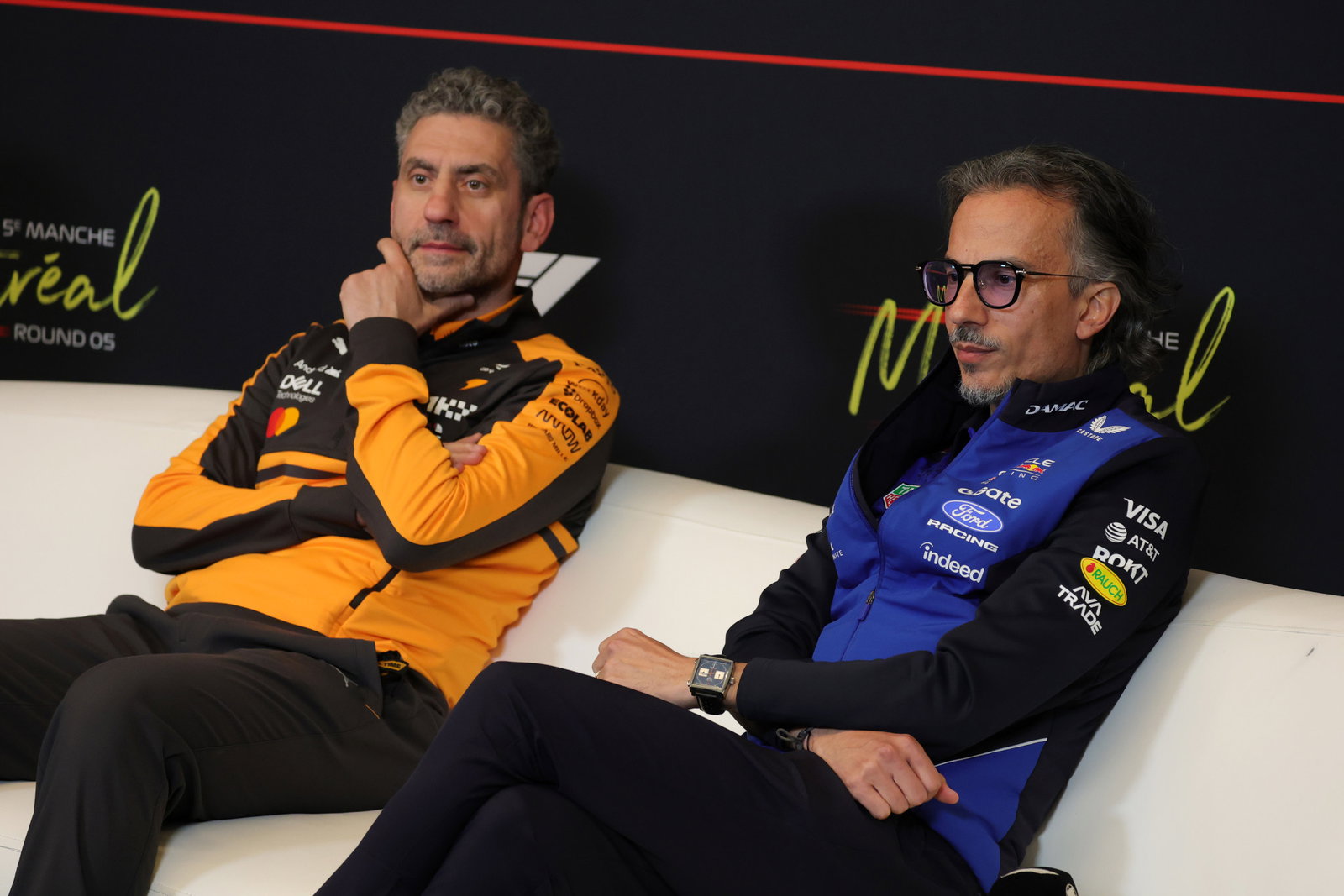
    Red Bull’s position was viewed as pivotal to securing that supermajority, and sources indicated it may back closing the loophole to avoid leaving Mercedes with a pre‑season advantage. Mercedes team principal Toto Wolff publicly defended the work as legal and transparent, pointing to the team’s recent five‑day shakedown and apparent reliability as evidence of legitimacy.

    The FIA initially measured engines cold and declared them compliant, but Autosprint recently reported the governing body plans to retest all V6 power units under hot, running conditions starting at the Australian Grand Prix to verify compliance in race‑like conditions. With the March 1 homologation deadline approaching, rapid regulatory change before Melbourne looks difficult, so any substantive rewrite is likely to be deferred into 2027. The dispute centers on measurement methodology and enforcement rather than a new hardware ban, but it has raised political and sporting tensions in the paddock and risks overshadowing the start of the season.

    More